














These Little Wild Cats Sound Straight Out of Sci-Fi
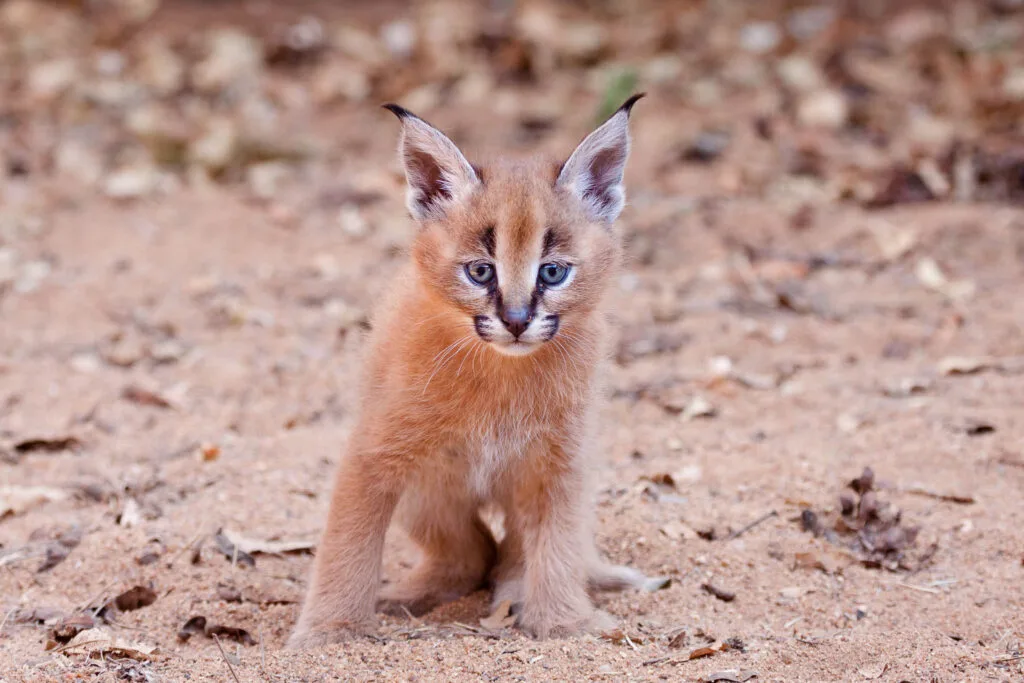
Today’s Sunday Sonics meets the caracal — a sleek, tufted-ear wild cat whose high-pitched chirps, squeaks and strange little calls can sound less like the animal kingdom and more like somebody firing a futuristic laser beam in a sci-fi movie.
And yes, those sounds are real. Caracals have a much bigger vocal vocabulary than the internet clips might suggest: they can purr, mew, growl, hiss, bark, chirrup and even make a distinctive “wah-wah” call. Kittens can produce especially shrill contact calls, which helps explain why some of the little ones sound so wonderfully electronic.
entertainment
Sunday Sonics: Meet the Caracal
Hear the wild cat with the sci-fi soundtrack, then learn more about one of nature’s most striking felines.
Some links may be affiliate links. INYIM may earn from qualifying purchases.
So Why Does a Caracal Sound Like That?
Like other cats, caracals use different sounds for different moods and situations. A content caracal may purr. Hisses, growls and spits are warning sounds. Mews and chirrups can work as contact calls, while San Diego Zoo notes that caracals can also produce a peculiar “wah-wah” sound when they appear uneasy.
The result is an animal that can go from soft domestic-cat-adjacent noises to something that sounds like a laser printer, spaceship door and tiny alien all arguing at once.
Click all on the warm and fuzzy silly sounds!
Those Giant Ear Tufts Aren’t Just for the Look
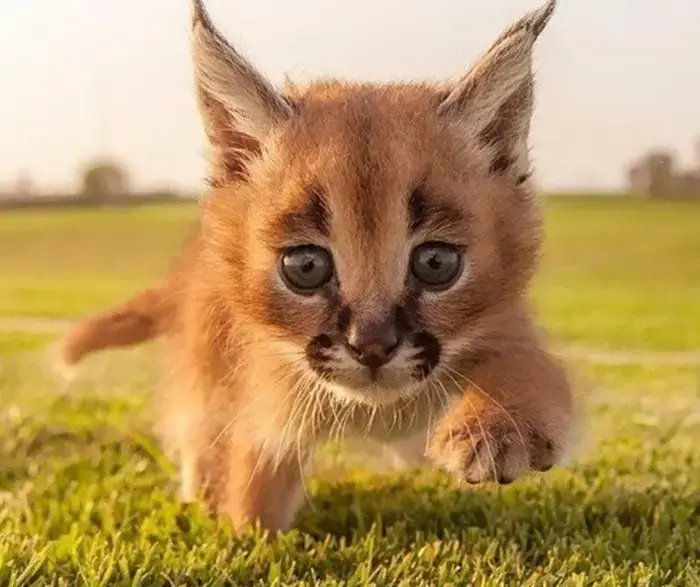
Caracals are instantly recognizable by their long black ear tufts, reddish coats and powerful build. The name itself comes from the Turkish kara kulak, meaning “black ear.” They are native across parts of Africa, the Middle East and Asia and are adapted to dry country, scrub, savanna and rocky terrain.
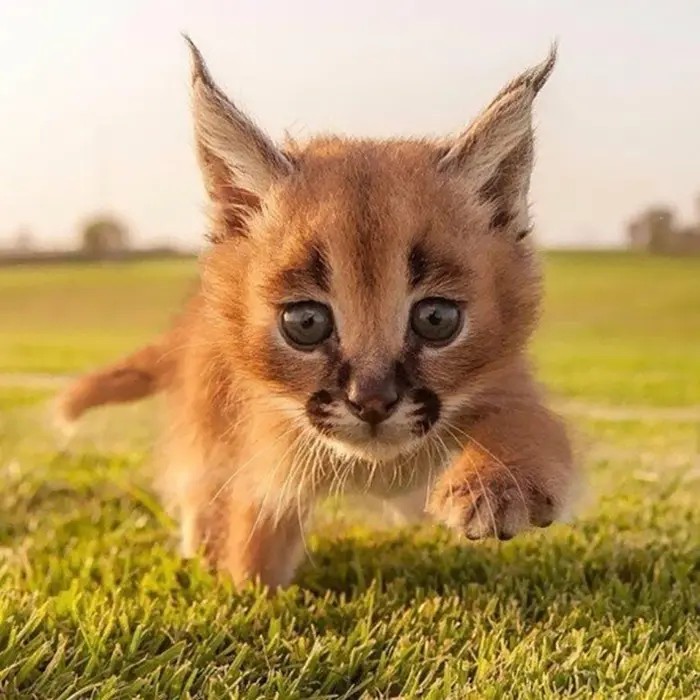
They may look ridiculously cuddly as kittens, but caracals are still wild predators, not domestic house cats. In nature they are primarily solitary hunters, using speed, powerful hind legs and sharp hearing to track prey. They are also famous for explosive vertical leaps that can send them several feet into the air after birds.
So the cute little sci-fi noises come attached to an animal that is considerably more athletic than your couch cat.
Hear the Caracal’s Futuristic Laser-Beam Sounds
Listen to INYIM Media’s caracal clip and hear just how strange these tiny wild-cat calls can get.

Don’t have TikTok? Watch on IG.
Sources: San Diego Zoo Wildlife Alliance; Mammalian Species (Oxford Academic); INYIM Media social video.