















Greta Thunberg skips the festival fluff for a story with much heavier stakes
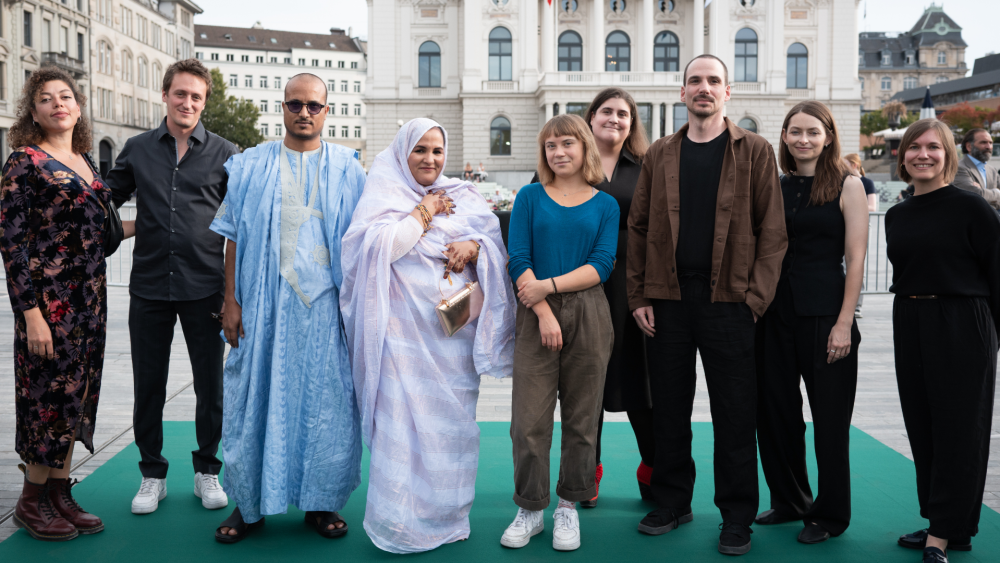
Greta Thunberg is out here in these film-festival streets — but there is no post-party rager or barrage of press. It is just Greta being Greta. The Swedish climate activist turned up at the Zurich Film Festival on September 29 in support of the world premiere of My Home of Wind and Sand, a documentary centered on Sahrawi activist Najla Mohamed Lamin.
And that distinction matters. Greta may be the familiar name pulling outside attention toward the screening, but Najla is the story. Austrian filmmaker Patrick Wally followed her over roughly a decade as she built a life, became a mother of two and continued advocating peacefully for the future of Western Sahara.
entertainment
My Home of Wind and Sand
Patrick Wally’s documentary follows Sahrawi activist Najla Mohamed Lamin across a decade of family life, community work and peaceful activism before its world premiere in Zurich.
Some links may be affiliate links. INYIM may earn from qualifying purchases.
My Home of Wind and Sand Keeps Najla Mohamed Lamin at the Center
Wally’s film follows Najla from the Sahrawi refugee camps near Tindouf, Algeria, where she was born, through years of community organizing and international advocacy. The documentary does not treat her as a geopolitical footnote. It stays with the much harder question of what it means to build a family, a community and an identity around a homeland she has never been able to live in herself.
The film also traces a shift in Najla’s own thinking. Her activism has centered on peaceful resistance, but renewed conflict forces her to examine what that commitment means for herself and for a younger generation growing up in exile. Wally is not simply observing from a distance either; the project developed through years of conversations between filmmaker and subject, with Najla also credited as a producer.
That decade-long approach gives the documentary something a quick festival-news cycle cannot: time. School, motherhood, activism, frustration and ordinary life all get to exist alongside the larger political question instead of being flattened into one headline.
Why Western Sahara Remains an Unresolved International Dispute
Western Sahara has been listed by the United Nations as a Non-Self-Governing Territory since 1963. Spain ended its presence there in 1976, but the territory’s final political status has never been resolved.
Today, Morocco controls most of Western Sahara and considers the territory part of Morocco, while the Polisario Front seeks an independent Sahrawi state. Morocco has promoted an autonomy plan under Moroccan sovereignty; Polisario has continued to argue for self-determination that includes independence as an option. The United Nations has spent decades trying to broker a political settlement.
Meanwhile, generations of Sahrawis have lived in refugee camps around Tindouf. United Nations agencies have described those camps as heavily dependent on humanitarian aid, making the dispute something much more immediate than a line on a diplomatic map.
Greta Thunberg Came to Zurich to Put the Spotlight Back on the Film
Thunberg’s Zurich appearance was added to the festival program at the last minute. She joined Najla and Patrick Wally around the world-premiere screening and took part in a post-film discussion focused on Western Sahara, activism and human rights.
There is also a personal connection behind the appearance. Thunberg visited a Sahrawi refugee camp in 2025 and has since spoken publicly about the relationship she sees between the Sahrawi experience, climate pressures and social justice. At Zurich, though, the event was built around Najla’s story rather than turning the documentary into a Greta vehicle.
Which makes the whole thing unusually on-brand for Thunberg: arrive at one of Europe’s glossy film festivals and use the moment to point everybody toward a subject that rarely gets this kind of mainstream cultural attention. No velvet-rope theatrics necessary.
Watch Greta Thunberg at the Zurich Film Festival for My Home of Wind and Sand
The Zurich appearance followed the documentary’s September 29 world premiere, with Thunberg joining the conversation around Najla Mohamed Lamin and Western Sahara.
Sources: Zurich Film Festival; Austrian Films; United Nations; SWI swissinfo / Keystone-SDA.