


















Six Miles of Cliffside Road, Decades of Crashes and No Easy Fix
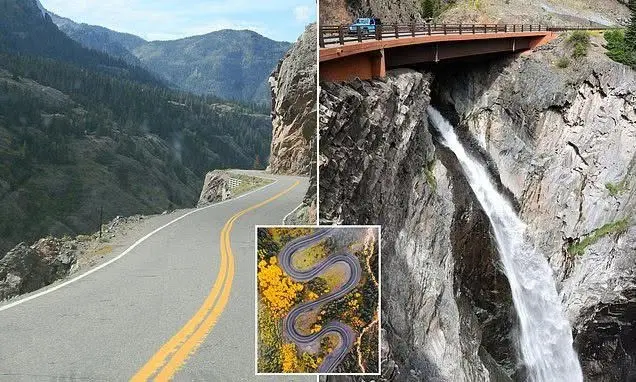
A rather urgent and timely Present Day-Developments takes us to Colorado’s Million Dollar Highway, a section of U.S. Highway 550 where beauty and danger sit uncomfortably close together — and where the question of how much can realistically be changed is far more complicated than simply adding a guardrail.
The most notorious stretch climbs through the San Juan Mountains between Ouray and Silverton, Colorado. In the Uncompahgre Gorge, the road gains more than 2,000 feet in roughly six miles, narrows to around 23 feet in places and runs beside steep drop-offs while also facing rockfall, avalanches and severe weather.
Discover More
Present Day-Developments: The Million Dollar Highway
Peter Hessler examines why one of America’s most intimidating mountain roads remains so difficult to redesign even after crashes, rescues and repeated calls for safer infrastructure.
Some links may be affiliate links. INYIM may earn from qualifying purchases.
Peter Hessler, writing for The New Yorker, reports on the aftermath of a tragic crash and the rescue work that follows when vehicles leave this unforgiving road. His larger question is the one hanging over the entire corridor: why has such a frightening stretch of highway remained largely recognizable for so long?
Why the Million Dollar Highway Is So Difficult to Rebuild
There is no single answer. The terrain itself is part of the problem. The route is carved into mountainsides, squeezed against cliffs and exposed to avalanche paths and falling rock. Major widening, extensive guardrail installation or snow-shed construction would require difficult engineering in a place where there is often very little room to move the roadway at all.
Then comes cost. Hessler’s reporting describes how local attitudes, limited budgets and the sheer expense of mountain engineering have all shaped the debate. That does not mean nothing is ever repaired. In 2026, the Colorado Department of Transportation carried out a roughly $1.9 million retaining-wall and tunnel project south of Ouray, including stabilization work at Mile Point 88.6 and repairs inside Bear Creek Tunnel.
That distinction matters: maintenance and targeted safety work are happening, but they are not the same thing as rebuilding the Million Dollar Highway into a wider, heavily protected modern mountain corridor. CDOT also dealt with mudslides, shoulder erosion and emergency road repairs along U.S. 550 during the summer of 2026 — a reminder that simply keeping the road open can itself become a major job.
And so the road remains a paradox. It is a critical route for mountain communities, tourism, emergency services and freight, while also being exposed to the very landscape that makes it famous. Drivers are asked to navigate narrow pavement, changing weather and steep terrain while engineers face the equally difficult question of what can be changed without creating another set of hazards, costs or disruptions.
So when the question is, “Why won’t they fix it?” the more accurate answer may be that parts of it are continually being fixed — while the larger transformation people imagine would be a far more complicated and expensive undertaking than the road’s nickname suggests.
The New Yorker Examines Colorado’s Million Dollar Highway
Peter Hessler’s reporting looks at crashes, mountain rescues and the long-running question of why one of America’s most intimidating highways remains so difficult to overhaul.
Source: The New Yorker; Colorado Department of Transportation.