




















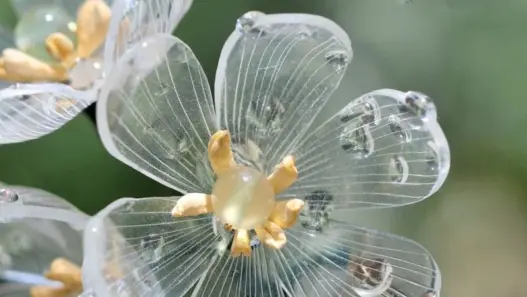
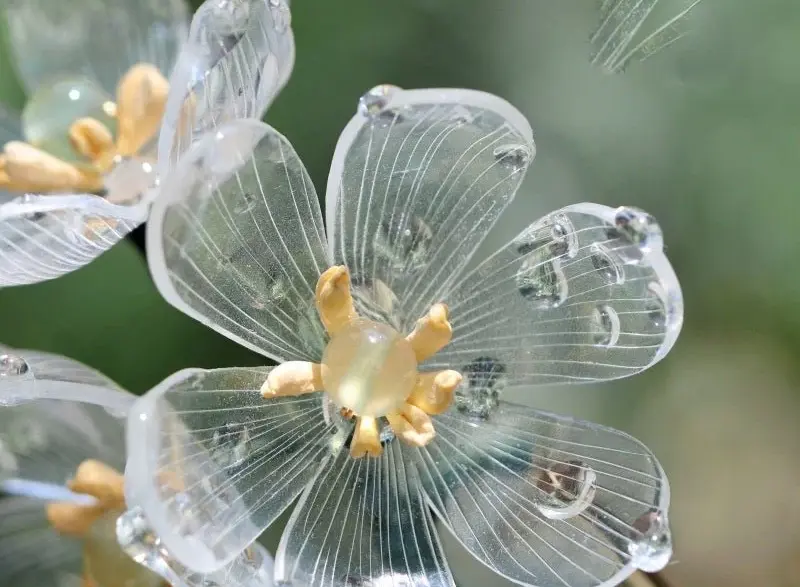
Flower Power! This White Bloom Goes Nearly Glass-Clear in the Rain
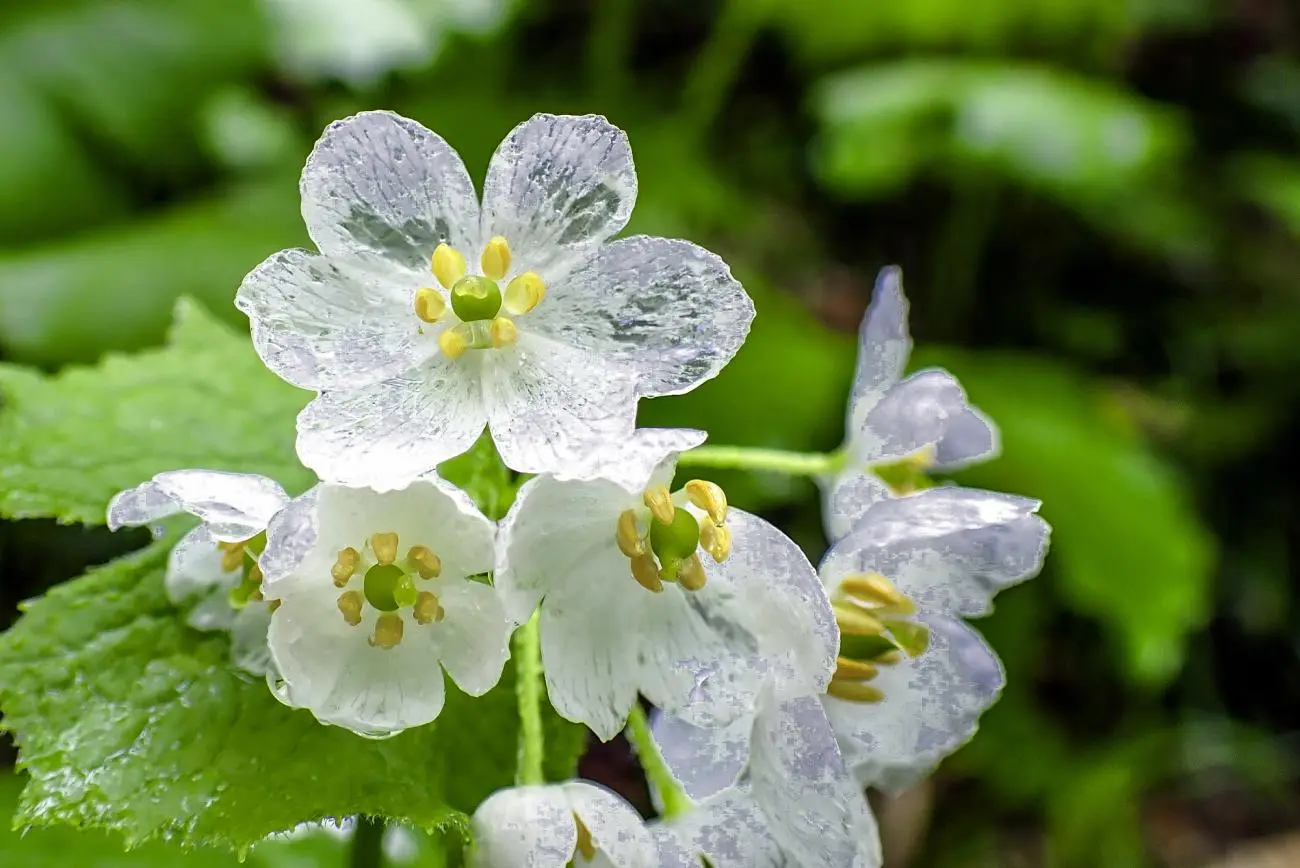
Flower Power! Meet thee Skeleton Flower — one of nature’s slickest little transformations. Dry, its delicate petals look completely white. Give it a long enough soaking, though, and the same bloom can turn almost glass-clear, with the flower’s veins suddenly standing out like a tiny botanical skeleton.
The plant is widely known as Diphylleia grayi, although Kew’s current taxonomy accepts it as Podophyllum grayi and treats the older name as a synonym. Its native range stretches from Sakhalin and the Kuril Islands into northern and central Japan, where it grows in cool, temperate forest habitats.
And no, the petals are not magically losing their pigment. The trick is all about light, air and water.
Discover More
Why the Skeleton Flower Turns Clear
Its petals look white when dry because tiny air-filled gaps scatter light. Rainwater fills those spaces, reduces that scattering and lets far more light pass through.
Some links may be affiliate links. INYIM may earn from qualifying purchases.
So What Actually Makes the Skeleton Flower Transparent?
When the flower is dry, numerous microscopic air-filled gaps in the petal tissue create lots of boundaries where light changes direction. That diffuse scattering is what makes the petals appear opaque white. Once enough rainwater works into those spaces, the optical contrast drops dramatically. More light can travel through instead of bouncing around, and the petals take on that unmistakable translucent, almost crystal-like look.
There is another fun detail that gets lost in the quick social-media version of the story: the transformation is not necessarily instant. Botanist Tsubasa Toji, writing after observing the flowers during Japan’s rainy season, reported that light rain had to continue for roughly a day before the petals became transparent. Even after the weather cleared, they stayed clear for a while — then gradually returned to white as they dried.
So the flower is basically running its own reversible optical effect. White. Rain. Glass. Dry. White again. Nature really did not need to flex this hard.
A Small Woodland Flower With a Very Big Visual Trick
The skeleton flower itself is not some giant exotic bloom. Hokkaido University’s plant records describe a perennial roughly 30 to 50 centimeters tall, producing clusters of small white, six-petaled flowers around early summer. It grows in forests and along forest edges, spreading underground by rhizomes before later producing dark fruit.
Its transparency has become interesting far beyond botany, too. Materials researchers have studied the flower as a natural example of reversible transparency, using the same basic idea — controlling how water changes light scattering inside a material — as inspiration for hydrochromic films and other responsive surfaces.
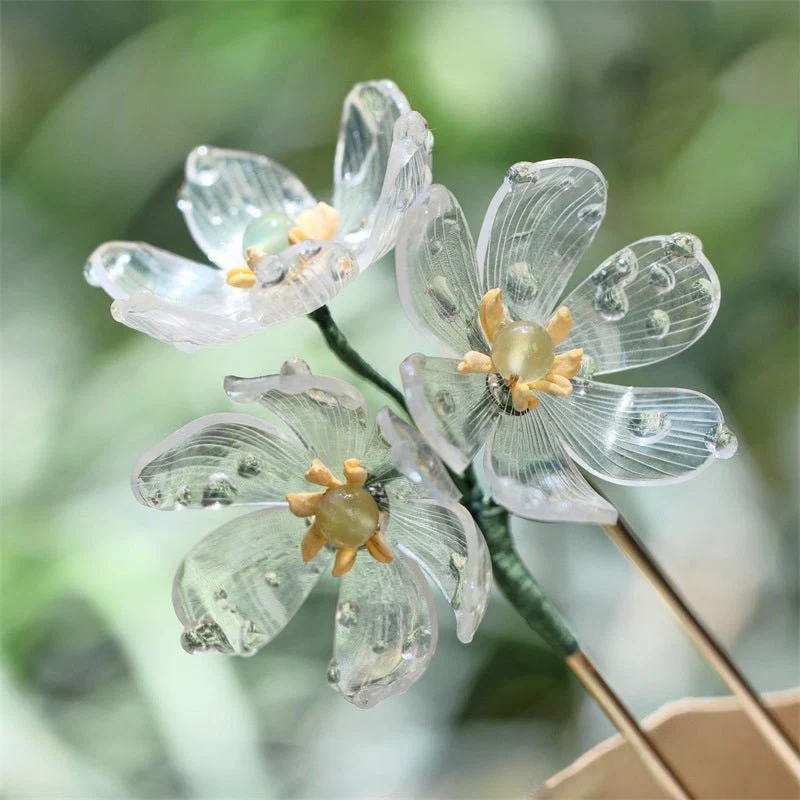
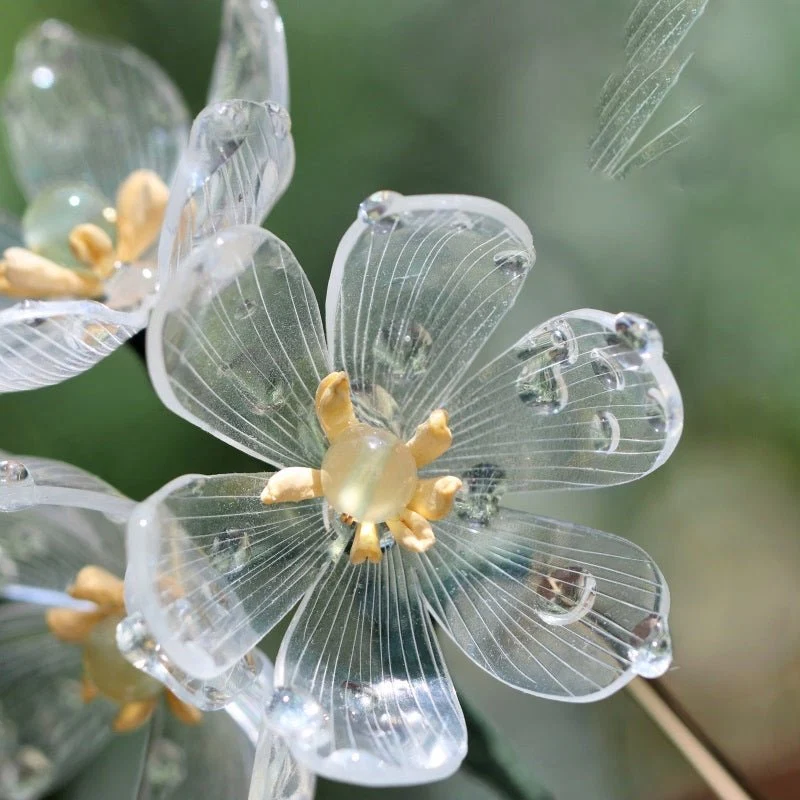
And that design connection makes complete sense. Once the petals go transparent, the flower stops looking quite real. It lands somewhere between pressed glass, wet silk and a tiny piece of botanical jewelry — which is probably why this strange little woodland plant keeps getting rediscovered online.
The science may come down to refractive index and microscopic air spaces, but the effect still feels wonderfully theatrical. Rain falls, the white disappears, and for a little while the skeleton flower shows you an entirely different version of itself.
Watch the Skeleton Flower Turn Transparent in the Rain
See the white petals shift toward their glass-like wet state in INYIM Media’s skeleton flower video. Don’t have TikTok? Watch on IG.

Sources: Frontiers in Ecology and the Environment / Kew Science / Hokkaido University. Product images: JewelryBlossom.