


















Columbia House Is Closing the Catalog on 71 Years of Music Mail-Order Madness (1955–2026)
All good things — and some beautifully questionable mail-order deals — must eventually come to an end.
Columbia House, the mail-order music and media club that taught an entire generation the joy of getting a stack of albums for practically nothing followed by the horror of discovering the fine print, is winding down after 71 years.
The company says it will stop accepting new media orders after September 15, 2026. Book purchases will continue for customers using existing credits or credit cards, but the Columbia House that once stuffed mailboxes with records, tapes, CDs, VHS tapes, DVDs and Blu-rays is effectively signing off.
Discover More
One cent, twelve CDs and a lifetime of memories.
Revisit the music-club years with classic albums, physical-media nostalgia and the soundtracks that once arrived in a cardboard box at your front door.
Some links may be affiliate links. INYIM may earn from qualifying purchases.
And yes, we were members. Throughout the ’90s and into the early 2000s, Columbia House was part of the music-buying experience around here too — many monies, many questionable choices and more than a few “wait, why did they send me this?” moments later.
The club began in 1955 as the Columbia Record Club, launched by CBS and Columbia Records as a way to sell music directly by mail. What started with vinyl eventually moved through nearly every major home-entertainment format as technology changed.
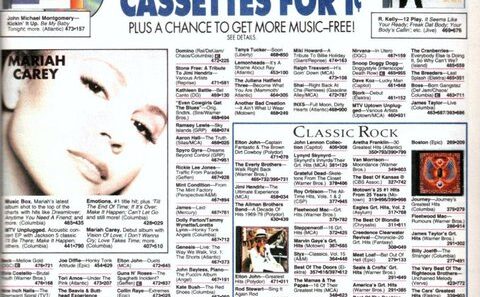
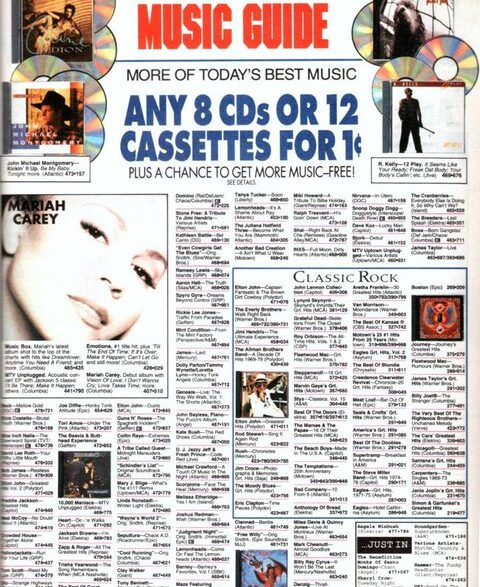
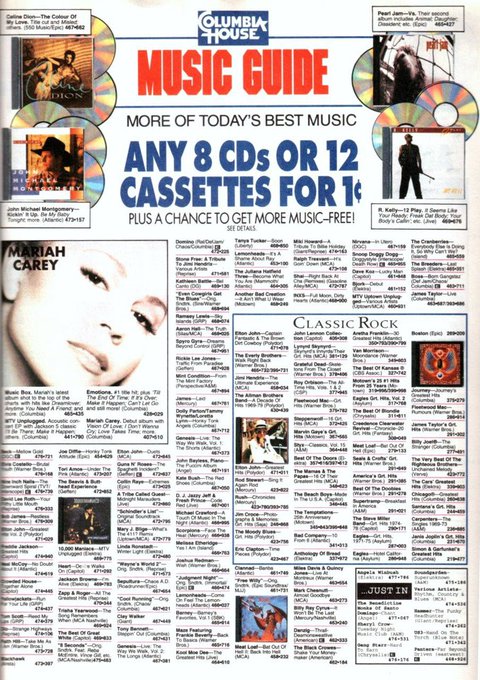
But the offer everybody remembers came later: 12 CDs for a penny. It looked completely insane because, on the surface, it was. You mailed in the card, picked a stack of albums and waited for a box that felt like Christmas morning had been personally sponsored by the record industry.
Then came the grown-up lesson.
Those nearly-free albums were tied to a commitment to buy additional titles at regular club prices, usually with shipping and handling added on top. Columbia House also became famous — or infamous — for its selection-of-the-month system. If you did not decline the featured title in time, it could simply arrive at your house with a bill attached.
Basically, Columbia House gave teenagers a crash course in contracts, deadlines and capitalism while simultaneously helping them build one hell of a CD collection.
And the thing was enormous. At its mid-1990s peak, Columbia House reportedly had around 16 million members and generated well over a billion dollars a year. In an era before streaming, before instant downloads and before you could pull nearly any album out of thin air with your phone, receiving music through the mail genuinely felt futuristic.
Then the internet changed everything. MP3s, file sharing, iTunes and eventually streaming stripped away the need for mail-order music clubs. Columbia House shifted heavily toward movies and home video, changed owners multiple times and filed for bankruptcy protection in 2015. Somehow, though, the name kept surviving.
Until now.
There is something oddly fitting about Columbia House finally disappearing in 2026. We now live in a world where millions of songs are available instantly and physical media is once again being treated as a collectible luxury. Columbia House belonged to the weird middle — when music was still physical, but the catalog made it feel almost unlimited.
You circled album covers. You licked little stamps. You waited. You forgot to decline the monthly selection. You got yelled at. You swore you would cancel. Then another catalog came.
There really was only one Columbia House. R.I.P. to the club that made a penny feel powerful and the mailbox feel dangerous.
Watch More on Columbia House and the Mail-Order Music Club Era
The supplied video revisits Columbia House and the mail-order music-club culture that made impossibly cheap introductory offers part of growing up with physical media.
Sources: Columbia House; People; Pitchfork; Business Insider.