















It Was Fun, Funky and Polished — Then Everything Changed
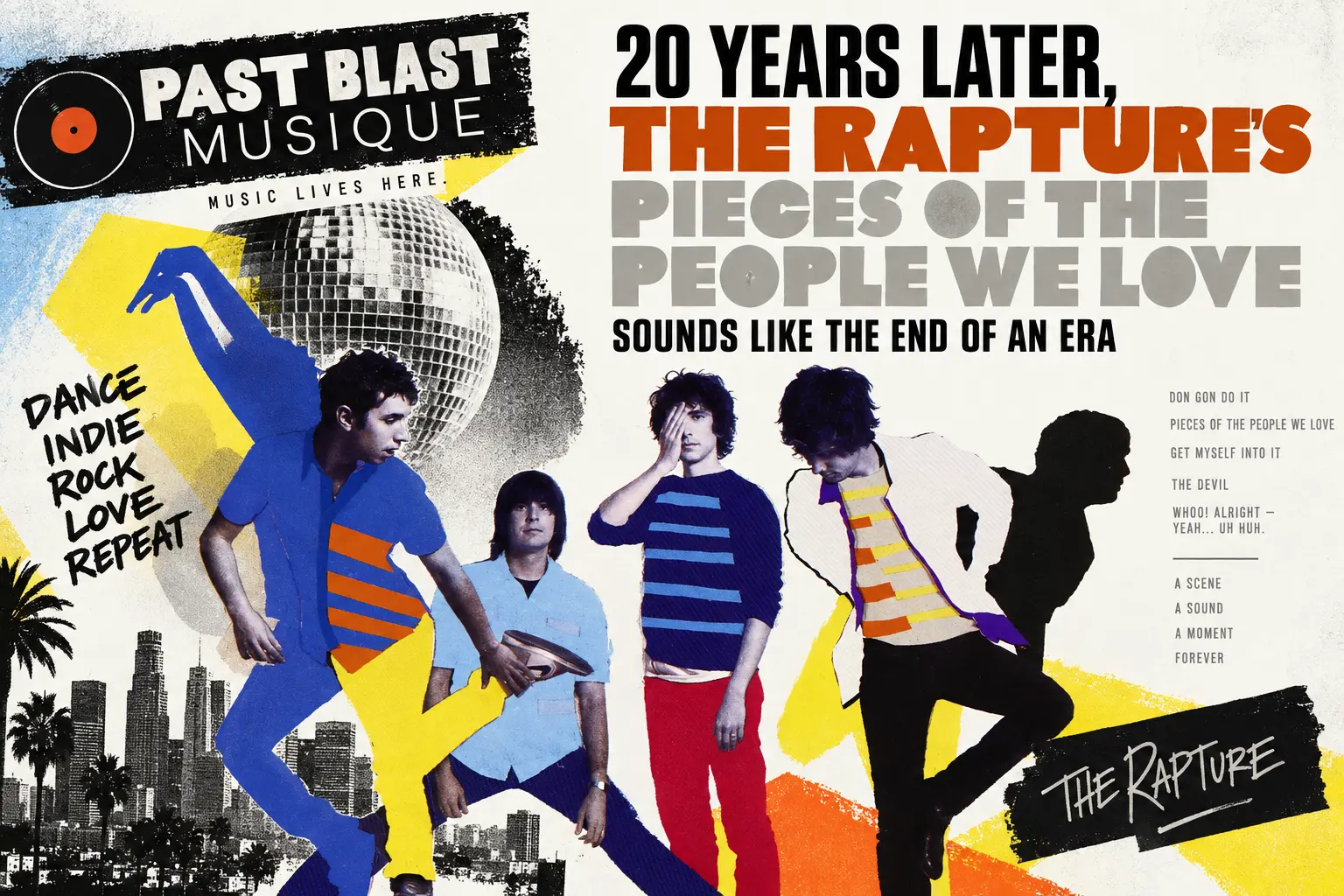
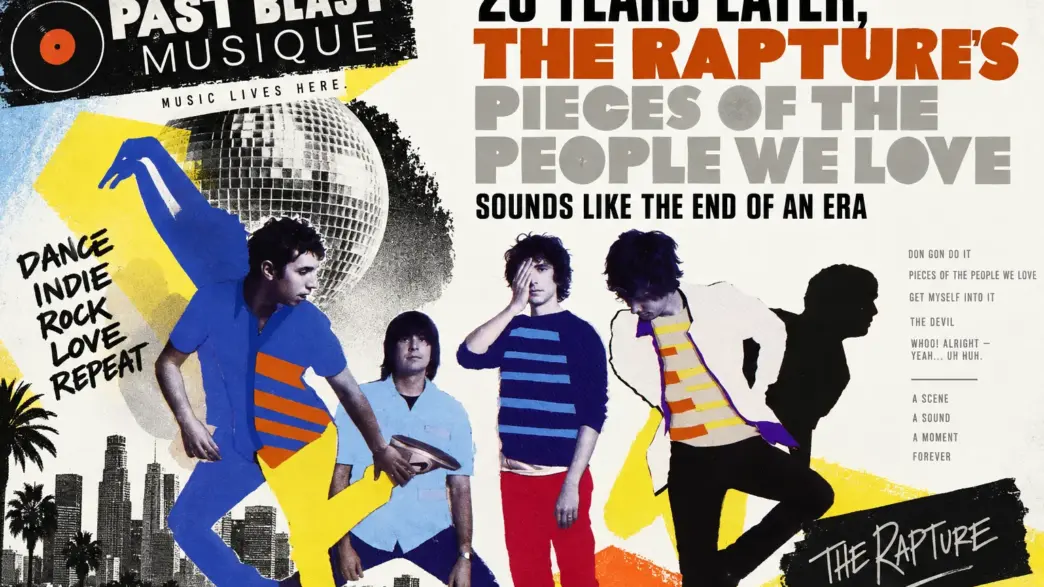
Twenty years ago, The Rapture released an album we loved. We just did not realize at the time that we were also listening to the closing chapter of an era.
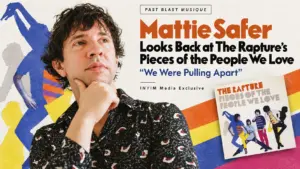
Released in the United States on September 12, 2006, Pieces of the People We Love arrived three years after Echoes had helped ignite the indie-dance explosion for us. If Echoes sounded like the beginning of the scene — sweaty, wiry, dangerous and new — Pieces sounded like the moment that scene had learned how to dress itself up before the lights came on.
It was tighter, brighter and more polished without losing the sweat. Fun. Funky. Restless. Stylish. A little messy in exactly the right places.
Twenty years later, it sounds almost impossibly tied to its moment.
Discover More
Put The Rapture Back on the Turntable
Revisit the record that closed out one of our favorite dance-floor eras, then dig back into the catalog that got us there.
Some links may be affiliate links. INYIM may earn from qualifying purchases.
To us, Pieces of the People We Love sounds like the entire indie-dance era compressed into one album.
Echoes was the start.
Pieces was the closing.
Boy, was it fun.
The Rapture Caught Indie-Dance at Full Blast
There was a stretch in the 2000s when indie rock remembered that dancing was allowed.
Guitars collided with disco basslines. Cowbells became cool again. Punk kids discovered house records. DJs dropped rock bands between electronic tracks without anybody acting like they had broken some sacred rule.
The Rapture were right in the middle of it.
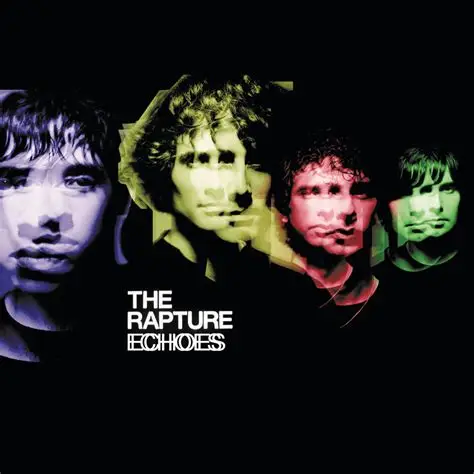
Their 2003 album Echoes — and especially “House of Jealous Lovers” — helped define that explosion. For us, Echoes sounded like the doors opening on a new room.
But our first real experience with The Rapture actually came before Echoes. It was the band’s 2001 Sub Pop EP Out of the Races and Onto the Tracks — six songs that, for us, ushered in that new indie-dance sound before the scene had fully settled into a name.
We first read about the EP in a music magazine, then did what music obsessives still did back then: went to Tower Records and sampled it at one of their in-store listening stations. Remember those?
And there it was: “Olio.” That track was one of our first real jolts of The Rapture — twitchy, rhythmic, strange and danceable in a way that felt like a new door opening.
The ingredients were already there: post-punk abrasion, wiry guitars, restless bass and percussion built to move. Mattie Safer had joined the band by then, and that little EP felt like a door cracking open onto something we had not quite heard put together that way before.
Then came Echoes in 2003 — the full-length statement. By then, “House of Jealous Lovers” had pushed The Rapture deeper into the underground conversation, and Echoes took that collision of rock and dance music and blew it out into an entire album.
For us, Out of the Races and Onto the Tracks ushered in the sound. Echoes threw the doors wide open.
By the time Pieces of the People We Love arrived in 2006, we were inside that room at full blast.
The new album was cleaner and more deliberate. Paul Epworth and Ewan Pearson produced most of the record, while Danger Mouse handled two tracks. Mattie Safer had also become an even more important part of the band’s sound and songwriting, taking lead vocals on several songs.
Yet for all of that polish, Pieces still moved.
“Don Gon Do It” kicks the door open before the title track turns the room into a party. “Get Myself Into It” has the kind of bassline that practically tells your body what to do. “The Devil” brings back the nervous energy. And “Whoo! Alright — Yeah… Uh Huh.” sounds like somebody trying to document a chaotic night out while it is still happening.
Then Mattie drops the line that sounds almost prophetic now: “People don’t dance no more.” Twenty years later, we cannot help thinking: he saw the future.
Because somewhere along the way, dancing gave way to vibing. People stand around, sway a little, hold a drink, watch the room and call it a night out. We hate it. The whole point was to lose yourself on the dance floor — not merely be seen near one.
There are records that remind you of a year. Pieces of the People We Love reminds us of an entire scene.
The Indie-Dance Club Era Was Already Changing
This is where our relationship with the album gets personal.
INYIM came out of a world where indie music, nightlife, fashion, art and dance culture constantly crossed paths. Those nights were never just about hearing a band you liked.
The crowd was part of the experience.
Indie kids. Gay club people. Art-school weirdos. Fashion people. DJs. Rock kids who suddenly discovered they actually liked dancing. People who knew the DFA catalog. People who could go from post-punk to disco to electro without needing somebody to explain why those things belonged together.
And, importantly, nobody needed to label the room.
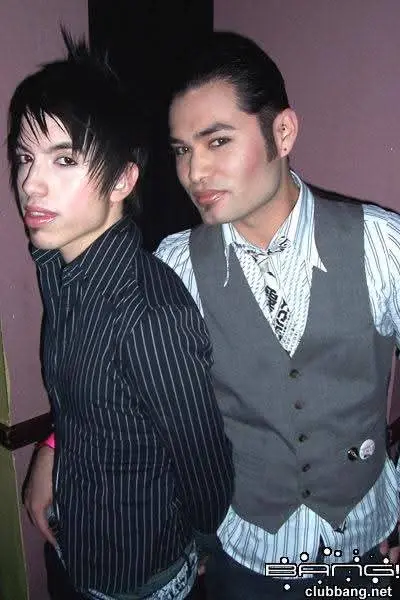
We still remember dancing at The Ruby in Hollywood and beginning to hear something we had never really heard before: straight newcomers referring to the indie/dance room as “the gay room.”
That stuck with us.
Because before that, it had never felt like the gay room or the straight room.
It was just the room.
Everybody was mixed together. That was part of what made the scene work. Nobody needed a demographic breakdown before walking onto the dance floor.
But as the crowds became more mainstream, suddenly people were arriving with labels for something that had previously existed rather beautifully without them.
The scene was changing.
Clubs were closing. Nights disappeared. The strange little coalition of people that had made those rooms so colorful became harder to find.
By late 2008, we could physically see it. We remember looking across the dance floor and realizing the glitter was barely there anymore. The colorful characters were few. And, more importantly, the energy was gone.
It did not happen with some dramatic final night or a giant announcement telling everyone the indie-dance era was over.
It just faded.
And that was our cue to exit.
Forever.
Pieces of the People We Love did not cause any of that. It simply arrived at exactly the moment when, looking back now, the shift was already underway.
That is why listening to it today feels different.
It is not a sad record. Quite the opposite.
It sounds like one last enormous night out.
Boy, was it fun.
The Singles — In the Order We Got Them
The album’s singles tell their own little version of the story, so we are revisiting them in release order.
“Get Myself Into It” — August 21, 2006
The first single arrived ahead of the album and immediately announced that this version of The Rapture was going to be slicker without becoming safer.
“Whoo! Alright — Yeah… Uh Huh.” — November 27, 2006
Frantic, funky and knowingly absurd, it still feels like a dance-floor conversation somehow turned into a song.
“Pieces of the People We Love” — April 23, 2007
Then came the title track and final single. The final single from the original lineup. Produced by Danger Mouse and featuring backing vocals from CeeLo Green, “Pieces of the People We Love” somehow manages to feel celebratory and sentimental at the same time.
And here is something we somehow never knew until revisiting the album for this anniversary:
CeeLo Green is on the title single.
Yes. That CeeLo Green.
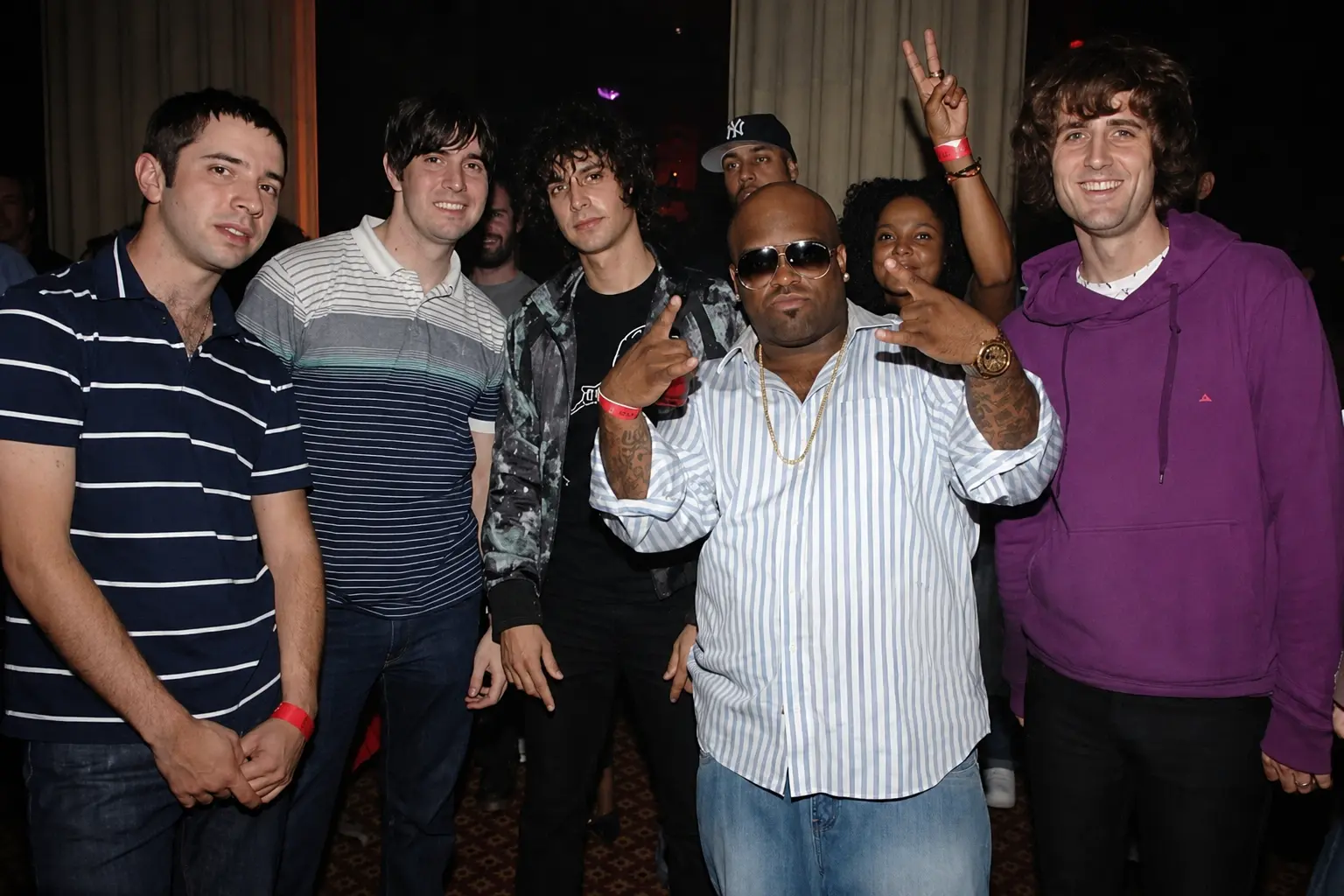
Danger Mouse produced the track, while CeeLo contributed backing vocals. The song’s credited writers are Gabriel Andruzzi, Luke Jenner, Vito Roccoforte and Matthew Safer — CeeLo is not credited as a songwriter or producer.
Which makes the discovery even better considering CeeLo was also an in-real-life friend of our very own Anthony De La Cruz, INYIM Founder.
We had absolutely no idea he was hiding inside one of our favorite records from the era.
Apparently twenty years was not enough time for somebody to mention this.
But that is another story.
The Last True Rapture Record
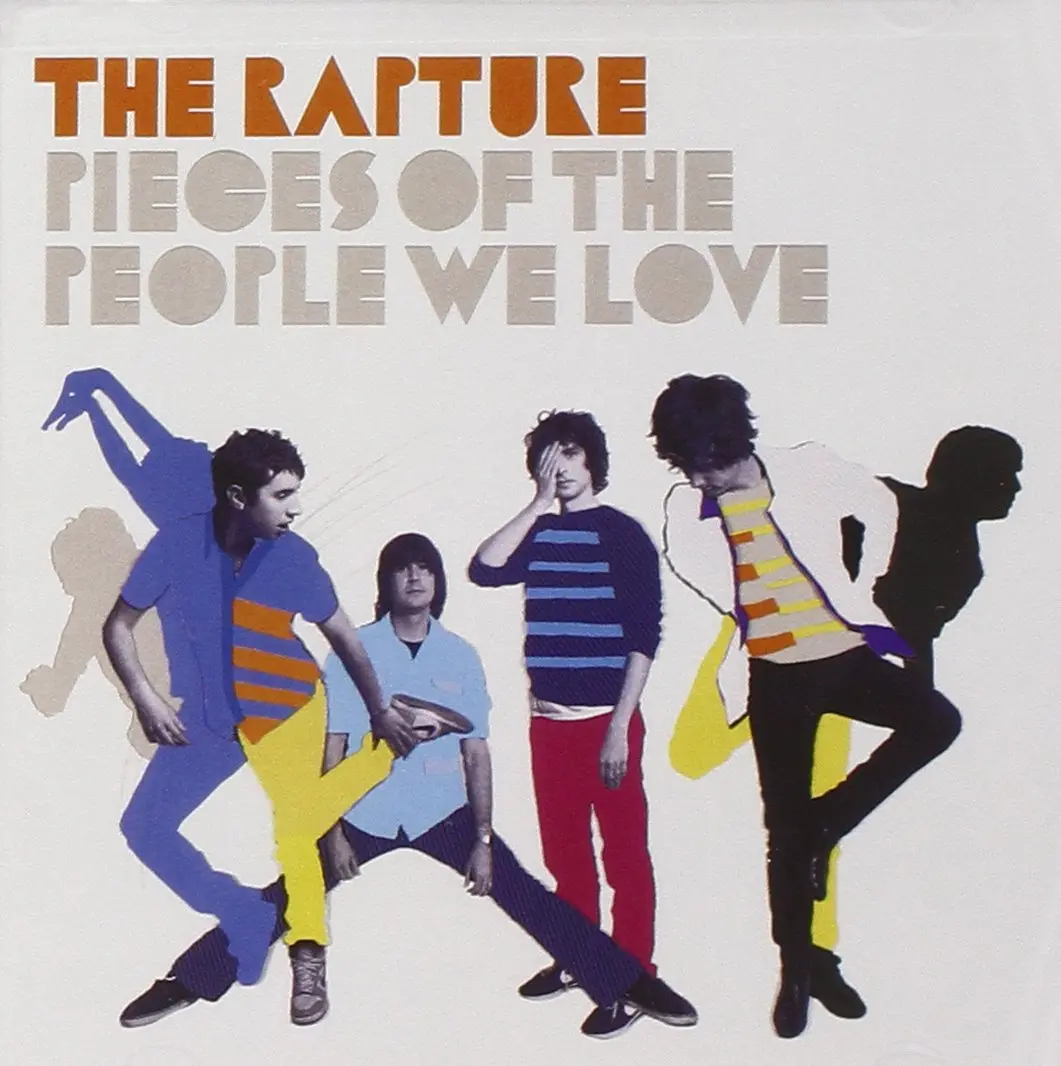
Technically, Pieces of the People We Love was not The Rapture’s final album.
The band returned in 2011 with In the Grace of Your Love, their first studio record after Mattie Safer’s departure.
But for us, Pieces of the People We Love was the last true Rapture record.
Not because everything that came afterward was without merit.
Because this was the last album that contained the complete chemistry we associate with The Rapture — Luke Jenner, Mattie Safer, Vito Roccoforte and Gabriel Andruzzi pulling against one another and somehow turning all of that tension into something ridiculously alive.
It was also the perfect record for the moment.
Echoes had opened the doors to the indie-dance era.
Pieces of the People We Love caught that world at full color just before it began disappearing.
The band changed afterward.
The scene changed afterward.
So did we.
And maybe Mattie knew the club was over, too.
By the time he left The Rapture in 2009, the scene around the band had already changed dramatically. The rooms were different. The crowds were different. The energy that had once made indie-dance feel spontaneous and limitless was disappearing.
We felt it.
Looking back, Mattie’s departure now feels almost perfectly timed with the end of that world. We cannot know that he saw it exactly the way we did, but from our side of the dance floor, the timing still feels uncanny.
He moved on.
The scene moved on.
Eventually, even the people still standing in the room had to admit the night was over.
For us, this is where The Rapture as we knew them ends.
Mattie Safer Kept Moving

There is another reason this particular Rapture album remains special to INYIM.
Mattie Safer is a friend of INYIM Media, and Pieces of the People We Love captured him at an especially important point in the band.
His voice and personality became much more prominent on this record. The push and pull between Safer and Luke Jenner helped give The Rapture something that was difficult to imitate. There was tension in the sound — rock against disco, anxiety against swagger, Jenner’s wiry attack against Safer’s groove.
Safer left The Rapture in 2009.
But he did not stop.
Today, Mattie Safer continues making new music through his lovetempo project, solo work as Safer and performs as bassist and singer with Poolside. In 2026, lovetempo released There Is A Light and continued putting new music into the world — including music heard on INYIM Radio.
That matters to us.
Because nostalgia is wonderful.
Living entirely inside it is something else.
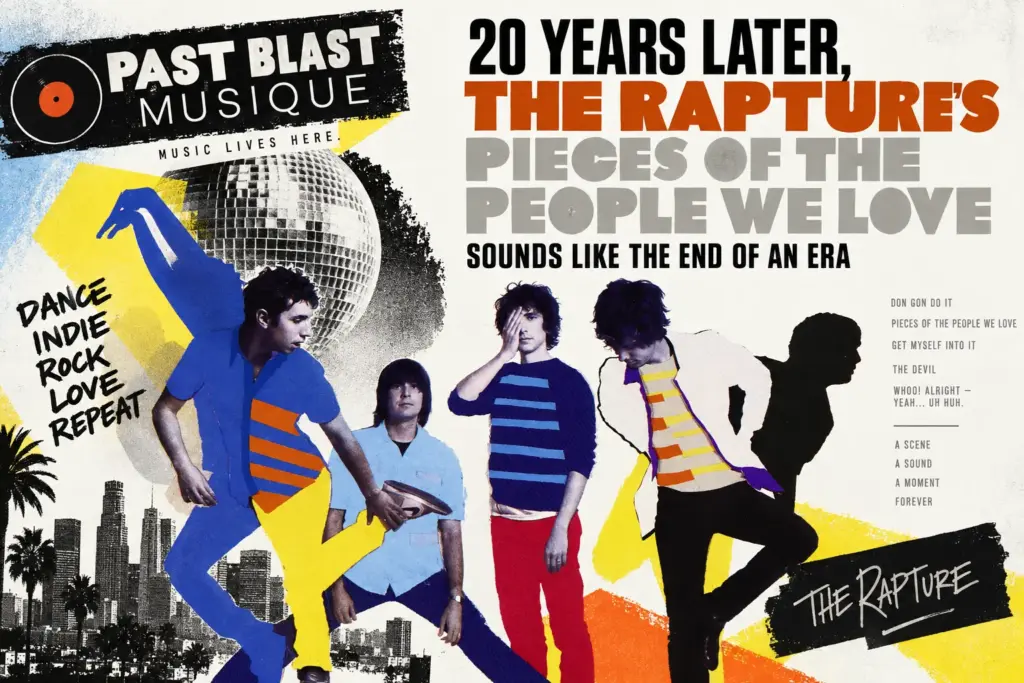
The Rapture Became a Nostalgia Act. We Approve This Message.
The current touring incarnation of The Rapture is centered around Luke Jenner, the sole original member in the present lineup, playing songs from the catalog that made the band one of the defining names of the 2000s indie-dance era.
So yes: in 2026, The Rapture is a nostalgia act.
We approve this message.
And there is nothing inherently wrong with nostalgia. Seeing the songs again can be fun. Hearing “House of Jealous Lovers” explode out of a sound system can instantly transport somebody back two decades. A great song does not suddenly stop being great because its audience got older.
But the contrast is impossible for us to ignore.
Mattie moved forward.
The Rapture name moved backward toward its catalog.
Maybe that is part of why Pieces of the People We Love feels so poignant now.
The record sits right between those two ideas.
Echoes had sounded like discovery.
Pieces sounded like arrival — and, without us knowing it yet, the beginning of goodbye.
It captures a band evolving musically while the culture surrounding it was beginning to fade. It is polished without becoming sterile. Nostalgic now, but not remotely nostalgic when it was made.
It was alive.
One More Dance
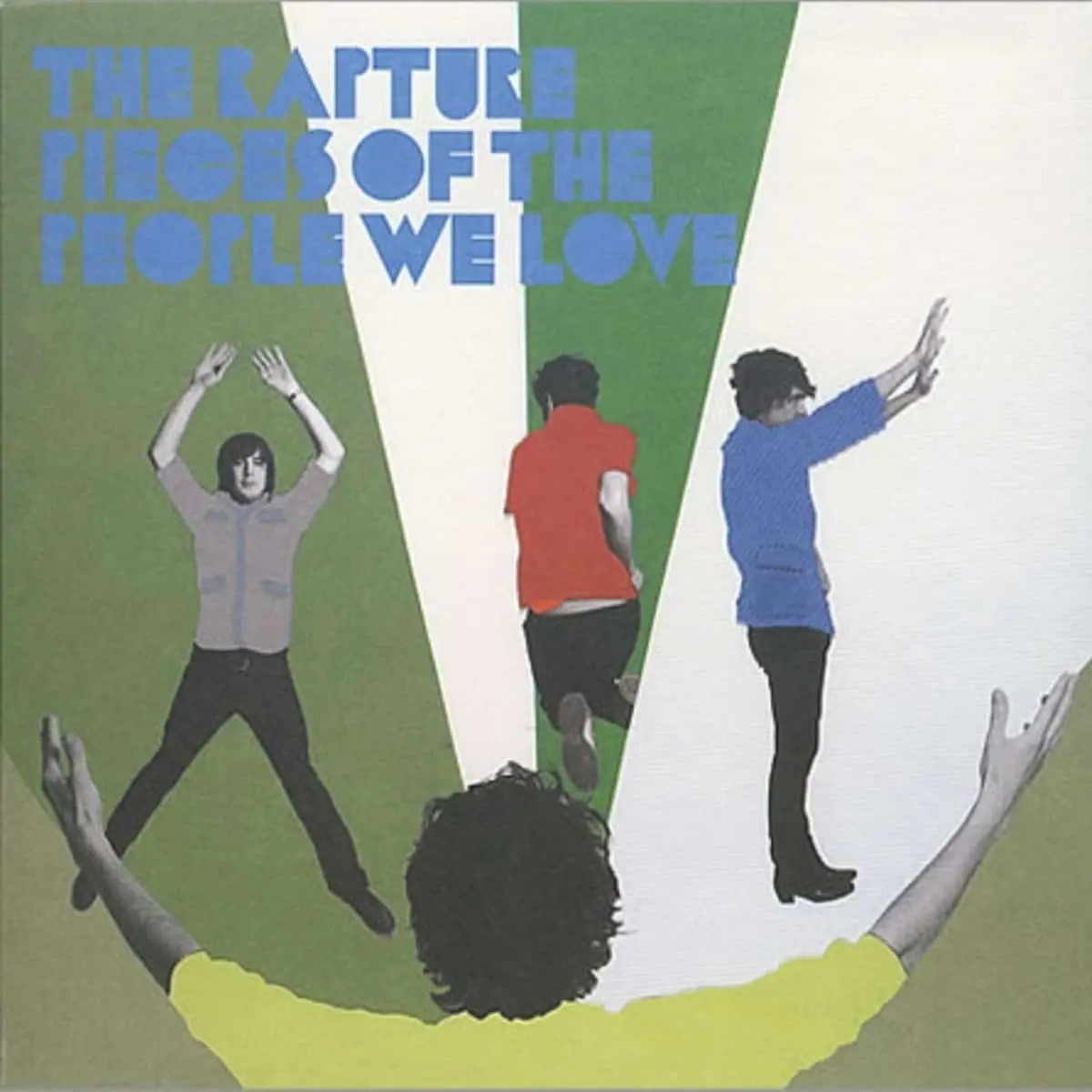
Twenty years later, Pieces of the People We Love does not sound like a museum piece.
Turn it up and it still moves.
The bass still hits. The guitars still twitch. The percussion still pushes everything forward. The songs still contain that strange combination of confidence and chaos that made the best indie-dance records feel like the night could go absolutely anywhere.
But now there is something else underneath it.
Memory.
We remember the clubs.
We remember the crowds.
We remember the glitter.
We remember the colorful characters.
We remember when nobody called it the gay room because nobody needed to.
We remember when these sounds did not belong to an anniversary festival or a nostalgia circuit.
They belonged to right now.
And then right now became twenty years ago.
That is what scenes do.
They appear. They explode. They change. Sometimes they disappear completely.
And what a scene it was.
For us, Echoes was the beginning.
Pieces of the People We Love was the closing.
In between was one hell of a dance floor.
Boy, was it fun.
The people inside those scenes eventually have a choice.
We grow. We learn. We move on.
Most of us.
Listen to The Rapture’s Pieces of the People We Love Full Album
Twenty years later, the best argument for this album is still the album itself. Turn it up.
Sources: MusicBrainz; AllMusic; NME; Universal Music; Apple Music; The Rapture official; lovetempo; Poolside.