












Bombshell Energy Meets the Art of Leaving Something Out
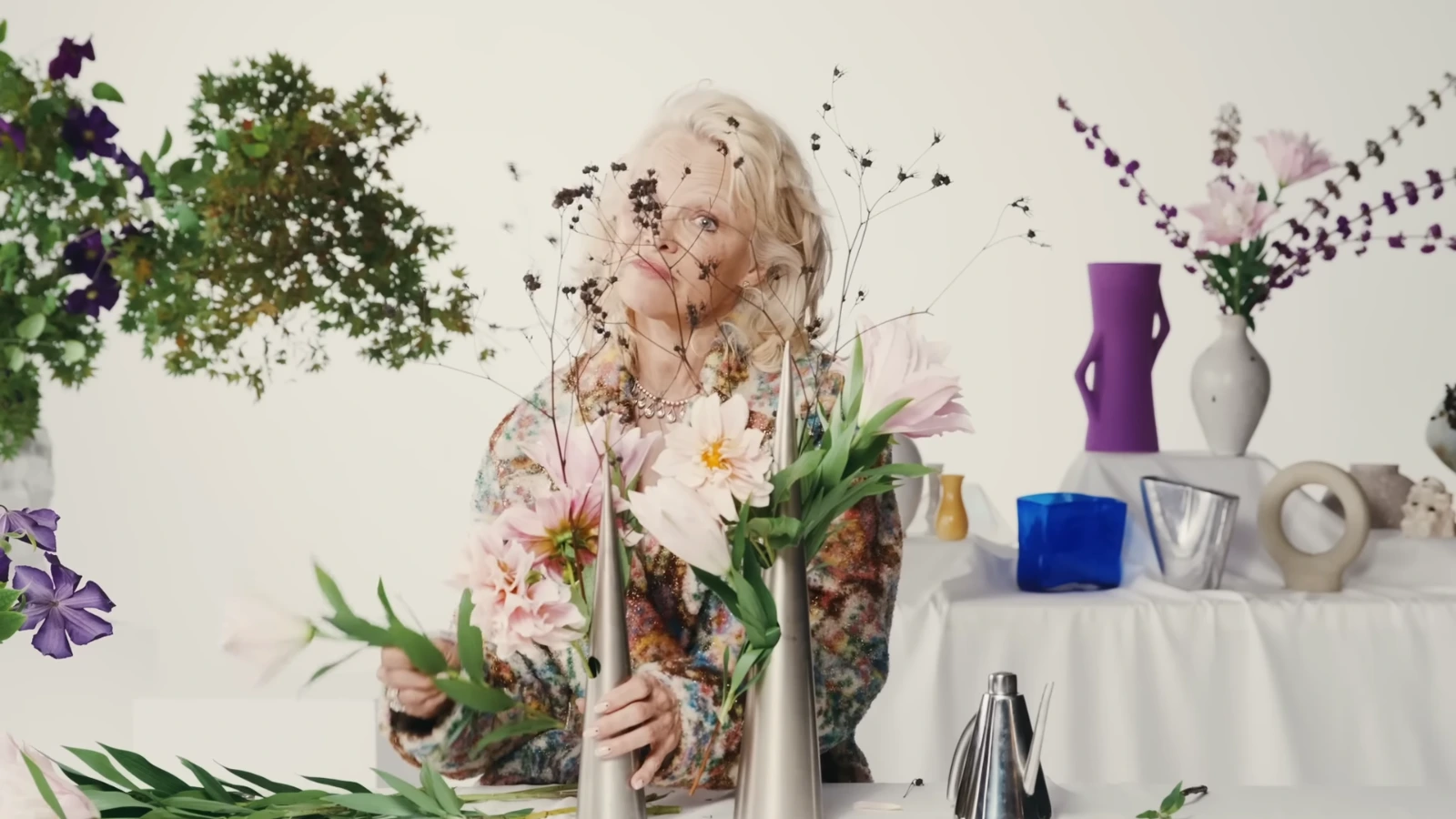
Watch the living legend and one of the royal-class members of thee “OG authentic” blonde bombshell club trade red carpets and flashbulbs for stems, space and a very sharp pair of floral shears.
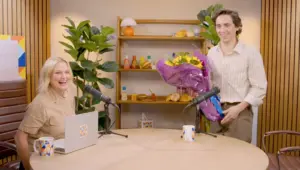
For Vogue Australia, Pamela Anderson demonstrates a Japanese ikebana floral arrangement while chatting through the creative process. It is a rare, grounded look at the woman behind the icon—and another reminder that her current chapter is not about erasing the bombshell. It is about deciding for herself what the bombshell gets to do next.
Pamela now has another beauty trick up her sleeve, although “trick” undersells what ikebana asks of the person making it. This is not a matter of stuffing the prettiest blooms into a vase until no daylight survives. Ikebana depends on line, color, mass and the space between materials.
Discover More
Bring a Little Ikebana Home
Visit Vogue Australia’s world, then explore beginner-friendly ikebana guides and the tools used to turn stems, line and negative space into a living composition.
Some links may be affiliate links. INYIM may earn from qualifying purchases.
Ikebana Is Not About Making the Vase Look Full
Western floral arrangements often build toward abundance: more blooms, more symmetry, more visible fullness. Ikebana can move in the opposite direction. A single branch may carry the strongest line. Empty space becomes part of the composition. Asymmetry creates movement instead of looking unfinished.
The Sogetsu School describes line, color and mass as central elements, with the arrangement also owning and responding to the space around it. That last point is the secret sauce. The vessel, stems and surrounding air are not separate things competing for attention. They are one image.
That makes every choice visible. A cut cannot hide inside a giant bouquet. A stem angled slightly differently changes the whole balance. Restraint is not the absence of design; restraint is where the design has nowhere left to lie.
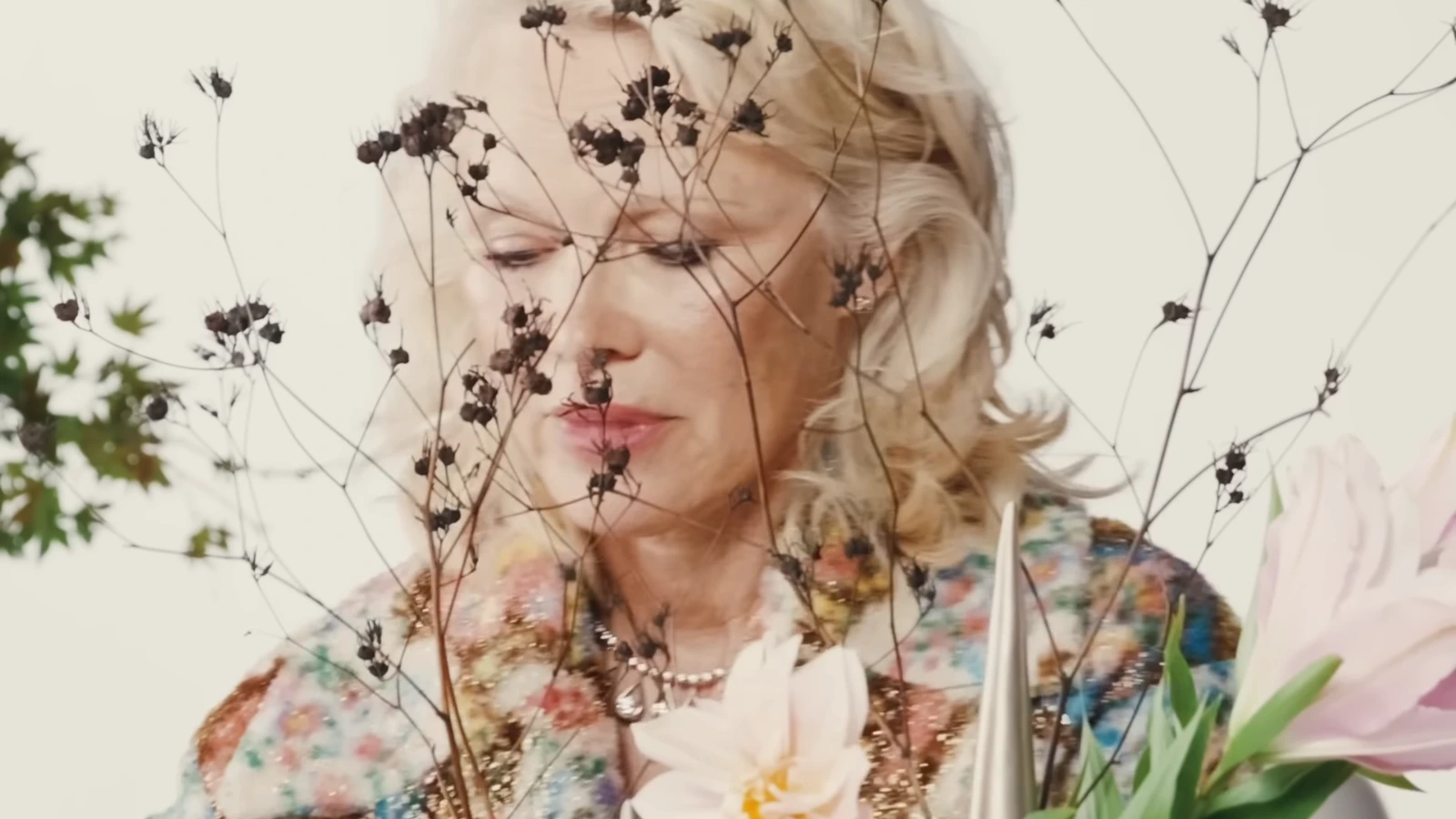
Pamela’s New Beauty Language Has Always Been About Choice
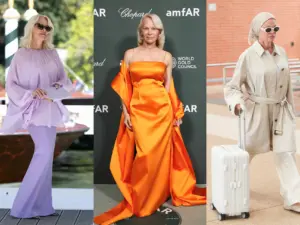
Anderson’s recent public image has often been reduced to one headline: Pamela stopped wearing makeup. The more interesting story is that she stopped letting other people decide which version of Pamela had to appear.
She can arrive bare-faced, return to full glamour, cook, garden, act, write, launch a beauty brand or sit down with a collection of stems and build an ikebana arrangement. None of those choices cancel the woman who ran down a beach in a red swimsuit or ruled 1990s magazine racks.
That is why this Vogue Australia feature works. The attraction is not the novelty of “Pamela Anderson does flowers.” It is watching someone whose image was once treated as public property become increasingly comfortable choosing slower, quieter forms of beauty.
She remains Pamela Anderson. The volume knob simply belongs to her now.
Ikebana suits that shift because it rewards intention over excess. Every material has to justify the space it occupies, which is perhaps the most elegant possible answer to a culture that once demanded Pamela occupy every inch of the frame.
The Empty Space Is Doing More Work Than You Think
One of the first things viewers may notice is how little an ikebana arrangement can resemble the packed floral centerpieces usually associated with glamour shoots and celebrity homes.
Negative space is not waiting to be filled. It directs the eye. A tall stem creates a route upward. A low bloom introduces weight. A branch extending beyond the vessel can make the whole piece feel as though it is still growing rather than sitting politely on a table.
The arrangement becomes sculptural because the air around it remains visible. Ikebana asks the maker to notice not only what the plant material is doing, but what the eye does while moving between it.
Anderson’s calm presence fits the exercise. There is no race to a giant reveal and no need to manufacture a makeover moment. The pleasure comes from watching the shape emerge one decision at a time.
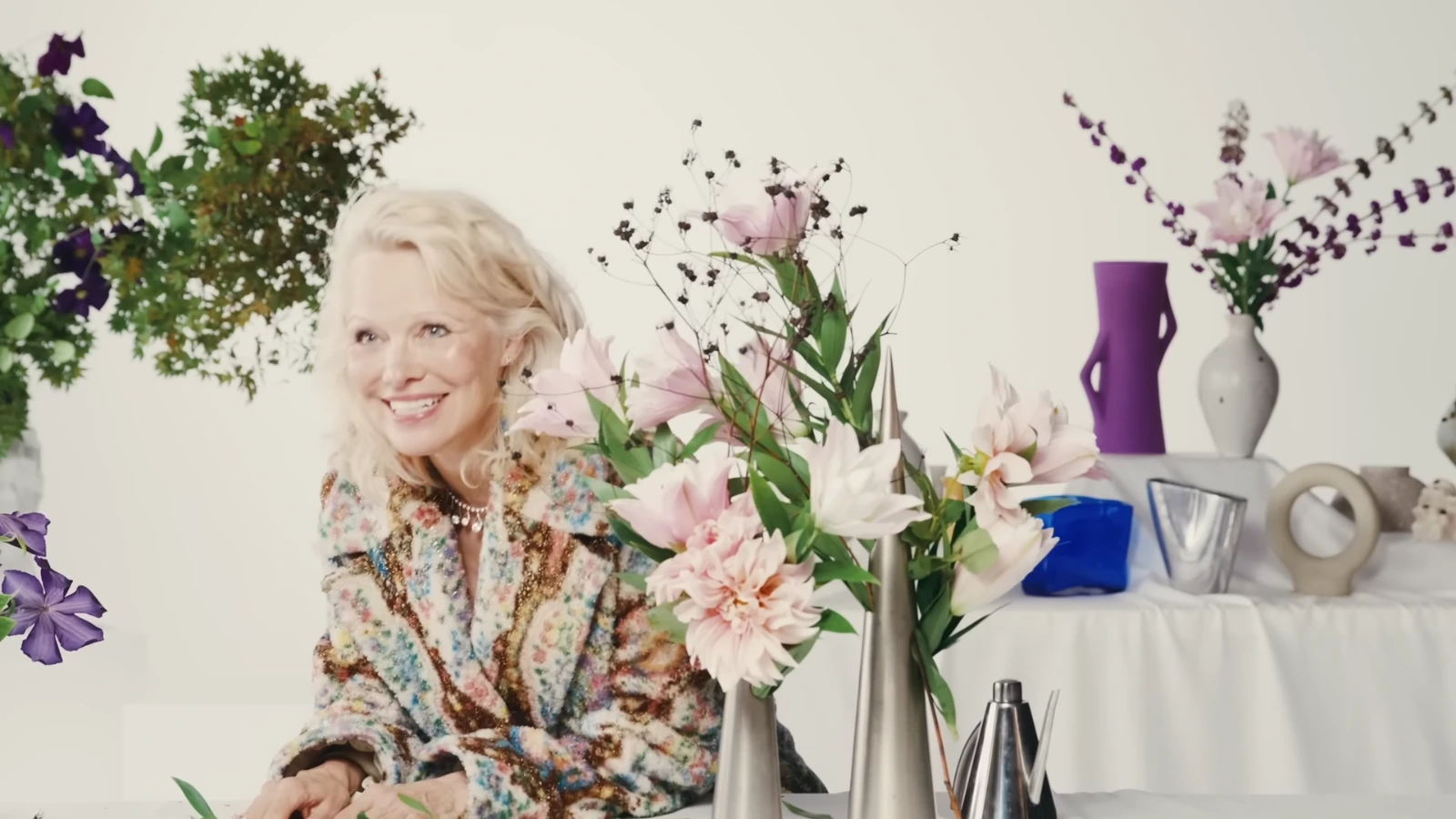
Thee Original Blonde Bombshell Is Still Expanding the Definition
Pamela Anderson did not become less iconic by becoming more grounded. If anything, the contrast reveals how narrow the original definition of a blonde bombshell always was.
The authentic version was never only hair, body, eyeliner or the right camera angle. It was timing, humor, vulnerability, instinct and the ability to turn attention into a kind of performance. Those qualities do not disappear when the setting becomes quieter.
Here, glamour is concentration. It is the confidence to leave open space, accept an imperfect branch and trust that one carefully placed element can carry more energy than an entire armful of decoration.
Dig into the alluring and creative offering below for a rare look at the woman behind the icon—still unmistakably Pamela, just arranging the frame on her own terms.
Pamela Anderson Creates an Ikebana Arrangement for Vogue Australia
The supplied image set follows Anderson through Vogue Australia’s Japanese floral-arrangement feature, preserving the full sequence in its original order.
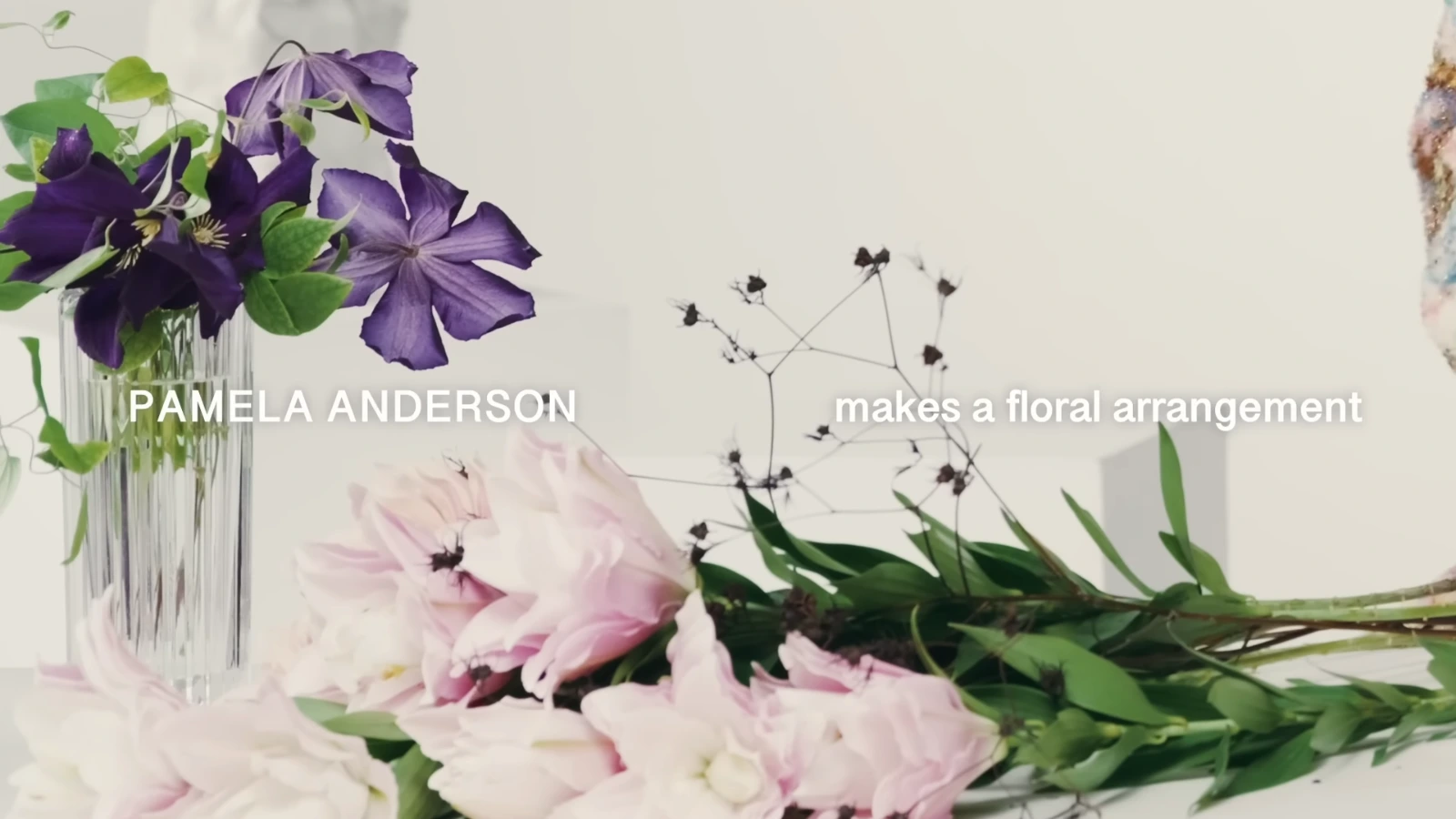
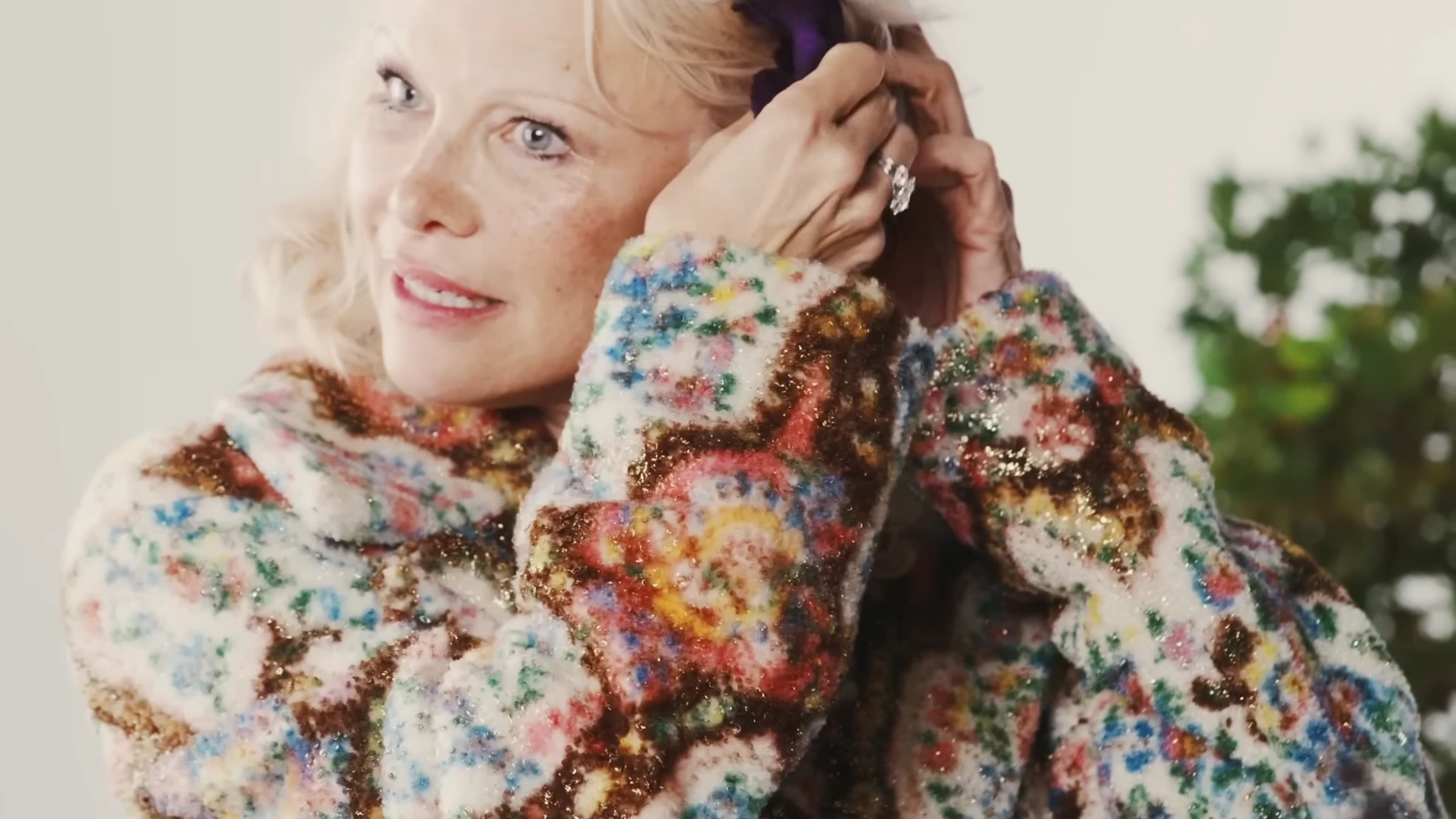
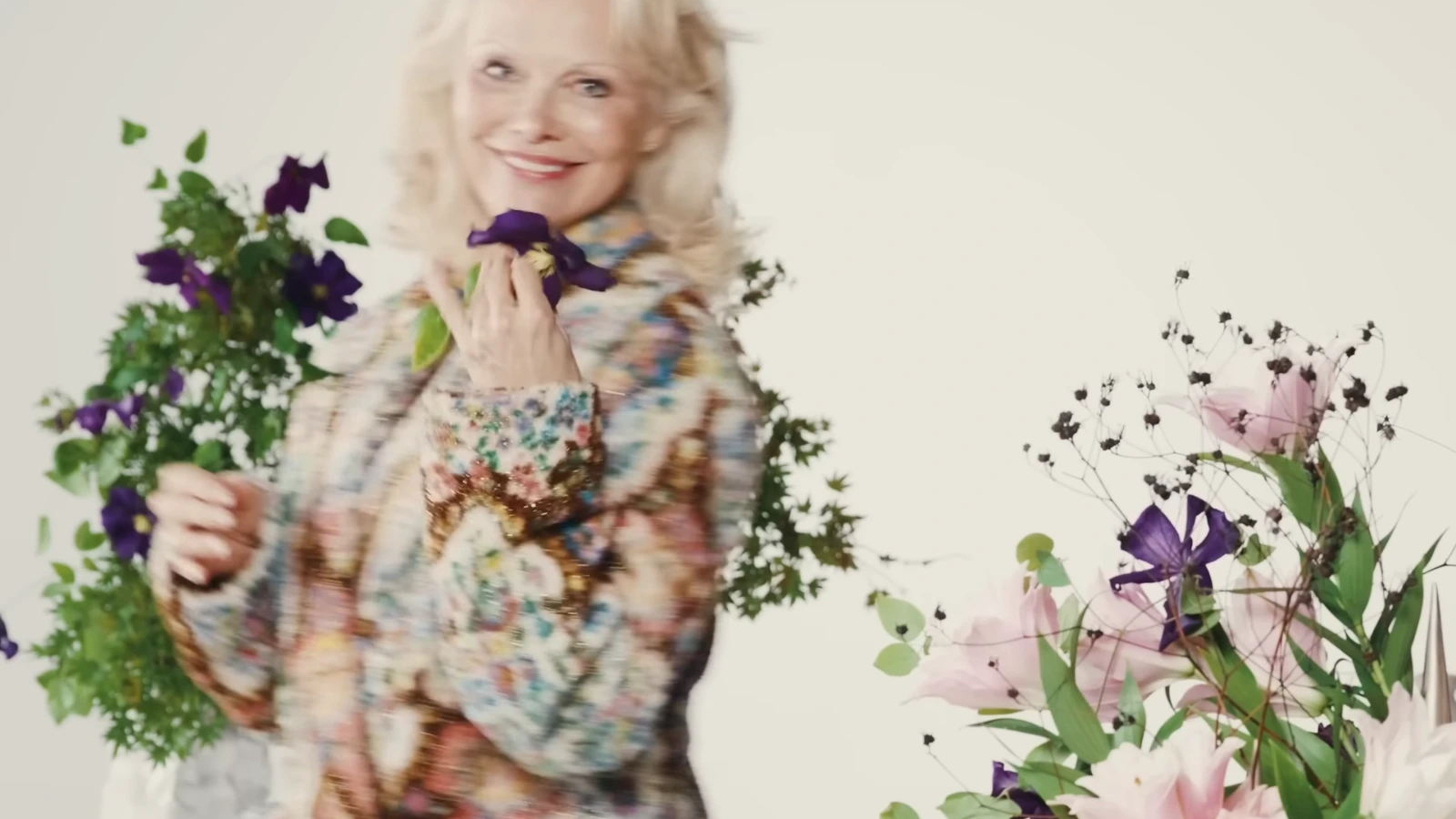
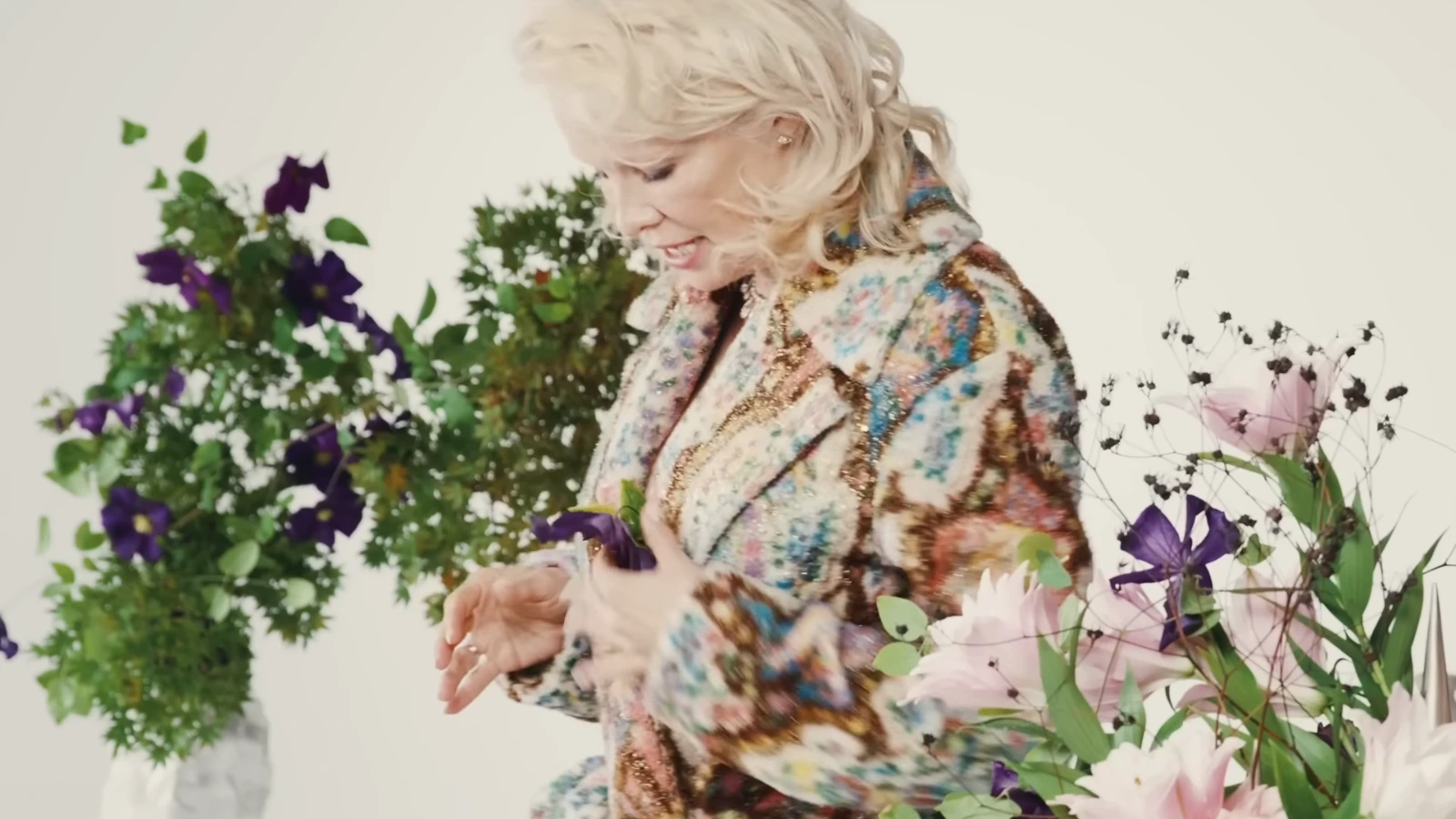
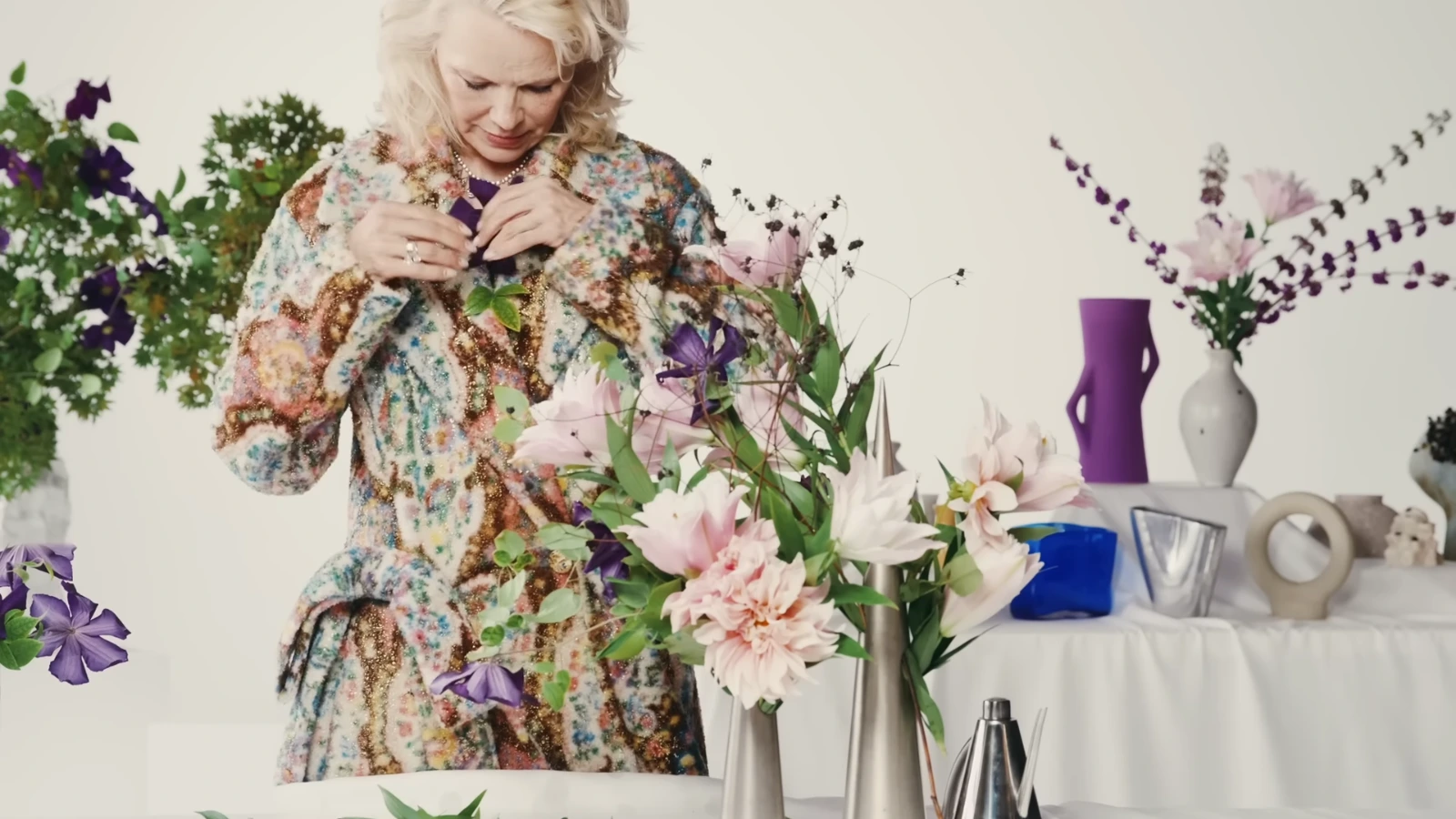
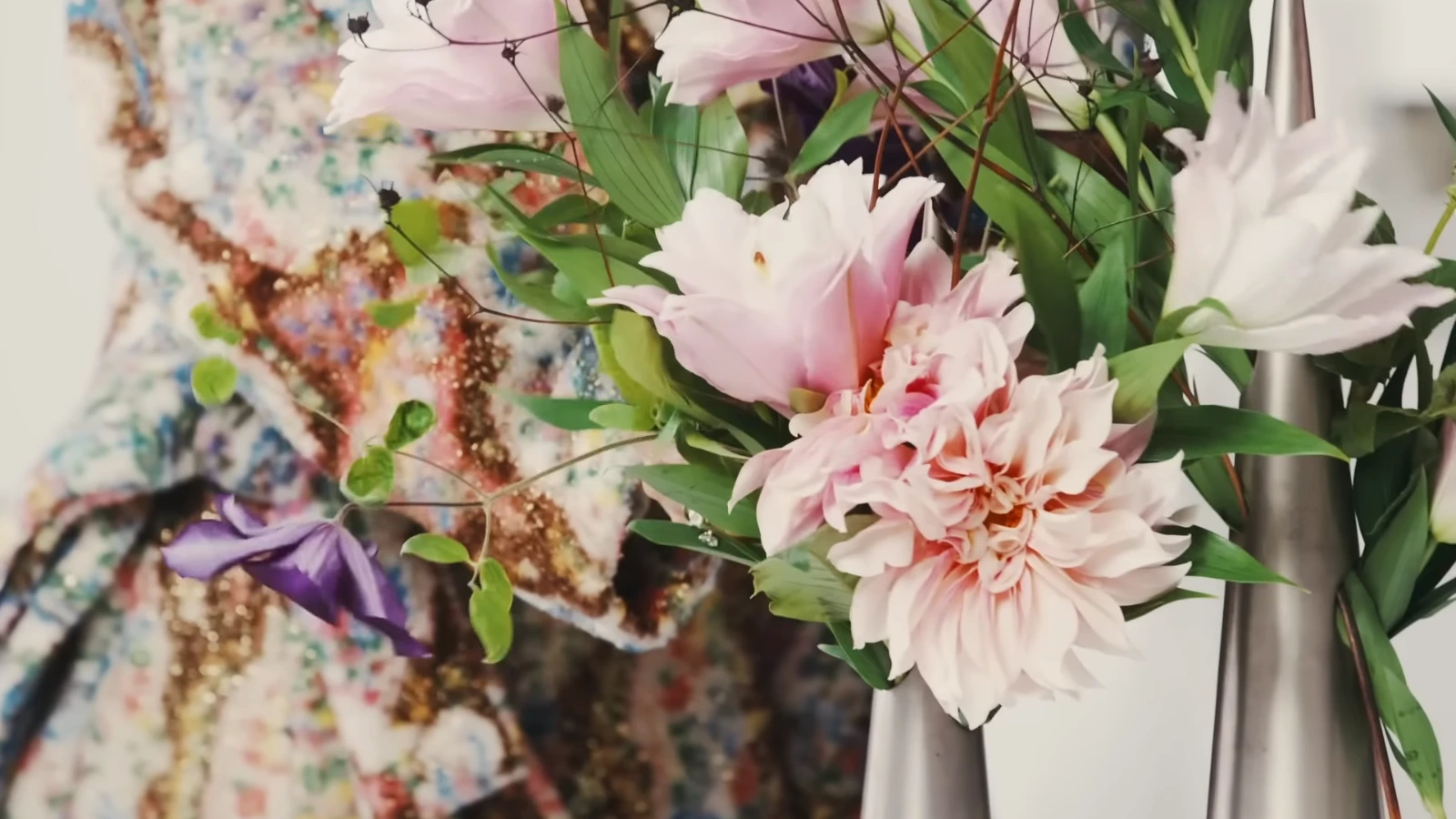
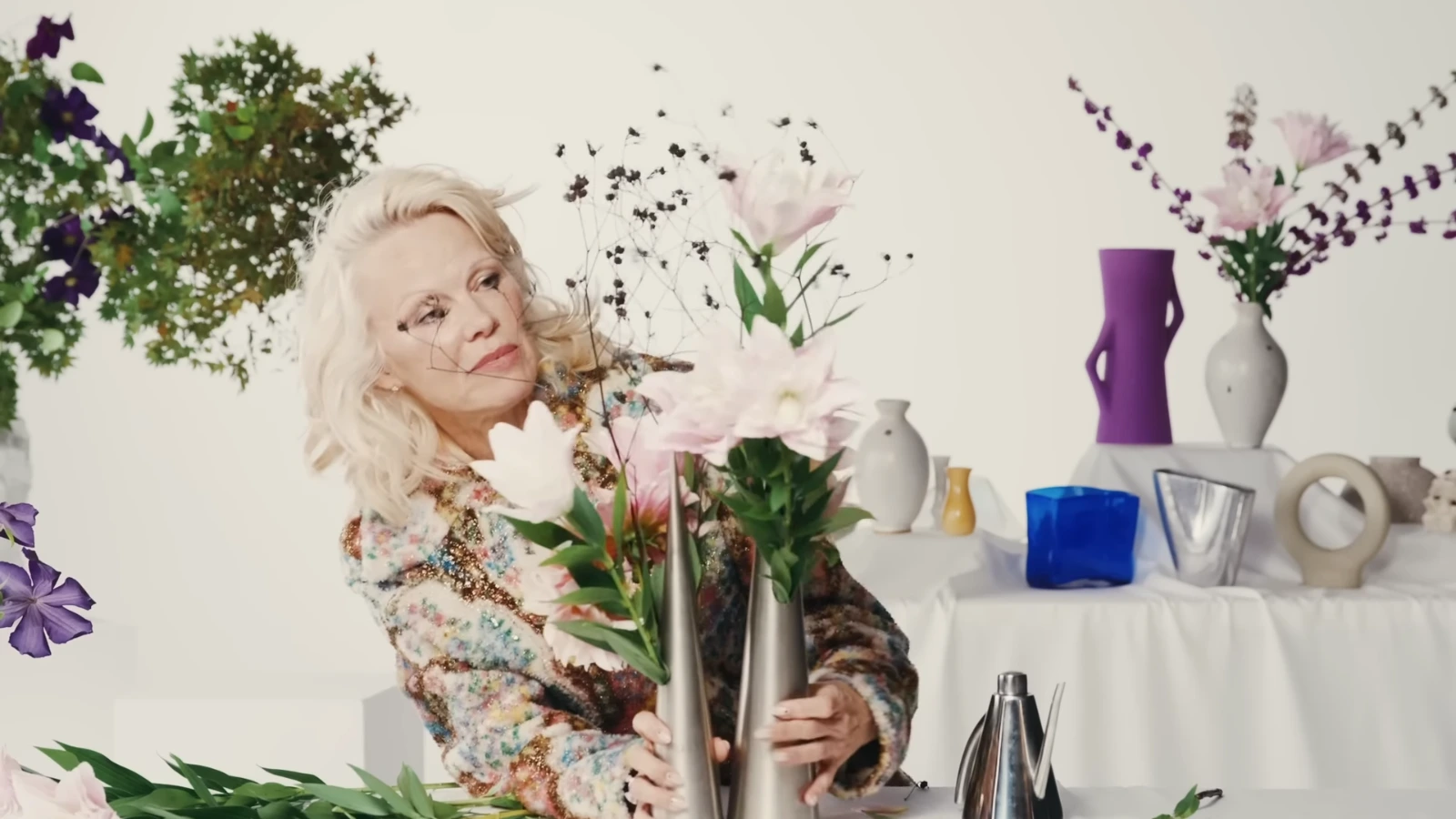
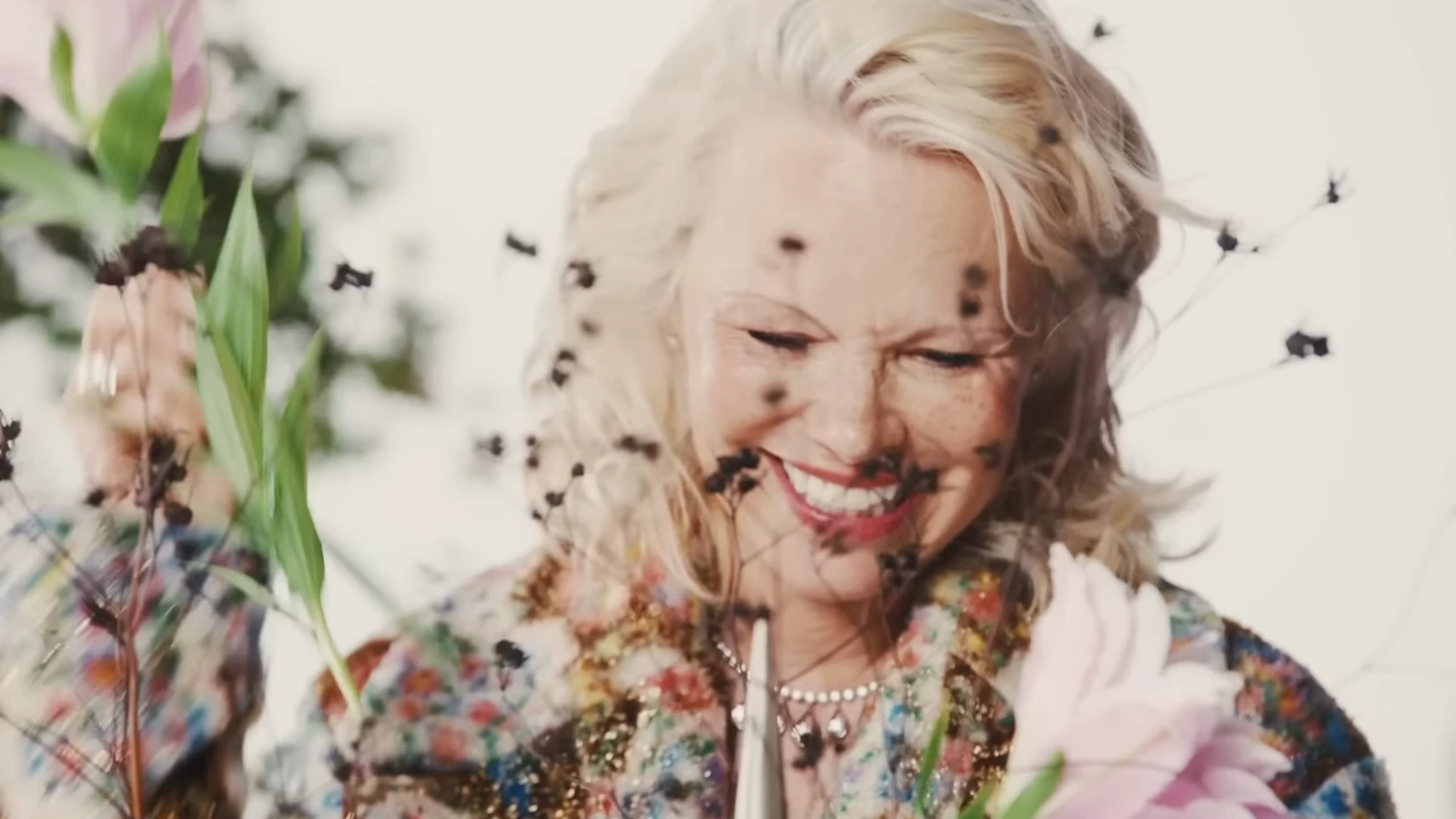
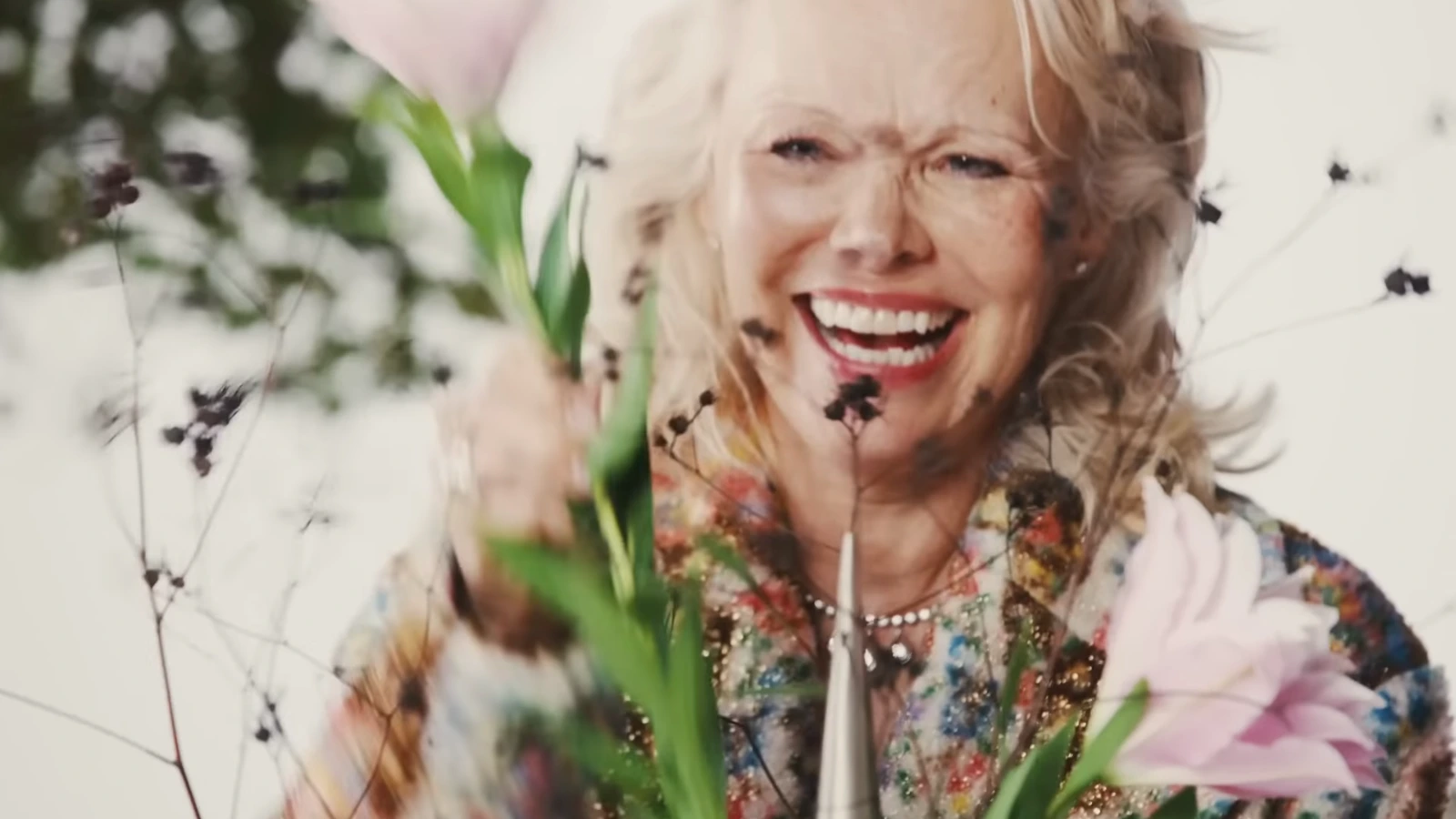
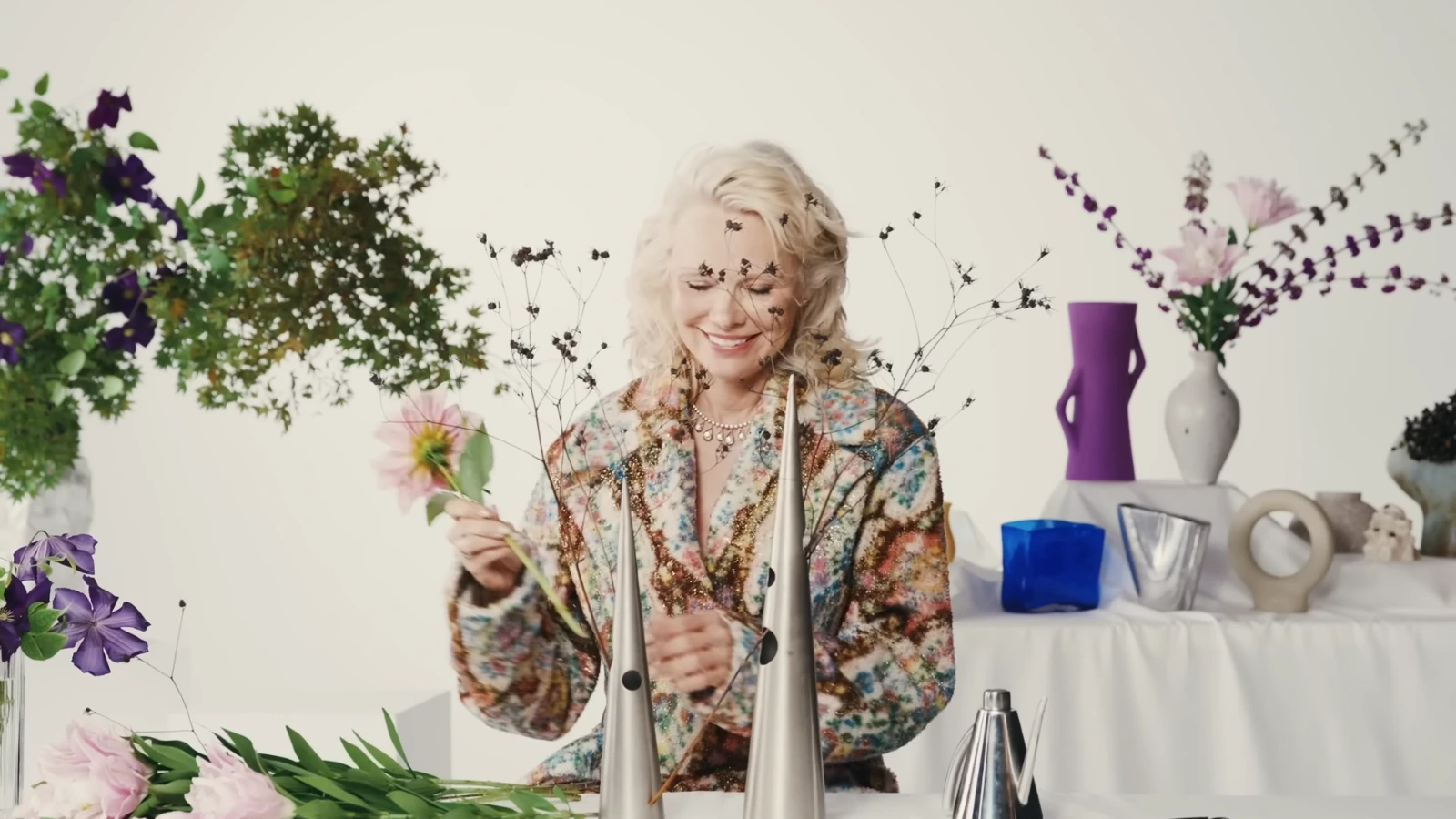
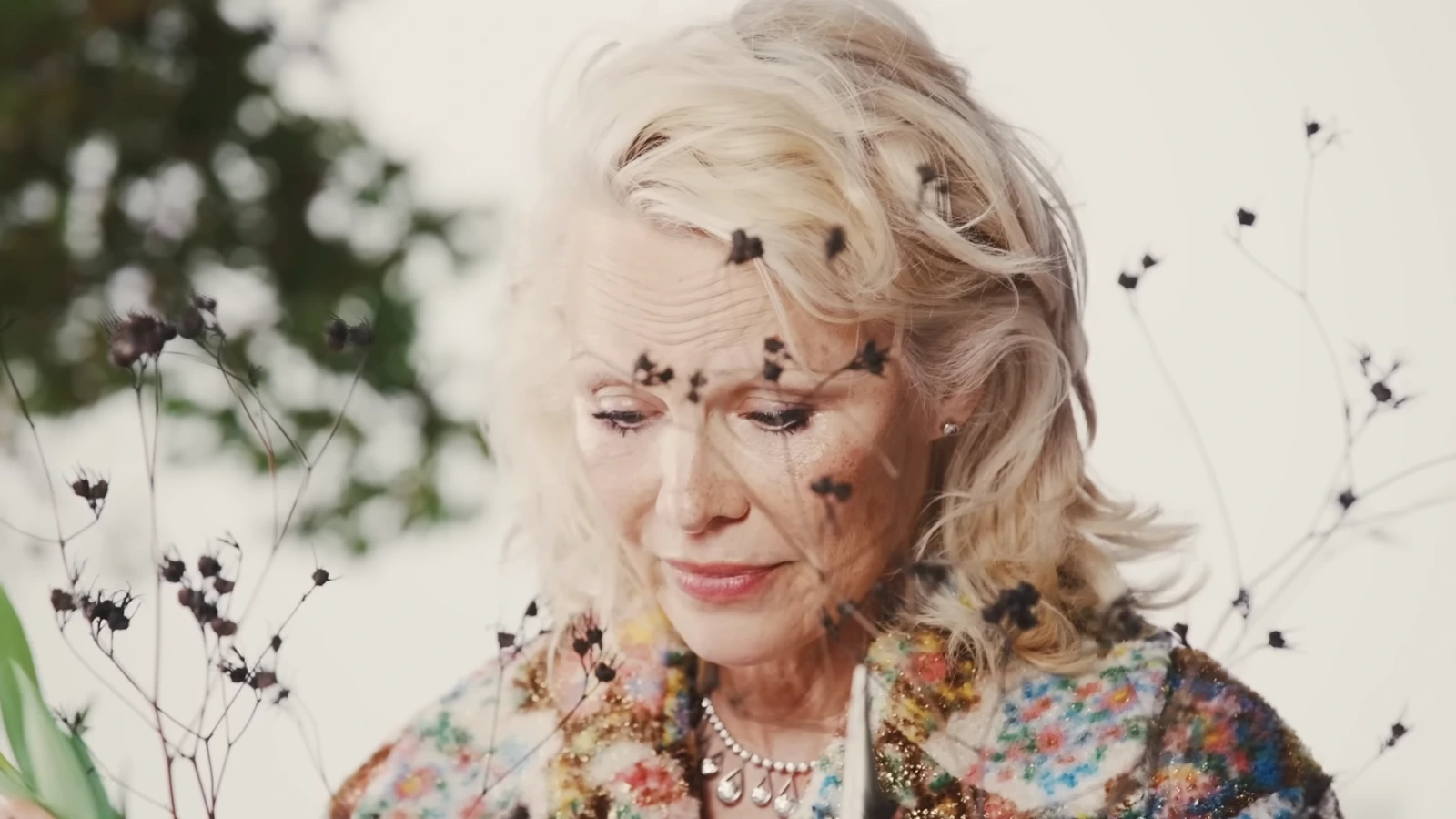
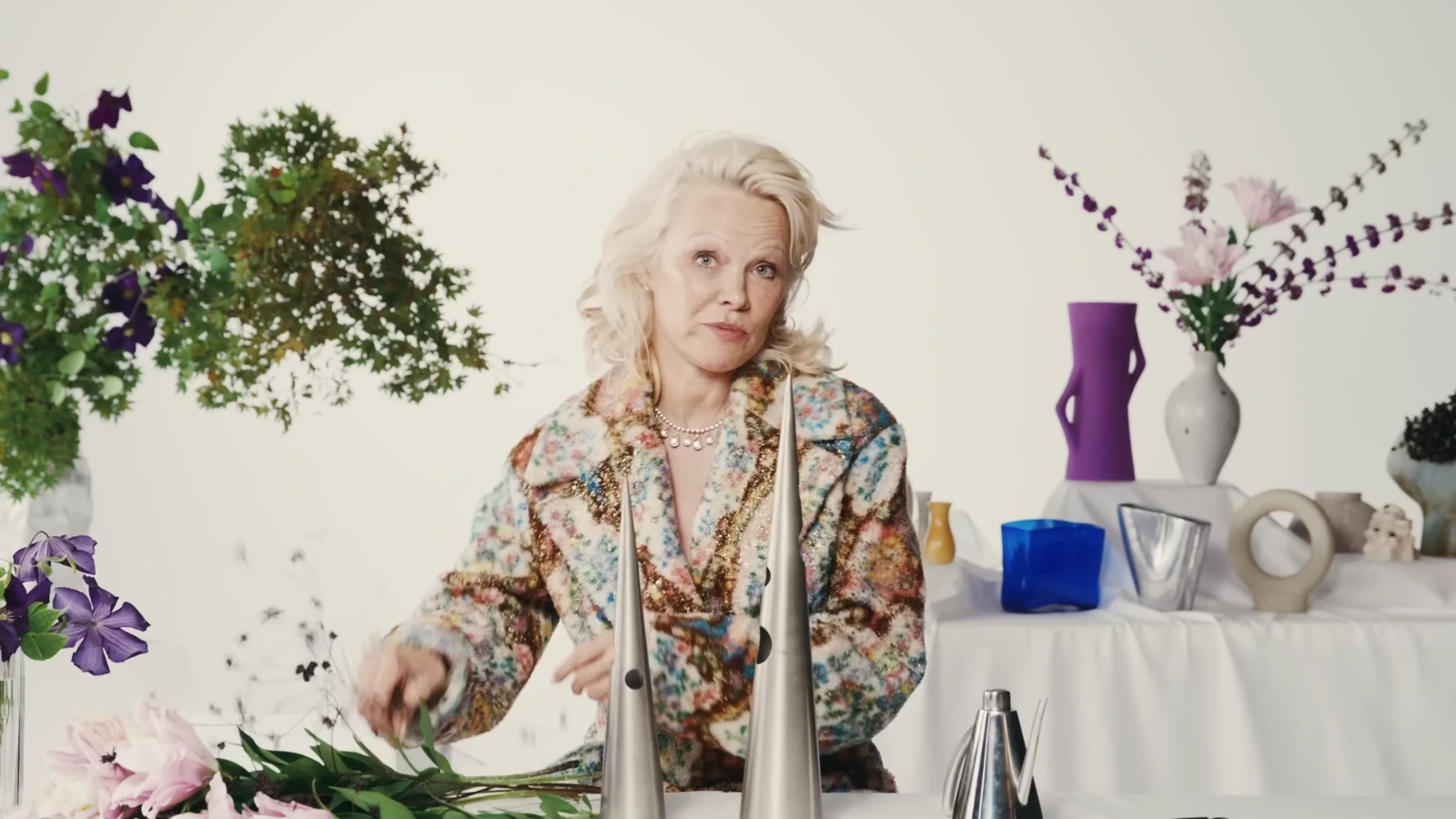
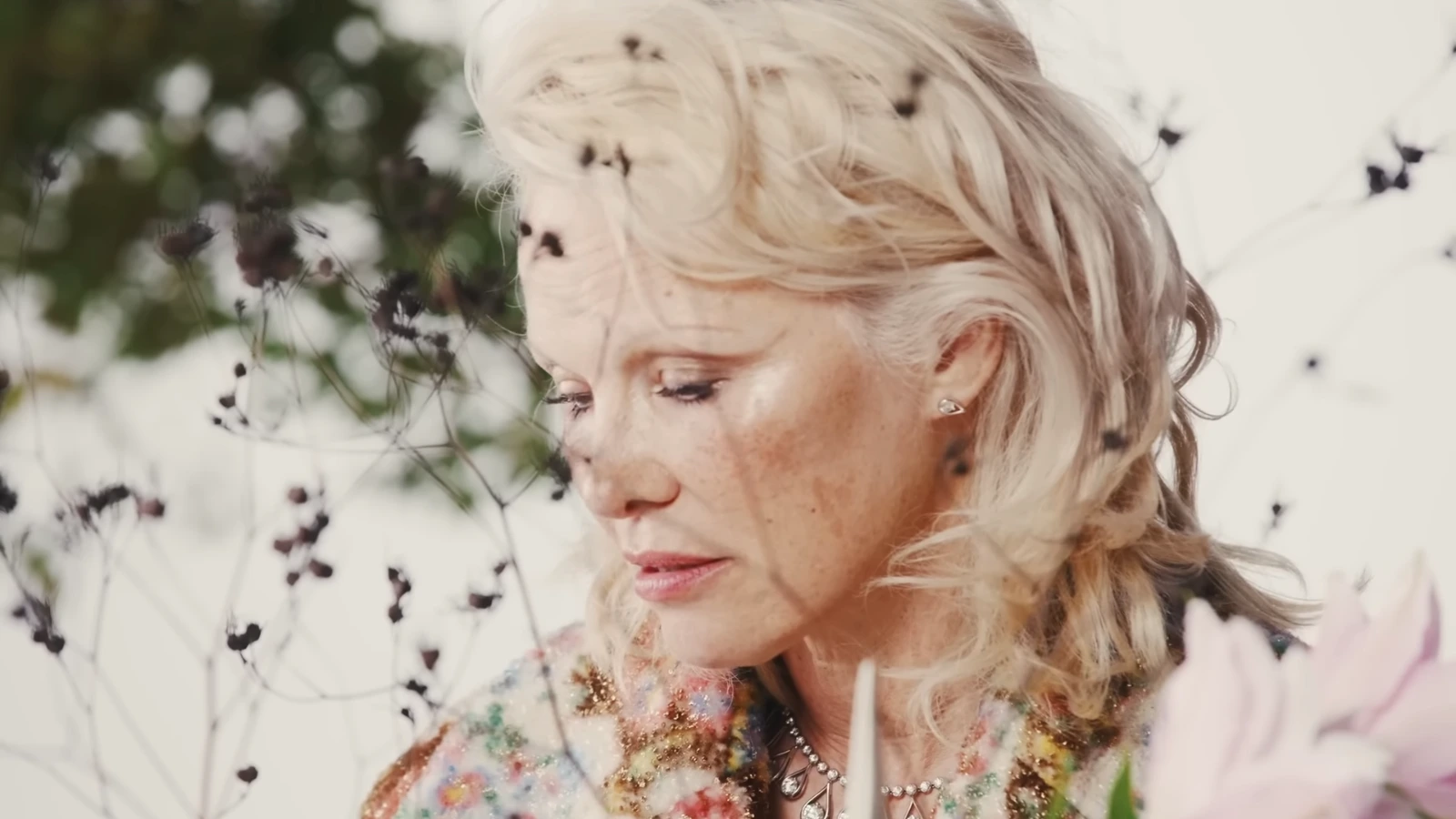
Pamela Anderson demonstrates ikebana for Vogue Australia, working with line, asymmetry and open space. Images: Vogue Australia / YouTube.
What begins with separate stems and materials gradually becomes a composition with its own rhythm. The final pleasure is not simply seeing what she makes, but watching the pauses and revisions that allow the arrangement to find its shape.
Beauty has always been part construction, part instinct and part knowing exactly when to stop. Pamela Anderson knows all three.
Watch Pamela Anderson Make an Ikebana Arrangement for Vogue Australia
The Vogue Australia video follows Anderson as she demonstrates the Japanese floral art and talks through her creative approach.
Sources: Vogue Australia; Sogetsu School of Ikebana.