


















Meet the tiny hyena that can eat 300,000 termites in one night.
Despite their name and foxlike appearance, aardwolves are not wolves at all.
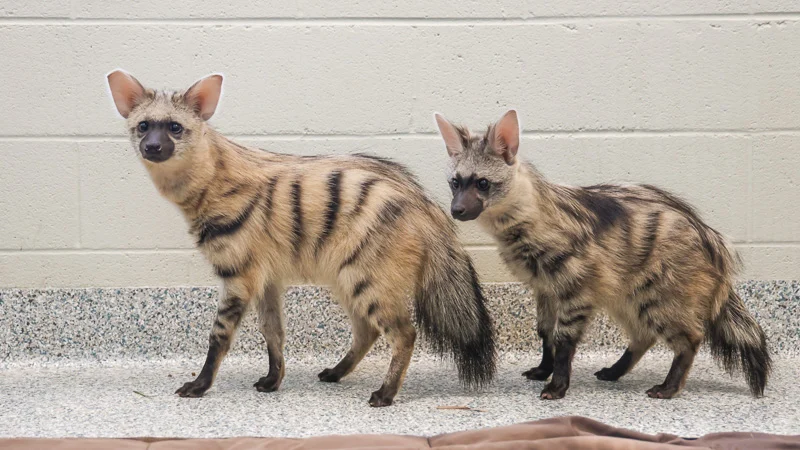
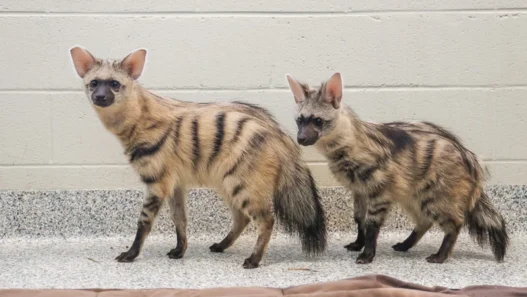
Meet the aardwolf, one of the smallest members of the hyena family and an African mammal specially adapted for a life built almost entirely around eating termites.
Its name translates to “earth wolf” in Afrikaans, but the animal belongs to the family Hyaenidae alongside spotted, striped and brown hyenas.
That family connection explains the sloping back, shaggy mane and striped coat. The enormous ears, delicate muzzle and insect-based menu, however, place the aardwolf in its own wonderfully peculiar lane.
It looks ready to terrorize the savanna. In reality, it is searching for a very specific termite buffet.
Learn more about the aardwolf and discover a few wildlife-inspired picks for the curious creature watcher.
As an Amazon Associate, INYIM Media earns from qualifying purchases.
The aardwolf traded bone-crushing jaws for one sticky tongue.
Unlike its better-known relatives, the aardwolf does not chase antelope, overpower large prey or rely on scavenged meat.
Its diet consists almost entirely of termites, particularly harvester termites that emerge across the grasslands and savannas of eastern and southern Africa.
An aardwolf uses its broad, flat and sticky tongue to sweep the insects from the ground. During a productive night of foraging, one animal may consume as many as 300,000 termites.
The specialization reshaped its entire mouth. Aardwolves have much smaller and more reduced cheek teeth than other hyenas because they have little need to crush bones or tear through large pieces of meat.
They also receive much of the moisture they require through their food, allowing them to survive in dry regions without constantly searching for open water.
Why wrestle a wildebeest when dinner arrives in several hundred thousand bite-sized pieces?
Large ears help locate a very tiny dinner.
Aardwolves are primarily nocturnal, spending daylight hours resting inside underground dens before emerging after dark.
Their oversized pointed ears and sharp hearing help them detect termite activity while moving quietly through open grassland.
Rather than smashing open entire termite mounds, they usually lick insects from exposed surfaces. This allows the colony to survive and continue supplying future meals.
The animals often occupy burrows originally dug by aardvarks or other burrowing species, relocating between dens as conditions change.
Although aardwolves may share a territory with a partner and their young, adults usually forage alone.
That soft mane doubles as a savanna-sized warning sign.
An adult aardwolf generally weighs only around 17 to 31 pounds, making it considerably smaller than the spotted and striped hyenas it resembles.
When frightened or confronted, the long mane running down its neck and back rises upright, making the animal appear much larger than it actually is.
The display may be accompanied by growls, roars or a foul-smelling secretion released from its anal glands.
Those glands are also important for communication. Aardwolves leave scent marks throughout their territories, sharing information with mates and warning unfamiliar animals to keep moving.
Small frame, giant ears and a defensive blowout worthy of a full wind machine.
Aardwolf fathers take den duty seriously.
Female aardwolves usually give birth to litters of two to five pups after a gestation period of roughly three months.
The newborns remain underground for their first several weeks while their mother nurses them. During that period, the male often guards the den while she leaves to forage.
As the pups grow, they begin exploring outside, playing with their siblings and gradually following their parents farther from the den.
They may remain under parental supervision for close to a year before becoming completely independent.
Aardwolves are currently classified as Least Concern, and populations are considered generally stable. Their secretive nighttime habits, however, make them difficult to observe.
They may still be killed after being mistaken for livestock predators, even though their termite-heavy diet means they pose little threat to farm animals.
A tiny hyena that protects grasslands, raises striped pups and eats termites instead of livestock? The aardwolf deserves much better public relations.
Dig out one of the animal kingdom’s most unusual hyena relatives right below!
Watch Aardwolf | World Weirdest Animals.
The wildlife explainer introduces the aardwolf, the termite-eating member of the hyena family whose enormous ears, striped coat and specialized diet separate it from its larger relatives.
Meet the striped aardwolf pups with INYIM Media.
Our secondary wildlife post spotlights the small hyena relative and the distinctive pups born with oversized ears, dark masks and softly striped coats.
Sources: the featured aardwolf wildlife video provided the primary embed; Animal Diversity Web provided classification, range, diet, behavior and family-life information; the Zoological Association of America provided additional pup and parental-care context; SANBI’s species assessment provided conservation context; and INYIM Media’s Instagram post provided the secondary social embed.