















Meet the bearcat that smells like buttered popcorn.
Neither a bear nor a feline, the binturong is one unusual member of the civet fam bam.
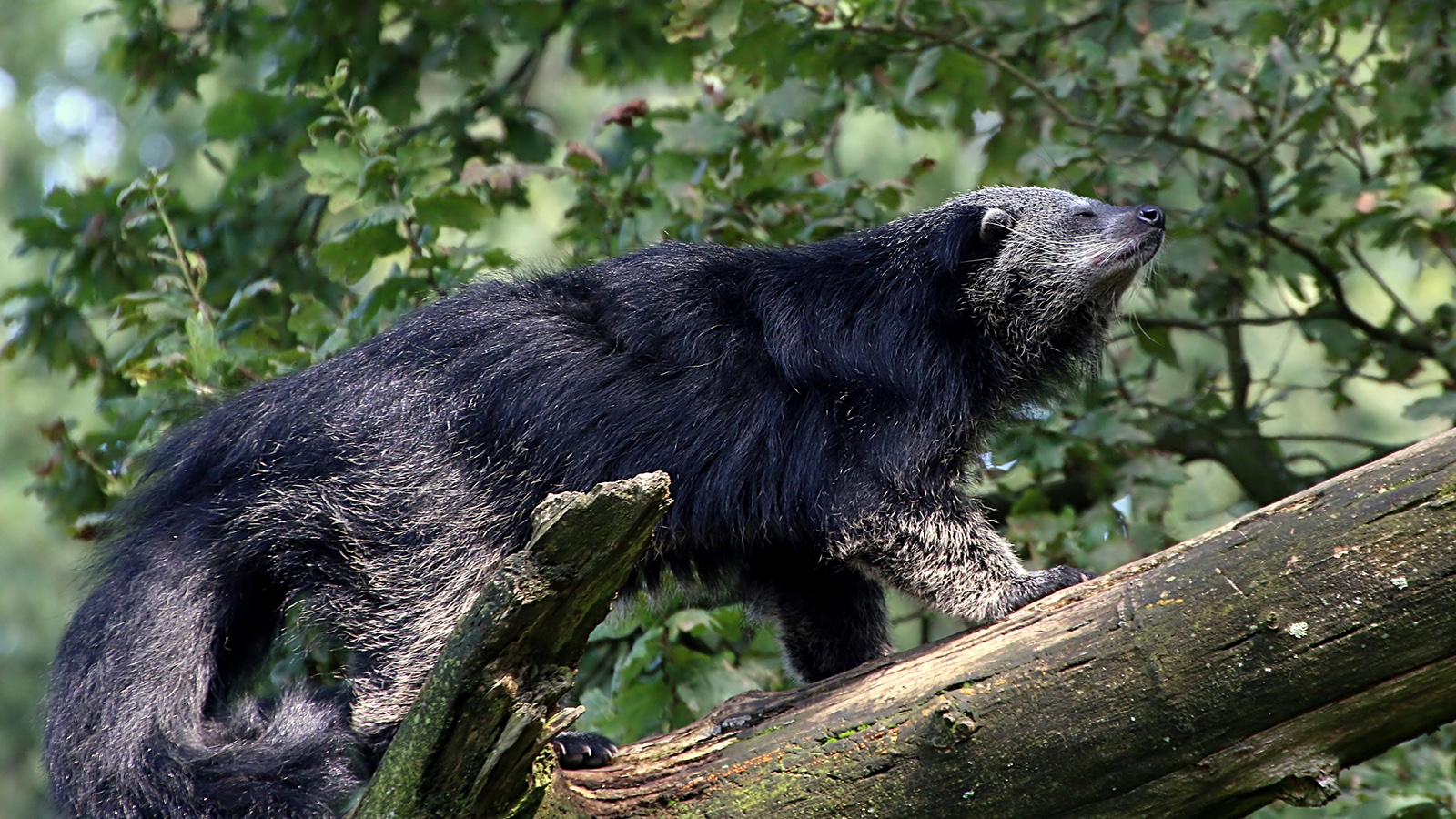
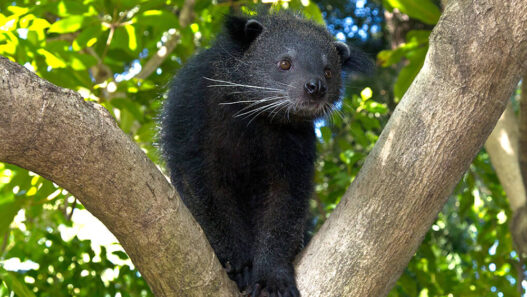
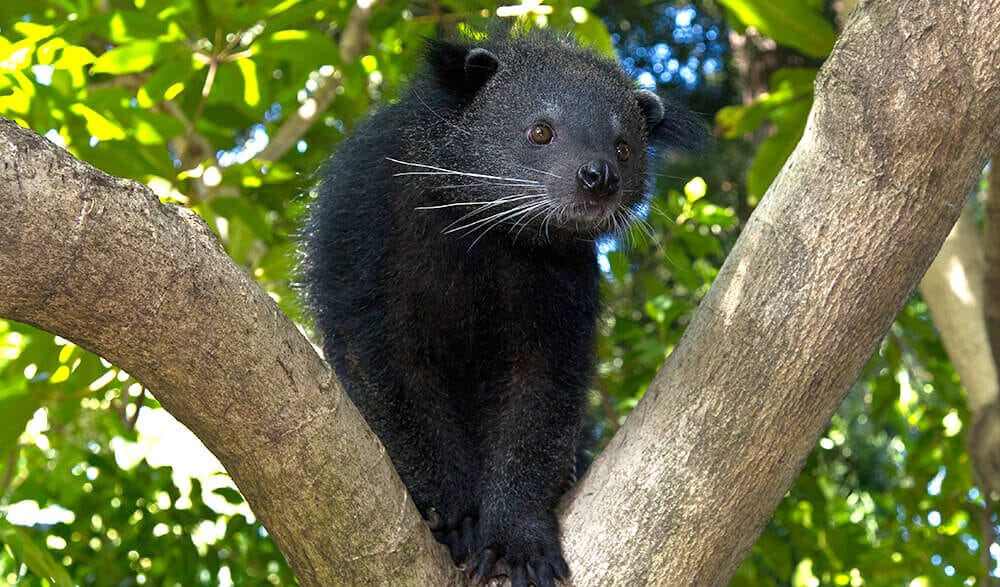
Meet the binturong, aka the bearcat: one elusive Southeast Asian mammal equipped with shaggy black fur, long white whiskers and a powerful prehensile tail that works almost like a fifth limb.
Despite its nickname, the creature is not closely related to bears or cats. Its scientific name is Arctictis binturong, and it belongs to the Viverridae family alongside civets and genets.
Binturongs spend much of their time high in the forest canopy, moving carefully across branches and curling their muscular tails around trees for balance and additional support.
Basically, somebody combined a tiny bear, a cat, a sloth, a monkey tail and the smell of a movie-theater concession stand.
Learn more about the elusive bearcat and find a few wildlife-inspired picks for the animal enthusiast in your habitat.
As an Amazon Associate, INYIM Media earns from qualifying purchases.
That tail is doing much more than looking fluffy.
The binturong is one of only two carnivoran mammals known to have a fully prehensile tail, sharing that unusual distinction with the kinkajou.
The tail helps the slow-moving mammal grip branches, maintain its balance and support its weight while reaching through the canopy for food.
Binturongs are primarily nocturnal, usually sleeping high in the trees during the day before waking up to forage after dark.
Although their sharp teeth and claws place them within the order Carnivora, their meals lean heavily toward fruit and berries. They may also eat eggs, leaves, insects, fish, birds and small mammals when available.
The fruit-heavy diet gives the binturong an important rainforest job. Seeds pass through its digestive system and are redistributed across the forest, helping new plants—including strangler figs—take root.
Gander at the elusive bearcat in its treetop habitat.
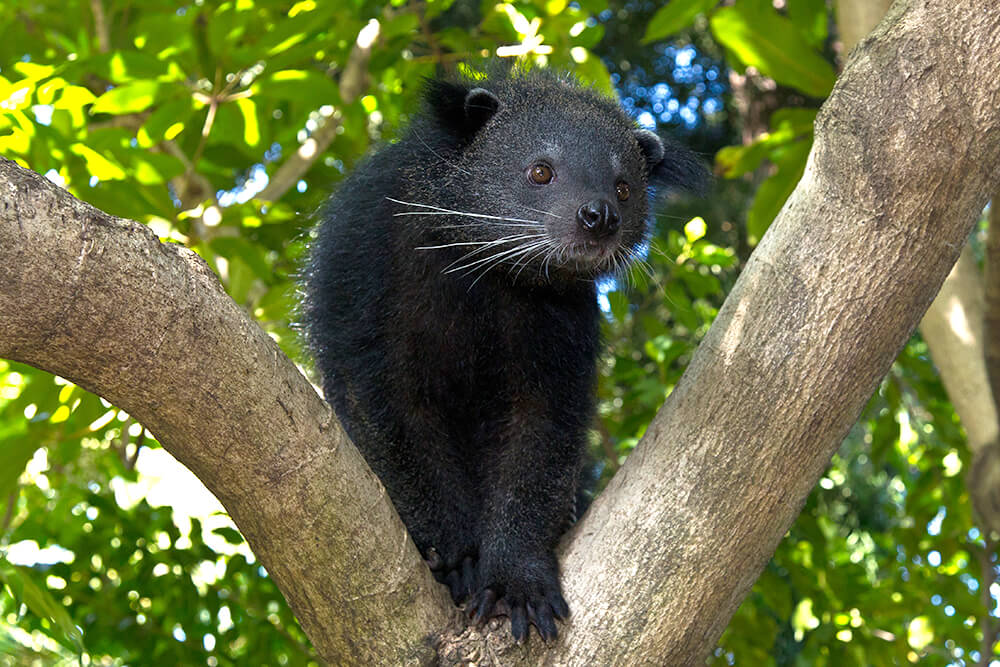
With its rounded ears, long whiskers, shaggy black coat and branch-gripping tail, the binturong looks like several different animals sharing one extremely charming outfit.
Why does the binturong smell like buttered popcorn?
One of the binturong’s most unexpected trademarks is an aroma commonly compared to freshly buttered popcorn.
The scent comes from a compound called 2-acetyl-1-pyrroline, the same chemical responsible for part of popcorn’s familiar smell.
The less glamorous explanation is that the compound appears in the animal’s urine. As a binturong moves through the branches, it leaves scent markings that help announce its territory and presence to other binturongs.
So yes, it smells like the movies—but perhaps do not investigate too closely.
The bearcat faces a very real fight for survival.
The binturong is currently classified as Vulnerable, with wild populations continuing to decline across parts of its range.
Major threats include forest loss, conversion of habitat into agricultural land, hunting and capture for the illegal wildlife trade.
Its quiet, nocturnal lifestyle also makes the species difficult to study, which means researchers are still learning how binturongs move, communicate and survive inside increasingly fragmented forests.
Even the babies arrive with an adorable title. Young binturongs are sometimes called binlets.
Popcorn perfume, a fifth-limb tail and babies called binlets. The binturong understood the assignment.
Dig out Animal Fact Files exploring the fascinating bearcat right below!
Watch Animal Fact Files uncover the binturong.
The wildlife explainer examines why the so-called bearcat is neither bear nor cat, along with its rainforest habitat, diet, climbing adaptations and unusual popcorn-like scent.
Meet Southeast Asia’s elusive binturong.
INYIM’s wildlife post introduces the shaggy bearcat, its powerful tail and the unusual traits that make it one of Southeast Asia’s most distinctive rainforest mammals.
Sources: INYIM Media’s binturong post provided the featured social embed; Animal Fact Files’ binturong explainer provided the featured video; Smithsonian’s National Zoo and San Diego Zoo provided species, diet and behavioral background; and WCS Indonesia provided conservation context.