














The Horse World Has a Woolly Little Plot Twist
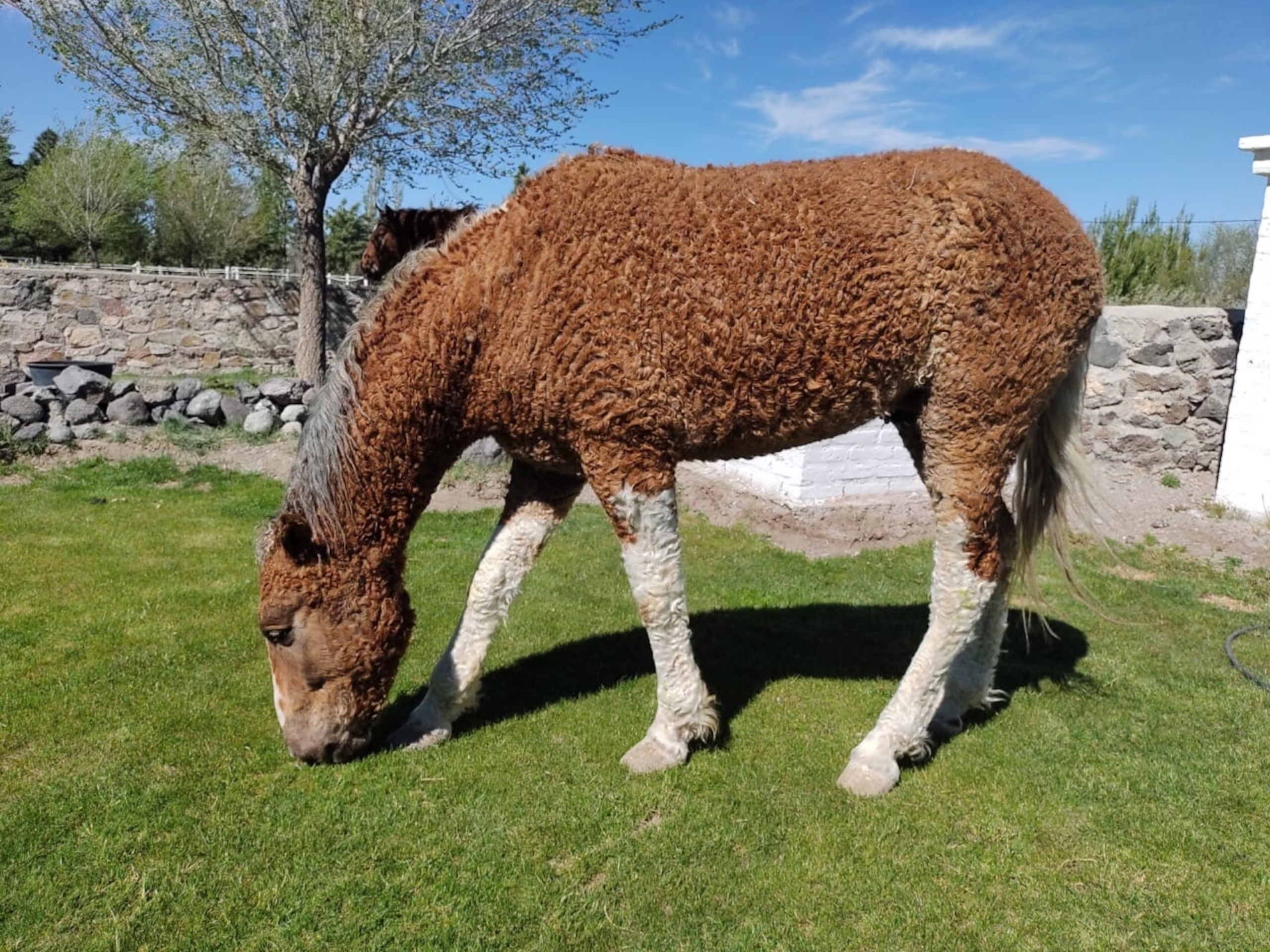
Meet the curly-coated horseys: one of the woolliest-looking plot twists in the animal kingdom.
Instead of the smooth outer coat most people expect, some horses grow waves, crushed-velvet textures or full corkscrew curls. The effect can cover the body, mane, tail and even the fine hair around the ears—turning an already majestic creature into something that looks dressed for permanent sweater weather.
Discover More
For the Horse Lover Who Thought They Had Seen Everything
Explore the International Curly Horse Organization, then dig into horse-breed books and grooming tools made for getting closer to the animal kingdom’s woolliest equine wonder.
Some links may be affiliate links. INYIM may earn from qualifying purchases.
The curls are genetic, but the science is more complicated than one magical fluff switch. Researchers have linked dominant curly coats in horses to variants involving the KRT25 and SP6 genes, both connected to hair formation. Different genetic combinations can produce different degrees of curl—and in some horses, changes involving KRT25 are also associated with thinning or loss of mane and tail hair.
That means “Curly” describes a visible trait as much as a single uniform look. One horse may carry tight ringlets across the body, another may show deep waves, and another may appear much straighter once the weather warms. Not every Curly horse reads like a walking wool blanket all year long.
The winter coat is when the drama usually reaches full volume. Curly horses can grow especially dense cold-weather hair before shedding much of it in spring and summer. Some also shed portions of the mane or tail, then regrow them as the cooler season returns. Nature said seasonal collection—and apparently meant it.
The best-known North American population is often called the American Bashkir Curly, although its exact origin remains one of the horse world’s lingering mysteries. Oklahoma State University traces the modern American story to curly-coated horses seen in central Nevada in 1898 and later preserved through the Damele family’s ranch herd.
The name does not settle the ancestry question. Researchers and breed historians have proposed several possible roots, while the development of today’s American Curly also involved crossing with breeds including Quarter Horses, Appaloosas and Paint Horses. The curly trait has appeared beyond one bloodline and has also been documented in horses such as Missouri Fox Trotters.
The American Bashkir Curly Registry was established in 1971, and organizations including the International Curly Horse Organization now work to register, preserve and research Curly horses and their unusual characteristics.
So yes, the curls are real. They are seasonal, genetically complex and far more varied than one viral image can show. But the first impression remains undefeated: a majestic horse arrived wearing the animal kingdom’s most unexpected perm.
Watch INYIM Media’s Curly-Coated Horse Video
The TikTok post highlights the horse’s woolly appearance, genetic coat trait and especially dense winter curls.
Source: Scientific Reports; Oklahoma State University; International Curly Horse Organization; INYIM Media TikTok.