















Puppets, Pee-wee and Camcorder Chaos Meet on Two Amigos
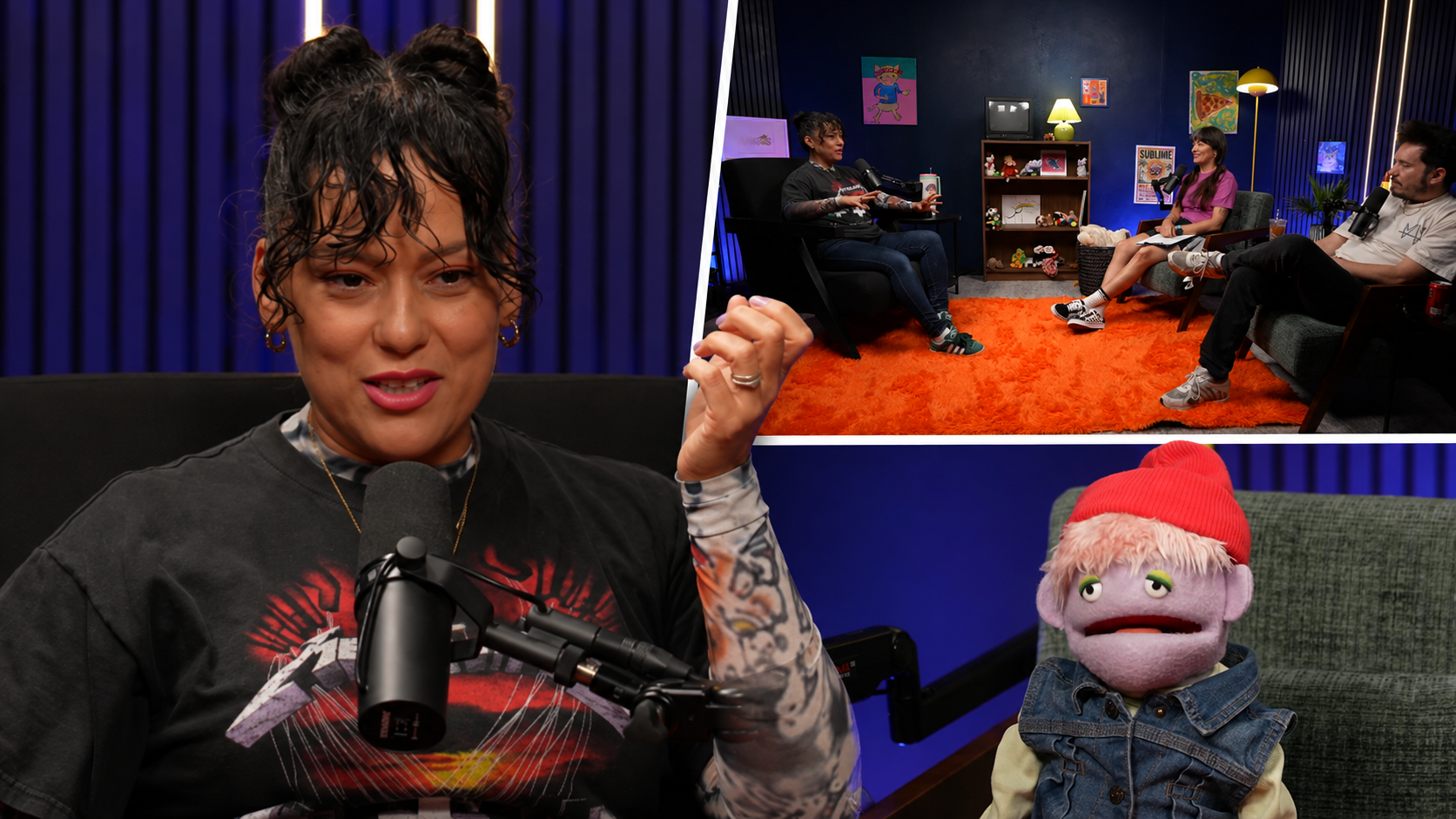
One of our favorite INYIM comedians and cousin in our heads, Melissa Villaseñor, welcomed master puppeteer Michelle Zamora into the wonderfully unstable world of the Two Amigos podcast. Alongside co-host Steven Castillo, the conversation becomes part career deep dive, part childhood-creativity reunion and part warning about what happens when somebody leaves a Pee-wee Herman humanette within reach of three comedians.
Zamora is the founder of Los Angeles puppet studio Viva La Puppet, and her work stretches across Waffles + Mochi, The Rehearsal, A Black Lady Sketch Show, Let’s Be Real and projects where the character may be made of foam but the physical labor behind it is very human.
Discover More
Enter Michelle Zamora’s Puppet World
Explore Viva La Puppet, then pick up the tools and inspiration for creating characters the delightfully old-fashioned way.
Some links may be affiliate links. INYIM may earn from qualifying purchases.
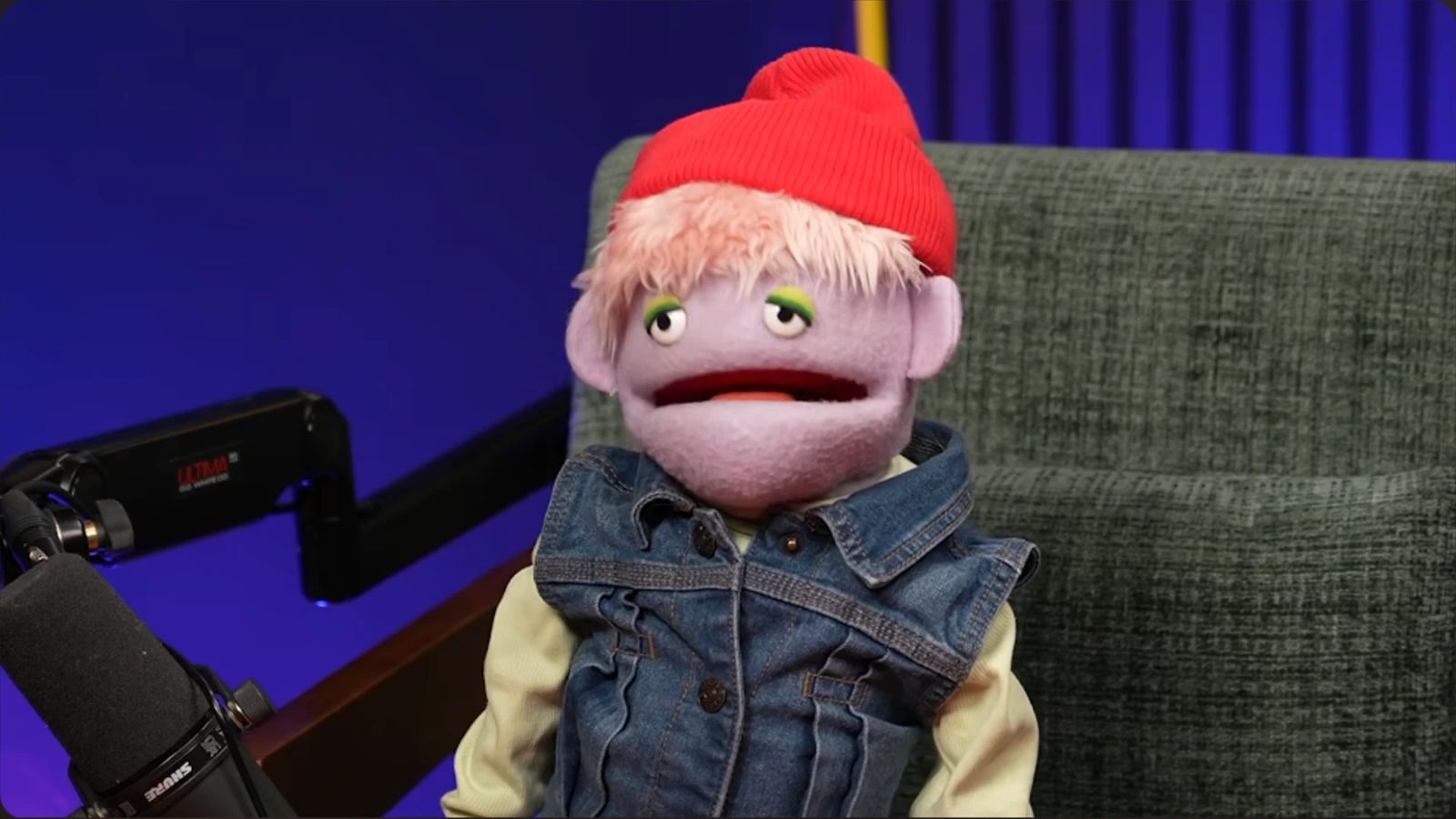
The episode opens with puppets already employed as the podcast’s makeup artist, caterer, talent booker and deeply questionable accounting department. Before Zamora can receive a proper introduction, Melissa accidentally reduces her impressive résumé to the phrase “Latina puppet”—which naturally leads Steven to introduce himself as a Latino puppet and the entire show to briefly consider quitting.
That immediate nonsense is also the perfect environment for Zamora, who explains that practical puppetry offers something increasingly rare: a character that is physically present in the room. She talks about how puppetry forces a performer to slow down, breathe and consider the body behind the illusion. The audience sees a living creature; somewhere below the frame, a puppeteer may be folded into a tiny box with one arm questioning every career decision.
Michelle Zamora Helped Put Black Women Puppets Center Stage
Zamora’s connection to HBO’s A Black Lady Sketch Show deserves more than a passing credit. Her company, Viva La Puppet, created the remarkable puppet versions of original cast members Robin Thede, Ashley Nicole Black, Gabrielle Dennis and Quinta Brunson used in the first season’s opening sequence, with Zamora also working as a puppeteer on the series.
The puppets were not generic little felt approximations. The fabrication process involved detailed reference photography of the cast, close attention to hair textures, skin tones, facial structure, makeup and even Robin Thede’s specific eye color. The bodies were made small enough to remain unmistakably puppet-like, while the heads were large and expressive enough to interact with human performers.
That level of detail mattered beyond a cute opening gag. Thede has spoken about how intentional it was to place four Black woman puppets—different shades, sizes and features—at the visual center of the series. In a medium where Black characters have historically been underrepresented even in puppet form, the opening made representation tactile, funny and impossible to miss.
It also captures what Zamora’s work does so well: likeness without flattening a person into a cruel caricature. Later in the podcast, she discusses creating a Jordan Peele puppet as a birthday gift commissioned by his manager. She wanted the likeness to feel recognizable and playful rather than exaggerated into one of those theme-park portraits that makes somebody quietly reconsider their face.
The Pee-wee Humanette Hijacks the Entire Podcast
The episode’s most beautifully ridiculous turn begins with Zamora explaining how she discovered puppetry before she even had the language for it. As a child in Brownsville, Texas, she pulled the head of a Cabbage Patch doll backward, placed its tiny body around her own head and unknowingly created a humanette—the classic puppet illusion where a human head appears attached to a miniature body.
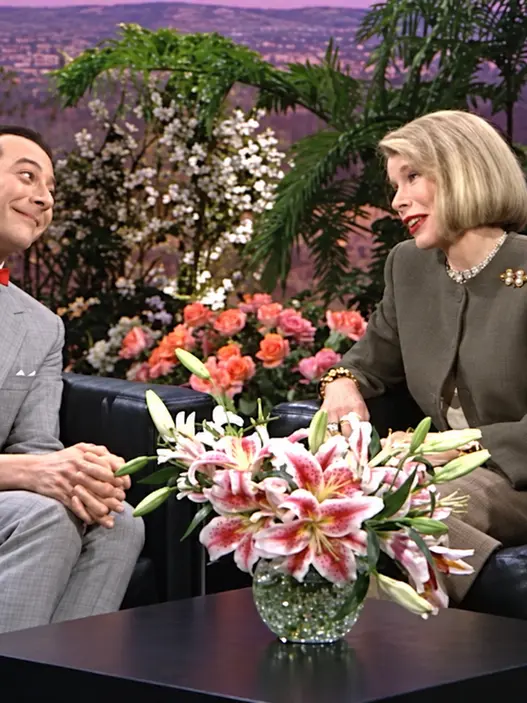
That childhood trick leads Melissa to unveil an older Pee-wee Herman humanette Zamora originally made for a Pee-wee art show years earlier. Suddenly, Melissa and Steven are sticking their heads through the tiny body, competing over who has the superior Pee-wee voice and conducting the kind of ordinary weekend conversation that becomes disturbing when delivered by a giant human head attached to a doll-sized red-suited body.
The visual is exactly the sort of thing that could wake somebody who fell asleep with YouTube autoplay running and make them briefly question whether they had returned to the correct dimension. Naturally, the group considers doing the humanette bit for the remaining 40 minutes.
The Pee-wee connection is deeper than the prop. Zamora names Pee-wee’s Playhouse, Lamb Chop’s Play-Along, Fraggle Rock, Labyrinth and The Dark Crystal among the puppet worlds that shaped her. Melissa brings up the Alamo tour-guide joke from Pee-wee’s Big Adventure, and just like that, the conversation becomes a gathering of adults who never fully stopped playing.
Their Camcorder Childhood Felt Very Familiar to INYIM
Zamora says her father brought home a VHS camcorder and she and her sister immediately went wild making things. Melissa and Steven jump in with their own homemade productions: toy videos, a backyard Blair Witch Project, lip-sync performances, MC Hammer pants constructed from trash bags and a family-made “Pimp My Bike” parody that included actually painting the bike gold.
That entire conversation felt extremely familiar over here at INYIM. We share the same kind of growing-up story—grabbing a digital camcorder, creating characters and filming homemade sketches long before anybody had a proper set, budget or clue what the final thing was supposed to become. Different camcorder generation, same instinct: somebody holds the camera, everybody becomes an actor, and the living room is suddenly a studio.
Those childhood videos may have looked silly, but they were real creative training. You learned framing by trying to keep somebody’s head in the shot, editing by stopping and starting the recording at exactly the wrong moment, and production design by using whatever was in the closet. Most importantly, you learned that making something could be the entertainment itself.
Zamora puts it beautifully: children naturally play, but adults eventually begin acting as though they need permission. Her career is proof that keeping that impulse alive can become a genuine craft—one requiring design, performance, voice acting, engineering, collaboration and apparently the willingness to leave set with puppet milk all over your shoes.
From Waffles + Mochi to a 16-Foot Puppet Mother
On Netflix’s Waffles + Mochi, Zamora did far more than move a character’s mouth. As Waffles, she puppeteered, voiced the character and improvised interview-style scenes with world-famous chefs. When the puppet tasted food, crew members sometimes had to feed Zamora at the same moment so the reaction could feel genuine rather than like a felt mouth swallowing tortellini into the void.
Then there is The Rehearsal, where Zamora and a team of puppet artists built and operated a roughly 16-foot mother puppet for the second season. The enormous character had to breastfeed Nathan Fielder, a technical sentence nobody should be able to type with a straight face. Zamora notes that two breastfeeding mothers helped work out the physical positioning—and that the practical effect left milk across her shoes. Art requires sacrifice.
The podcast also gets into puppet stunts, the misery of prank-calling a Christmas-hating shop employee for Crank Yankers, making a likeness puppet for Jordan Peele and the simple truth that throwing a puppet across a room will almost always be funny because it can explode in one scene and return completely healthy in the next.
Michelle Zamora Brings Her Puppet World to Two Amigos
The episode moves from Zamora’s professional creations to the Pee-wee humanette, childhood camcorder chaos and a puppet takeover of the podcast.
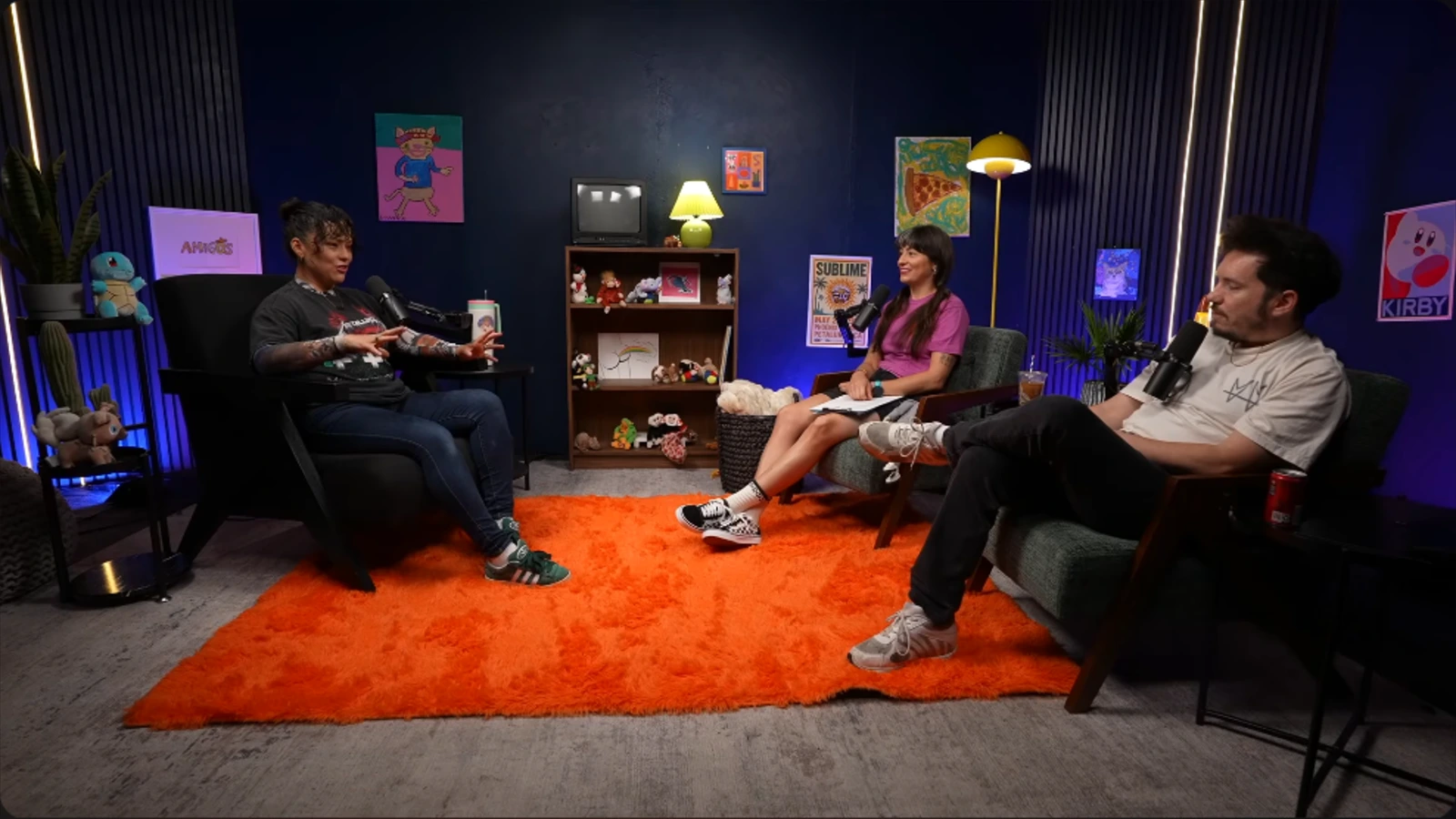
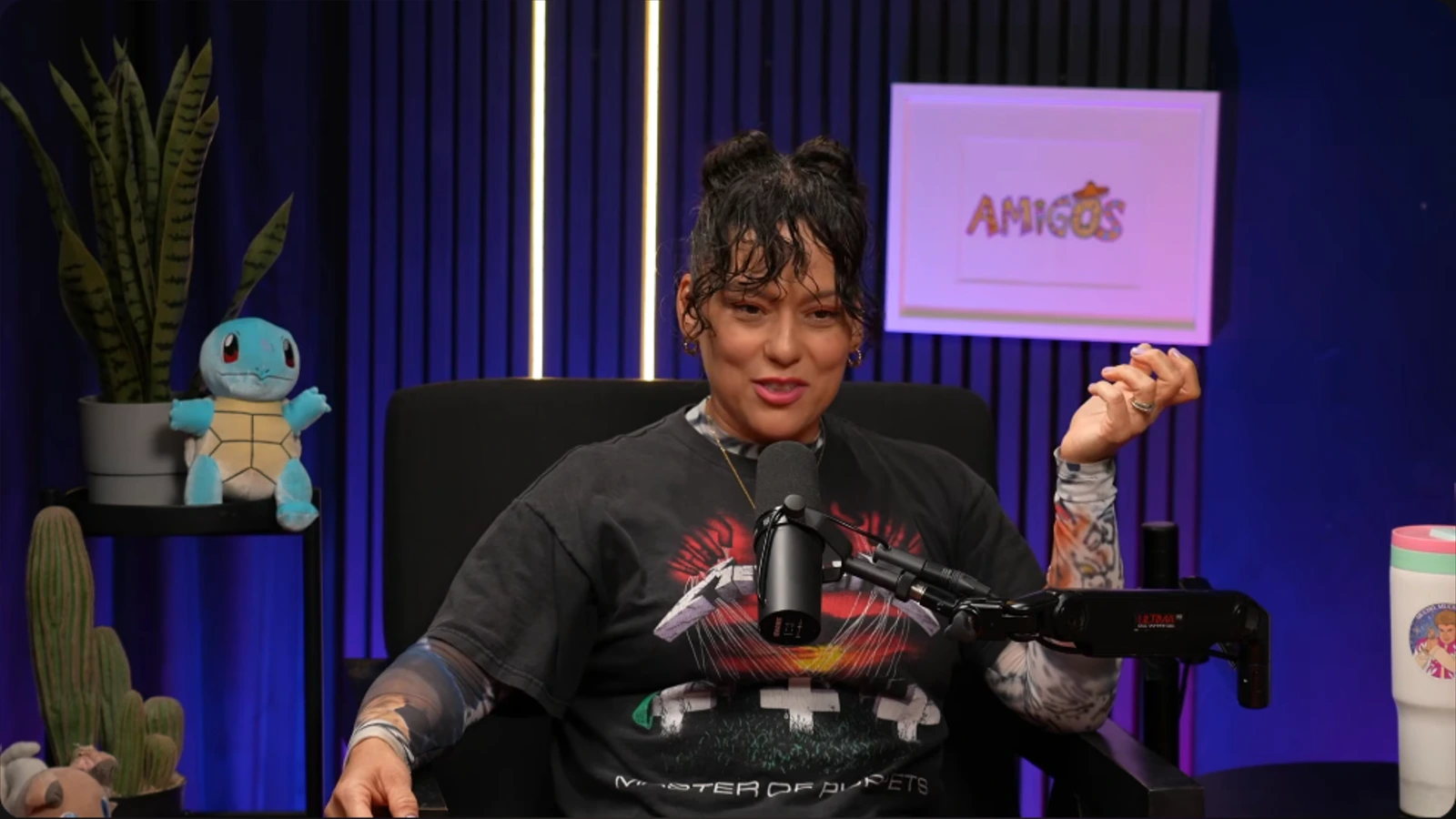
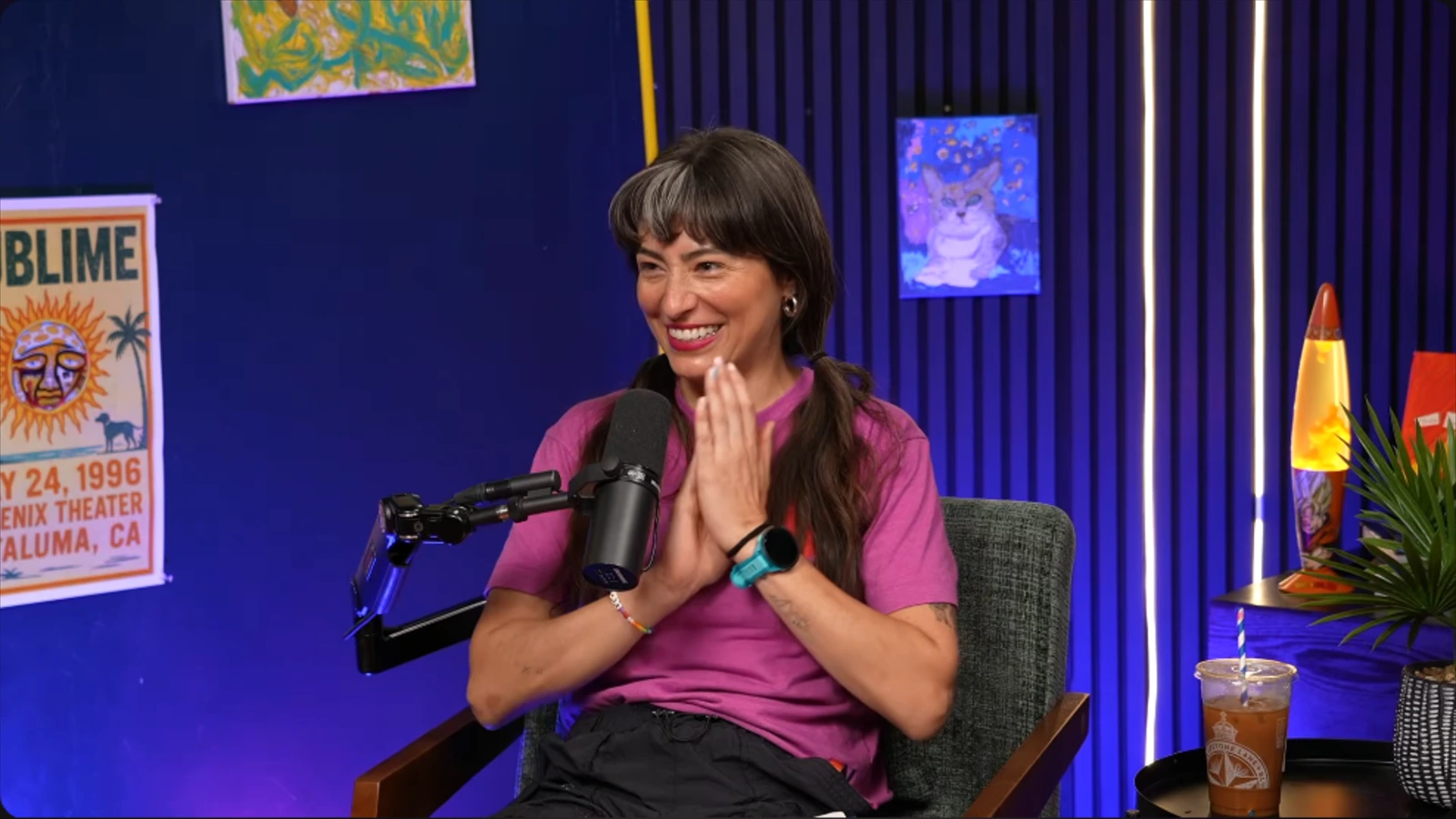
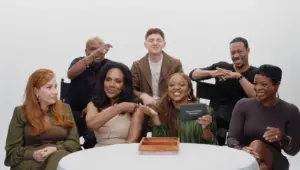
Michelle Zamora joins Melissa Villaseñor and Steven Castillo on the Two Amigos podcast. Images: Two Amigos / YouTube.
By the end, Zamora has replaced the hosts with puppets selected to match their individual energy, Steven learns he has apparently been represented by a demon potato, and Melissa receives a “Latina Power” gift from Zamora’s Brownsville hometown. It is a warm, chaotic conversation about the people behind characters—and about the childhood urge to make something weird simply because the camera was available.
Watch Michelle Zamora Join Melissa Villaseñor on Two Amigos
The roughly 32-minute episode covers Viva La Puppet, A Black Lady Sketch Show, the Pee-wee humanette, homemade camcorder sketches, Waffles + Mochi and The Rehearsal.
Sources: Two Amigos; Viva La Puppet; HBO; Collider.