












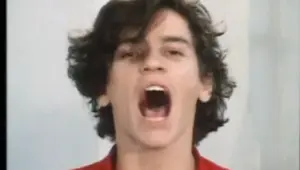
Come Thru Vocals: Björk strips Human Behaviour down to pure instinct.
Björk is pretty much a musical crush all day, every day.
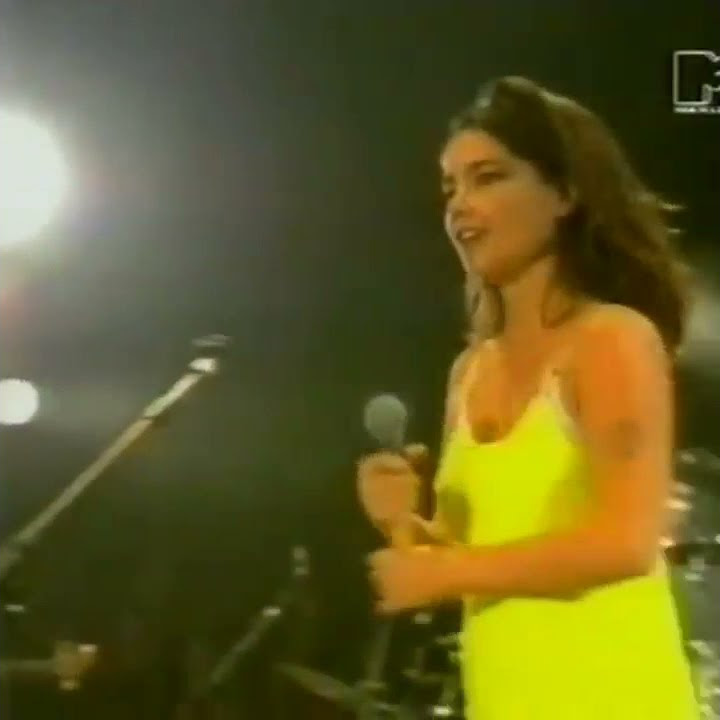
For this special Come Thru Vocals edition, we are specifically revisiting the moment the Icelandic supreme goddess pulled Human Behaviour away from its original production and let the vocal performance run completely wild.
Released in 1993 as the opening statement from Debut, the song introduced Björk’s international solo era with booming percussion, restless electronic movement and an outsider’s study of how confusing people can be.
The lyrics approach humanity from an animal’s point of view. Once the dense rhythm is stripped away, that idea becomes even clearer: Björk sounds like a curious creature attempting to explain an unpredictable species in real time.
No giant production tricks required. Give Björk a microphone and human emotion will provide enough chaos on its own.
Revisit the album that launched her international solo era and spin the records behind one of modern music’s most unmistakable voices.
As an Amazon Associate, INYIM Media earns from qualifying purchases.
Human Behaviour introduced Björk on her own terms.
Following her years fronting The Sugarcubes, Björk used Human Behaviour to establish that her solo work would not follow a predictable pop blueprint.
The original recording pairs her voice with forceful timpani, electronic rhythm and a looping sample connected to the Ray Brown Orchestra’s Go Down Dying.
Her performance moves between soft observation, abrupt cries, playful growls and enormous melodic leaps. The vocal does not simply sit on top of the music—it behaves like another unpredictable instrument inside it.
That elasticity became one of the defining features of the Debut era. Björk could sound childlike, ancient, amused, frightened and completely in command within a matter of seconds.
The humans may be confusing, but the vocal decisions remain crystal clear.
The stripped-back arrangement gives every vocal turn room to breathe.
Without the full weight of the studio version, the live performance becomes an even sharper display of control.
Björk stretches phrases, changes their shape and allows silence to become part of the arrangement. A whisper can suddenly turn into a yelp, while a delicate melodic line can expand into something raw enough to rattle the room.
The approach also reveals how much rhythm exists inside her delivery. Even when the instrumental backing becomes sparse, she supplies her own momentum through clipped consonants, breath, timing and physical movement.
It is less an acoustic imitation of the single and more a complete reinterpretation built around everything her voice can do.
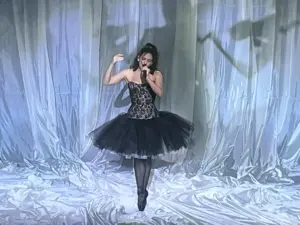
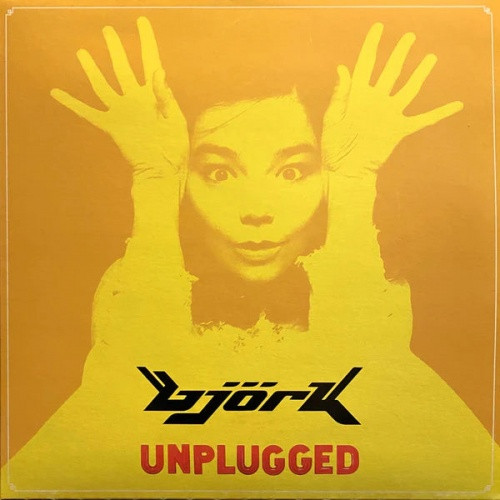
Björk’s Unplugged era keeps the voice front and center.
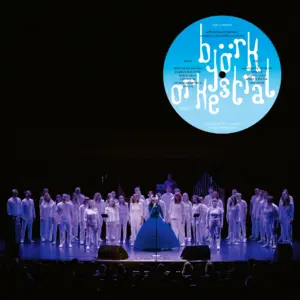
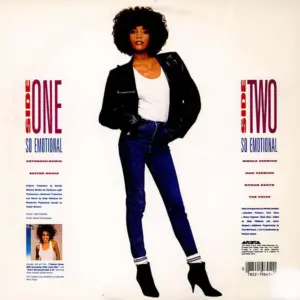
Archival artwork from Björk’s stripped-back live recordings reflects the fearless vocal experimentation surrounding her early solo performances.
More than three decades later, Human Behaviour still sounds like an artist announcing that conventional logic will not be part of the journey.
The song became the first chapter in a solo catalog constantly willing to rebuild itself through orchestras, choirs, electronics, brass, flutes and whatever musical ecosystem Björk could imagine next.
Before all of that expansion, there was one microphone, one wonderfully strange song and a voice already refusing to behave.
Press play on this special Come Thru Vocals edition right below!
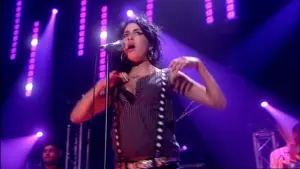
Watch Björk perform Human Behaviour live.
The archival performance, presented with Spanish and English subtitles, strips back the song’s original production and places Björk’s restless, expressive vocal delivery at the center.
Revisit Björk’s stripped-back Human Behaviour with INYIM Media.
Our secondary social reel spotlights the same vocal-focused performance and celebrates the unpredictable brilliance of Björk’s Debut era.