










The Year 2000 Arrived With Robot Barbers and Flying Everything
A doozy of a “Back to the Future” today features what folks around 1900 thought modern life would look like—and let us clarify immediately: their “today” was the year 2000, not 2026.
The images come from the French series En L’An 2000, or In the Year 2000, commissioned by Lyon toy manufacturer Armand Gervais for the 1900 Paris World Exhibition. The first 50 paper cards were produced by illustrator Jean-Marc Côté, with other artists later contributing to a collection of at least 78 known designs.
They were intended first as inserts for cigarette boxes and later as postcards, each one attempting to picture daily life a century ahead. The artists reached for a high-tech future using the visual vocabulary they already knew: buttons, gears, propellers, elaborate machinery and people still dressed as though the Belle Époque had simply refused to leave.
Discover More
The Future Looked Better With Brass Levers
Explore the complete public-domain card collection, then dig into Isaac Asimov’s Futuredays and more retrofuturist visions of tomorrow.
Some links may be affiliate links. INYIM may earn from qualifying purchases.
They Predicted Automation but Kept Every Waistcoat and Corset
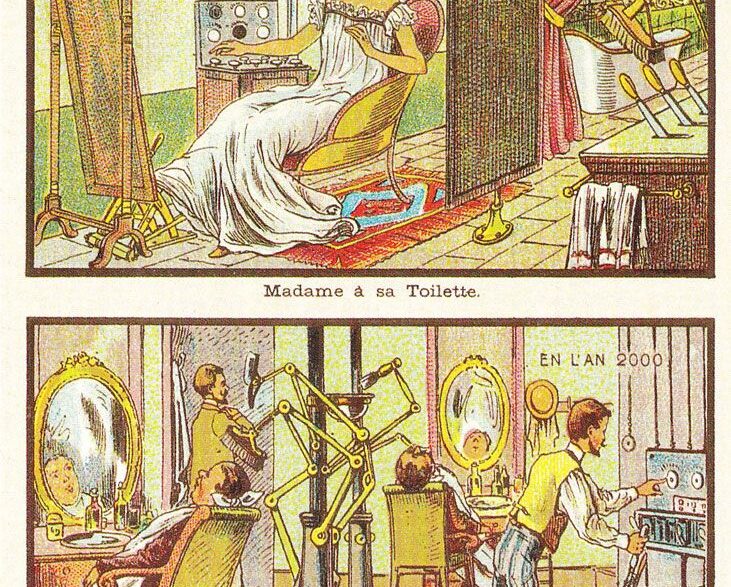
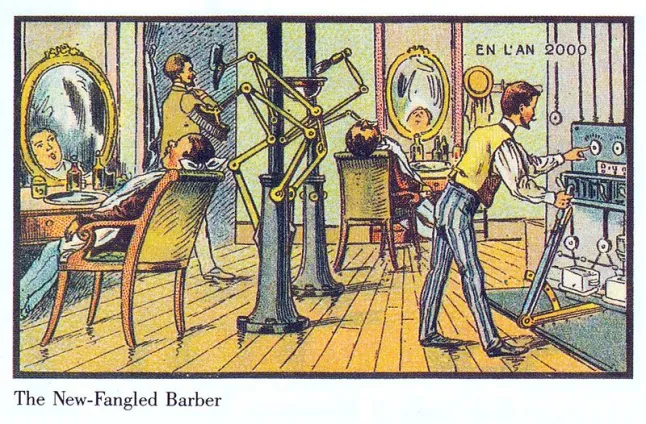
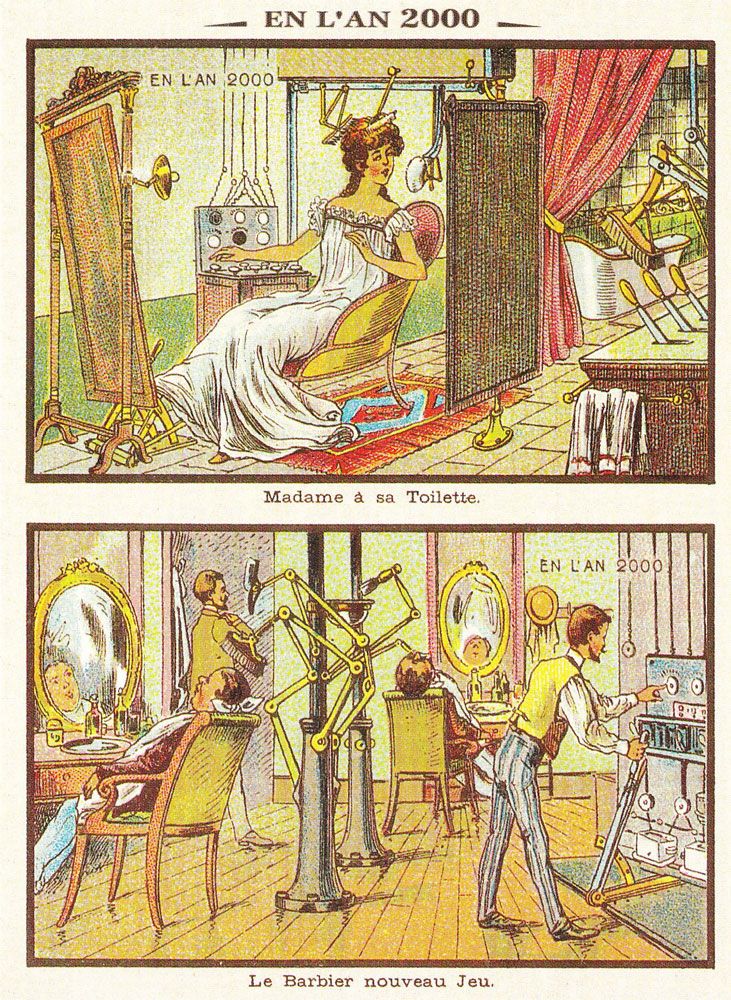
The automated barbershop is the perfect introduction. Instead of imagining people abandoning grooming rituals, Côté pictured the same familiar service performed by articulated mechanical arms. The job remains recognizable; only the human labor has been replaced by an elaborate contraption that looks one loose screw away from making the haircut extremely personal.
That pattern runs throughout the series. Tailoring becomes mechanized. Orchestras turn electronic. Agriculture becomes industrial. Transportation moves into the air and beneath the sea. The artists understood that machines would transform everyday tasks, but they usually imagined those machines as larger, louder versions of the equipment already surrounding them.
They correctly sensed that automation was coming. They were less certain why every useful device would not require twelve brass levers and an operator wearing formalwear.
That is what makes the collection more than a roundup of silly misses. Every image reveals how difficult it is to picture a future that is not secretly built from the materials, habits and social assumptions of the present.
Some Predictions Missed Wildly While Others Landed Uncomfortably Close
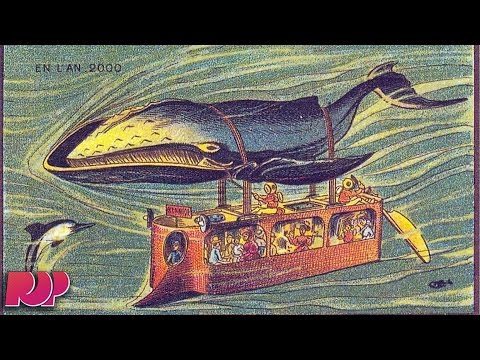
The most fanciful cards turn the sky and sea into crowded transportation networks. Personal flying machines, airborne public services, underwater buses and elaborate moving houses suggest a world where gravity had become more of a recommendation than a rule.
Other ideas feel surprisingly familiar. Automated personal services, mechanized food production, remote communication, moving images and labor-saving household equipment all became real in forms that were sleeker, smaller and far less decorated than these artists expected.
The cards did not predict smartphones, streaming, social media or a tiny rectangle becoming work, entertainment, shopping, navigation and everybody’s emotional-support object. But they absolutely understood that technology would keep invading tasks once considered too personal, skilled or ordinary to automate.
Isaac Asimov Helped Bring the Lost Future Back Into View
The cards were not widely distributed as planned after financial problems interrupted the original project. Decades later, science-fiction writer Isaac Asimov encountered a set and helped reintroduce the illustrations through his 1986 book Futuredays: A Nineteenth-Century Vision of the Year 2000.
That second life made the series part of the wider retrofuturism conversation: not simply old art, but a record of how one generation projected its hopes, fears and favorite machinery onto another century.
The best future predictions are rarely valuable because they are perfectly correct. They are valuable because they reveal what the past thought progress was supposed to fix.
En L’An 2000 Imagines Everyday Life in the Future
The supplied gallery preserves all three remaining illustrations in their original INYIM order.
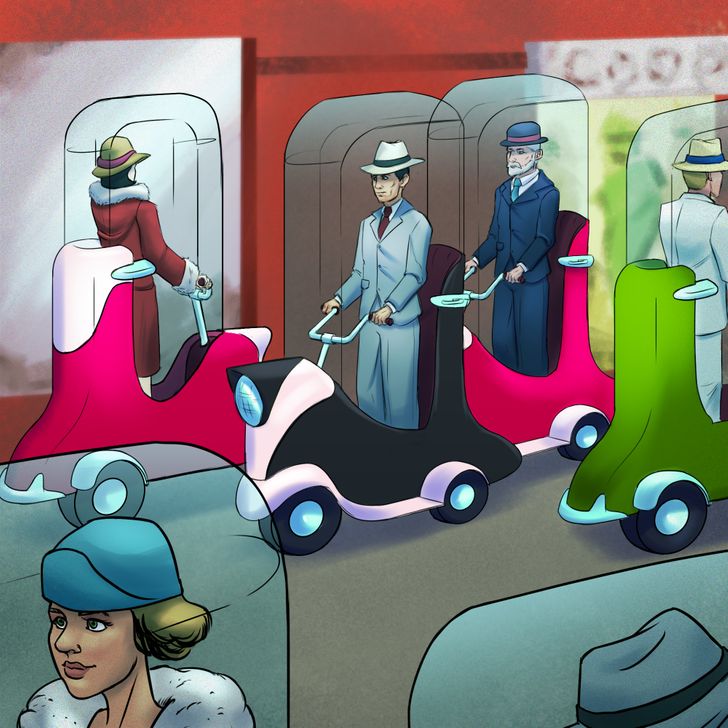
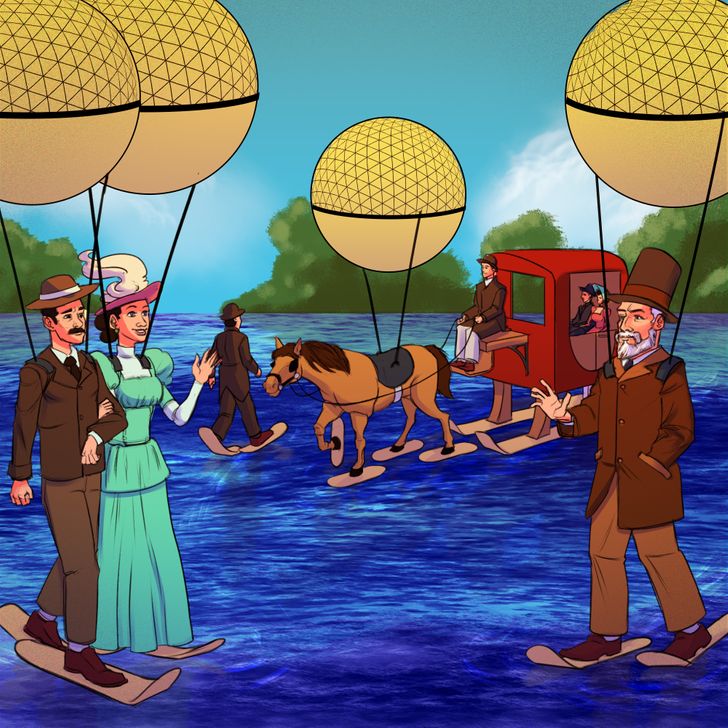
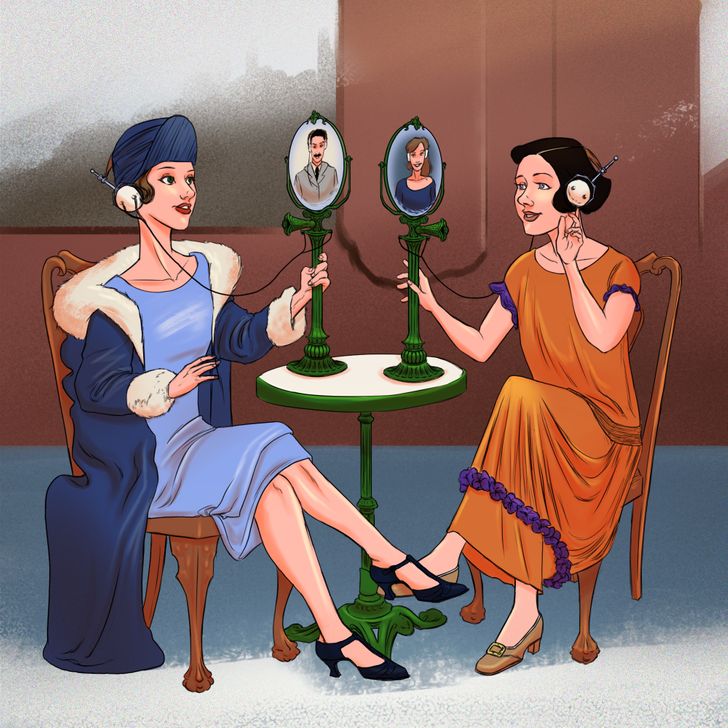
Illustrations associated with the French En L’An 2000 series imagining life in the year 2000. Images: Public-domain postcard series.
What they created was whimsical, high-tech and occasionally uncanny: a future full of mechanical servants, airborne errands and familiar human routines stubbornly surviving inside increasingly complicated machines.
Watch INYIM’s En L’An 2000 Future-Predictions Compilation
INYIM’s TikTok compilation presents selections from the postcard series with an editorial look at how artists around 1900 imagined life a century later.
Don’t have TikTok? See this on Instagram.
Sources: The Public Domain Review; Futuredays by Isaac Asimov. Compilation and editorial presentation: INYIM Media.