













Before Goodbye, Dolly Was Making an Entire Room Feel Lighter
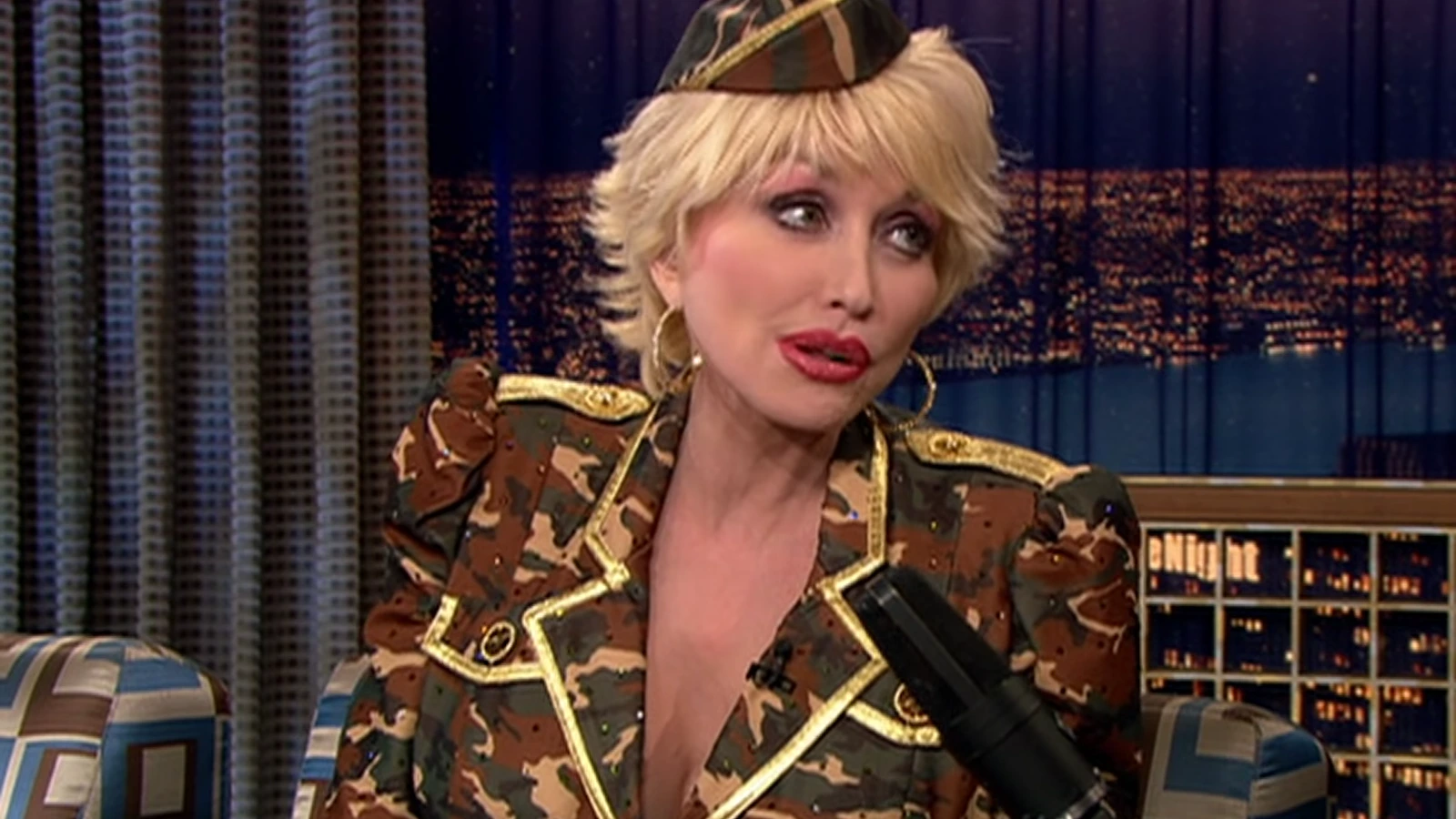
Less than a week after losing Dolly Parton at 80, it still feels unnatural to put her in the past tense. Some stars slowly dim in public. Dolly always seemed wired to her own power source — writing something, recording something, launching something, laughing about something. Watching this November 2003 visit to Late Night with Conan O’Brien now, it is hard not to feel like we are looking back at a star we simply never imagined could burn out.
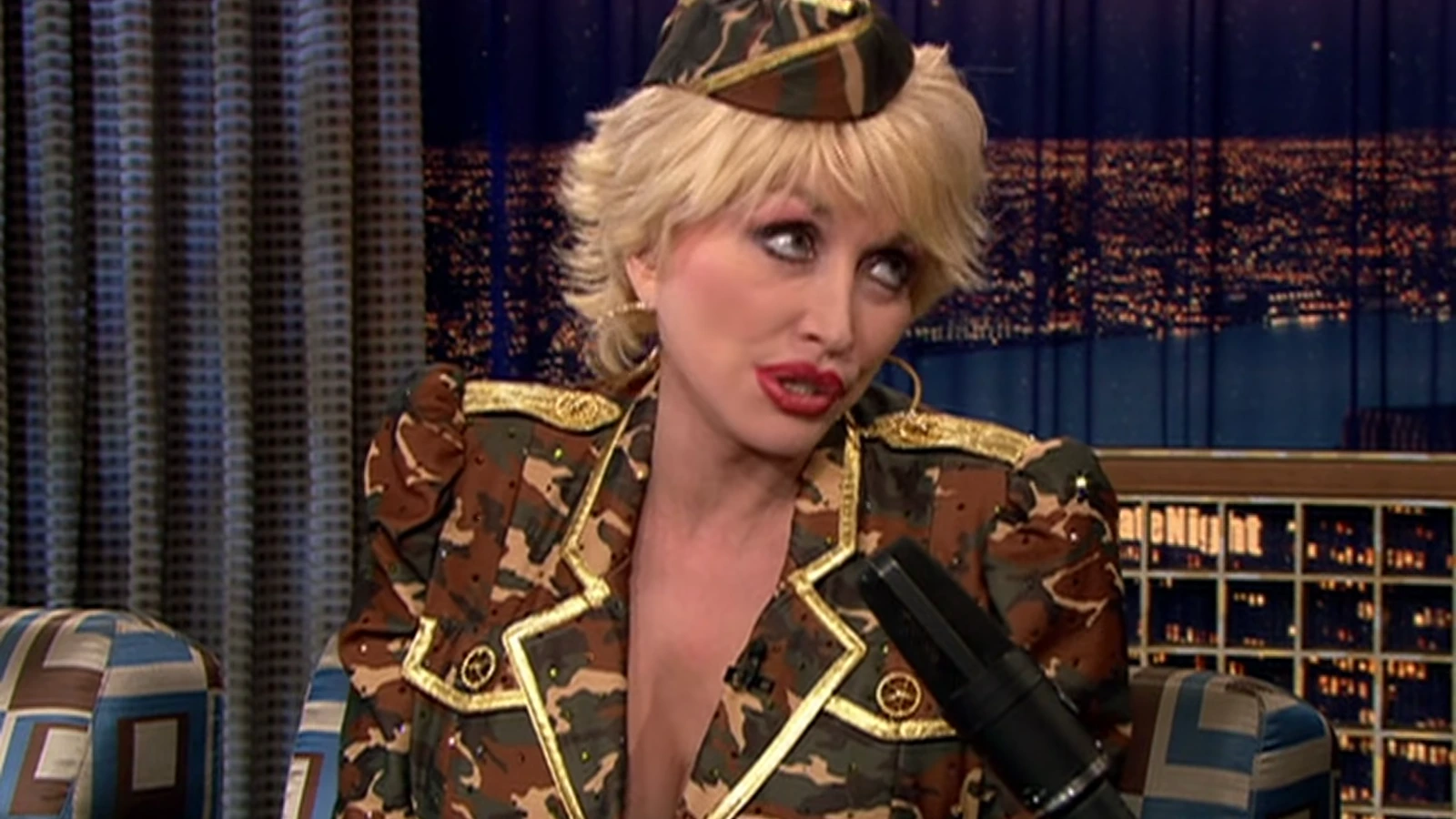
And first: how cute does Dolly look? To our eye, she is giving full Country Electro-Clash Star — camouflage, gold military trim, structured shoulders, that tiny cap and, hello, the short feathered blonde hair! It is such a different silhouette from the towering Dolly hair most people picture first, and it makes the whole look feel even more locked into that early-2000s nightlife moment.
The military styling was no accident. Dolly was promoting the newly released patriotic album For God and Country, whose album credits list longtime custom designer Robért Behar for wardrobe. Behar also designed the patriotic suit used for the album campaign, national television and print promotion, and the “Welcome Home” video. We have not found an archival credit tying him specifically to this exact camouflage-and-gold Conan jacket, so we are not going to pretend we have — but it clearly belongs to the same 2003 military-glam universe.
And INYIM can claim a little firsthand authority here because we lived that era. Military jackets, camouflage, gold trim, structured shoulders — we had our own military ensemble for dancing and romancing. That mash-up of army-surplus attitude, Electro-Clash nightlife and dressed-to-be-seen glamour was absolutely in the air. Dolly, naturally, filtered it through Dolly and somehow made tactical colors look ready for the Grand Ole Opry afterparty.
The original airdate was November 13, 2003. Two days earlier, Parton had released For God and Country, her 40th solo studio album, and she arrived on Conan’s couch in full Dolly mode: quick, self-deprecating, completely in command and somehow capable of turning nearly every answer into either a punchline or a song.
Discover More
Dolly, Still in Motion
Revisit the music, stories and sparkle surrounding one of Dolly Parton’s funniest late-night appearances.
Some links may be affiliate links. INYIM may earn from qualifying purchases.
Conan Asked About 73 Albums — Dolly Started Roasting Her Own Songs
Conan opens by telling Dolly he had read that she had made 73 albums. Her response is essentially: that sounds about right, she has been at it a long time. The number is more of an all-in career tally than the way discographies count solo studio albums today, but the exchange immediately establishes something wonderfully absurd — even Dolly Parton had reached the point where keeping track of all the Dolly Parton records required a little help.
When Conan asks whether she ever regretted one, Dolly says songwriters tend to think all their songs are good in the same way parents think all their children are pretty. Then she starts pulling out examples. There is a wonderfully ridiculous early idea involving a man with oil wells, complete with a mock prototype of “I Will Always Love You” centered on wanting his petroleum fortune.
Then comes “I Don’t Want to Throw Rice.” And here is the part that makes the bit even better: that was not something Dolly invented on Conan’s couch for a laugh. She and her uncle Bill Owens actually co-wrote it, and Dolly recorded it for her 1967 debut album, Hello, I’m Dolly. More than three decades later, she could drag one of her own early songs on national television and make it feel like she was telling you the story at the kitchen table.
Squirrels, the “Suck Hole” and Dolly Dean Ordering Infomercial Junk
The conversation then wanders exactly where a great late-night interview should. Dolly talks about growing up poor in the Tennessee mountains, where squirrel and rabbit were food because sometimes the alternative was going hungry. She remembers her father refusing to let the family eat possum because, in his assessment, it was basically a giant rat — before apparently being perfectly happy to pass the squirrel.
She also remembers swimming as a kid at a dangerous local river spot everyone called the “old suck hole,” where deep cold water and rocks could pull swimmers underneath. Looking back, Dolly admits she sometimes wondered how all those rowdy kids made it through. Then, almost immediately, she sums the whole childhood up with affection: it was a good life.
And then we learn that one of the most famous women on Earth was an infomercial addict. The habit went back to childhood, when her bedridden grandmother would order things for her from catalogs. Adult Dolly still felt that little rush whenever television or an airplane catalog promised some object she suddenly could not live without. She even admits ordering exercise machines only to use them for hanging clothes and wigs. When operators asked for a name, she says she used “Dolly Dean,” her married name.
It is such a small detail, but it is part of what made Dolly feel almost impossible as a celebrity. She could be rhinestones, wigs, songwriting royalty and a major business empire — then tell Conan she had bought some ridiculous late-night gadget exactly like the rest of us.
What Hits Hardest Now Is How Much Future Dolly Had Planned
By the final stretch, the interview turns to For God and Country. Dolly explains that she had wanted to make the project for a long time, mixing patriotic material with gospel songs such as “Peace in the Valley” and “Whispering Hope,” traditional standards and her own writing. She describes the album almost like a little musical, using spoken passages to explain why the songs mattered to her.
Then Conan keeps asking her to stay on the couch. Dolly says she cannot because she is going to be recording with Norah Jones later. That throwaway line is another tiny time capsule: Jones and Parton would appear together on “Creepin’ In” from Jones’ 2004 album Feels Like Home, a collaboration that went on to earn a Grammy nomination.
But Conan keeps pushing: stay a little longer. Dolly keeps refusing. A musical chord arrives, and the running joke suddenly tumbles into “I Will Always Love You.” What begins as comedy becomes one of those wonderfully loose television moments that cannot be manufactured — Conan, Dolly and the band circling one of the most famous songs ever written as the audience realizes where the joke has landed.
That is the moment that gets us now.
In this clip, Dolly has somewhere else to be. Another recording. Another song. Another room. Another tomorrow. Her entire energy points forward. Even while talking about a career already decades old, she does not behave like somebody protecting a legacy; she behaves like somebody still building one.
That is probably why her death feels so strange. Dolly Parton became one of those rare figures who seemed less like a star with a lifespan and more like a permanent light source. We knew, intellectually, that could never be true. We just never quite imagined the day when the light would actually go out.
So today we are going back to 2003 — to the jokes, the impossible outfit, the squirrel stories, the junk she ordered from television and the moment “please stay” became “I will always love you.” Not because Dolly belongs only to the past now, but because moments like this explain why she never really will.
Dolly Parton on Late Night With Conan O’Brien in 2003
The full supplied image selection from Dolly’s 2003 late-night appearance..
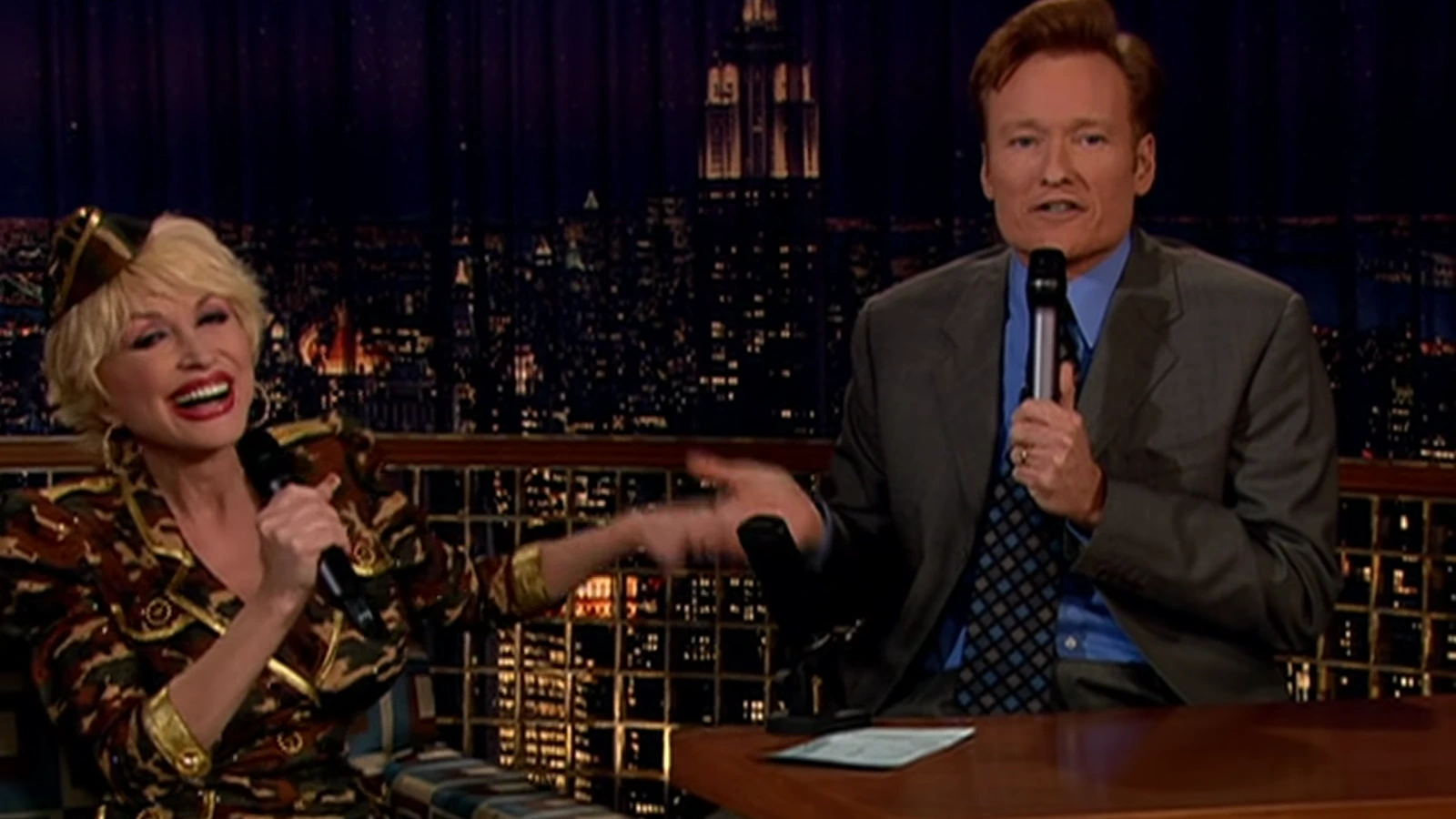
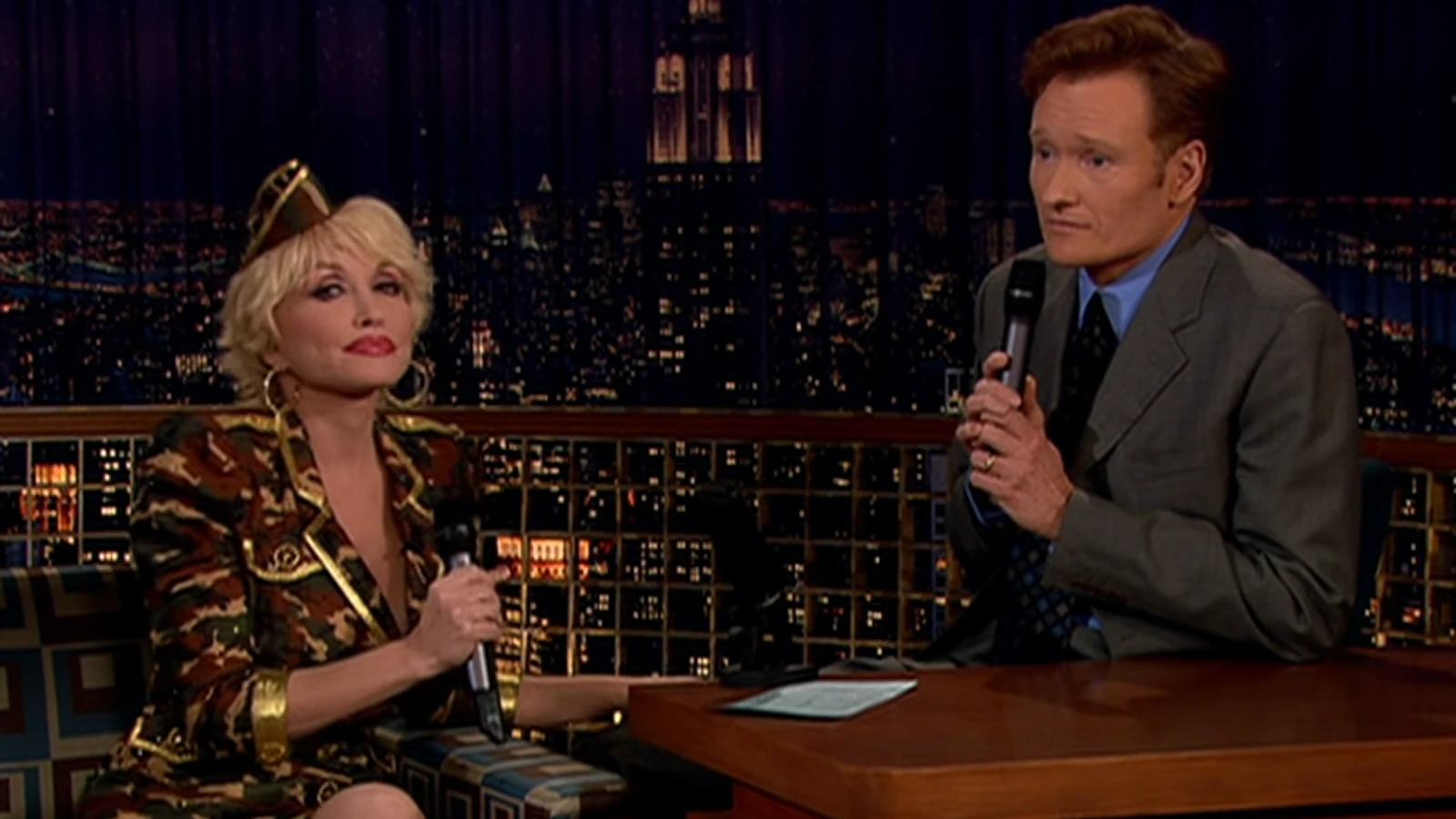
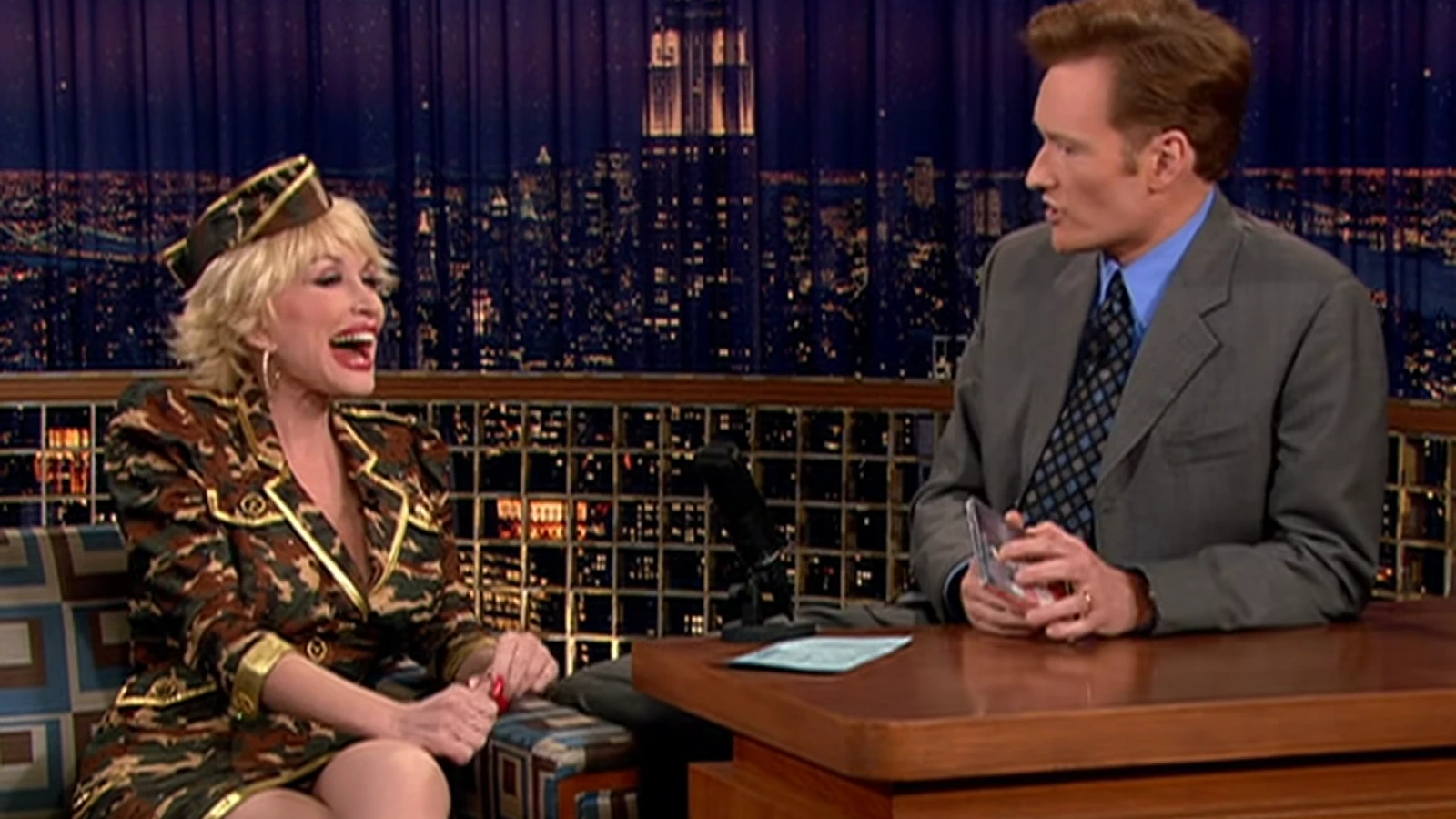
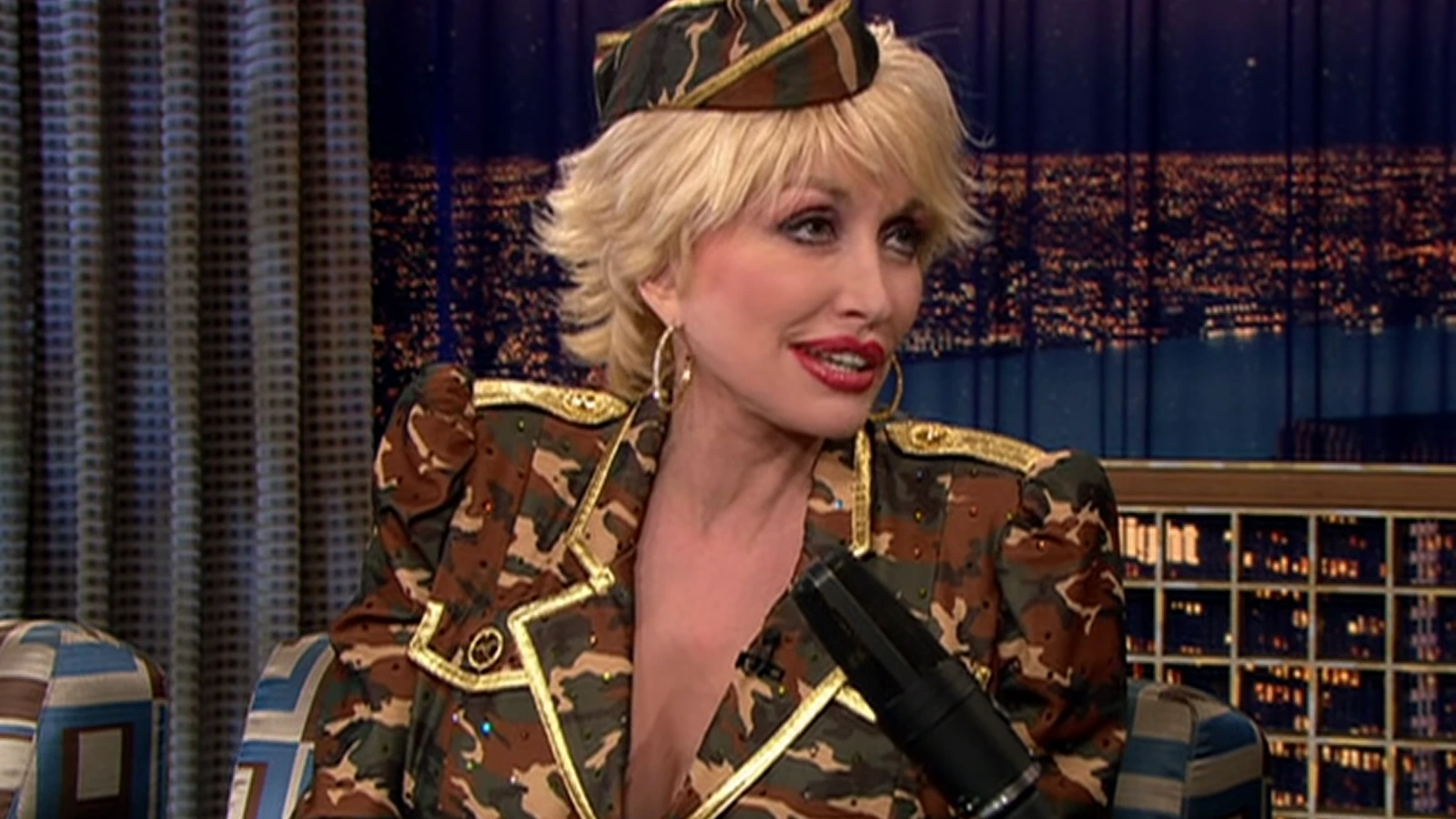
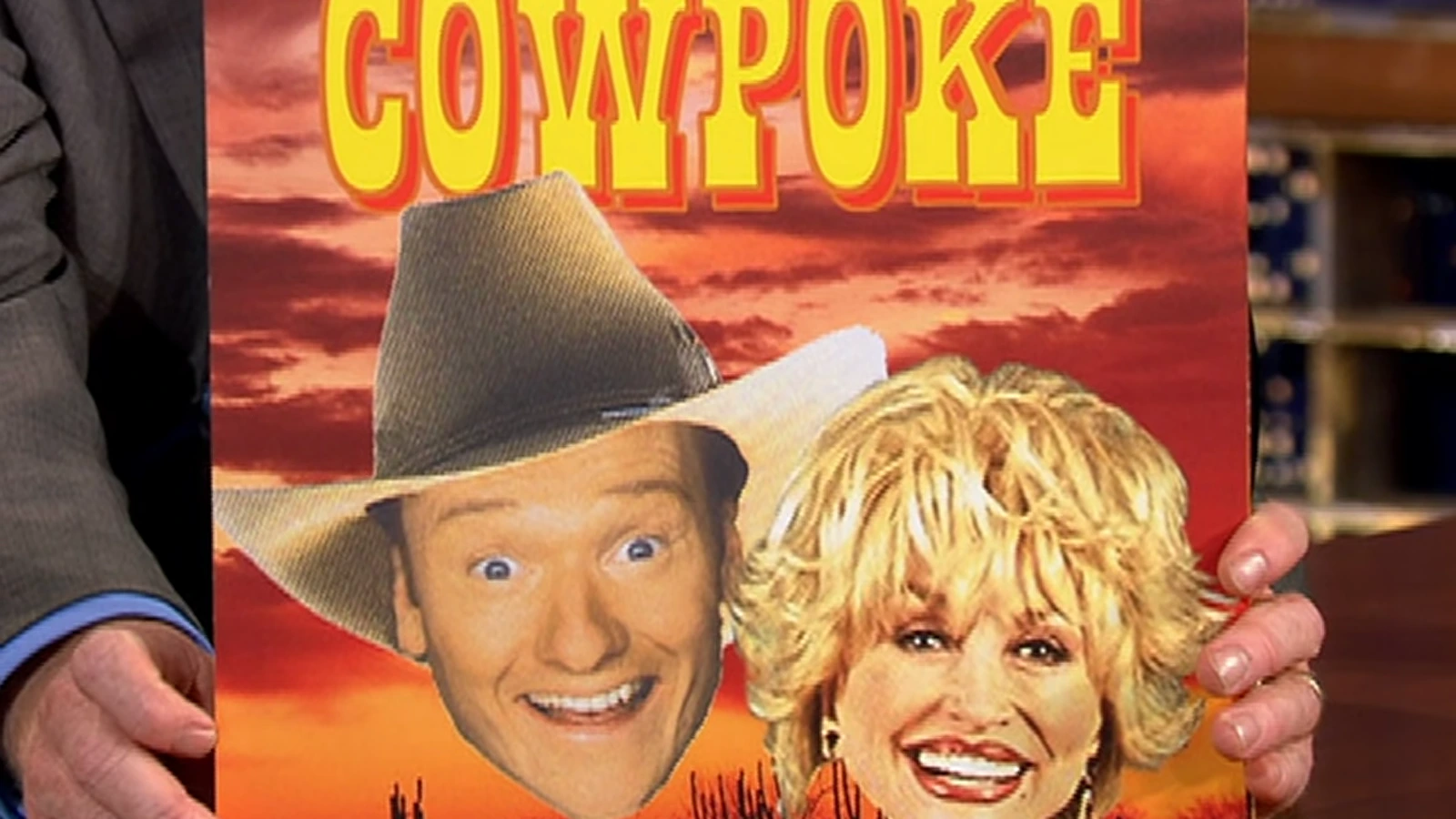
The clothes and set may scream 2003, but Dolly’s timing does not age a day. That ease — the way she could move from mountain childhood to absurd punchline to a devastating song without changing gears — is the real artifact here.
Watch Dolly Parton Name Her Worst Songs on Late Night With Conan O’Brien
Team Coco’s clip comes from the November 13, 2003 broadcast, two days after For God and Country was released, and carries the interview all the way through its unexpected “I Will Always Love You” payoff.
Sources: Team Coco; The Dolly Parton Discography; V Magazine — Dolly archive / Robért Behar; Reuters; Norah Jones, Feels Like Home.