












The Trains Arrived. The Promised Investment Still Hasn’t.
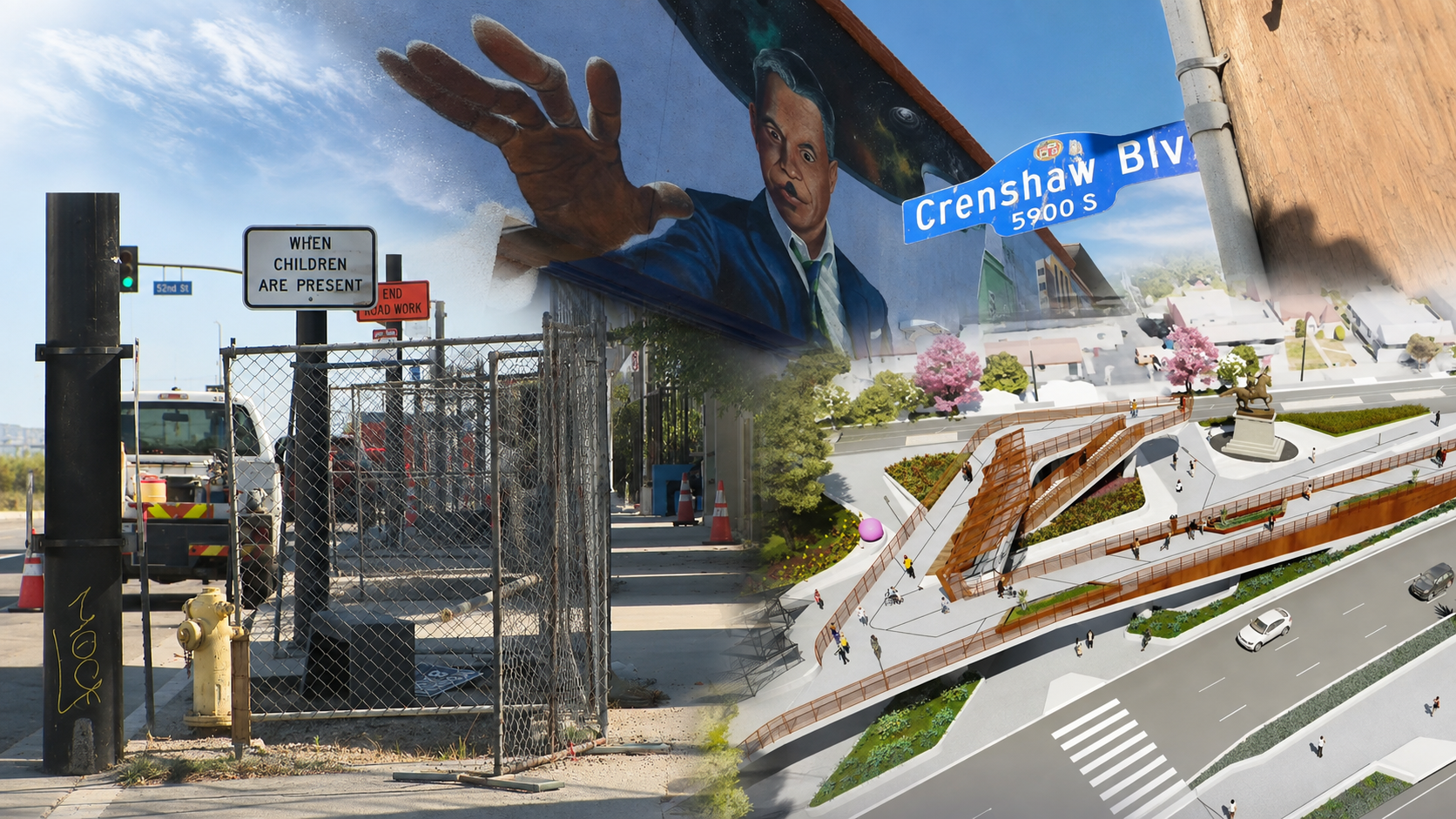
For years, we have driven down Crenshaw Boulevard wondering what that large rust-colored construction structure was supposed to become. We usually pass it while heading toward one of our favorite local stops, and every time it looked less like a neighborhood investment and more like somebody abandoned a very expensive idea halfway through building it.
Now that residents are asking what happened to roughly $100 million tied to the project, our view is blunt: it looks like somebody may have been stealing from Crenshaw—or the money has been handled so badly that the community has every right to suspect it. Either way, it is time to show the receipts. Pitchfork energy has officially entered the chat.
Now we know it belongs to Destination Crenshaw, the ambitious 1.3-mile cultural corridor and open-air museum created to celebrate Black Los Angeles while offsetting the damage caused when Metro’s K Line was built above ground through the heart of the historic Crenshaw community.
The train arrived. The fences stayed. Parking disappeared. Businesses kept absorbing the disruption. And residents are now asking a very reasonable question: where is the completed project they were promised?
Discover More
Support Crenshaw While It Waits
Destination Crenshaw was built around protecting Black culture and local commerce. Learn about the official vision, then support books and resources centered on Black Los Angeles history.
Some links may be affiliate links. INYIM may earn from qualifying purchases.
Destination Crenshaw Was the Community’s Answer to an Above-Ground Rail Line
When Metro planned the Crenshaw/LAX rail project, residents fought against running trains at street level through one of Los Angeles’ most important Black business corridors. The above-ground design removed hundreds of mature trees and roughly 300 parking spaces, creating fears that the new line would disrupt businesses, accelerate displacement and erase the neighborhood identity it was supposedly connecting to the rest of the city.
Destination Crenshaw was presented as the answer: a community-driven investment featuring new sidewalks, trees, landscaping, parks, storefront improvements and more than 100 works by Black artists along Crenshaw Boulevard.
The idea was not simply beautification. It was supposed to ensure that the arrival of public transportation did not become another story in which infrastructure moved through a Black neighborhood while the benefits moved somewhere else.
Metro’s K Line opened in 2022. Four years later, CBS Los Angeles found residents still looking at construction fencing, unfinished work and businesses struggling with the consequences.
Crenshaw Has Already Seen a Promised Upgrade Become an Empty Field
This community has already been dealt nearly the same blow farther up Crenshaw Boulevard. At Crenshaw and Rodeo Road—now Obama Boulevard—the old shopping center housing a neighborhood Ralphs, a dry cleaner and other businesses was demolished to make way for a supposedly upgraded development called District Square.
The replacement was sold as a much larger shopping destination with a new Ralphs supermarket, Target, restaurants including Chili’s and hundreds of promised jobs. In 2010, the City Council approved more than $26 million in federal grants and loans to help make it happen.
What the neighborhood actually received was the demolition. The upgraded shopping center never materialized, the local Ralphs was never replaced and the enormous parcel was left sitting empty. By 2019, the Los Angeles Times reported that $6.3 million had already been spent and the project’s federal loans were in default.
Years of revised plans and political maneuvering followed, but the community had already lost the grocery store and surrounding businesses that once served it. For those of us who still pass that huge vacant site, it remains a physical reminder of what happens when officials demolish something useful before ensuring the promised replacement is real.
That history makes Destination Crenshaw’s delays feel less like an unfortunate exception and more like Crenshaw being told, once again, to surrender what it has today for an investment that may arrive someday.
Businesses Say the Construction Is Blocking the Customers They Need
The delay is not an abstract planning dispute for the people who work along the corridor. Construction fencing has swallowed parking, narrowed access and made some businesses look closed even when they are fighting to stay open.
Dr. John Hardy told CBS Los Angeles that his family-owned veterinary clinic has been dealing with the disruption since construction began in 2021. Customers bringing sick or healthy animals may have to park blocks away before reaching the entrance.
Local churches described attendance falling because families arrive, cannot find somewhere to park and leave. That means the project designed to strengthen the community is currently making it harder for some of its existing institutions to function.
Residents recently packed a town hall to demand answers. Their message was not that they oppose the art, parks or cultural vision. They want the vision finished before more businesses are damaged waiting for it.
The distinction matters. Community members are not rejecting investment. They are rejecting indefinite disruption disguised as progress.
What Happened to the Money—and Where Is the Public Accounting?
At the town hall, residents asked what happened to the approximately $100 million already associated with Destination Crenshaw. No public finding supplied with the report establishes who, if anyone, committed theft. But when that much money is attached to a project that remains fenced off, delayed and damaging the businesses it was supposed to support, suspecting theft, diversion or serious misuse is not some wild leap—it is an accountability question created by the people controlling the money.
So yes, from the INYIM desk: we think somebody needs to explain whether Crenshaw’s promised investment was stolen, redirected, burned through or simply buried under years of “mismanagement.” Until the full accounting is public, officials should expect residents to assume the worst rather than keep applauding renderings and revised timelines.
A 2026 report cited by PACE News described Destination Crenshaw as a project whose total cost had grown to roughly $150 million, with construction paused and another $35 million still needing to be raised.
Meanwhile, the project has received multiple streams of public and private support over the years, including $15 million approved by Metro, New Markets Tax Credit financing and more recent grants intended to restart work at Sankofa Park.
That does not automatically indicate wrongdoing. It does make the community’s demands for detailed answers entirely justified:
- How much money has been received?
- How much has been spent, and on what?
- Which contractors and businesses received the work?
- How much remains available?
- What is the binding completion date?
- What relief will be provided to businesses harmed by the delay?
Before anybody reaches for the pitchforks, the city and project leadership can simply show the receipts.
That “Construction Bridge” Is Part of Sankofa Park
The rust-colored elevated structure that has puzzled drivers near Crenshaw and Leimert boulevards is associated with Sankofa Park, the flagship public space within Destination Crenshaw.
Sankofa Park broke ground in 2020 and was once expected to open in 2023. Construction later stalled for more than a year after project leadership said federal funding was pulled and fundraising hit a wall.
Earlier in 2026, Destination Crenshaw President and CEO Jason Foster said work could restart after the project secured a $3.3 million Baldwin Hills Conservancy grant and an additional $1 million county grant. At that point, the hope was to open the park in the fall.
But the newer CBS Los Angeles report states that there is still no confirmed completion timeline for the overall project. That gap between hopeful estimates and binding deadlines is exactly why residents no longer want another “coming soon.”
Council President Marqueece Harris-Dawson Says His Office Will Respond
Residents told CBS Los Angeles that attempts to reach City Council President Marqueece Harris-Dawson had gone unanswered. The station requested an interview but was told he was unavailable.
His office instead supplied a statement saying the concerns of Crenshaw businesses and residents are critical and that the office will work with Destination Crenshaw to address them.
Harris-Dawson is not a distant observer. He helped found and champion Destination Crenshaw as the city’s response to the K Line’s impact on the neighborhood. That history makes his involvement essential—and makes silence or vague reassurance much less acceptable now.
The community does not need another statement acknowledging that its concerns matter. It needs the work schedule, the funding breakdown, business relief and somebody publicly responsible for delivering all three.
Crenshaw Deserves the Project It Was Sold
Destination Crenshaw remains a powerful idea. A living monument to Black Los Angeles, created along a corridor repeatedly asked to absorb disruption without receiving the same level of investment seen elsewhere, is worth completing.
But the community should not be expected to survive years of fencing, lost parking and uncertainty simply because the final renderings are beautiful.
The K Line is operating. The businesses are still there. The churches are still there. The residents who were promised sidewalks, parks, trees, art and economic support are still there too.
Keep the promise. Release the accounting. Protect the businesses. Finish Destination Crenshaw.
Crenshaw Residents Show What Years of Delay Look Like
CBS Los Angeles documented the fencing, access problems and unfinished Destination Crenshaw work residents and local institutions have been living around.
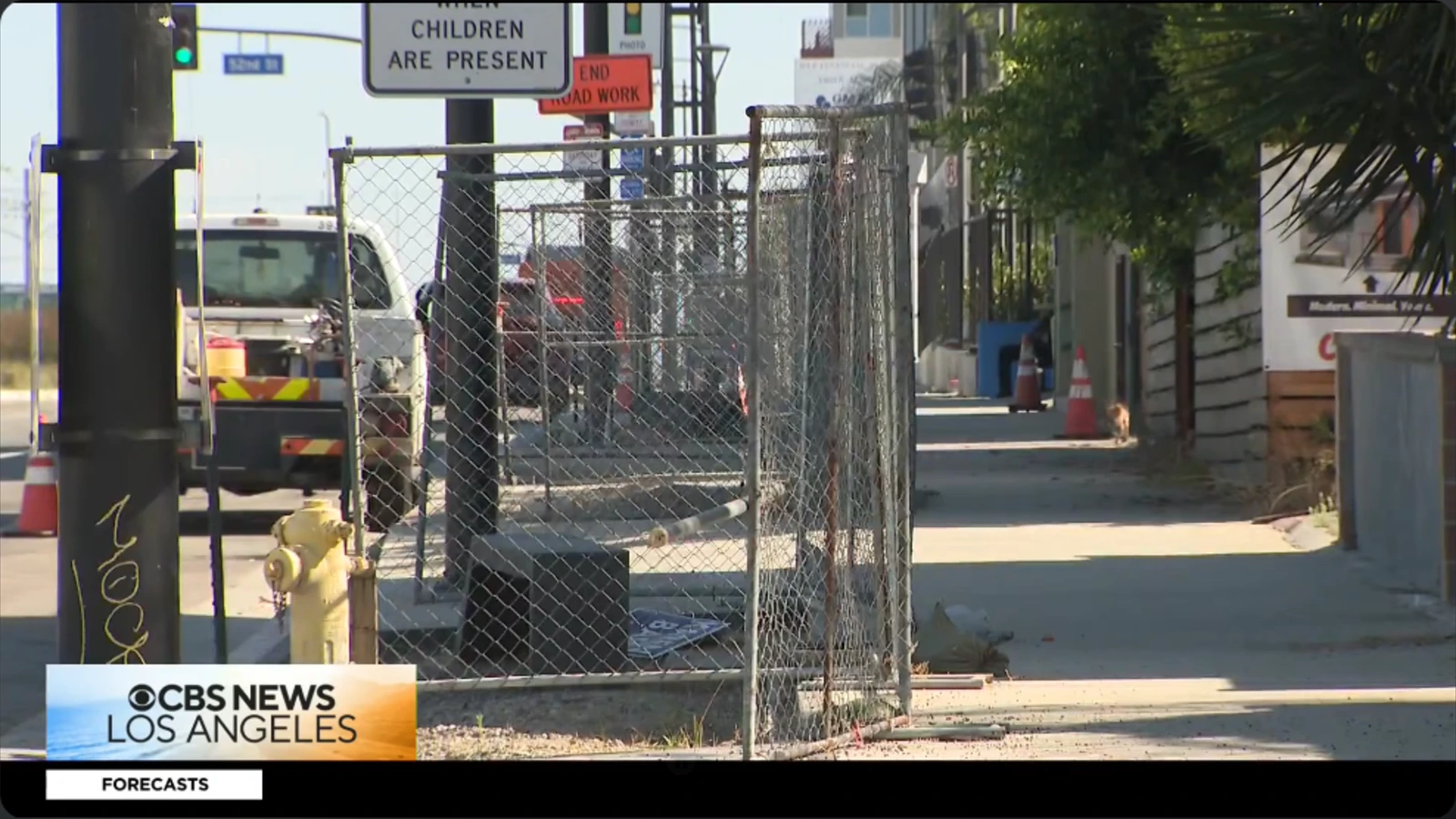
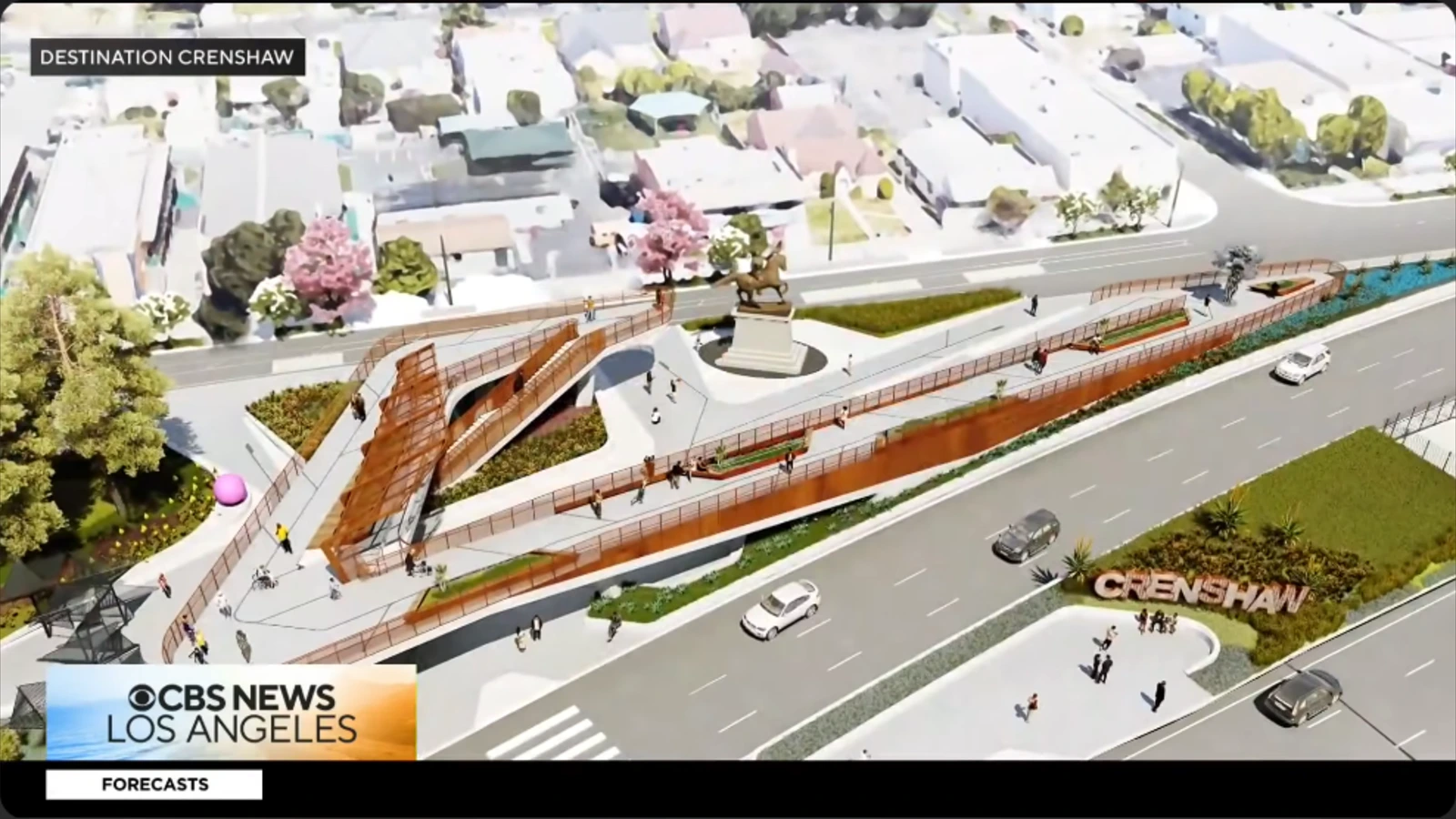
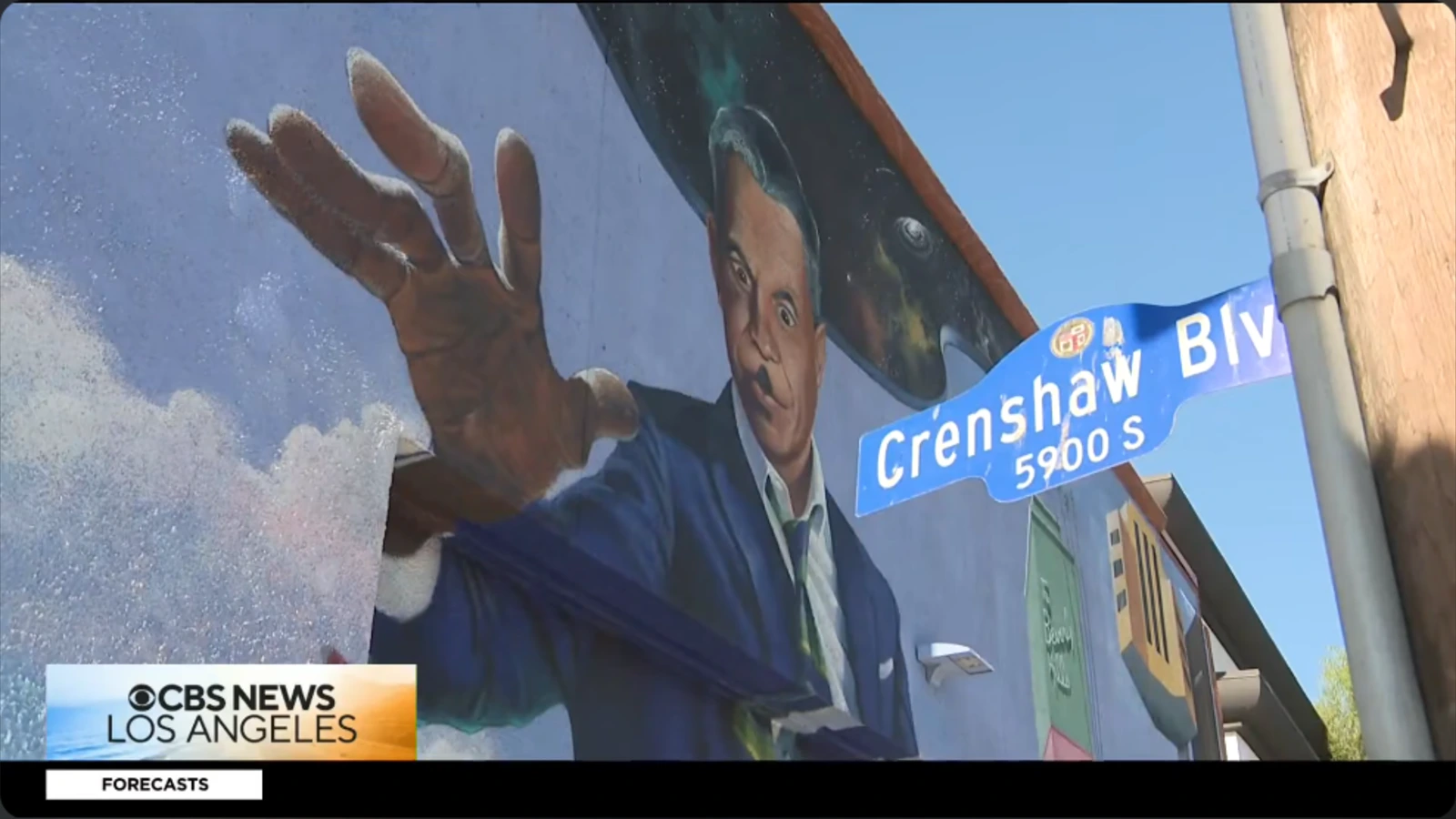
CBS Los Angeles documented the unfinished Destination Crenshaw construction and the disruption surrounding it. Images: CBS Los Angeles / YouTube.
Watch CBS Los Angeles Report on the Delayed Destination Crenshaw Project
Lauren Pozen reports on the residents, businesses and churches demanding answers after years of construction disruption along Crenshaw Boulevard.
Sources: CBS Los Angeles; Destination Crenshaw; Los Angeles Times; The LA Local; PACE News.