















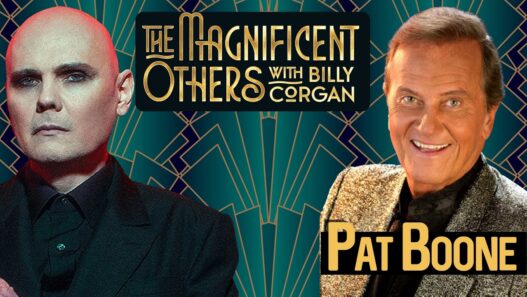
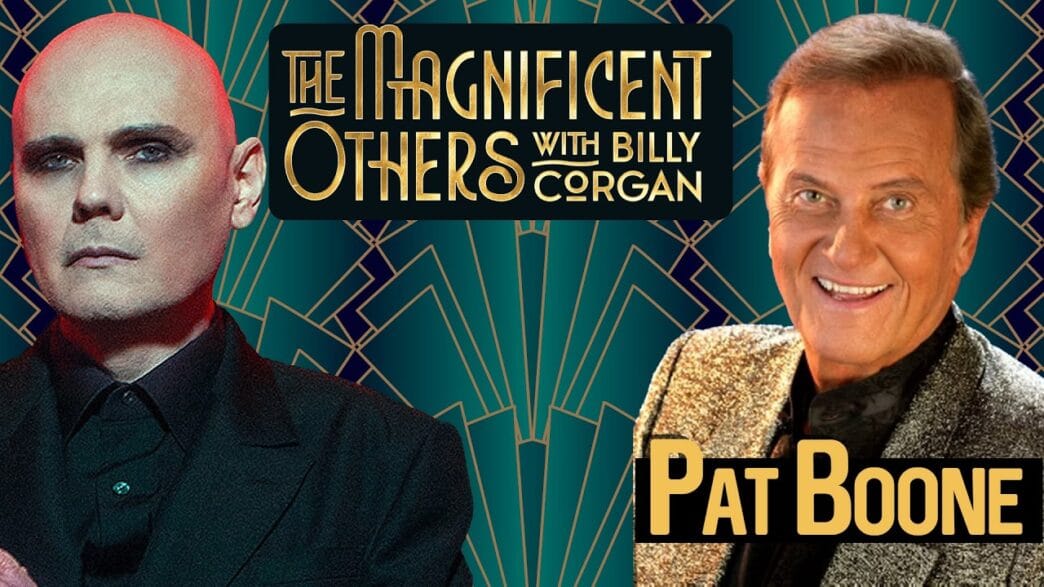
Billy Corgan gives living music history room to speak.
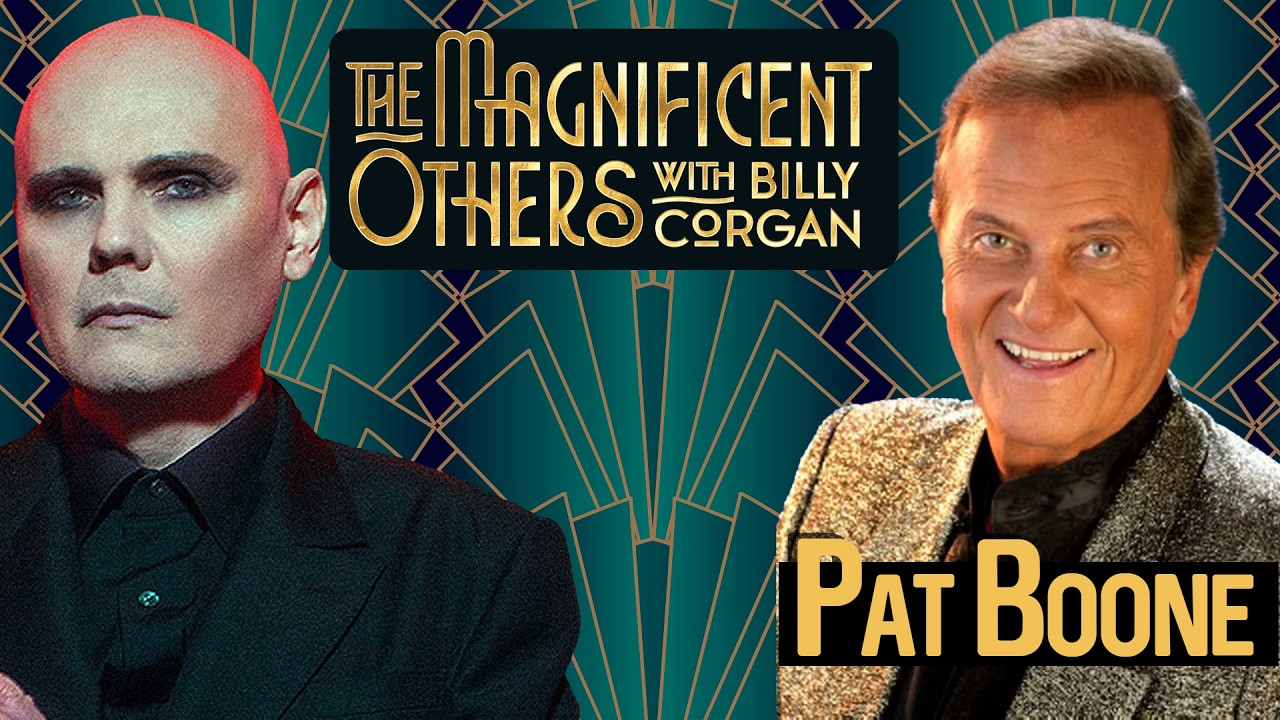
The one and only Pat Boone, one of the last living links to the birth of rock and roll and Hollywood’s mid-century studio era, side-steps over to The Magnificent Others with Billy Corgan.
Billy converses about everything and then some with thee indomitable Mr. Boone during a remarkable discussion about surviving fame, making history and keeping an optimistic spirit through more than 70 years in entertainment.
Boone arrives at 91 years young with nearly 50 million records sold, dozens of major chart hits, six No. 1 singles and a historic run of 220 consecutive weeks with at least one record appearing on the Billboard charts.
He also tells Corgan that the number of songs he has recorded has now climbed to approximately 2,700.
Those statistics are enormous, but this conversation is most valuable when the numbers give way to the details that can only come from someone who was actually standing inside the room.
Explore Pat Boone’s remarkable catalog, from early rock and roll to his unexpected big-band journey through heavy metal.
As an Amazon Associate, INYIM Media earns from qualifying purchases.
One thing we love about Billy Corgan’s podcast is that it is actively preserving music history across every genre before the small, human details disappear.
Corgan does not approach the past as one narrow rock-and-roll timeline. He follows country music into pop, rhythm and blues into early rock, jazz into television, gospel into heavy metal and Hollywood into the record business.
That curiosity matters. Too many music interviews remain trapped inside one artist’s latest promotional cycle. The Magnificent Others instead allows musicians, performers, producers and behind-the-scenes architects to explain how their worlds were actually built.
With Boone, Corgan begins before the superstardom.
Boone remembers marrying his high-school sweetheart, Shirley Foley, at 19 after learning that her father, country legend Red Foley, planned to move the family to Springfield, Missouri, for what became Ozark Jubilee.
The young couple asked for permission on a Friday, purchased their rings and married the following day. Because of the licensing requirements, they went through two ceremonies and jokingly became “double married.” Their simple original wedding band remained an important symbol through 66 years together.
At that point, Boone expected to become a teacher and preacher. He had won major talent contests, but no meaningful career offer followed. Then Dot Records founder Randy Wood called with a rhythm-and-blues song and a plane ticket to Chicago.
The recording conditions sound almost impossible by today’s standards. Boone describes cutting Two Hearts, Two Kisses live in mono with only a few musicians and singers. There were no digital repairs, isolated corrections or endless opportunities to rebuild the vocal.
Either the musicians created the moment together, or they did not.
When competing versions by Frank Sinatra, Doris Day and other acts appeared, Boone was sent through 20 cities in 18 days to promote his recording. Cleveland disc jockey Bill Randle eventually declared Boone’s version the one that carried the spirit of the song.
Inside Pat Boone’s conversation with Billy Corgan.
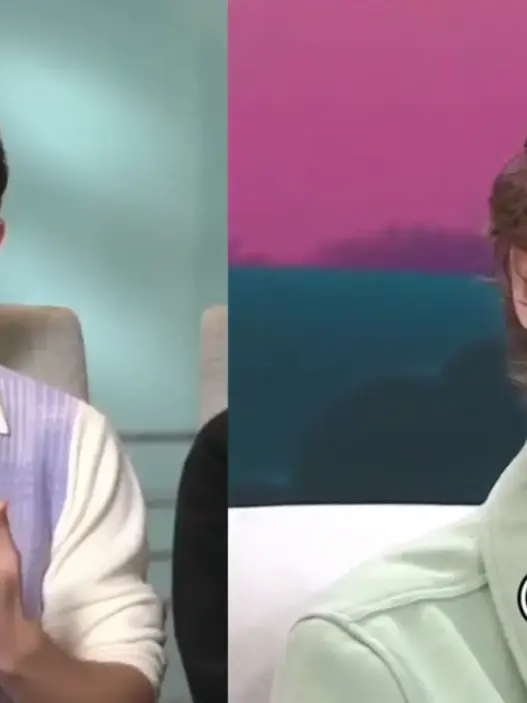
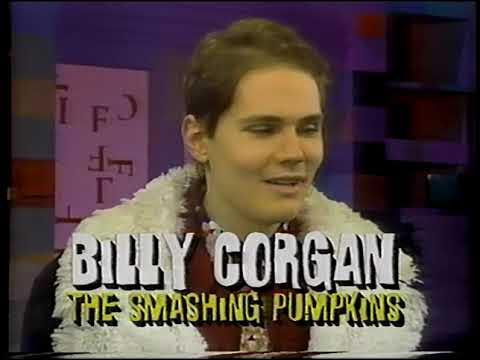
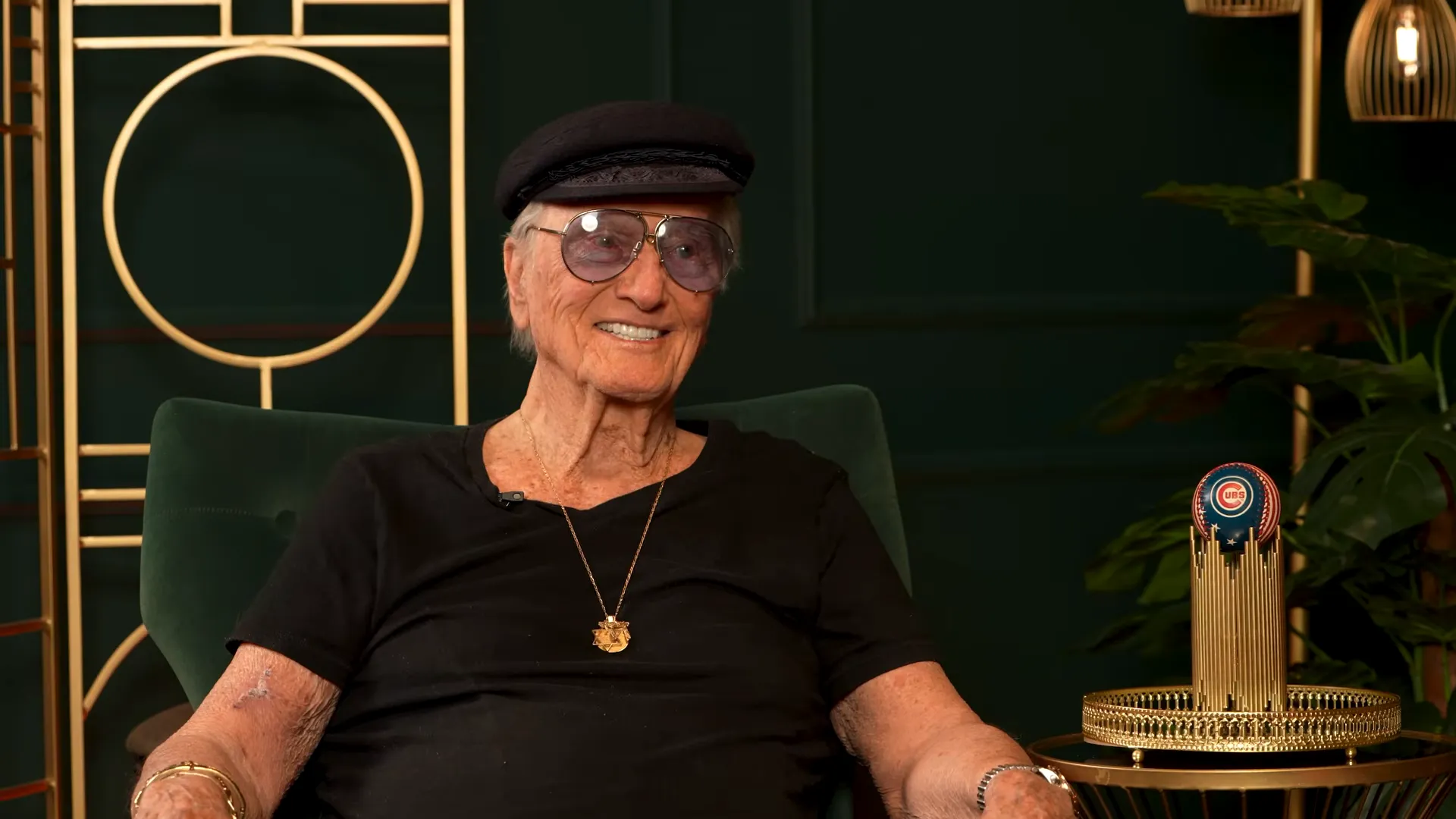
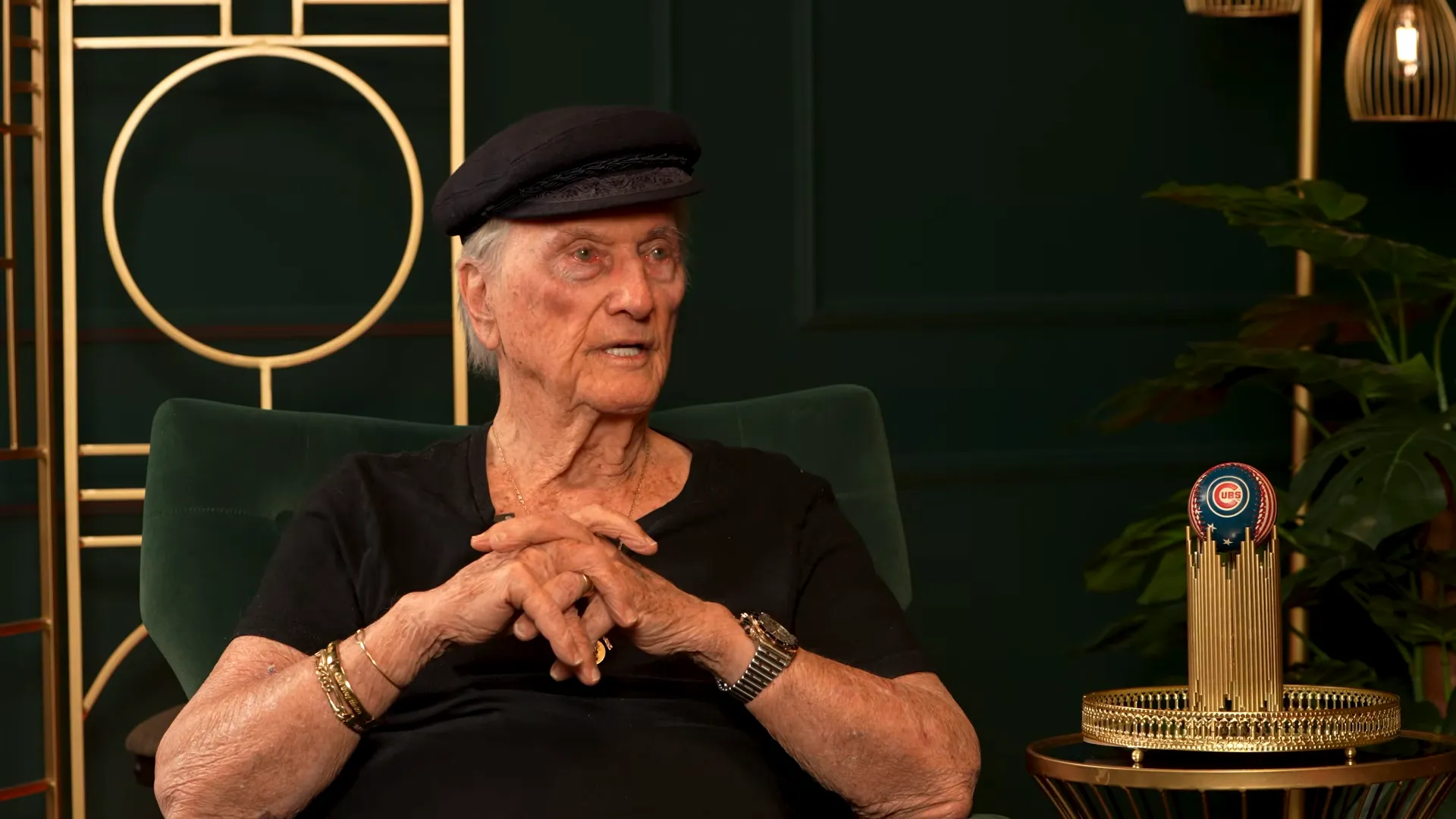
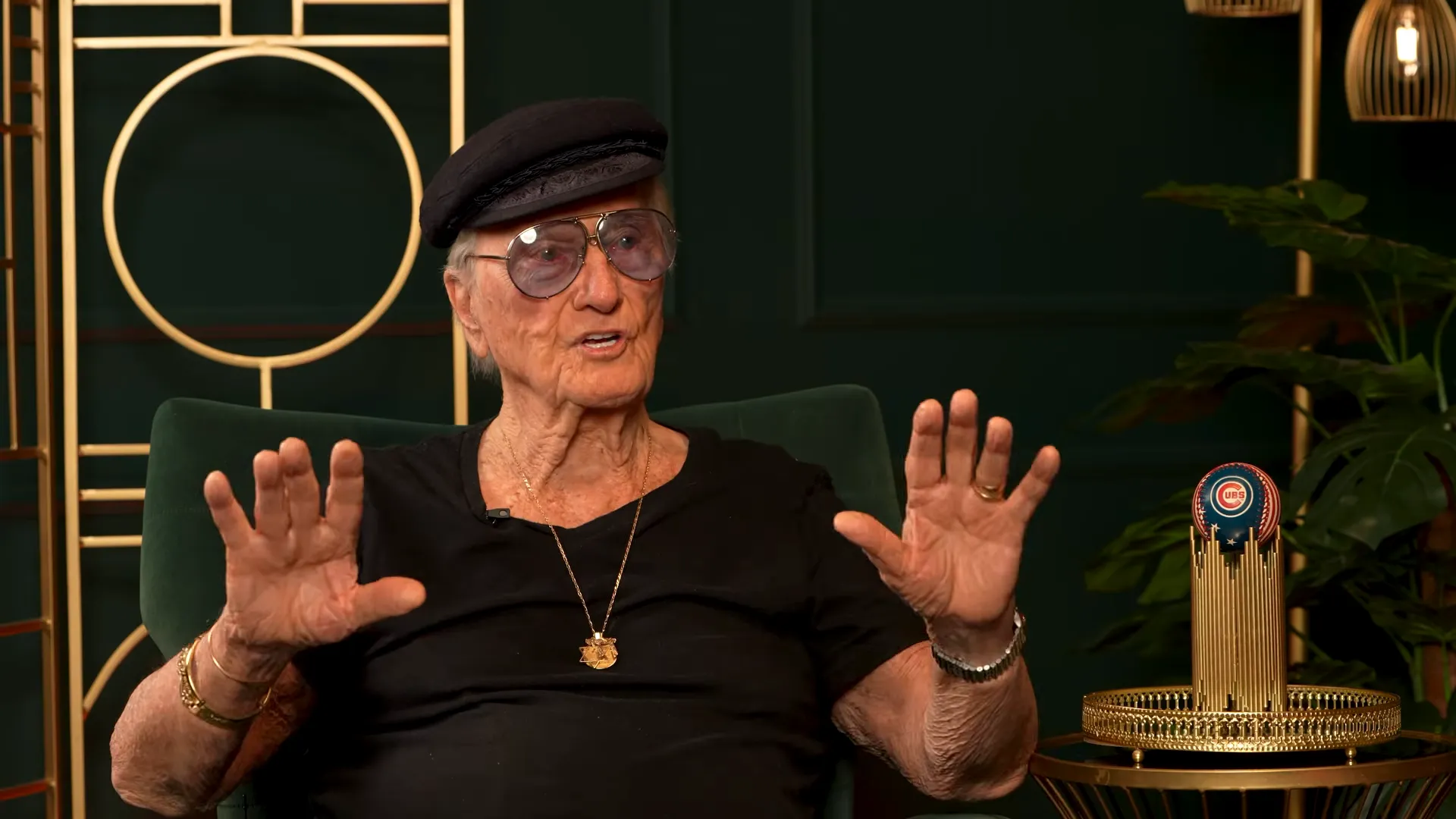
Video stills: Pat Boone and Billy Corgan discuss early rock and roll, live television, Elvis Presley and a career spanning more than seven decades on The Magnificent Others.
His next major breakthrough, a recording of Fats Domino’s Ain’t That a Shame, became Boone’s first million-selling No. 1 record while he was still in his early twenties.
The conversation also captures how quickly records could move during that period.
After recording Moody River in Los Angeles, Boone went to collect Shirley before heading home. While standing at a friend’s doorway, he heard the song’s introduction coming from the radio.
The station was already announcing the newly recorded track as its pick hit of the week. Boone had not even made it home from the session.
That is the type of music-industry detail that disappears when everyone who remembers the machinery is gone.
Pat Boone, Elvis Presley and the earliest days of rock and roll.
Boone also revisits meeting a young Elvis Presley at a Cleveland sock hop in 1955, before screaming crowds and global mythology had completely taken over.
He remembers Elvis arriving with a soft voice and visibly shy manner. When the future King of Rock and Roll first stepped before the teenagers, the girls liked the way he looked, but they were not yet screaming—and Elvis was not yet performing the exaggerated movements later associated with him.
Then Elvis moved from Blue Moon of Kentucky into That’s All Right, and Boone immediately heard the sound that RCA Victor and Colonel Tom Parker believed could change popular music.
The two eventually became friends and neighbors in Beverly Hills. Elvis sometimes arrived at Boone’s home on Sunday afternoons, where Boone’s four daughters treated him less like a global star and more like the family friend visiting the swimming pool.
Boone believes Elvis was drawn to the home because it offered something he deeply wanted: a wife, children and a more ordinary family rhythm beyond the machinery surrounding his career.
The discussion becomes especially moving when Boone describes Elvis privately admitting that he wished he could attend church without disrupting the service.
Elvis also asked whether Boone knew evangelist Oral Roberts. Boone made the connection, leading Roberts to visit Elvis in Las Vegas. Roberts later described him as spiritually starved and longing for the gospel experiences of his childhood.
Boone remembers Elvis keeping musicians and gospel quartets after performances so they could sing spiritual music through the night. Beneath the spectacle, he heard someone still searching for home.
The television stand Pat Boone refused to abandon.
One of the most revealing portions involves Harry Belafonte and The Pat Boone Chevy Showroom.
Belafonte wanted to appear after noticing the warmth and respect Boone showed guests including Ella Fitzgerald, Johnny Mathis and the Mills Brothers.
Boone says the network, sponsor and advertising representatives resisted because Belafonte was an outspoken civil-rights leader and Chevrolet feared consequences in the South.
Boone’s response was direct: if a program carrying his name required him to reject Harry Belafonte, then it was not truly his program.
“I’m aware of the problem, but I’m not going to perpetuate it.”
Belafonte was ultimately permitted to appear, but Boone remained disturbed by what happened. With only a few programs left in the season, he declined to renew the weekly series and moved into television specials instead.
The program’s legacy continued in other ways. During summer breaks, Dick Van Dyke and later Andy Williams filled Boone’s time period, giving both future television fixtures early opportunities to demonstrate that they could carry programs of their own.
Boone remembers navigating live television while still in his early twenties, standing beside performers including Nat King Cole, Ella Fitzgerald, Tony Bennett, Count Basie, Peggy Lee, Mel Tormé and Jo Stafford.
Sets fell, microphones failed and teleprompters stopped moments before airtime. Boone’s method was remarkably simple: accept what had happened and continue performing.
“At that young age, it was miraculous that I could just keep walking straight,” he tells Corgan. “I just took each moment as it came.”
The final stretch crosses yet another supposedly rigid genre boundary.
Boone explains that his 1997 album In a Metal Mood: No More Mr. Nice Guy was not intended to ridicule heavy metal. He heard the project as big-band jazz arrangements built around songs worthy of being treated as real compositions.
Ronnie James Dio joined him on Holy Diver, while other original artists supported the interpretations.
Then Ozzy Osbourne, whose Crazy Train Boone had recorded for the album, moved nearby.
Their first neighborhood exchange ended with Ozzy heading to an AA meeting and suggesting they have tea afterward. They did, and Boone remembers him not as a frightening rock caricature but as a sweet neighbor, family man and what he called a “prince of kindness.”
That unexpected friendship neatly captures why this podcast works.
Music history is not a collection of sealed genre boxes. It is a web of people, songs, television studios, radio stations, friendships, arguments and risks that repeatedly cross into one another.
Corgan understands that preserving those connections is as important as preserving the records themselves. The songs remain available, but the reason a key changed, how a performer handled a collapsing set or what two future legends said backstage can vanish in a single generation.
The Magnificent Others gives those memories time to breathe before that happens.
Press play on all thee intriguing brain juice, historical fun and firsthand music tales right below.
Watch Pat Boone on The Magnificent Others.
Billy Corgan guides Pat Boone through early rock and roll, Elvis Presley, live television, Harry Belafonte, Hollywood, heavy metal and the optimism that carried him through it all.
Sources: The official The Magnificent Others episode provided the featured conversation and firsthand stories; the official podcast listing provided the episode overview and program information; Pat Boone’s official website provided additional career and catalog background.