















Get Some Cinema Brain Juice: Jean Harlow Was Already Playing With the Machine
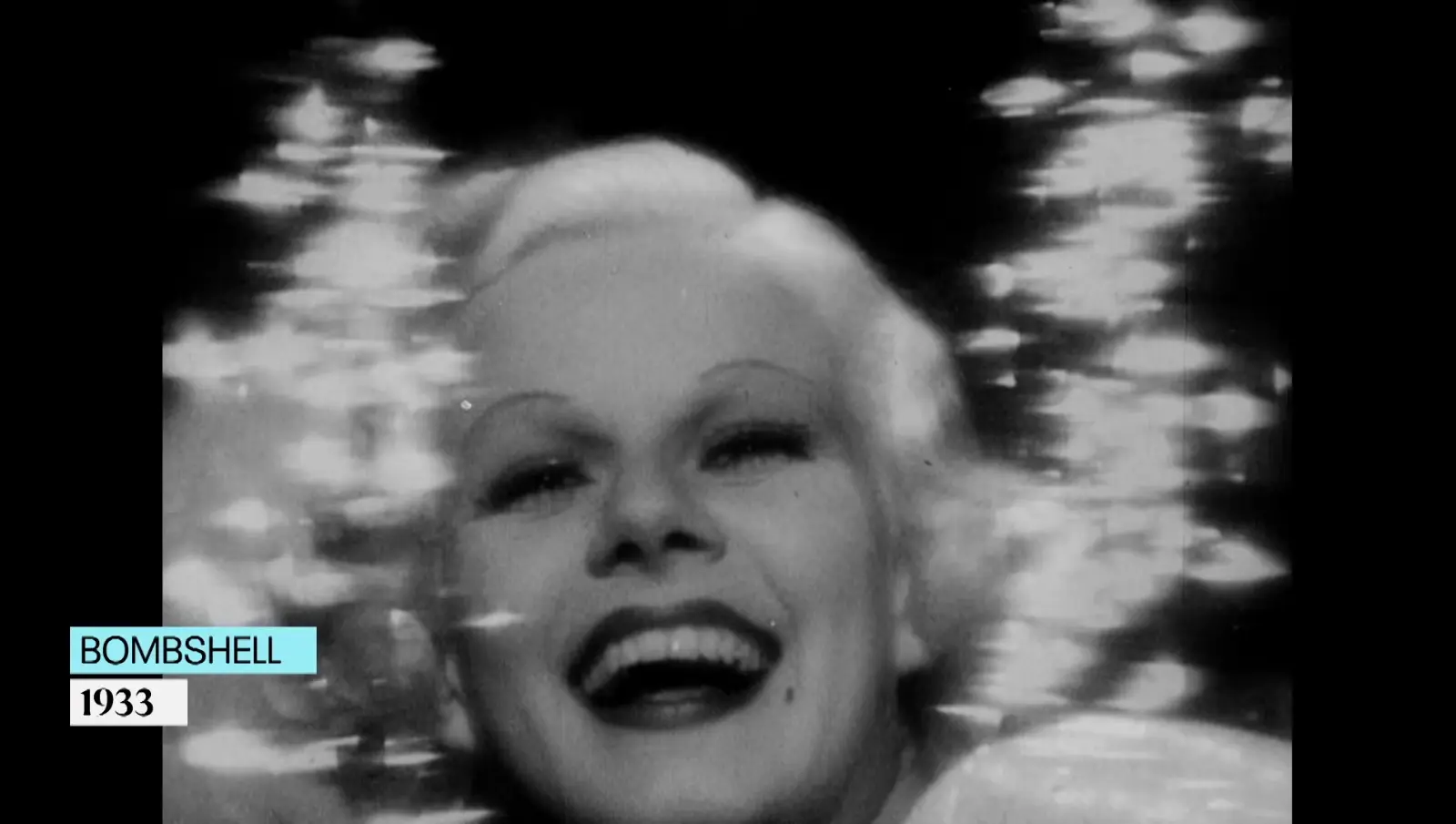
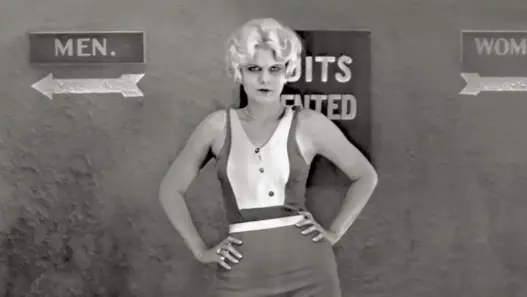
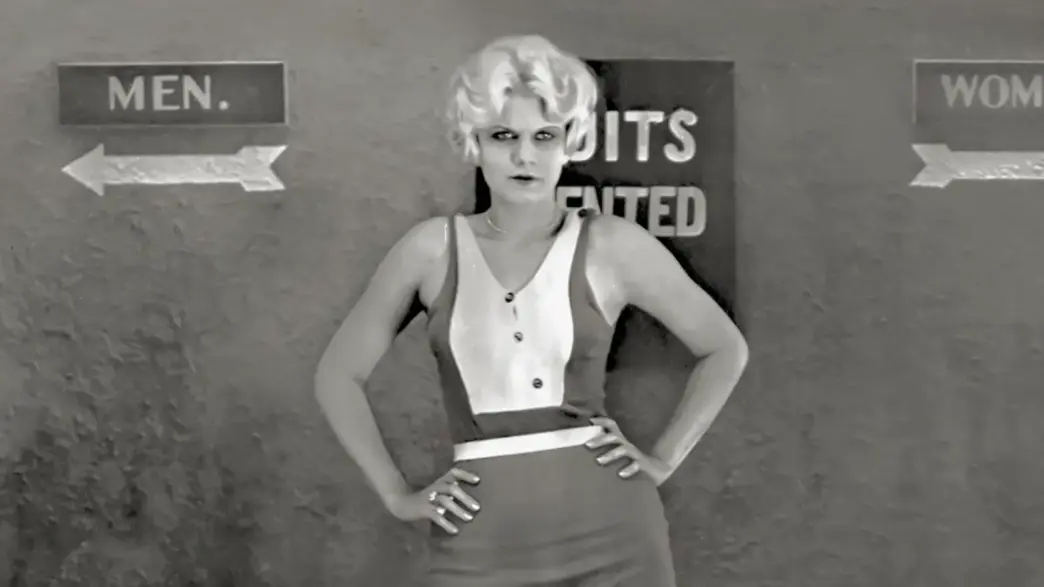
Get some cinema brain juice. By learning how film pioneer Jean Harlow and her 1933 comedy Bombshell were already playing with the idea of a movie star trapped inside the machine that manufactures her image.
Brought to us by Untold Hollywood via TCM, the short breaks down why Bombshell feels so modern: Harlow plays movie star Lola Burns, while the film turns publicity men, studio bosses, reporters, handlers, family freeloaders and even the star-making process itself into part of the comedy.
Calling it the movie that flat-out “invented the meta film” is cheeky shorthand, but the instinct is right. Bombshell is unusually self-referential for 1933 because it folds Harlow’s actual screen persona and Hollywood experience back into the fiction. The star is playing a star whose image is constantly being rewritten by everybody around her.
film
Jean Harlow vs. the Hollywood machine.
Bombshell turns the studio system, publicity games and the manufactured movie-star image into the joke — with Harlow standing right in the middle of it.
Some links may be affiliate links. INYIM may earn from qualifying purchases.
Directed by Victor Fleming, Bombshell stars Harlow as Lola, a wildly famous actress whose life barely belongs to her. Her publicist, Space Hanlon, keeps feeding stories to the press. Her family lives off her. Her household is chaos. Everybody wants a piece of the image while Lola is left trying to figure out whether there is any version of herself that exists outside the publicity cycle.
And here’s where it gets wonderfully tangled: TCM notes that the picture was partly inspired by Clara Bow, the silent-era “It Girl,” whose life gave the filmmakers plenty of raw material. Fleming had known Bow personally, and Lola Burns was built with clear echoes of Bow’s fame, household circus and exploitation.

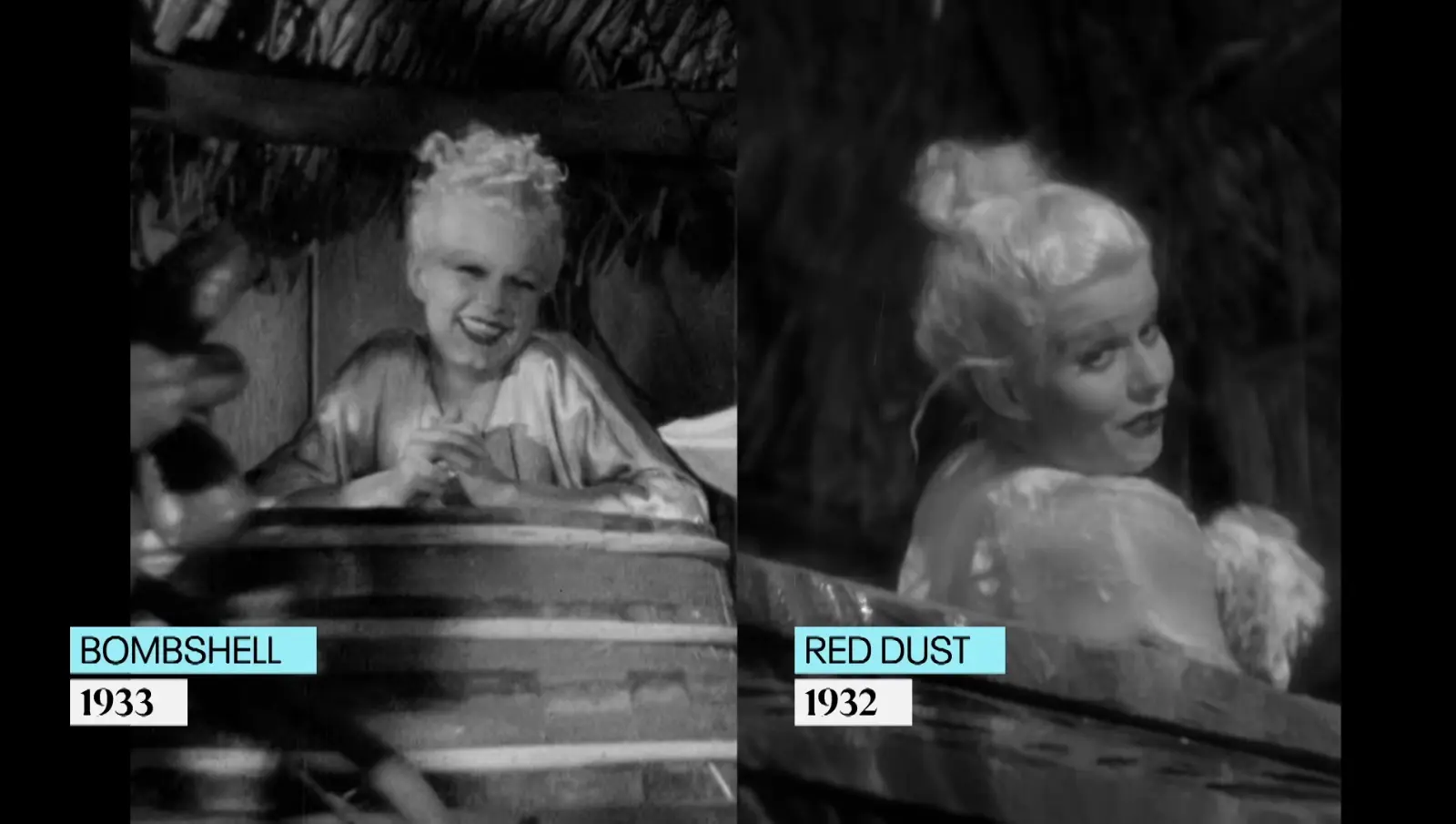
But the movie doesn’t stop at Bow. It also folds in pieces of Harlow’s own life and career. TCM points out that Lola’s all-white home mirrored Harlow’s real-life surroundings, and the movie even plays with Harlow’s previous MGM image by referencing and recreating material connected to Red Dust.
That is what makes Bombshell more than a backstage comedy. It is Hollywood looking at itself while one of its biggest stars performs inside the reflection.
AFI’s catalog confirms that the film recreates part of the famous bathing sequence from Red Dust (1932). In other words, audiences watching Harlow as fictional star Lola Burns were also being nudged to remember actual Jean Harlow, actual MGM and an actual earlier role. That loop between performer, persona and character is exactly why the movie still reads as so knowingly modern.
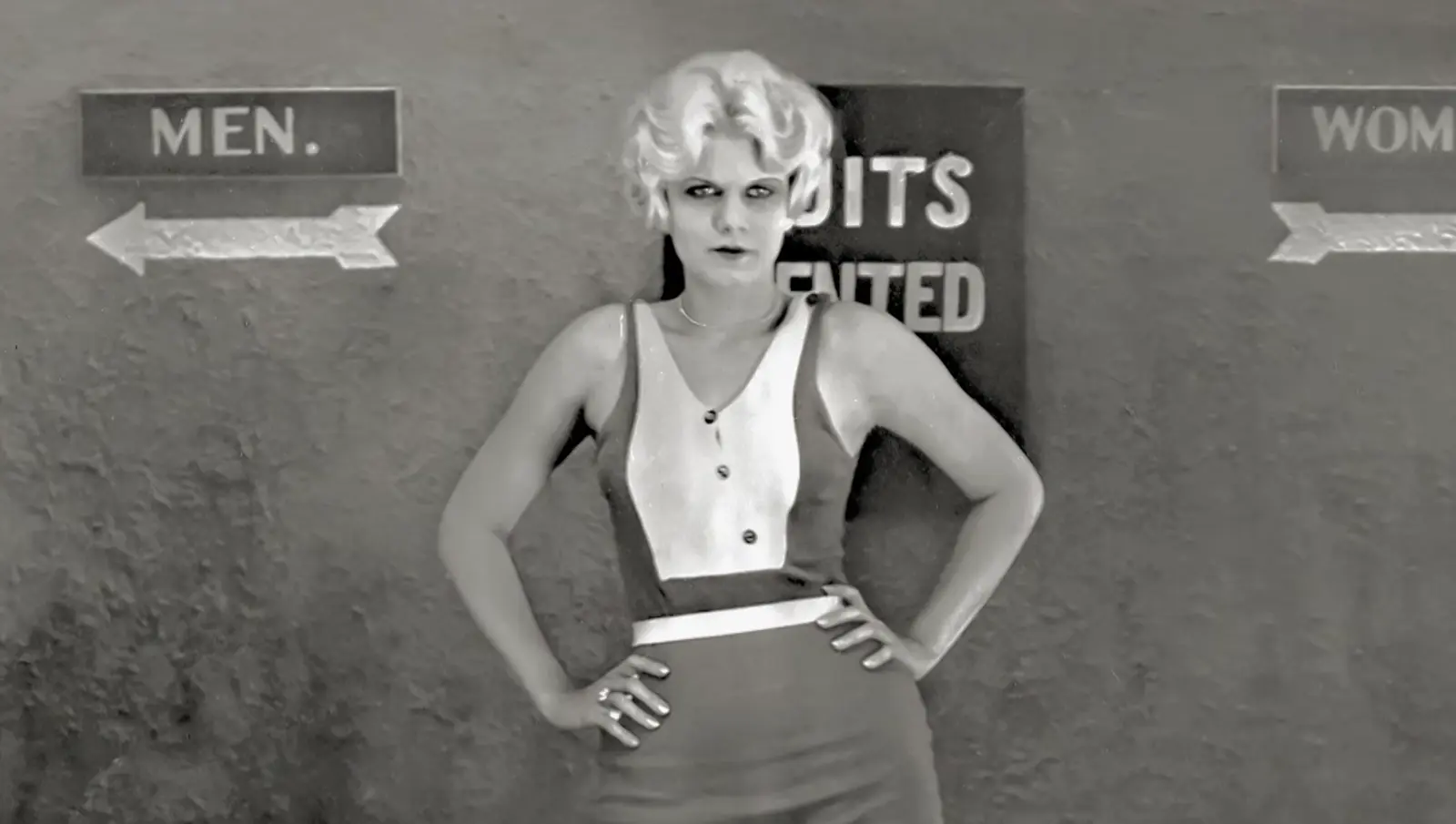
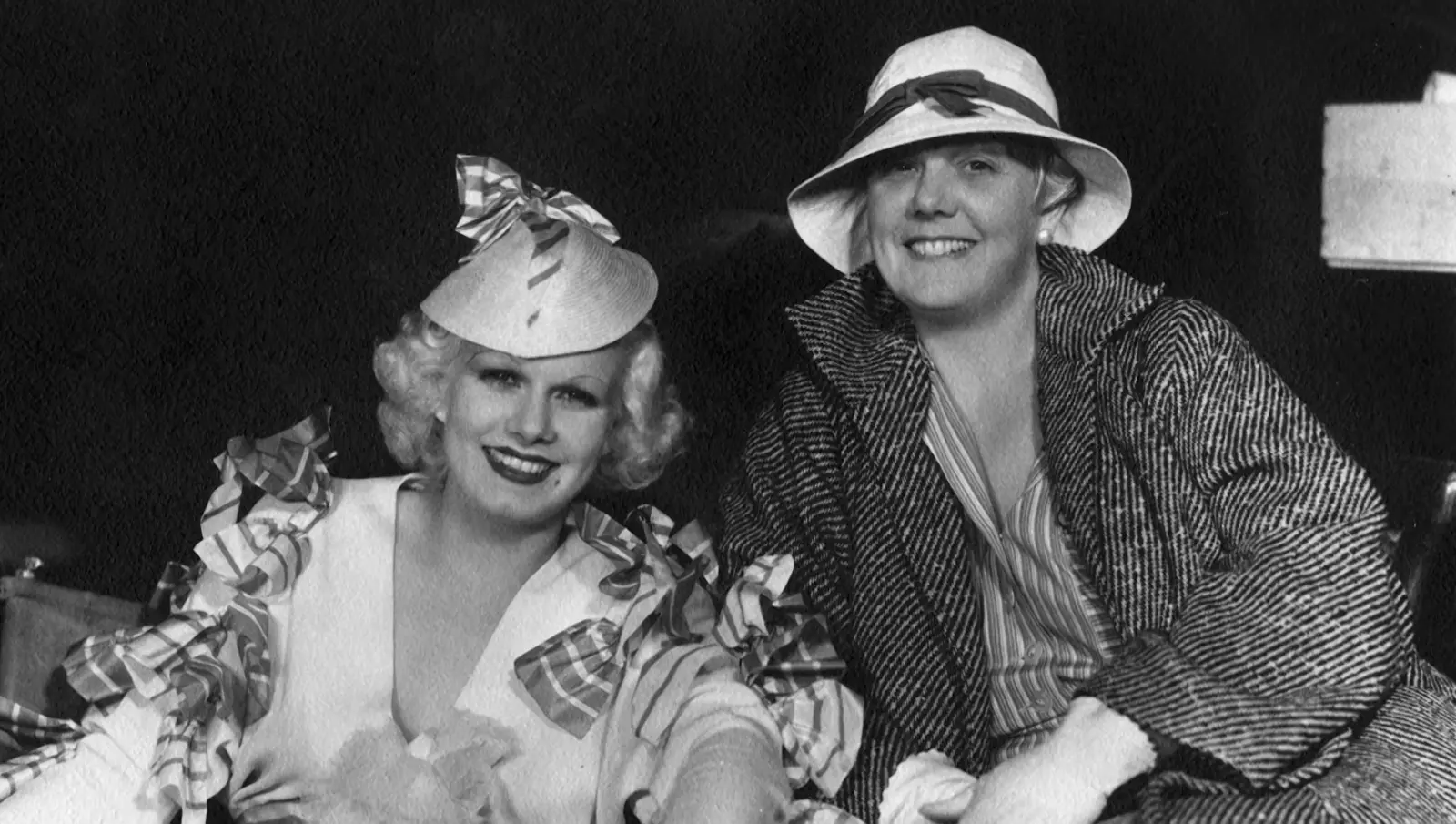
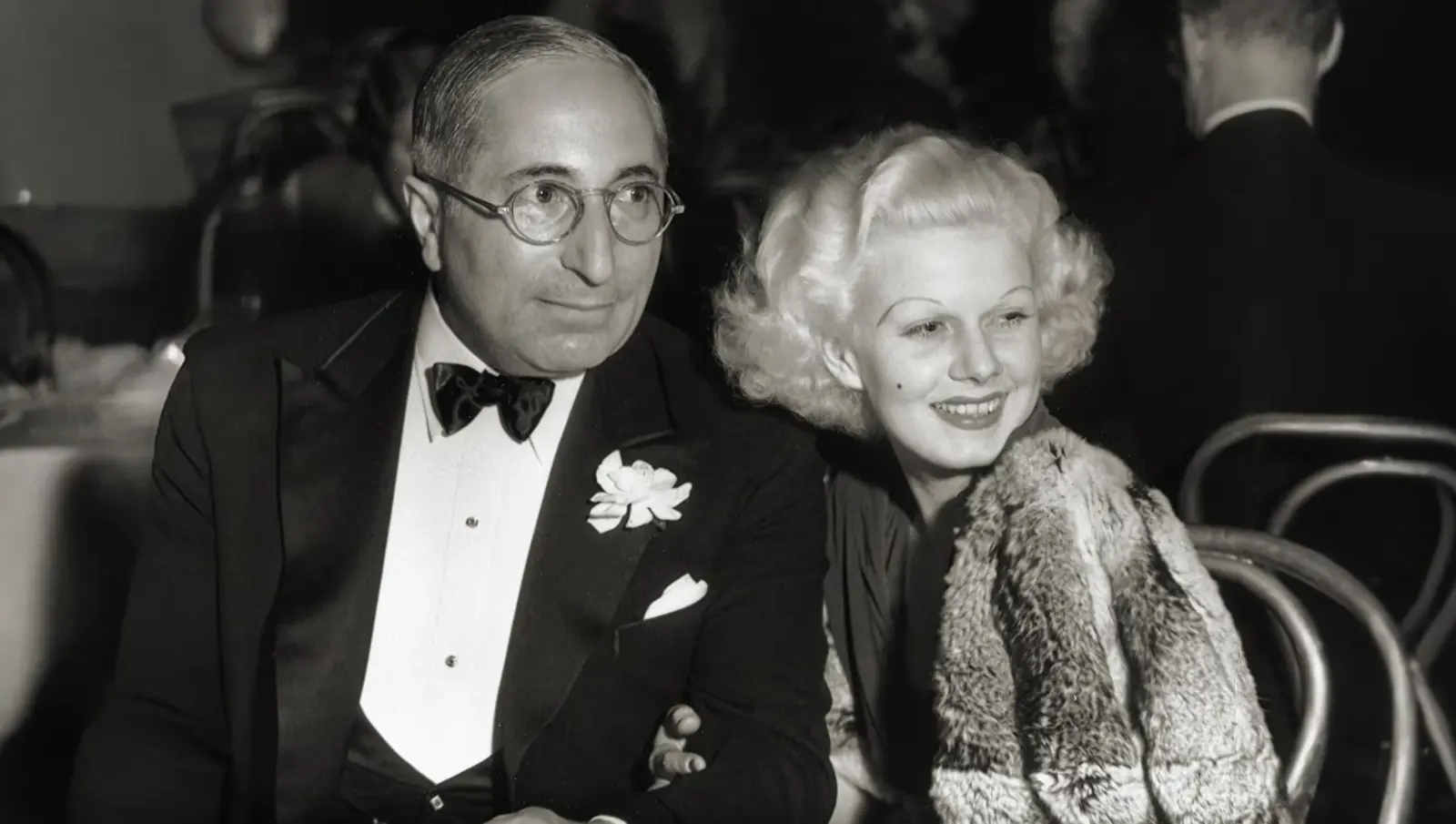
Images: TCM / Untold Hollywood.
There is also a sharp little irony sitting underneath the comedy. Harlow herself had been turned into one of MGM’s most marketable objects — platinum hair, sex-symbol billing, gossip-column fascination and all. Bombshell lets her play a woman suffocating under precisely that kind of attention.
And she was funny enough to make the satire land. Harlow was never only the “blonde bombshell” image sold around her. By 1933 she had already proved herself a sharp comic presence, and this movie weaponizes that timing. Lola can be glamorous, furious, exhausted, silly and completely aware that everybody surrounding her has an angle.
That is the real cinema brain juice here. Bombshell isn’t merely about a celebrity. It is about the system that invents celebrity, feeds off celebrity and then sells the resulting chaos back to the audience as entertainment.
Sound familiar? Exactly.
Now let TCM’s Untold Hollywood connect the dots itself — from Clara Bow to Harlow’s real star machinery and the wonderfully self-aware studio satire sitting inside Bombshell.
How Jean Harlow’s ‘Bombshell’ Turned Hollywood Into the Joke
TCM’s Untold Hollywood examines the real-life Hollywood parallels, publicity machinery and self-referential tricks packed into Victor Fleming’s 1933 comedy.
Source: TCM; American Film Institute.