










Mattie Safer Opens Up About the Rapture Record Made While the Band Was Pulling Apart
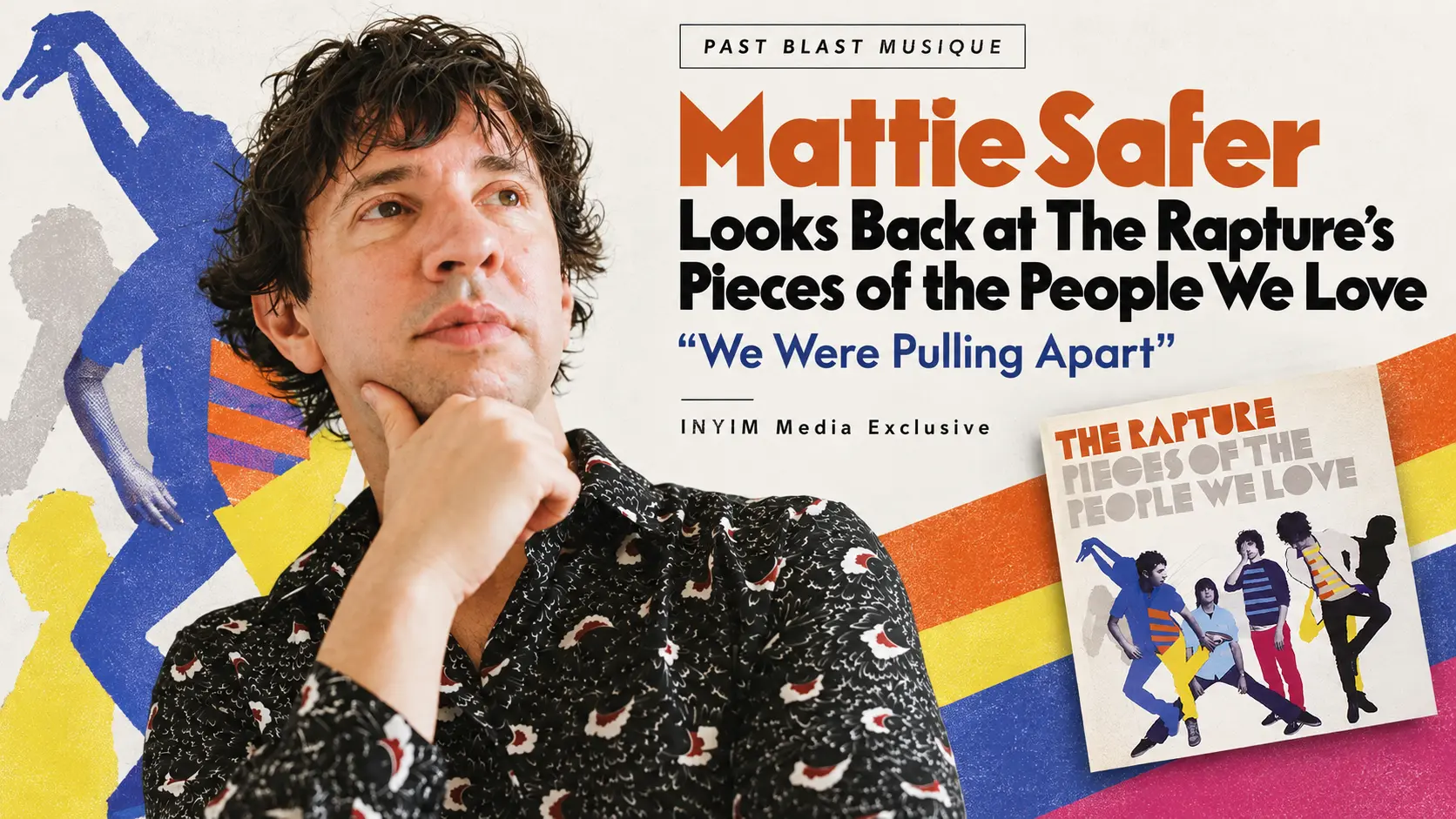
In an exclusive interview with INYIM Media, former Rapture bassist, vocalist and songwriter Mattie Safer says the band was already “pulling apart” creatively and personally while making 2006’s Pieces of the People We Love.
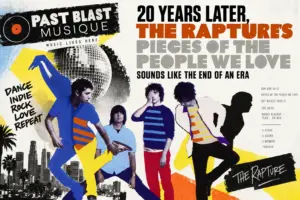
Twenty years later, Safer went back and listened to the album again while answering our questions — and what came back was far more than nostalgia.
He talked about a band working hard to find common ground while relationships were fracturing, the strange disconnect between playing Coachella and opening for Daft Punk while still being treated like a disappointment by a major label, the evolution of the title track, Danger Mouse’s ruthless editing process, a night out with CeeLo Green and why Safer was never particularly interested in many of the bands being filed next to The Rapture under the “indie dance” banner.
The conversation began after Safer — a longtime supporter of INYIM Media, current touring member of Poolside and the man behind lovetempo — read our 20th-anniversary look at Pieces of the People We Love.
What we did not expect was for Mattie Safer to open the door quite this wide.
And before we get to any of it, that generosity deserves its own note: Mattie did not just answer these questions from twenty-year-old memory. He went out of his way to put Pieces of the People We Love back on and actually listen to it again for us while he worked through his answers.
Revisiting old work can be the creative equivalent of nails on a chalkboard — old choices, old mixes and an old version of yourself suddenly staring back at you. And Mattie is exactly the kind of artist who, in his own words, lives, breathes and eats a record while making it and then moves on.
He could have answered from twenty-year-old memory. Instead, he hit play.
And, because this is Mattie, he also told us what he was listening to that day and what he was having for lunch.
Here is our conversation with Mattie Safer.
Twenty Years Later, Mattie Finally Put the Record Back On
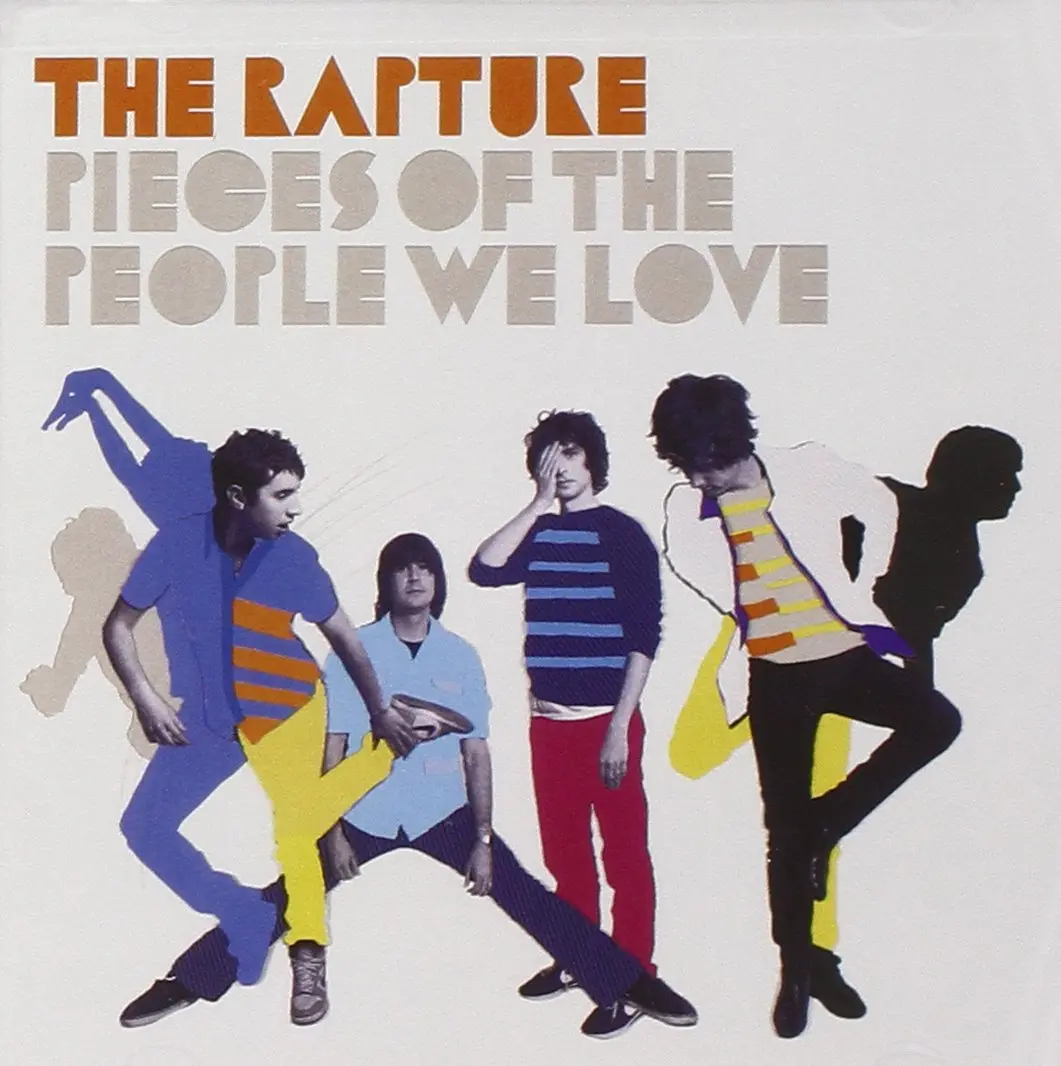
INYIM Media: Twenty years later, when you hear Pieces of the People We Love now, what do you hear in it that maybe you couldn’t hear while you were actually making it? Has your relationship with the record changed at all?
“I’ll be honest, it’s actually been a long time since I’ve listened to that album. I tend to be the kind of person who lives, breathes, and eats a record while making it and then moves on. Let me put it on in the background while I answer the rest of the questions and I’ll come back to it…”
And then he did.
“Ok, I listened. I think at various points in the past I thought the album was too slick, or trying to be too slick but failing. But listening today, the first six songs I think to me were a highly enjoyable listen.”
“This was an album being made by a band that in many ways was in the process of pulling apart, both creatively and personally. We had to work really hard to find common ground, but I think on a lot of the record we really did, and everybody found their way to lock in and bring their personality and preferences to the recordings while still managing to make music that sounds cohesive and interesting.”
“It falls off a little bit to me toward the end. I think that there were a few songs that might have been better, but for the sake of internal band politics we ended up with what we ended up with.”
That may be the most revealing way to hear Pieces two decades later. What sounds remarkably cohesive from the outside was being created by four people working hard just to locate the common ground.
It also reinforces why, for us, Pieces of the People We Love remains the last true Rapture record: it is the final studio album with that particular chemistry still in the room — Luke Jenner, Mattie Safer, Vito Roccoforte and Gabriel Andruzzi pushing and pulling against one another.
From the Indie Dance Floor to MTV — Without Realizing How Rare It Was

To understand why seeing The Rapture on MTV felt so surreal, it helps to remember exactly where music television was in 2006.
This was the late-TRL era: MTV had already moved heavily into reality and personality-driven programming, while the audience for music discovery was beginning to scatter toward the internet. But MTV and MTV2 could still provide a kind of national music-culture validation that was difficult to replicate anywhere else. A band could go from the indie-club ecosystem to suddenly appearing in the same television universe as Justin Timberlake, Beyoncé, Shakira, Christina Aguilera and whatever else America was watching that week.
The network itself was visibly caught between eras. For the 2006 MTV Video Music Awards on August 31 at Radio City Music Hall, MTV pushed beyond the traditional television broadcast with a live backstage feed through MTV Overdrive. The VMAs were also simulcast live on MTV2 for the first time, while the newly launched MHD carried the show in high definition. Music television was beginning to become multiplatform before most of us were even using that word.
And The Rapture were not simply watching that world from the outside.
They played the Virgin Mobile VMA after-party at Gotham Hall that night. The party was deliberately positioned as an alternative to the week’s hip-hop-heavy after-party circuit, with the MisShapes DJing, The Rapture performing and CeeLo closing the night. Photographers even caught The Rapture and CeeLo together at the event.
That is the kind of jump we are talking about. The band whose records belonged to our indie dance floor was suddenly part of the machinery surrounding one of pop music’s biggest television nights — less than two weeks before the U.S. release of Pieces of the People We Love.
And in hindsight, that timing feels almost too perfect. MTV itself was between worlds. The indie-dance scene was between worlds. The Rapture were between worlds.
INYIM Media: In our piece, we describe Echoes as feeling like the beginning and height of that indie/dance era, with Pieces of the People We Love almost feeling like the closing chapter of it. From our side of the dance floor, it was wild — we went from dancing to The Rapture in clubs and seeing you in smaller venues and at Coachella to suddenly turning on MTV and seeing your faces there. It felt like this little world we knew had suddenly broken through into another universe. Did it feel that way from inside the band too? And did you have any sense that the scene itself was changing around you?
“You know, I was really young when The Rapture broke through, so to me it was certainly not anything that I had dreamed of, but I didn’t really know any better to appreciate how unique it was, and how hard it is to achieve that kind of success. It just seems like, ‘Oh, I guess this is how it works.’”
Then came the major-label reality check.
“Weirdly though, when you sign to a major label, they don’t really care how good or bad your record is, how much it means to someone, if you play Coachella, open for Daft Punk, any stuff like that. They are comparing your record sales to Nelly or whoever.”
“And we never achieved anything close to a real ‘hit’ in that sense, so even though we were selling tons of records, and getting to do all these amazing things, there was always this vibe of disappointment or failure coming from the label that was getting in the way of truly experiencing the joy of the moment.”
That is a particularly strange piece of perspective twenty years later: a band could be helping define an era, appearing on MTV, playing major festivals and opening for Daft Punk — and still have a corporation looking at the numbers and wondering why they were not Nelly.
Mattie Safer Wasn’t Really Listening to the ‘Indie Dance’ Bands Anyway
There was another wrinkle in our memory of that period. From the dance floor, The Rapture sat at the center of this giant indie-dance collision. From Mattie’s side of the stage, the musical map looked a little different.
“Musically speaking, I really wasn’t a fan of a lot of the ‘indie dance’ bands that we were being lumped in with. I was much more drawn to what was happening in DJ world, both in terms of the new weird underground music coming out of Europe at the time and the classic disco and house records that were getting mixed in.”
“It was a beautiful eclectic moment in dance music, and I think Pieces of the People was an attempt to take those sorts of influences and ideas and process them through the band, to separate ourselves from what to me were a bunch of ‘dance’ bands that really didn’t have any groove.”
There it is.
Dance bands that didn’t have any groove.
Twenty years later, we are still laughing — and he is not wrong.
It also explains something about Pieces that has aged particularly well. It did not simply paste a disco beat underneath an indie-rock song and call the job finished. The bass, percussion and rhythmic architecture mattered. The record wanted to move like dance music, not merely dress like it.
How ‘Pieces of the People We Love’ Became a Completely Different Song
INYIM Media: Is there something about making Pieces that has stayed with you all these years — a song, a session, a ridiculous moment, something somebody said, or even something about the record that people never really noticed? Basically, what comes back to you when you think about that time now?
Safer went directly to the title track.
“‘Pieces of the People We Love’ is a song that really evolved over a long period of time and showed how a group of musicians working together, and working through differences, can make a piece of music better.”
“We started playing that song live while we were on tour in Italy with Belle and Sebastian in 2004. It was a very garage-y but electro song, trying to split the difference between the White Stripes and Soft Cell or something.”
That version did not last.
“It was going ok, but when we got back I think it was Gabe and Vito who had the idea to strip it down to its essential core: lyrics, melody, and chord changes, while reworking the feel.”
“Gabe wrote that synth bass line and Vito came up with that catchy, pounding drum beat. It was in a completely different time signature and a mellower feel, and that really allowed the romantic core of the song to shine through.”
“Luke’s guitar playing on it is sparse, but again, just perfect for the mood, providing a jolt of energy when the song needs it.”
Then Danger Mouse entered the picture.
Danger Mouse Had One Rule: Don’t Let Him Get Bored
“Working on it with Danger Mouse was great. His whole process for making a song was that he couldn’t get bored while listening to it.”
“So he would cut out sections, and really just try to get everything down to the absolute minimum length necessary. Every time he made a change he listened from the very beginning, to make sure it worked in the full context of the song. It was very illuminating.”
It is an almost ridiculously simple production philosophy — but once Mattie explains it, you can hear it in the finished recording. The title track never hangs around simply because a section could theoretically repeat one more time. It keeps moving.
And then there is the detail we somehow missed for twenty years.
Yes, CeeLo Green Really Is Singing on the Title Track
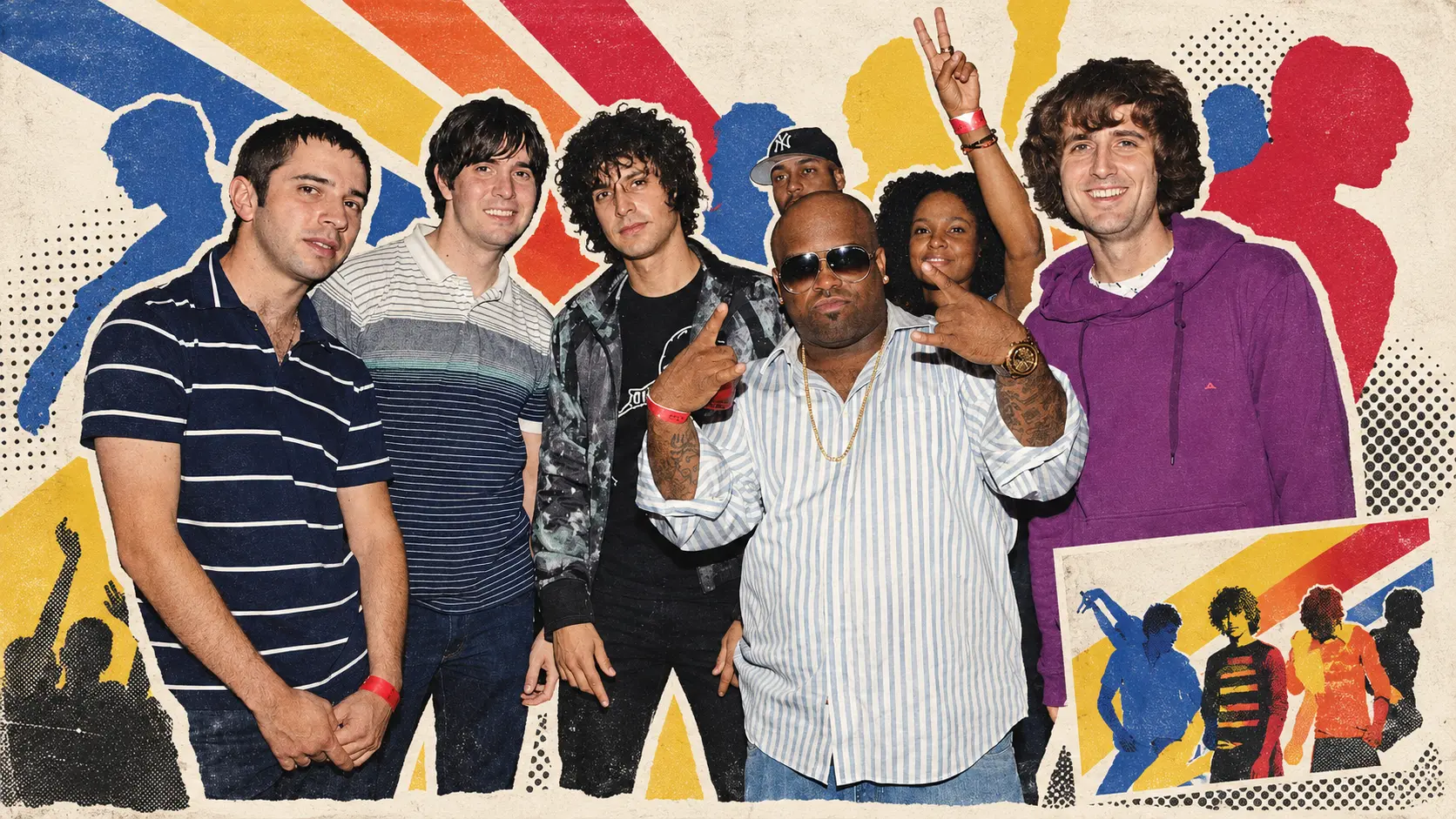
“And of course, getting CeeLo to sing on the record was a dream.”
When we were preparing our original anniversary story, we discovered that CeeLo Green provided vocals on “Pieces of the People We Love.” We genuinely had no idea.
The timing, according to Mattie, was extraordinary.
“We were working with Brian [Danger Mouse] right when ‘Crazy’ was starting to break, and CeeLo was around the studio quite a bit.”
And then Mattie gave us one more visual that deserves its own movie.
“I even got to go out to the club with him one night, which was a trip into a whole different world.”
We can imagine.
The whole thing is even funnier on our end because CeeLo was also an in-real-life fashion friend of INYIM co-founder Anthony.
Apparently everybody knew everybody except nobody thought to tell us CeeLo was singing on one of our favorite Rapture records.
But, as we said before, that is another story.
Hear The Rapture’s “Pieces of the People We Love” With CeeLo Green
The title track was produced by Danger Mouse and features additional vocals from CeeLo Green — the detail that somehow escaped us for twenty years.
Mattie Moved On — and He Is Still Making People Dance
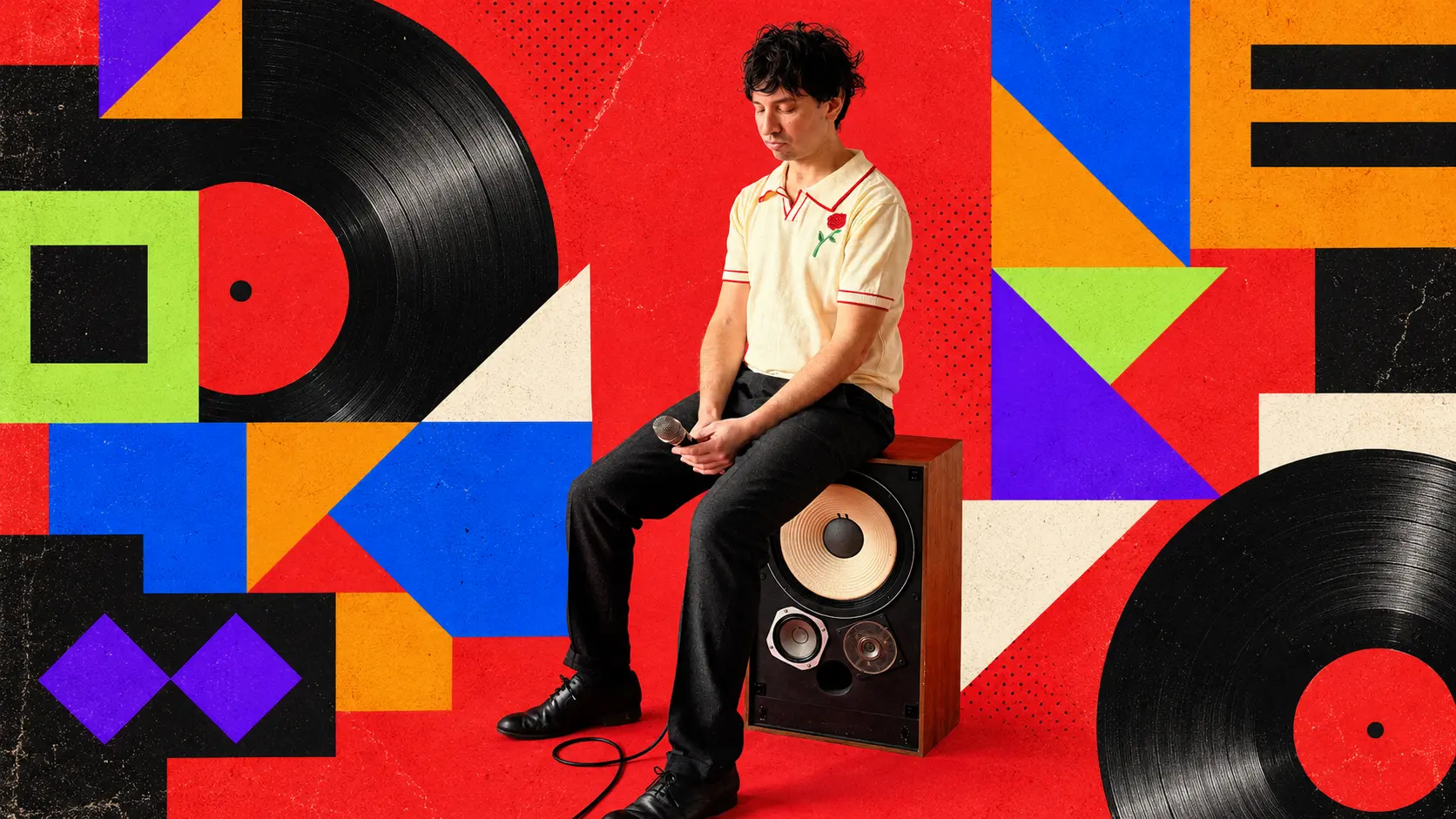
INYIM Media: And bring us up to the present — what are you working on next? Music, Poolside, your own projects, anything else you’re excited about. Plug away. Tell us what we should be listening to, watching for, buying tickets to, or generally paying attention to.
“I released my first lovetempo album, There Is a Light, this past April, and have been touring in support of it throughout the summer.”
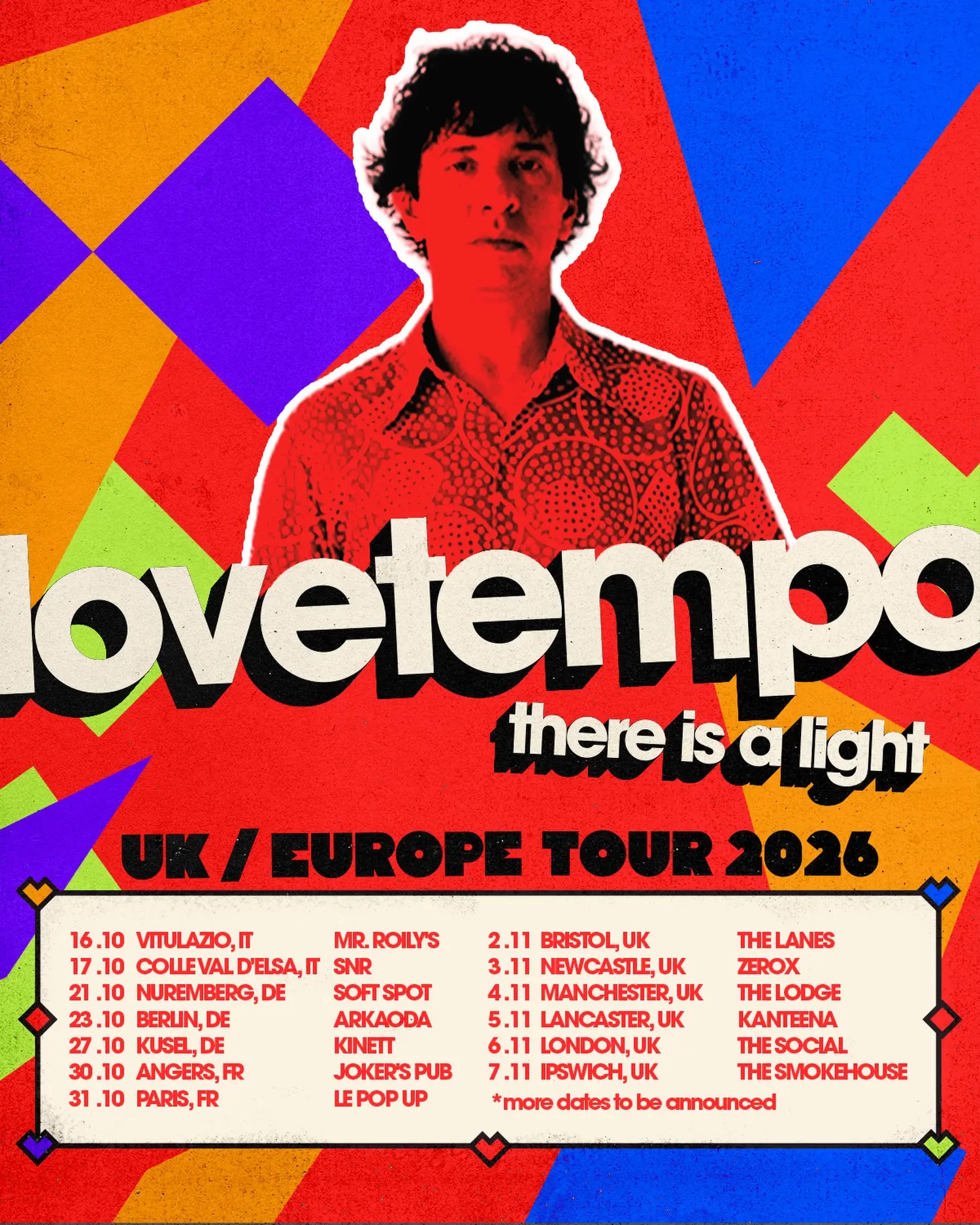
“We have a date in LA on September 25 supporting Mind Enterprises at The Bellwether, and then we are embarking on our first European tour in October and November. You can find links for all of it at lovetempo.band.”
The Los Angeles date is confirmed for Friday, September 25, 2026 at The Bellwether, with lovetempo joining Mind Enterprises and Fred Fancy. Doors are at 7 p.m. and the show begins at 8 p.m.
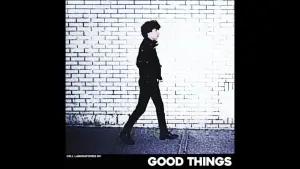
Safer’s debut lovetempo album, There Is A Light, arrived April 17 through Bastard Jazz Recordings. The project continues the thing that made his part of The Rapture so essential in the first place: groove, soul and dance music treated as something to actually feel rather than an accessory.
And Finally: Luther Vandross and a Burrito
We could have ended by asking Mattie another solemn question about legacy or influences.
We chose something more useful.
INYIM Media: What was the last song you listened to today — and what’s happening for breakfast, lunch or dinner?
“I’m currently listening to the Luther Vandross recording of ‘A House Is Not a Home.’ And I’m gonna get a burrito for lunch.”
Perfect.
Twenty years after Pieces of the People We Love, Mattie Safer put the record back on, told us what he hears differently now, remembered a band simultaneously finding common ground and coming apart, explained why Danger Mouse refused to let a song get boring, casually dropped a night out clubbing with CeeLo Green into the conversation — and then went to get a burrito.
More importantly, he kept moving.
That may be the most fitting ending of all.
We grow. We learn. We move on.
And sometimes we make another record.
Watch lovetempo’s “Wanna Be With You” Official Music Video
The 2025 official video, directed by Moriah Ziman and starring Mattie Safer and Katalina Iturralde, leads directly into the current lovetempo chapter and the 2026 album There Is a Light.
Keep Up With Mattie Safer and lovetempo
Visit lovetempo.band for music, tour dates and current lovetempo updates, and MattieSafer.com for more from Mattie.
Special thanks to Mattie Safer for his time, generosity and for actually putting Pieces of the People We Love back on before answering our questions. We appreciate him sharing these memories with INYIM Media.
Sources: Mattie Safer, exclusive interview with INYIM Media, September 2026; MattieSafer.com; lovetempo.band; Another Planet Entertainment; The Rapture / Universal Music Group; lovetempo official YouTube; 2006 MTV Video Music Awards; BizBash.