













The Northwest Fire Crisis Just Started Spinning
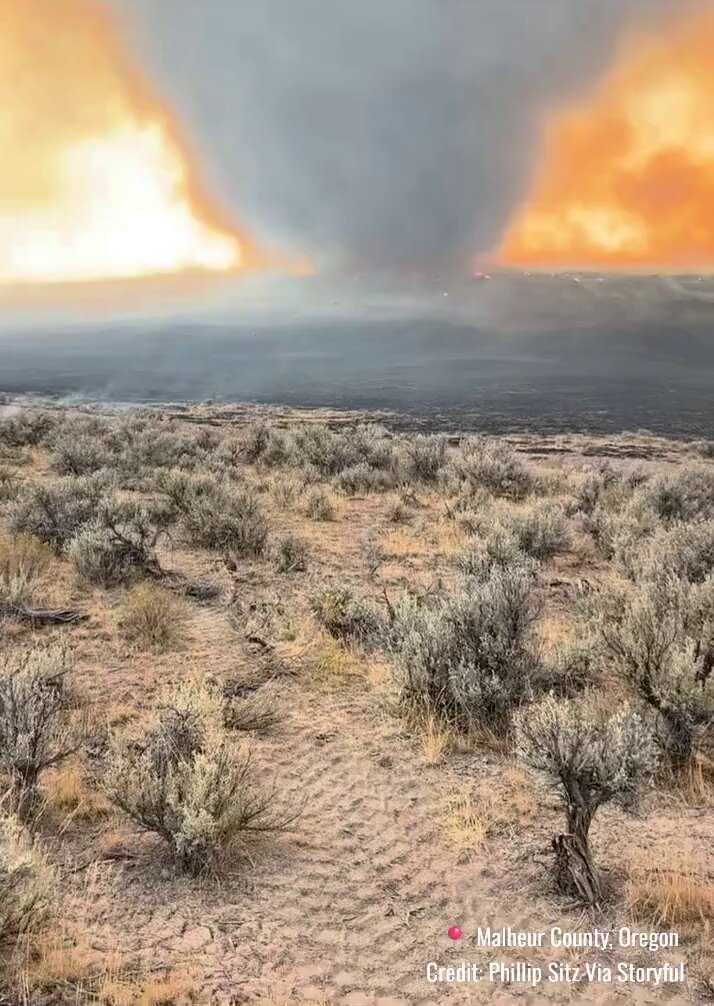
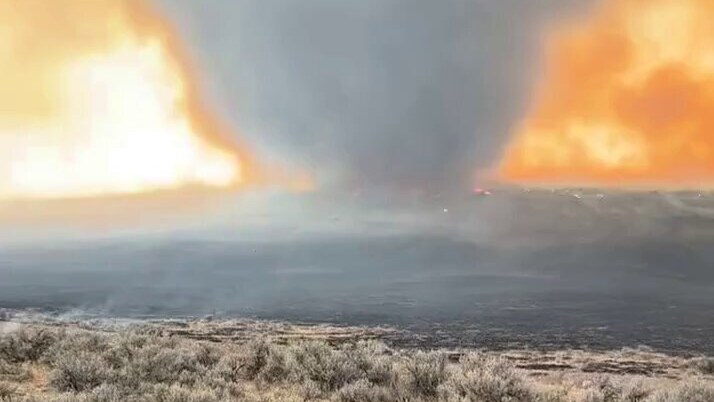
Present-day developments: A dramatic rotating column of smoke and flame—commonly called a “firenado”—was captured near wildfires burning across the Pacific Northwest as the region’s already brutal 2026 fire season pushed crews, communities and air quality into another dangerous stretch.
The sight is spectacular in the most absolutely-do-not-go-near-it way possible. A fire whirl forms when intense heat creates a powerful rising column of air that begins rotating, pulling smoke, debris and sometimes visible flame into the vortex.
The National Weather Service describes a fire whirl as a spinning column of ascending hot air and gases rising from a fire. Small whirls can be narrow and short-lived, while larger ones can reach the size and intensity of a small tornado—making already unpredictable wildfire behavior even harder for crews to manage.
Discover More
Keep Thee Emergency Kit Ready
Check official wildfire information, then keep a weather radio and portable power bank nearby before smoke, evacuations or outages reach your area.
Some links may be affiliate links. INYIM may earn from qualifying purchases.
The Two-Million-Acre Figure Describes a Regional Crisis, Not One Fire
Early descriptions of the clip reduced the story to one “historic wildfire” burning through two million acres. That is not the accurate frame. The figure reflects the combined scale of wildfires burning across the broader Northwest—not a single blaze swallowing an area that large.
By August 5, national fire activity had already burned more than 5.5 million acres across the United States. In the Northwest, simultaneous fires across Oregon, Washington and Idaho were generating widespread smoke while competing for crews, aircraft and other limited firefighting resources.
Near Spokane, Washington, three destructive fires forced tens of thousands of people to evacuate and destroyed more than 700 structures. Firefighters later gained ground as weather conditions briefly improved, but officials warned that hotter and drier conditions could return.
The firenado may be the visual that stops the scroll, but the larger story is a region dealing with many dangerous fires at once.
Why Fire Whirls Make an Already Dangerous Blaze Worse
A fire whirl is not automatically the same thing as a meteorological tornado. Most begin closer to the ground when extreme heat produces a strong updraft and surrounding winds feed rotation into it. The spinning column can carry burning material upward and throw embers beyond the most visible edge of the fire.
That matters because embers can ignite new spot fires away from the main front. A vortex can also change direction quickly, strengthen local winds and create conditions that are dangerous even for experienced firefighters working nearby.
The term “firenado” is irresistible because it tells the eye exactly what it thinks it is seeing. In many cases, however, fire whirl is the more precise description unless meteorologists confirm a larger fire-generated tornado connected to a rotating wildfire plume.
Smoke Can Travel Long After the Flames Leave the Headline
The Pacific Northwest’s fires were also pushing smoke beyond the communities closest to the flames. Large plumes from Oregon, Washington and British Columbia were expected to affect air quality across portions of Northern California, with haze capable of reaching the Bay Area, Sacramento Valley, Lake Tahoe and other areas as winds shifted.
Older wildfire smoke can lose its obvious campfire smell while still carrying fine particulate pollution. That makes local air-quality alerts more useful than the nose test, especially for children, older adults and people with asthma, heart disease or other conditions aggravated by smoke.
Evacuation orders and official incident information should remain the final word near an active fire. A dramatic clip can show what the flames are doing in one moment; local agencies are the ones tracking where the danger is moving next.
Watch a Firenado Spin Near Pacific Northwest Wildfires
The clip shows a rotating fire vortex near active wildfires during the Pacific Northwest’s severe 2026 fire season.
Sources: National Weather Service; National Interagency Fire Center; Reuters.