















Mugler Chased the Midnight Sun Until Fashion Met the Ice
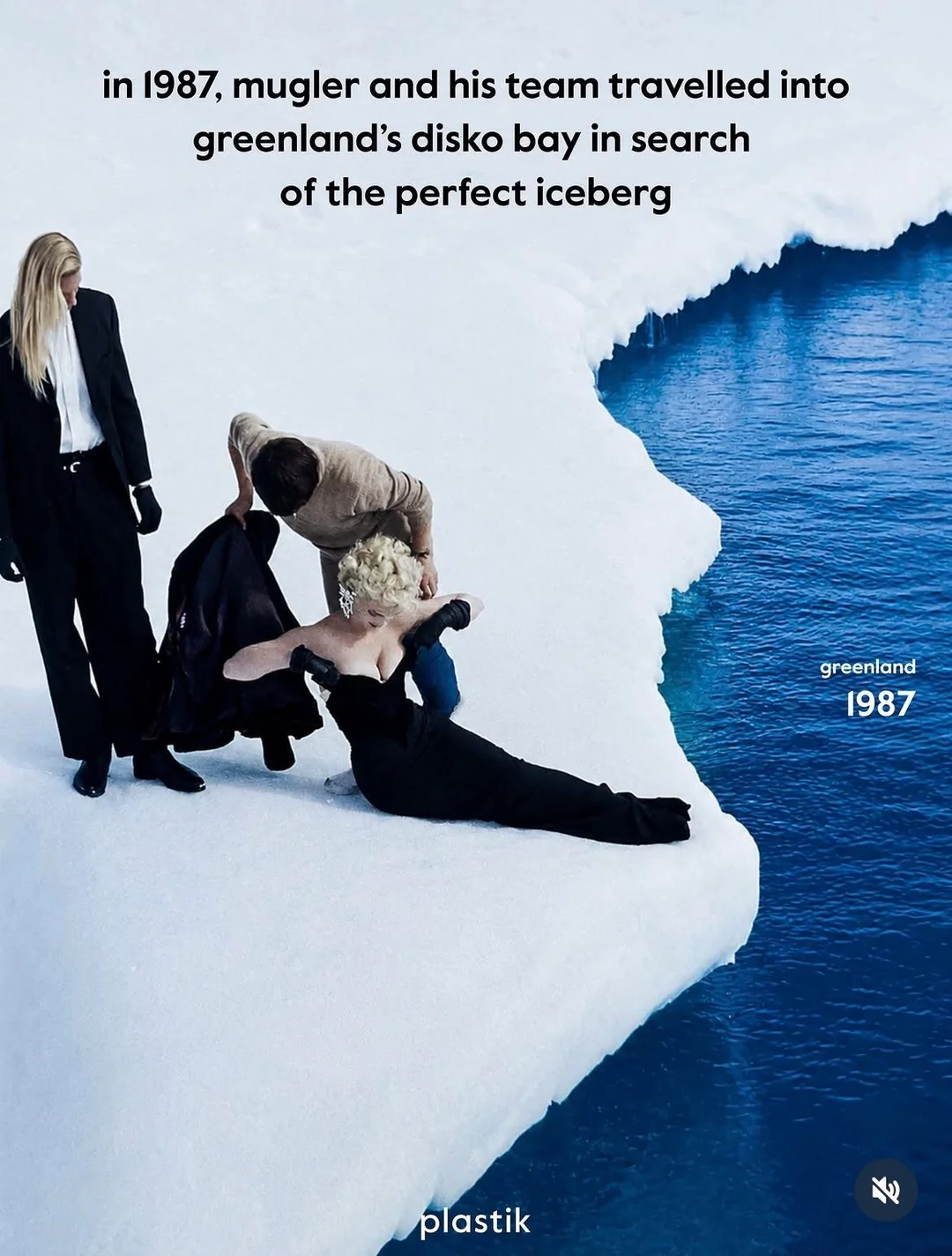
Today’s Tuesday Textures transports us to 1987, when Manfred Thierry Mugler sailed into Greenland’s Disko Bay in search of an iceberg dramatic enough to meet his imagination.
This was not fashion photographed beside a convenient patch of snow. Mugler wanted the scale, sharp geometry and shifting color of ice encountered far from shore—nature serving as architecture, lighting department and potentially lethal co-star.
The resulting images remain among the clearest expressions of Mugler’s entire creative philosophy: if the real world did not already look theatrical enough, he would travel until he found the corner of it that did.
Discover More
Enter the Mugler Universe
Explore the house’s uncompromising visual legacy, then revisit Manfred Thierry Mugler’s photography and the fashion books built for permanent display.
Some links may be affiliate links. INYIM may earn from qualifying purchases.
Twenty Nautical Miles Out for a Cleaner, Sharper Iceberg
Mugler later explained that icebergs photographed from land did not deliver what he wanted. Viewed more closely, the ice could appear dirty in color and softened at the edges. His answer was characteristically restrained: take the production roughly 20 nautical miles out to sea.
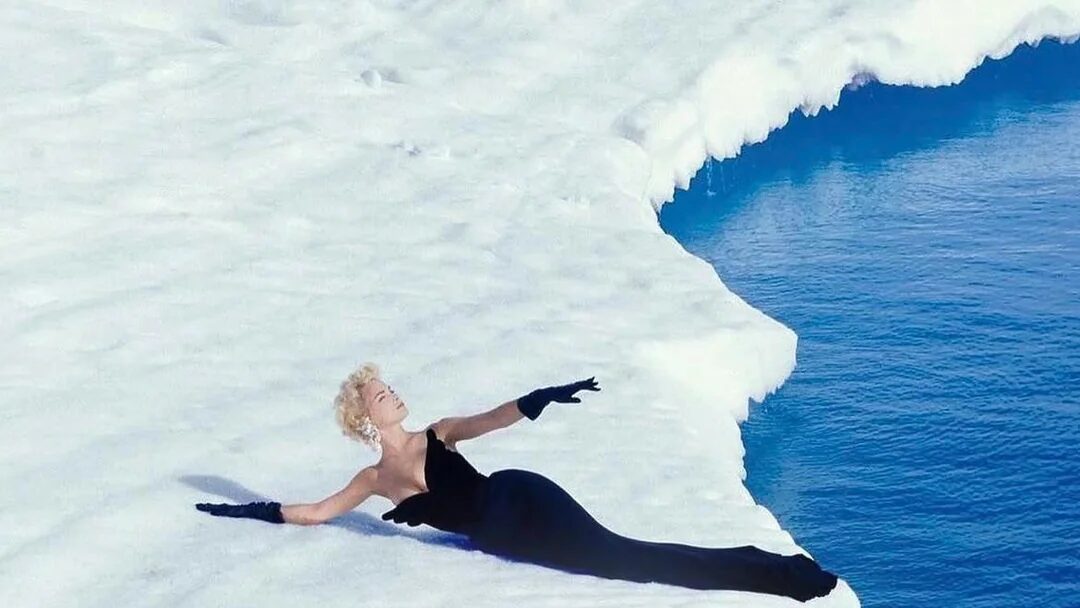
The designer-photographer traveled by boat with model Anna Bayle and a stylist during the summer-solstice period, when Greenland’s midnight sun could hold the landscape in extended light. Vogue identifies Anna Bayle and Tom Lust in the Disko Bay series, wearing Paillettes Polaires by Mugler.
The distance mattered because Mugler was not looking for a generic Arctic background. He wanted monumental forms with defined angles and color that could shift through white, blue, green and violet as the light moved across them.
In Mugler’s world, location was never merely behind the clothes. The iceberg had to perform too.
Two Seconds to Capture What Could Take Days to Find
The finished photographs feel calm, but producing them required a brutal amount of waiting followed by almost no time at all.
Bayle stepped onto the ice with tiny pieces of folded survival blanket positioned beneath her feet and hidden from the camera. Once the body, garment, landscape and light finally aligned, Mugler said he had about two seconds to make the photograph.
That flash of control could come only after days spent waiting for the correct conditions. It is a perfect summary of location fashion photography at its most extreme: endless patience, obsessive preparation and one very brief instant in which nobody is allowed to hesitate.
Nothing about the scene was digitally manufactured. The ice, water, sky and strange summer light were real, because Mugler believed nature already contained ingredients more ambitious than a studio could imitate.

Mugler Was the Designer, Photographer and World Builder
Manfred Thierry Mugler did not treat photography as a secondary activity used to document clothes after the real creative work was finished. Image-making was part of the design itself.
His photographs carried the same sculptural instinct as his tailoring. Bodies became graphic forms. Buildings became extensions of shoulders and waists. Deserts, rooftops, rock formations and glaciers operated like enormous sets—except the danger, weather and scale could not be switched off between takes.
Mugler described dreaming in images and searching the world for the best natural ingredients with which to construct them. Greenland joined a visual geography that also included the Sahara, the Great Mosque of Djenné, Utah’s rock formations, volcanic beaches and the rooftops of New York.
The constant was not simply spectacle. It was alignment: body, garment, architecture, landscape and light collapsing into one complete picture.
Paillettes Polaires Against a Landscape That Refused to Stay Still
The title Paillettes Polaires—polar sequins—captures the visual conversation. Mugler’s surfaces shimmered and reflected, while the surrounding ice performed its own version of texture: translucent, scarred, glossy, fractured and continually reshaped by water and light.
Against that scale, the models can appear both mythic and startlingly vulnerable. The clothes sharpen the human figure, but the iceberg refuses to become scenery. It remains larger, older and beyond anyone’s control.
That tension is why these images have not softened into ordinary vintage fashion nostalgia. They still look improbable. Even after decades of digital compositing, it takes a moment to accept that the scene was physically assembled in front of Mugler’s camera.
The 1987 Disko Bay Series by Manfred Thierry Mugler
The full supplied image set documents Mugler’s meeting of polar landscape, sculptural fashion and the extended light of Greenland’s summer solstice.
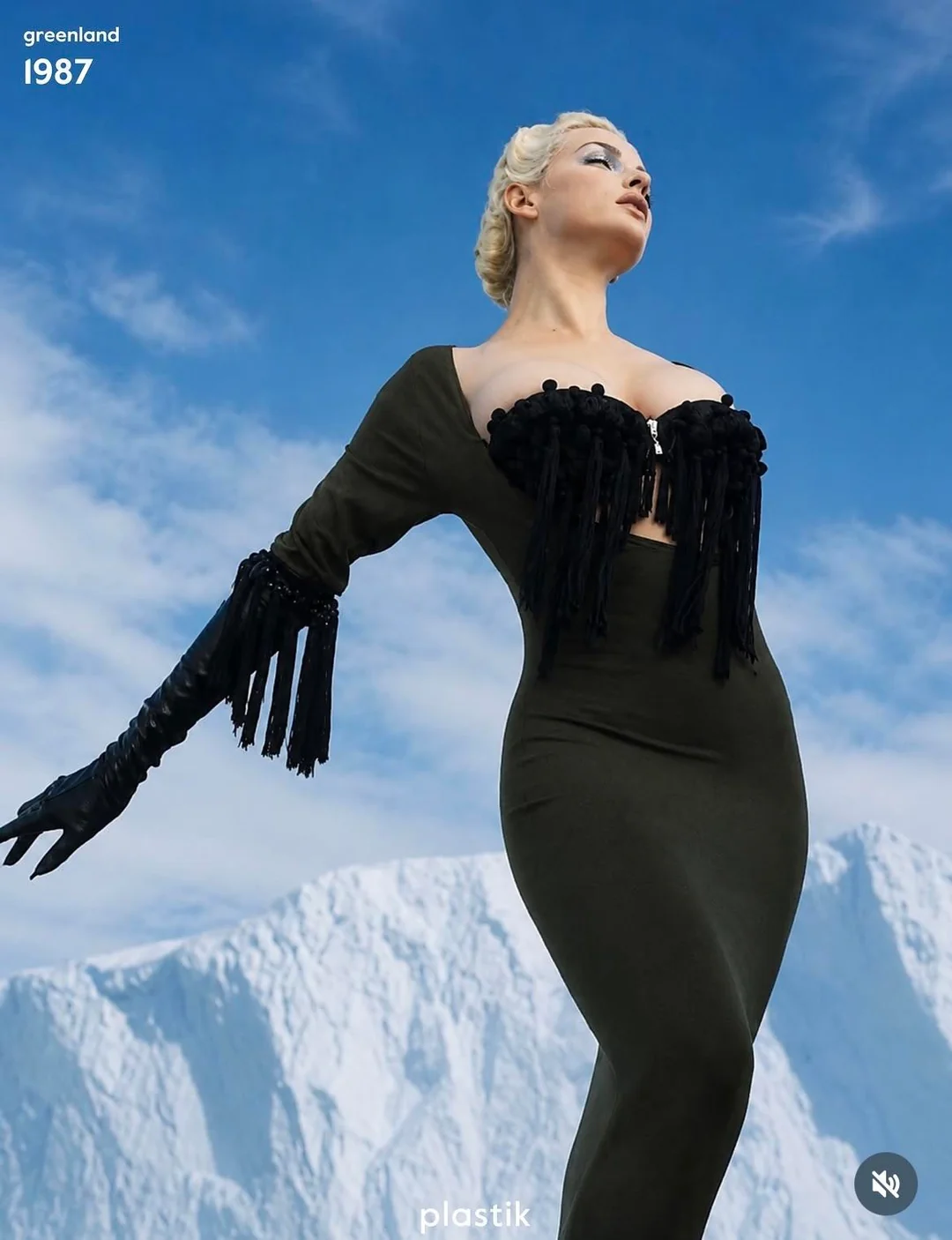
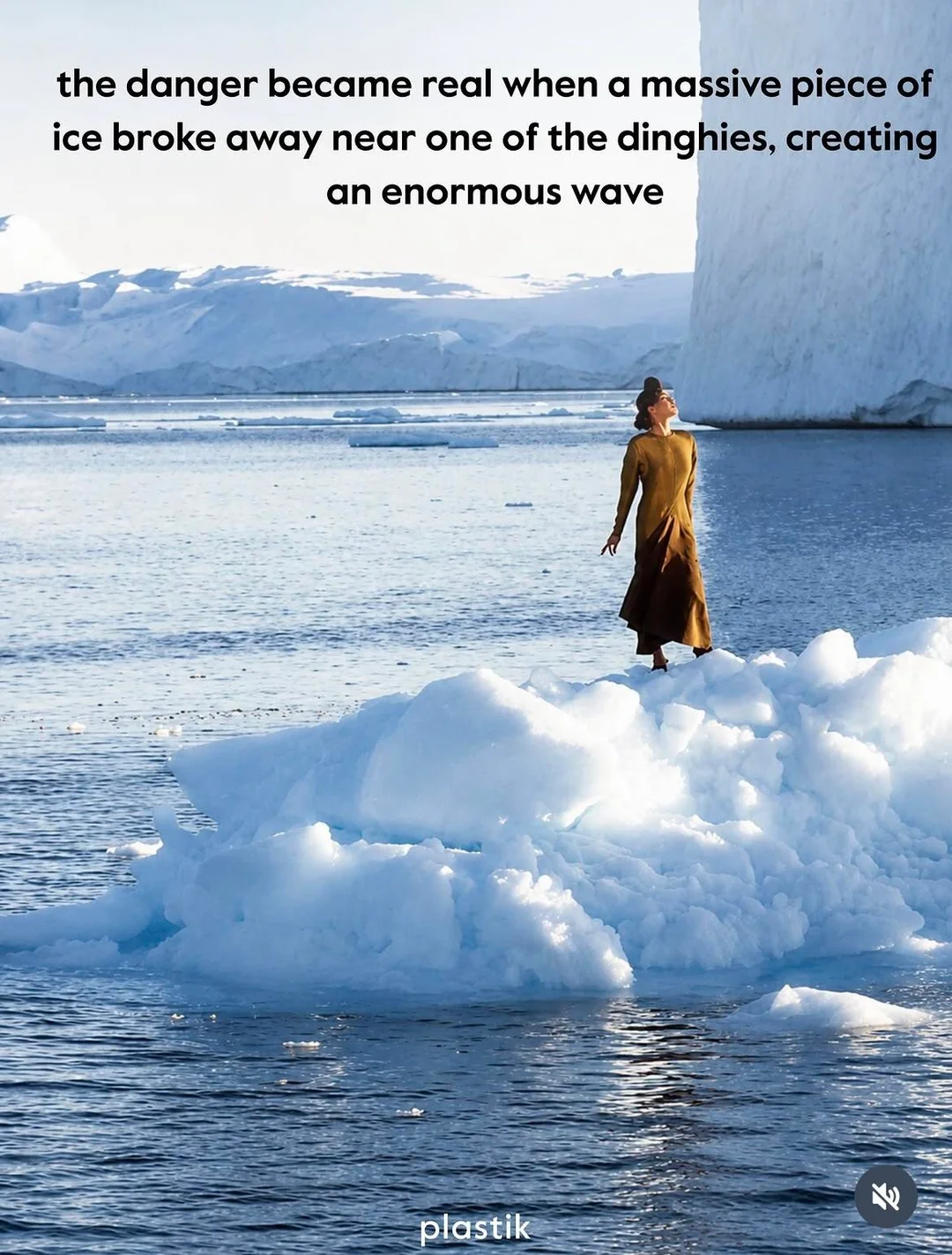
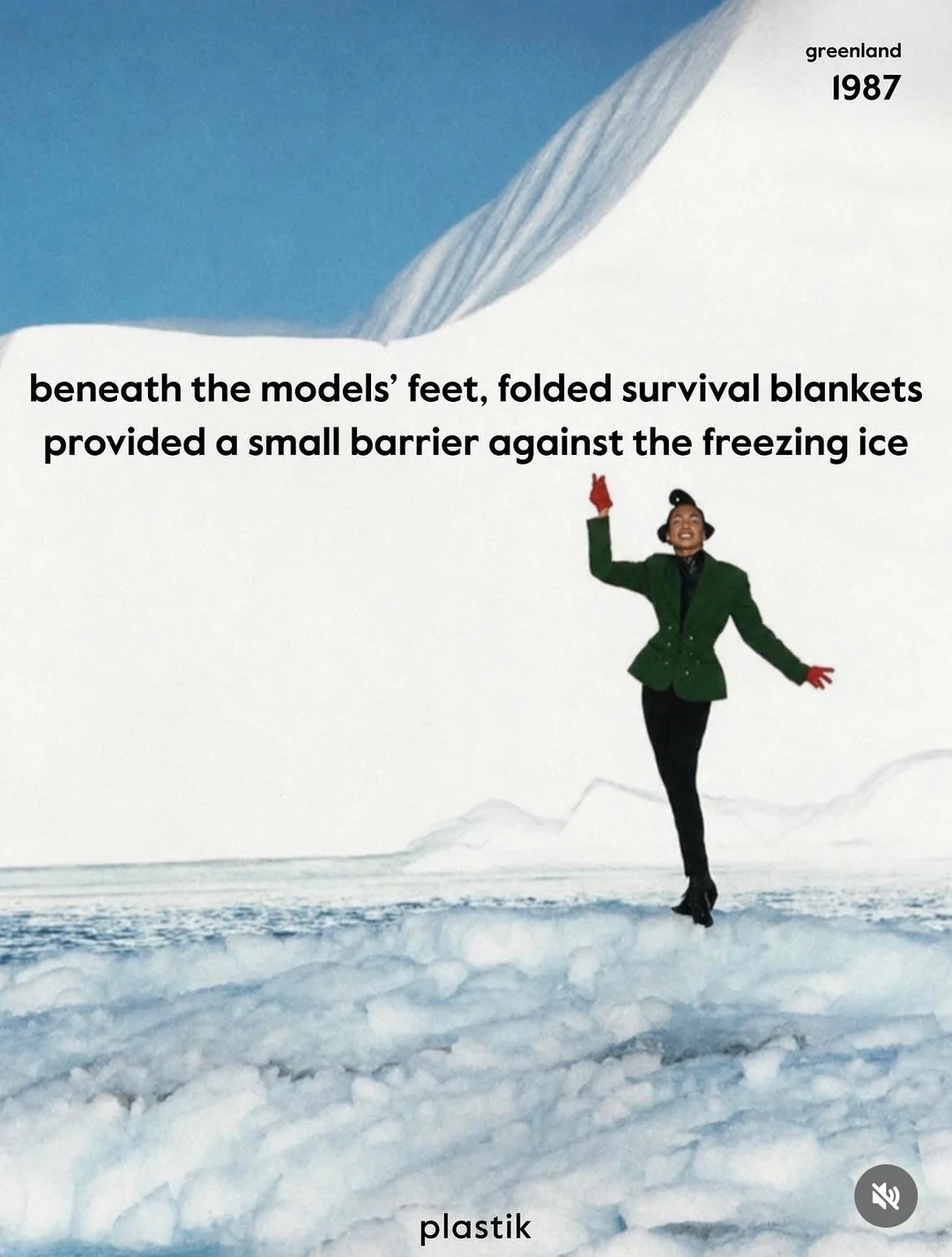
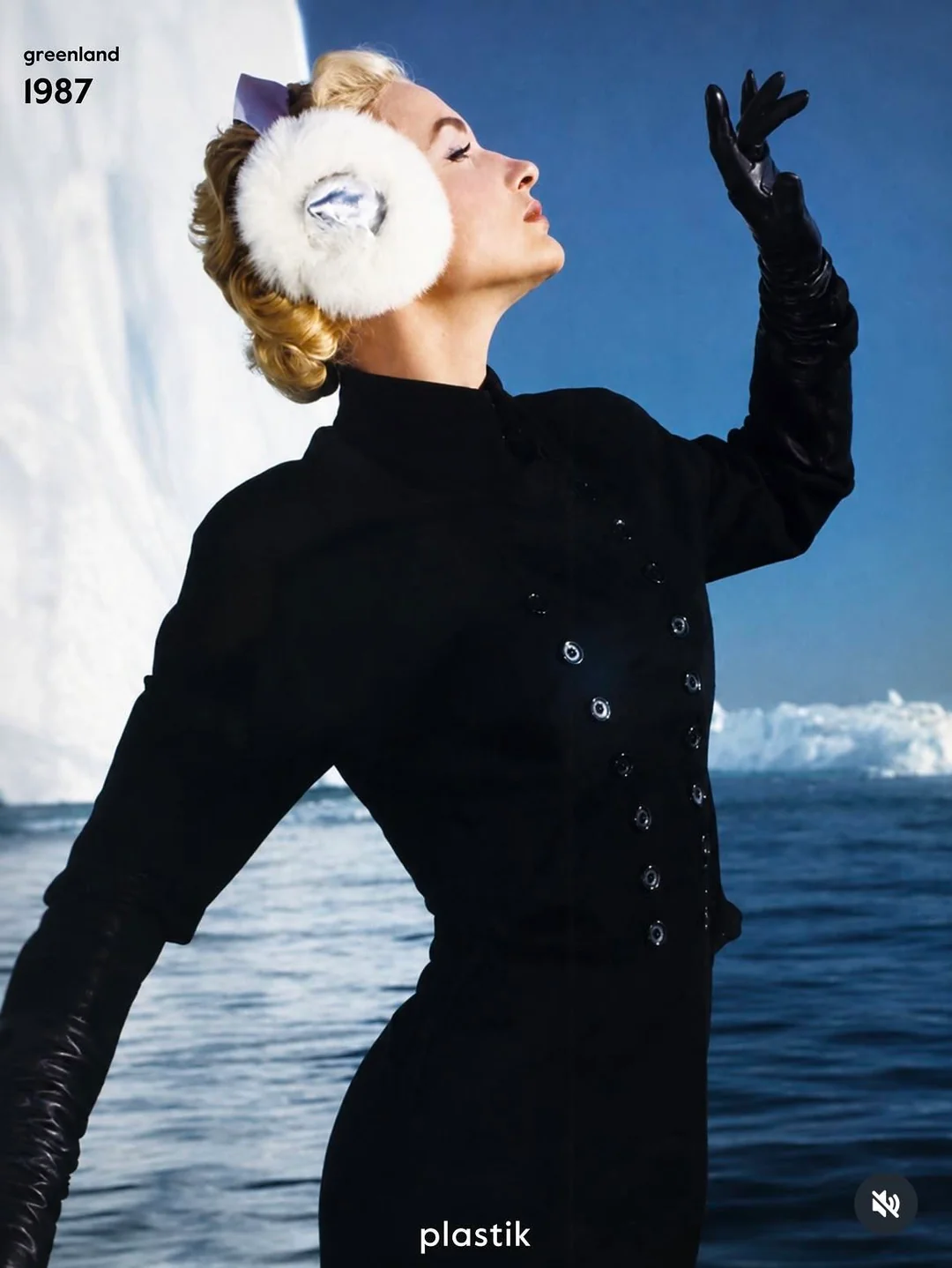
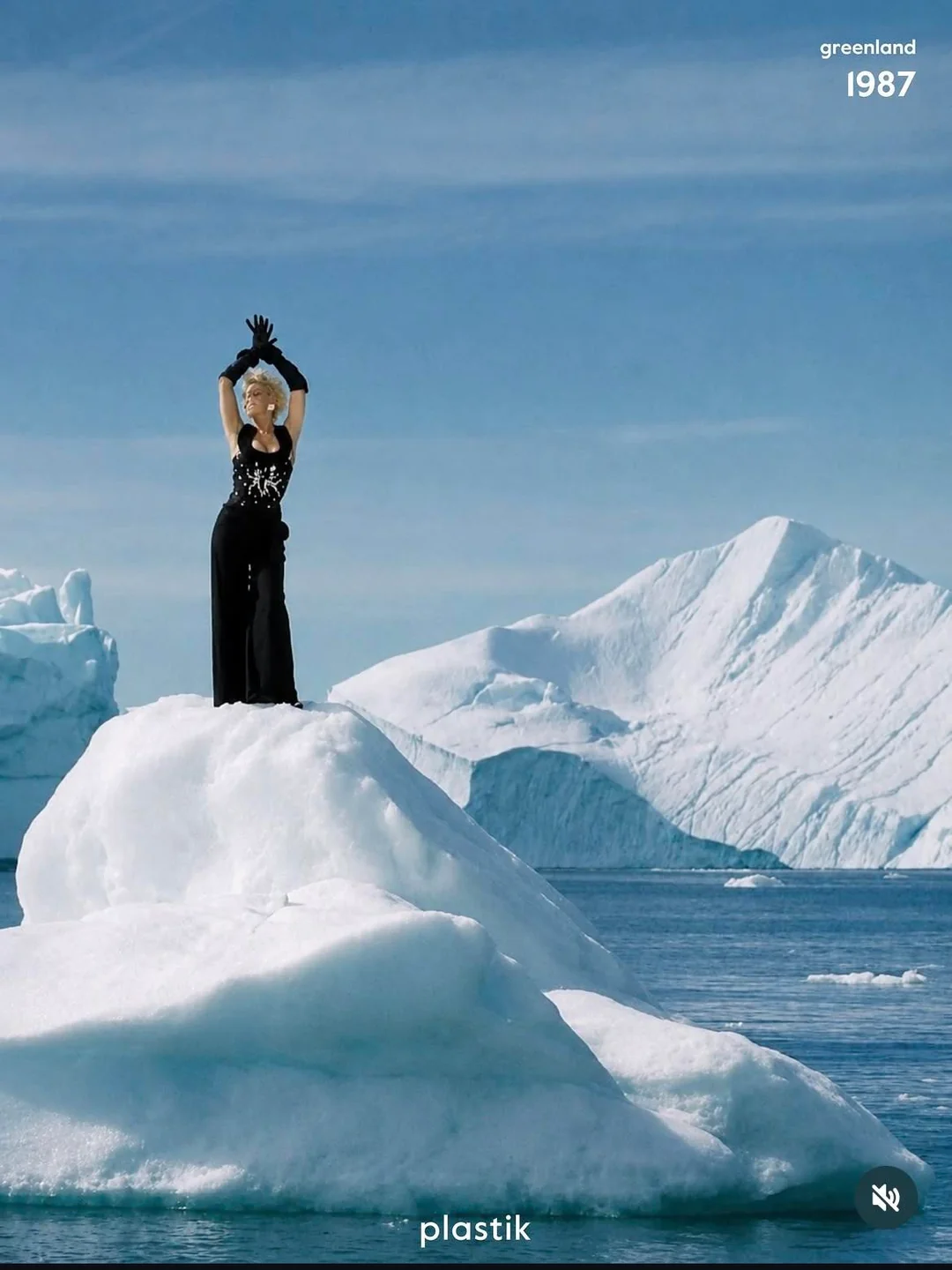
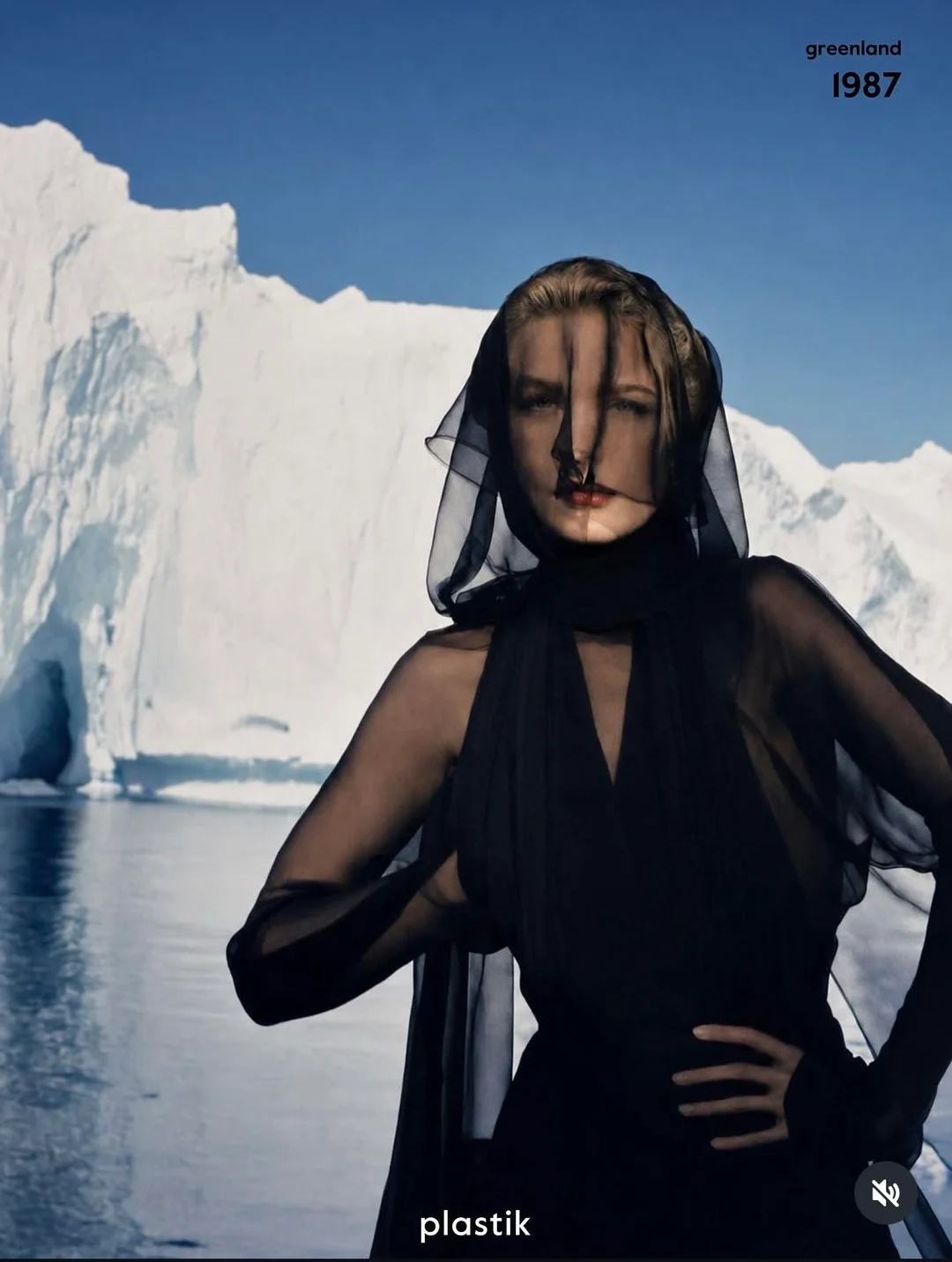
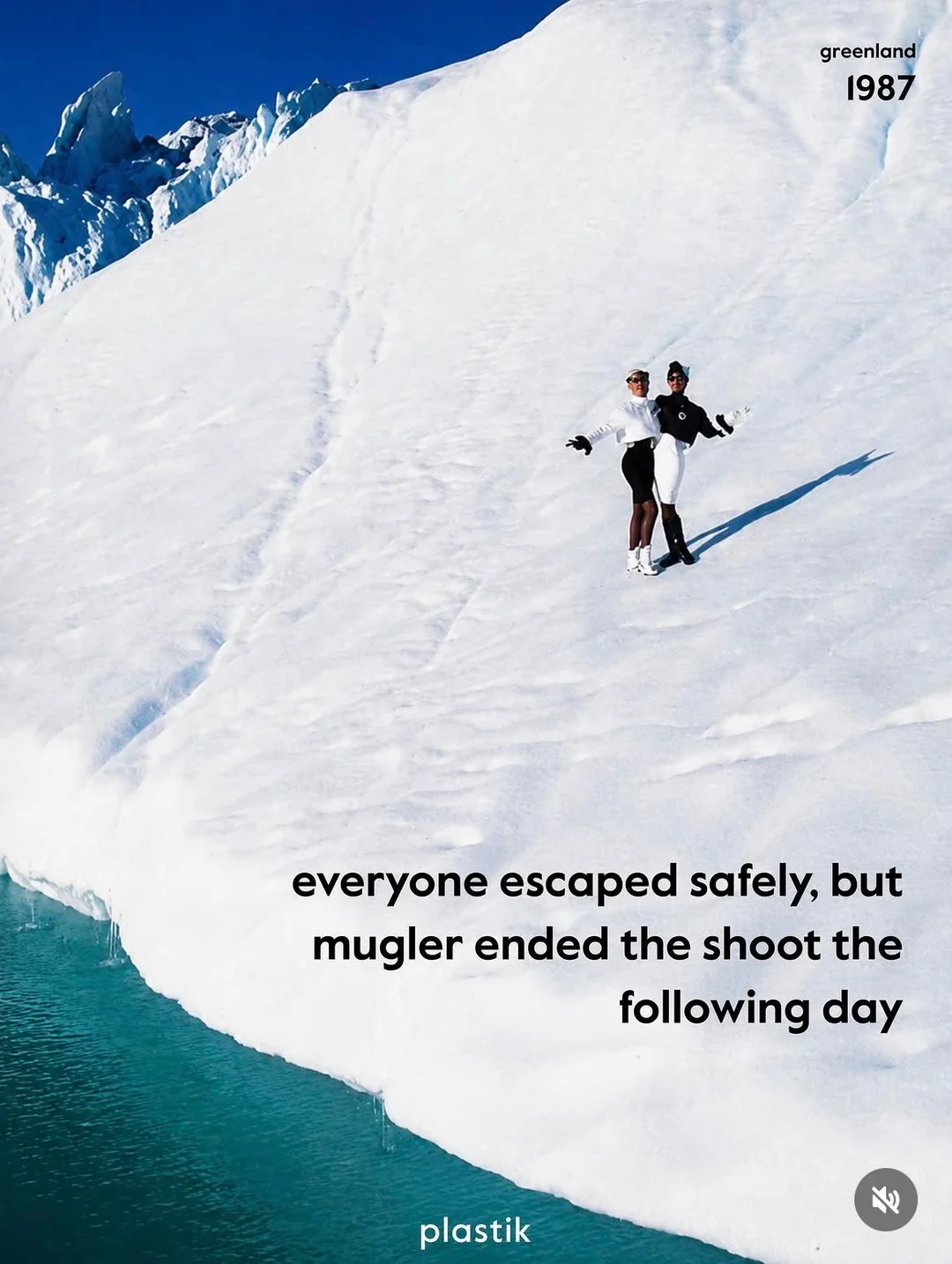
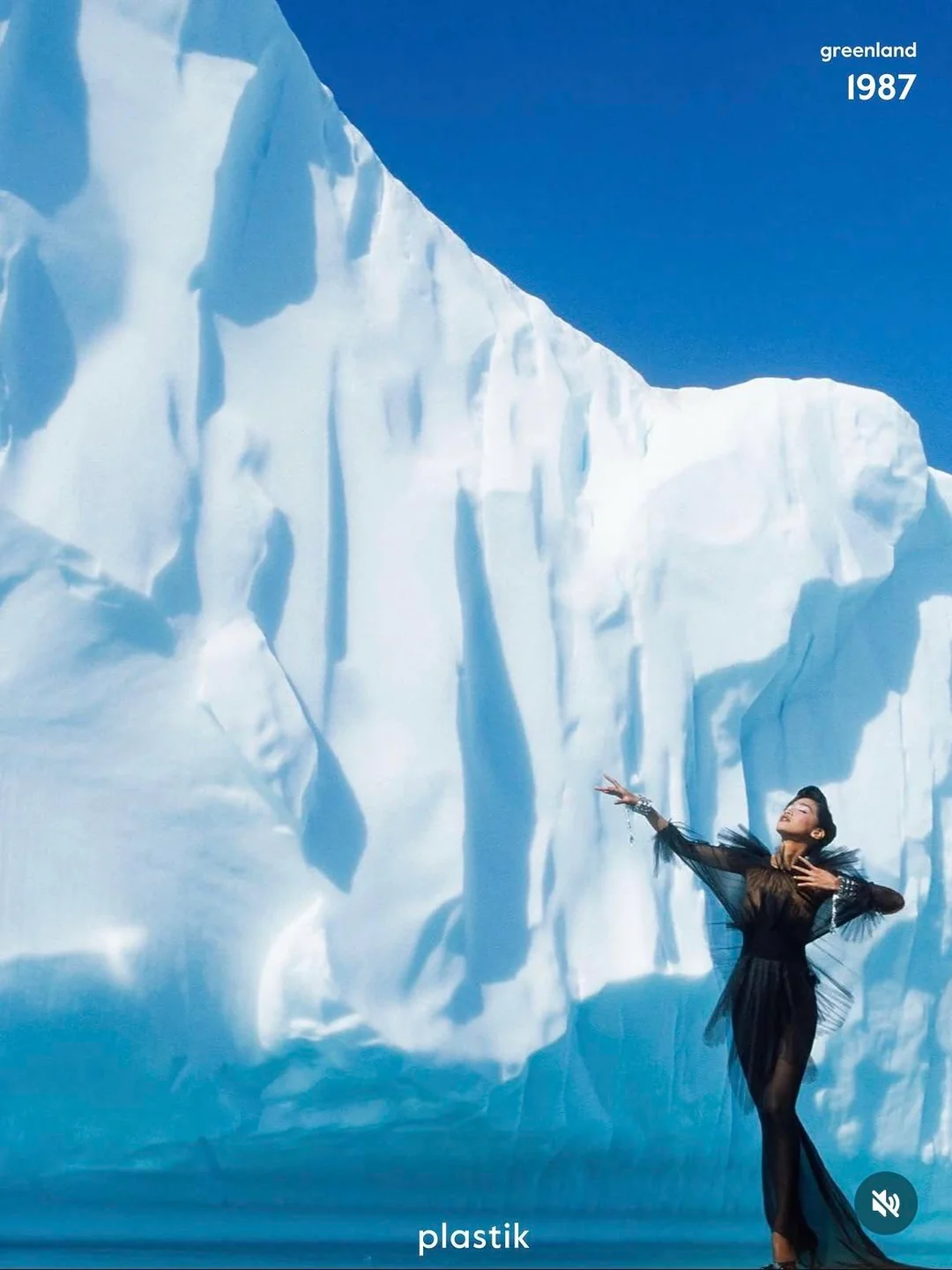
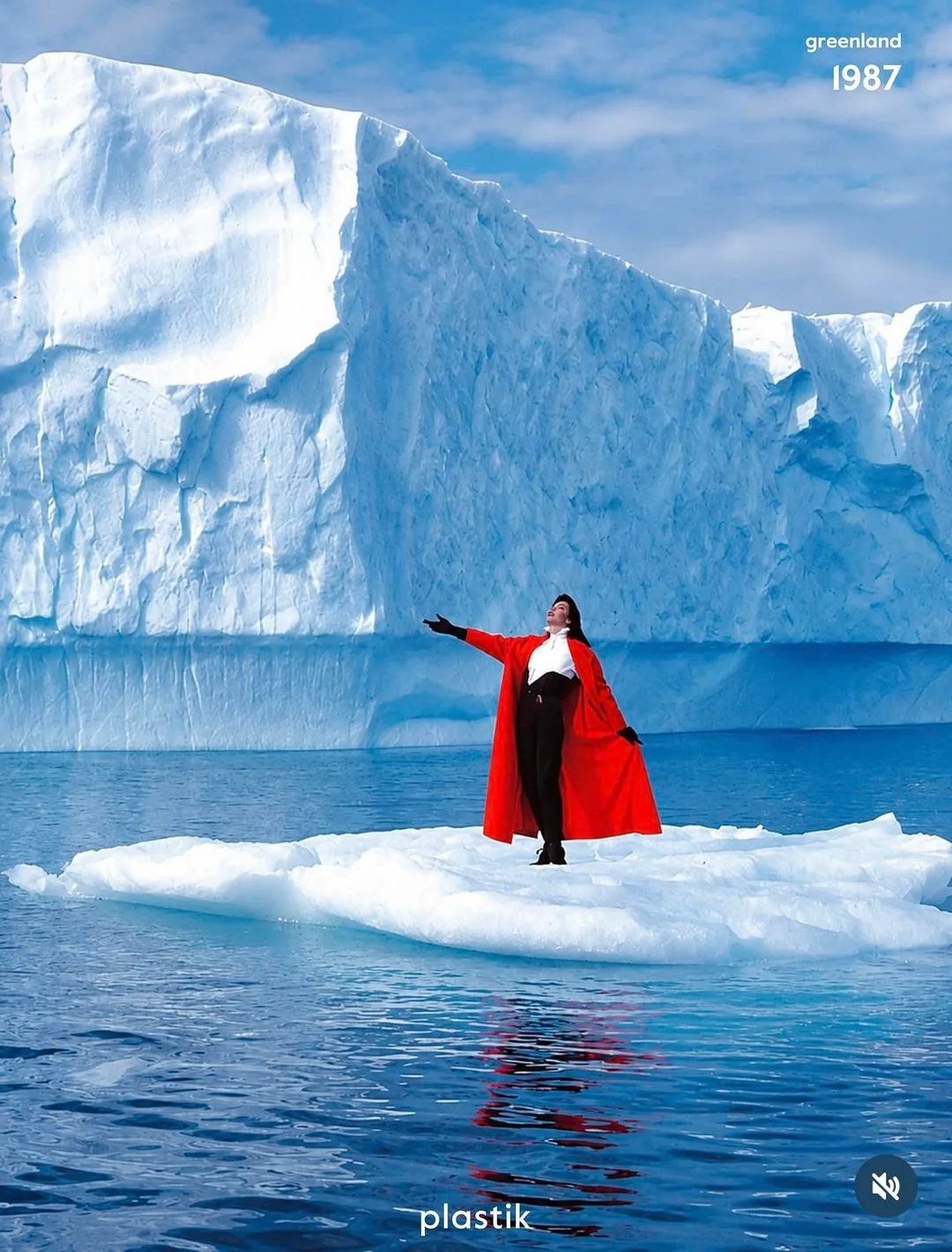
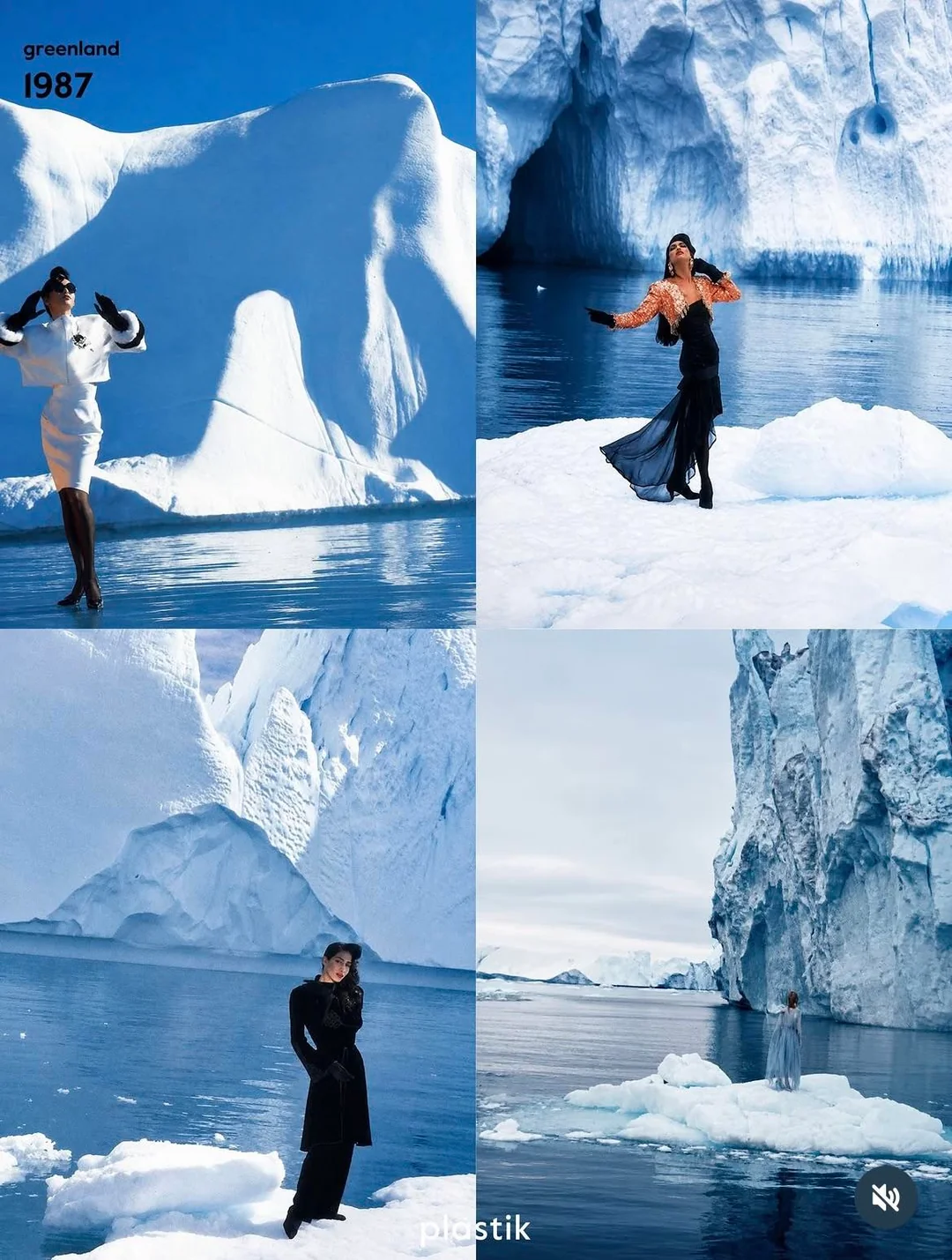
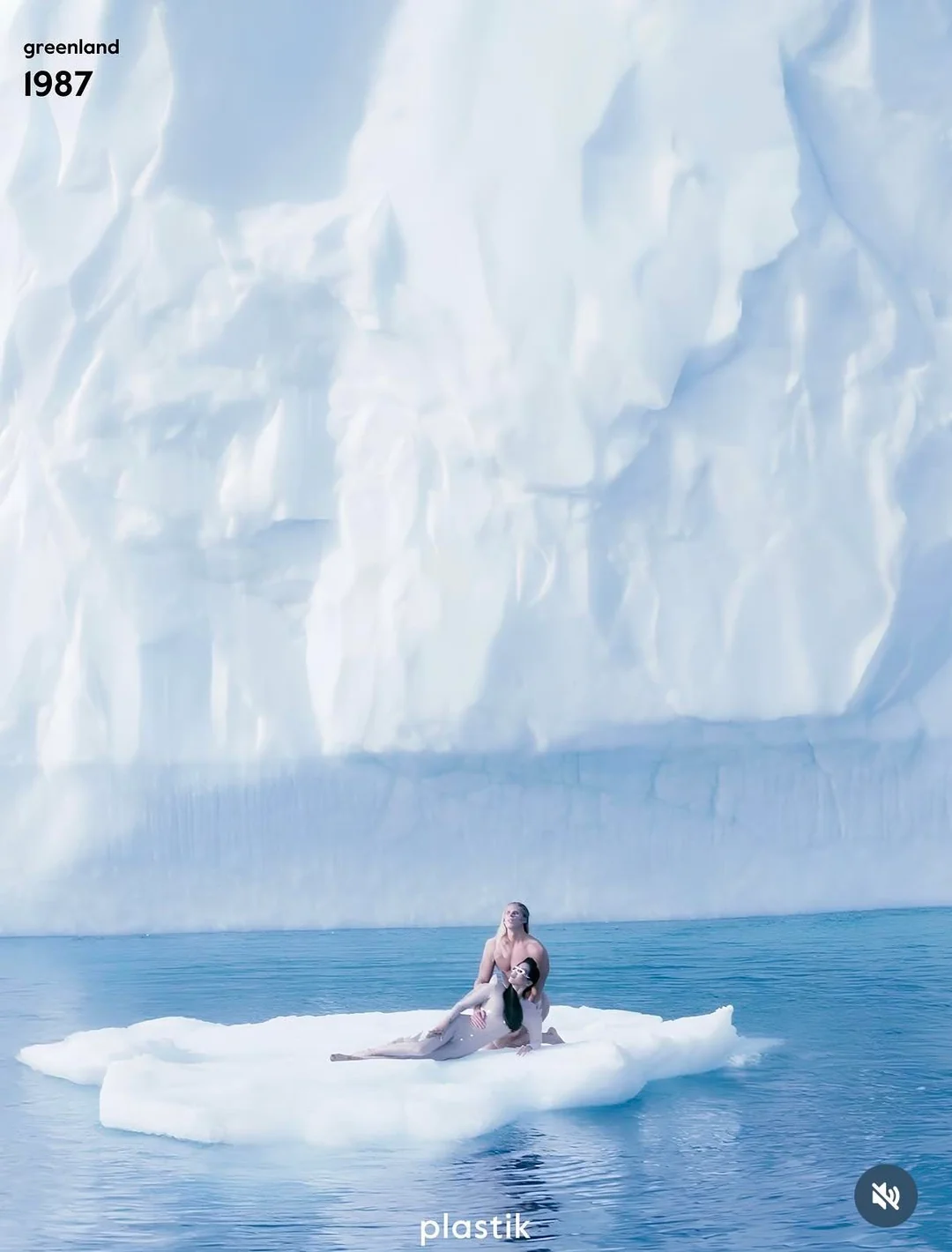

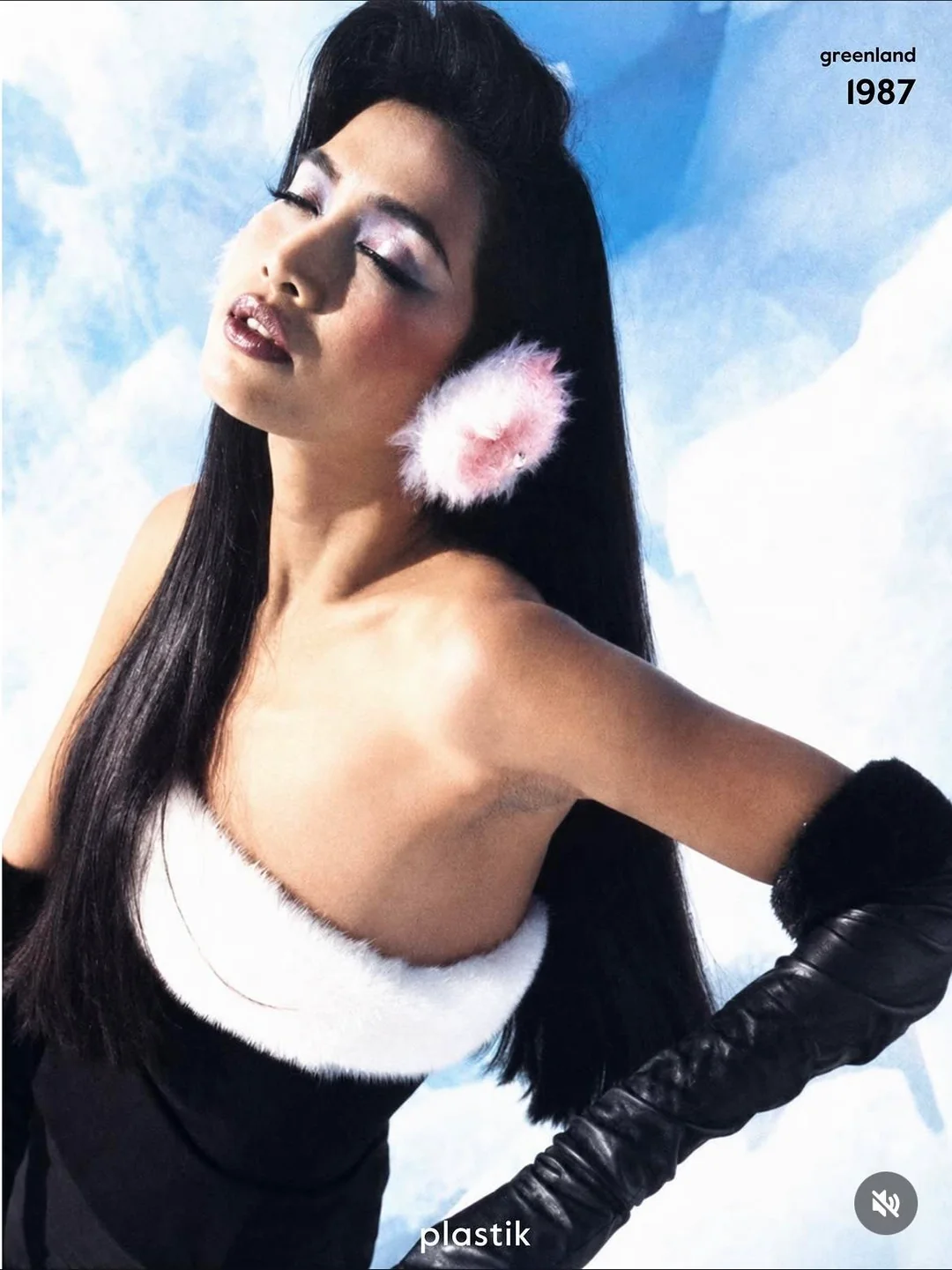
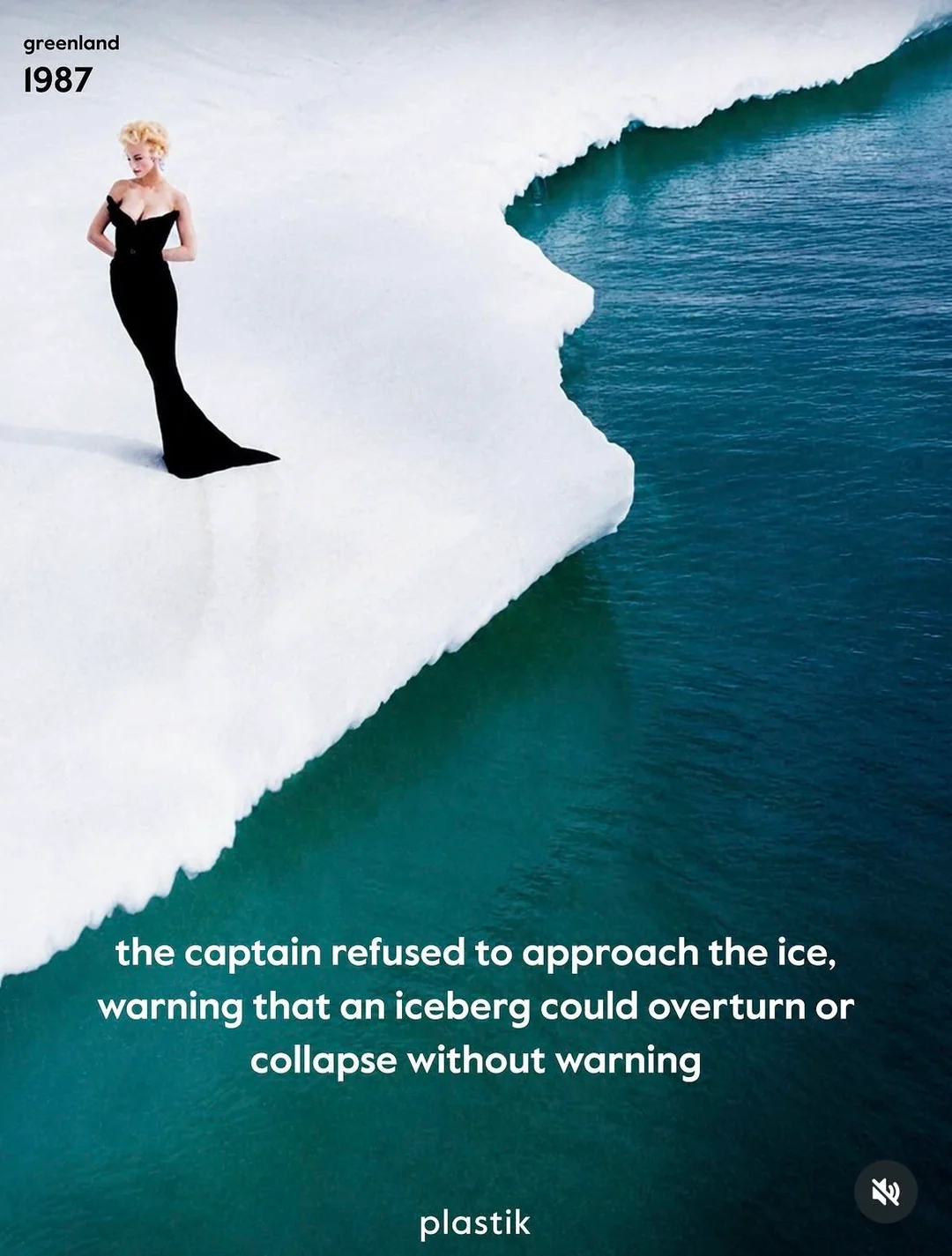

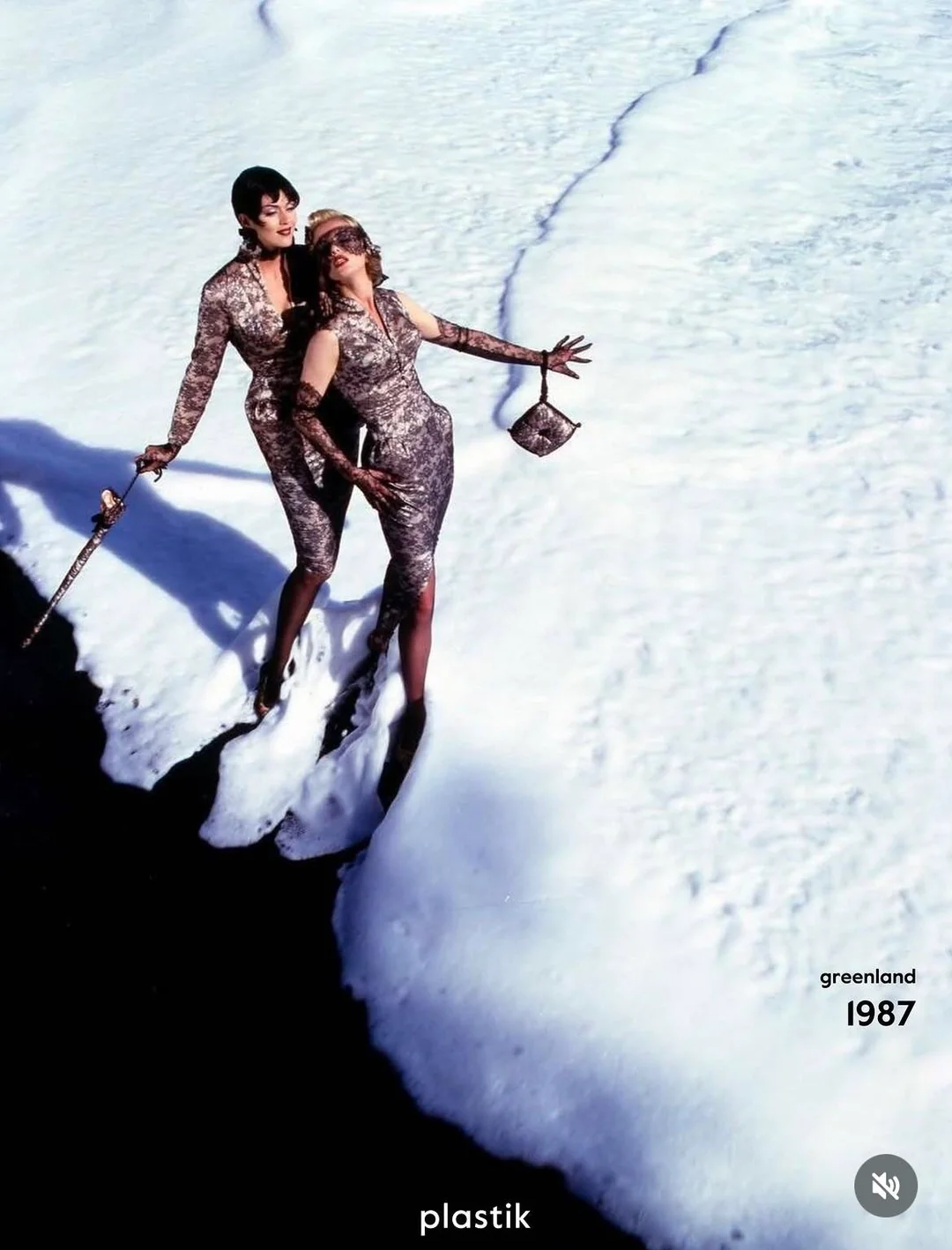
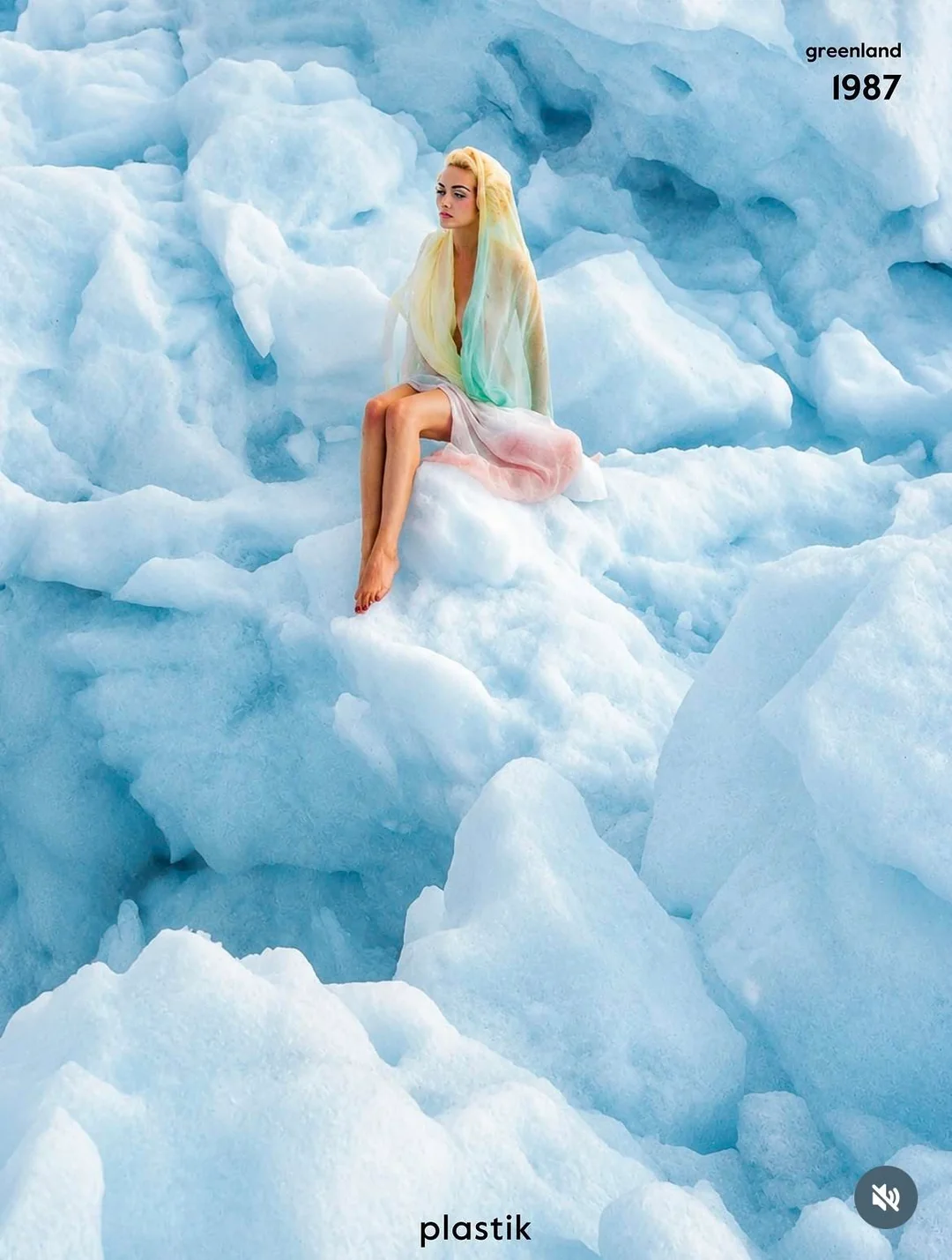
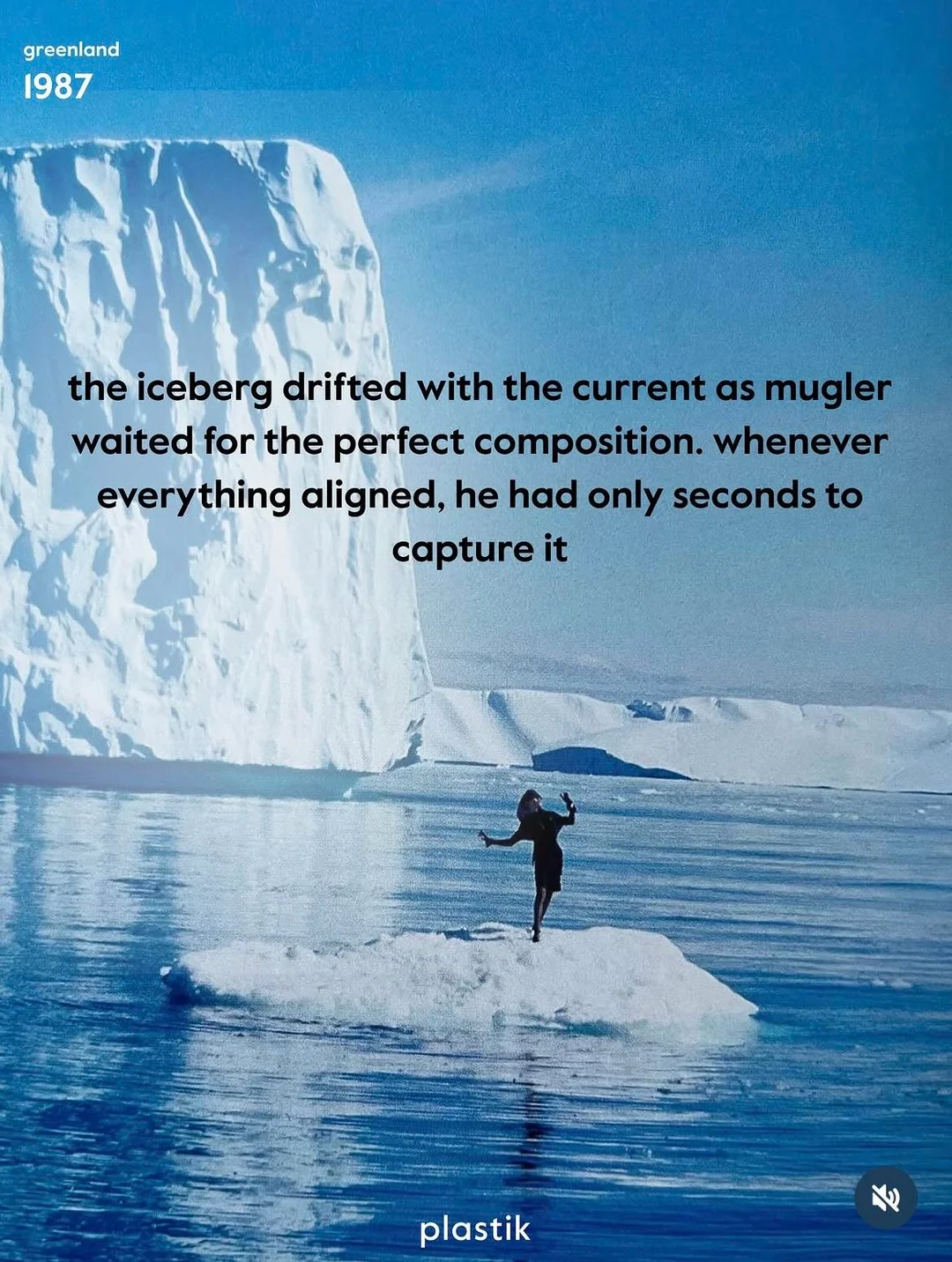
Anna Bayle and Tom Lust appear in Mugler’s 1987 Disko Bay series wearing Paillettes Polaires. Photography: Manfred Thierry Mugler.
Fashion frequently borrows the language of bravery for things that happen under carefully controlled conditions. This shoot earned the word more honestly. The team went far offshore, worked around freezing water and unstable ice, then concealed every practical safeguard so the final image could feel effortless.
That effortlessness was the illusion. The real texture lies beneath it: folded survival material, cold feet, days of waiting, a two-second exposure and an artist unwilling to settle for an iceberg that was merely good enough.
Thirty-nine years later, Mugler’s Disko Bay photographs still make most location shoots look like somebody gave up at the airport.
Watch the Tuesday Textures Mugler Edit on TikTok
The TikTok version pairs the Disko Bay imagery with INYIM Media’s account of the offshore shoot.

Sources: Vogue; Mugler.