



















When The Handheld Fan Gives Up, Bring The Whole Appliance
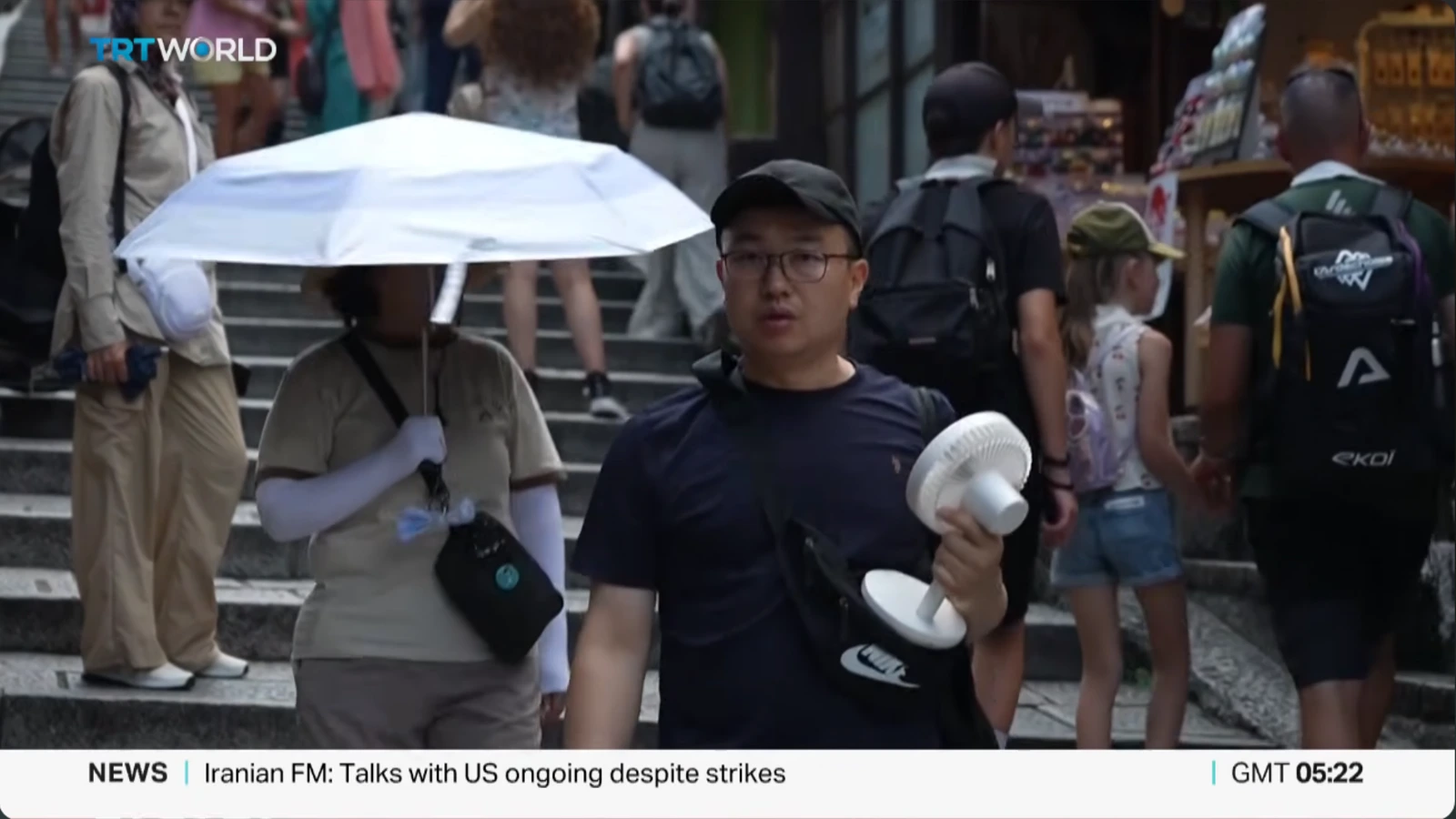
Japan’s summer heat is becoming nearly impossible to escape. From Tokyo to Kyoto and across central Japan, residents are carrying umbrellas, drinking water, taking salt tablets—and apparently bringing full-size home desk fans into the streets because the tiny handheld version is no longer cutting it.
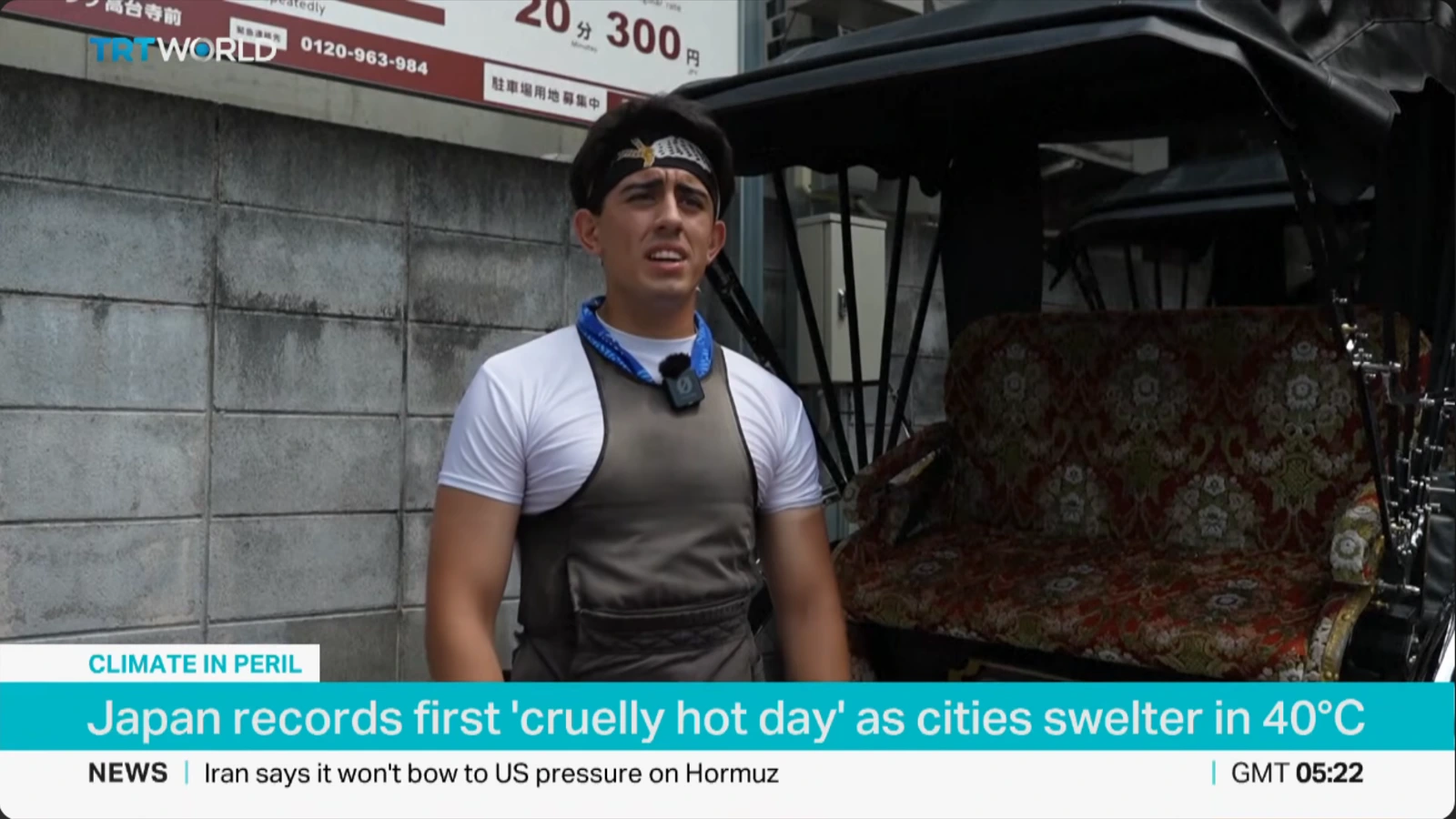
Temperatures climbed to and above 40°C, or 104°F, during Japan’s first newly designated “brutally hot days” of 2026. The Japanese term kokushobi now applies when the temperature reaches at least 40°C, reflecting just how frequently once-extraordinary heat is becoming part of the country’s summer reality.
BEAT THE HEAT
Hydrate Before The Sidewalk Wins
Extreme heat can turn an ordinary walk into a health emergency. Keep water close, create shade and use practical cooling tools before heading outdoors.
Some links may be affiliate links. INYIM may earn from qualifying purchases.
The numbers behind the heat are not funny. The Tokyo Fire Department transported 453 people with heat-related illnesses to hospitals in a single Wednesday—the highest daily number since those records began in 2010. One person died, while several others were reported in critical condition.
Across Japan, 10,857 people were taken to hospitals for heatstroke between July 13 and July 19. Fourteen people died, 321 were listed in serious condition and adults age 65 or older accounted for more than 60% of all transports.
Residents interviewed in Tokyo described becoming sweaty almost immediately after leaving home and having to remain intensely aware of their health, hydration and surroundings. One cyclist explained that fatigue makes it harder to pay attention to traffic, while a parent said the heat turns every outing into a constant effort to make sure her young son can cope.
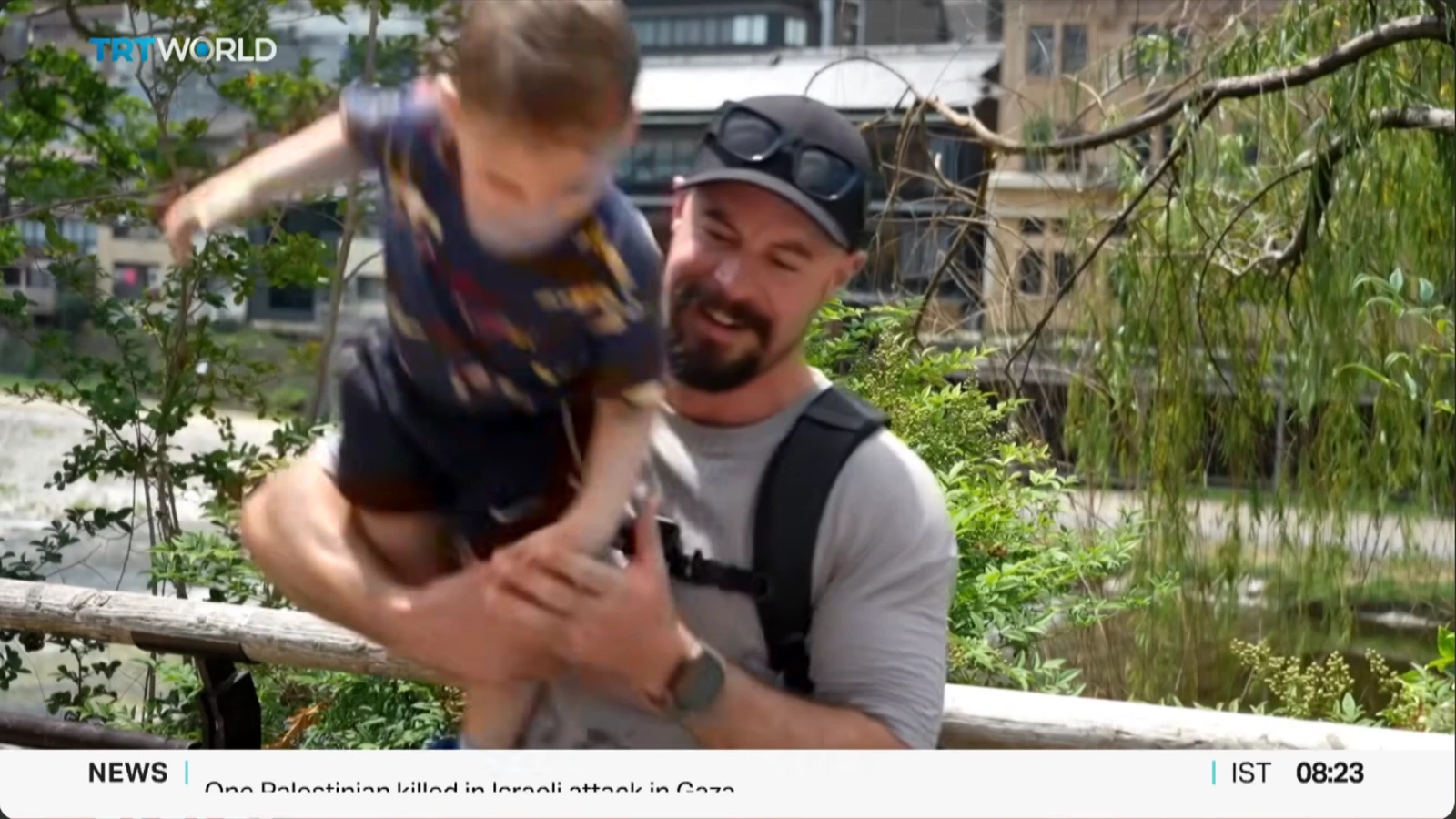
Then there is Australian tourist Dan Morgan, enthusiastically explaining the heat while his little boy descends into some off-camera chaos at his feet. Without breaking the flow of the interview, Morgan reaches down and hoists the child upright with the casual efficiency of someone repositioning a prop—or retrieving a tiny leashed animal who has wandered out of frame. “Hey, look at this,” the moment practically screams, as the child is chaotically tossed back into position amid the excitement of the interview and, probably, the 104°F heat.
The comedy of the visual does not erase Morgan’s very real concern. He told CNA that he was “very sweaty” from the minute he left home and that the day was all about “looking after my little boy and making sure that he can cope with the heat.”
That danger extends beyond people visibly working or exercising outdoors. More than 4,500 of the reported weekly heatstroke cases occurred inside homes, showing why simply staying indoors is not enough when rooms are poorly ventilated or air conditioning is not being used.
Authorities urged residents to use air conditioning freely, hydrate throughout the day and avoid spending long periods outside. Older adults and young children face especially high risks, but extreme heat can overwhelm anyone who is dehydrated, fatigued or exposed for too long.
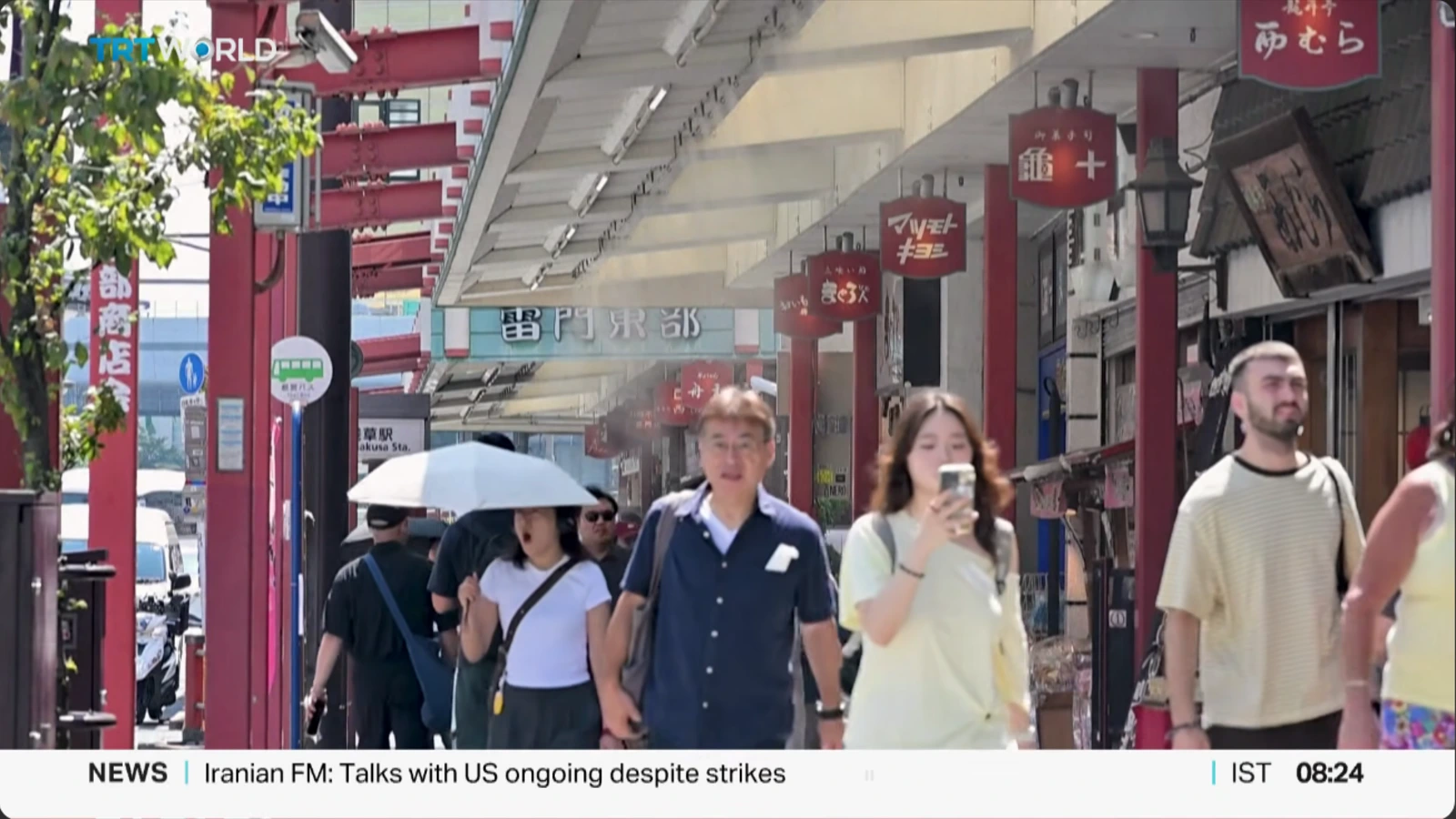
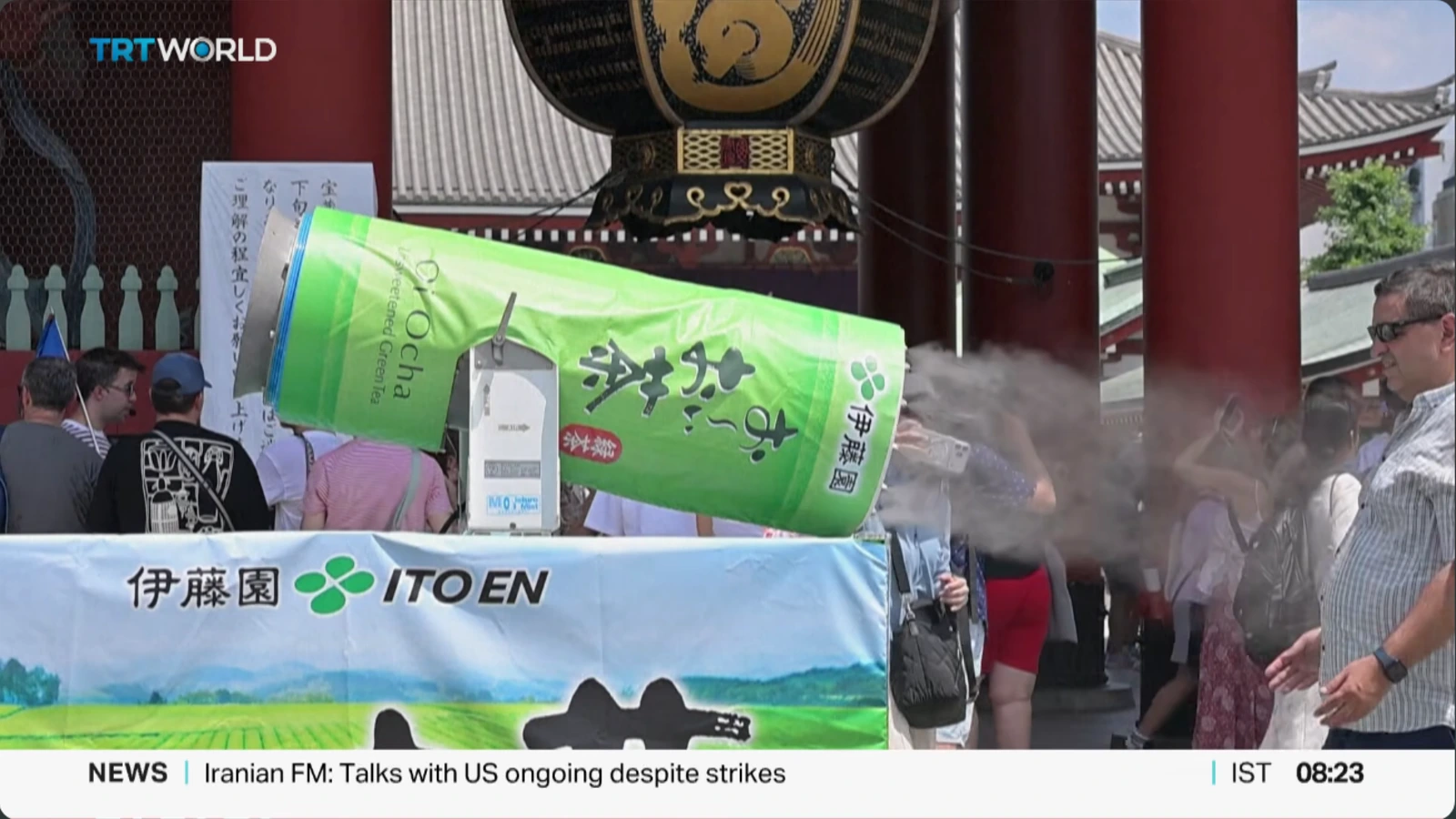
Japan recorded its hottest summer on record in 2025, including an all-time national high of 41.8°C, or 107.2°F. More than 100,000 people were transported to hospitals for heatstroke during that summer season, and the latest figures show the threat is not easing.
Scientists have repeatedly warned that the climate crisis is making extreme heat more frequent and more intense. In Japan, that means a temperature once treated as extraordinary now has its own official name—and residents are improvising everything from parasols to salt tablets to, yes, carrying the entire desk fan outside.
Watch Japan Confront Its First “Brutally Hot Days” Of 2026
CNA reports from Japan as temperatures climb to 40°C, or 104°F, and residents describe how they are protecting themselves and their families from dangerous heat.
Source: CNA, Reuters and Japan’s Fire and Disaster Management Agency.