














This Tiny Tokyo Village Lives Inside a Double Volcanic Caldera
You read that right: there is a tiny Japanese community living on an active volcanic island whose entire landscape was shaped by eruptions — and the view from above looks almost unreal.
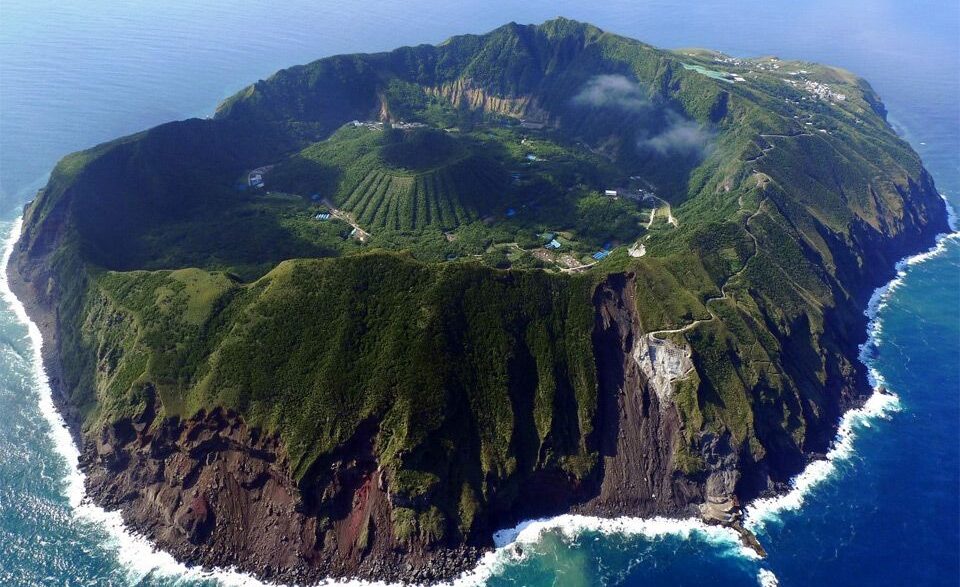
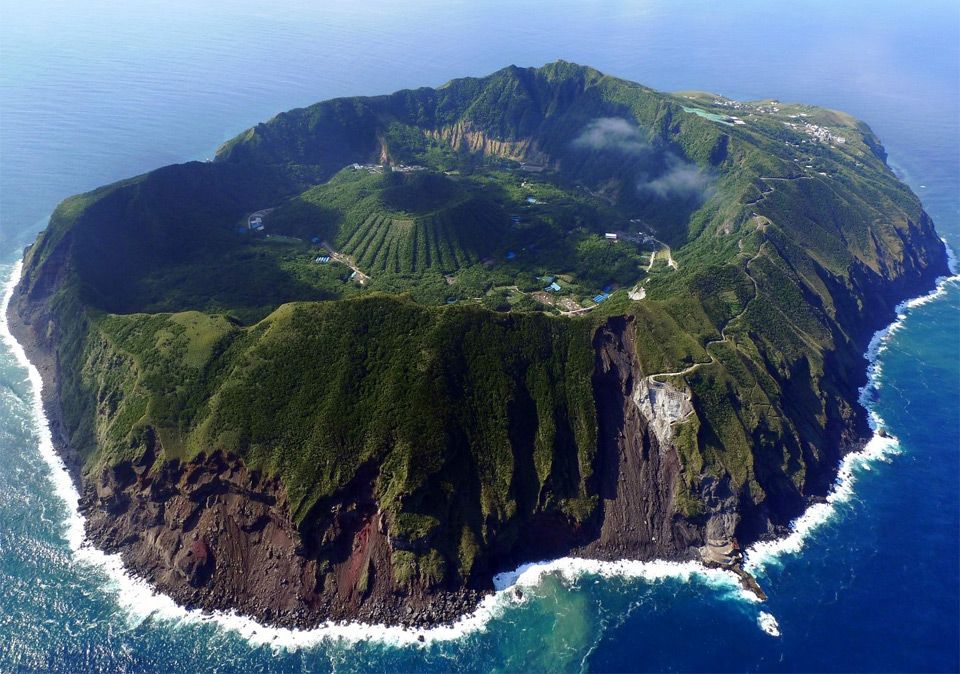
Aogashima sits about 358 kilometers south of central Tokyo in the Philippine Sea and is officially part of Tokyo Metropolis. The island is essentially one large volcanic crater with another, smaller volcanic cone rising inside it, creating the striking double-caldera shape that has made Aogashima famous far beyond its roughly 170 residents.
Calling it a “city inside a volcano” is a little dramatic — Aogashima is actually a village on a volcanic island — but honestly, the real geography is even stranger.
travel
Inside Japan’s Wildest Island Landscape
Aogashima is part remote Tokyo village, part active volcano and part nature escape that looks almost too strange to be real.
Some links may be affiliate links. INYIM may earn from qualifying purchases.
A Volcano Inside a Volcano
Aogashima’s topography is what makes the place look so spectacular. The island’s steep outer walls rise straight out of the ocean before dropping inward into a broad crater basin. Inside that basin sits Maruyama, the smaller central volcanic cone.
From above, it gives the whole island a giant ring-within-a-ring appearance. Roads, homes, fields and community buildings sit among the green slopes, while the Pacific stretches out in every direction beyond the crater walls.
The Tokyo Convention & Visitors Bureau describes Aogashima as the most remote and topographically unusual island in the Izu chain. Getting there proves the point: visitors first have to reach nearby Hachijojima, then continue by a roughly 20-minute helicopter flight or a boat trip of around two and a half hours when weather allows.
The 1785 Eruption Nearly Ended Life on the Island
The beauty comes with a very real history.
Japan’s Meteorological Agency records a devastating eruption in 1785. Of the island’s estimated 327 residents at the time, roughly 130 to 140 people were killed. The survivors evacuated to Hachijojima, and Aogashima remained uninhabited for around 50 years.
The island’s present-day shape was heavily influenced by that eruptive period. Maruyama, the inner cone visible inside the crater, was formed by 18th-century eruptions that deposited scoria and lava inside the larger Ikenosawa crater.
Aogashima is still classified as an active volcano, but that does not mean lava is constantly pouring through the village. “Active” is a geological classification based on the volcano’s eruptive history and potential for future activity, not a description of everyday life there.
Today, the Volcano Is Part of Daily Life
Modern Aogashima has turned some of that volcanic energy into an advantage.
Geothermal steam vents are used around the island, including near the public Aogashima Fureai Sauna, where volcanic heat powers the facility. Nearby vents can even be used to cook foods such as eggs and sweet potatoes.
The same isolation that makes reaching Aogashima difficult also helps keep the island remarkably quiet. Official Tokyo tourism information notes that there is just one store, one post office and a handful of bars, while visitors come for hiking, camping, crater views and some seriously dark skies.
With little urban light pollution, Aogashima has become especially known for stargazing. From an island already shaped like something out of science fiction, looking up apparently gets even better.
Why People Came Back
The most compelling part of Aogashima is not simply that people live near an active volcano. Plenty of communities around the world do that.
It is that after the catastrophic 1785 eruption emptied the island, people eventually returned.
The descendants of that restored community built homes, farms and a functioning village within one of Japan’s most dramatic volcanic landscapes. Fertile soil, fishing, geothermal resources and deep family ties all became part of a life shaped by isolation rather than defeated by it.
So no, there is not literally a modern metropolis sitting in a smoking crater. The truth is more interesting: a tiny Tokyo village survives on an active double-caldera island where geology has dictated almost everything about how people live.
See Aogashima’s Double-Caldera Landscape
This first clip offers a closer look at the remote volcanic island featured in the story.
Explore More of Aogashima
A second video gives another view of Aogashima and the extraordinary terrain surrounding its small community.
Sources: Japan Meteorological Agency; GO TOKYO / Tokyo Convention & Visitors Bureau.