
















Sherwood’s Major Oak Leaves One Last Legend Standing
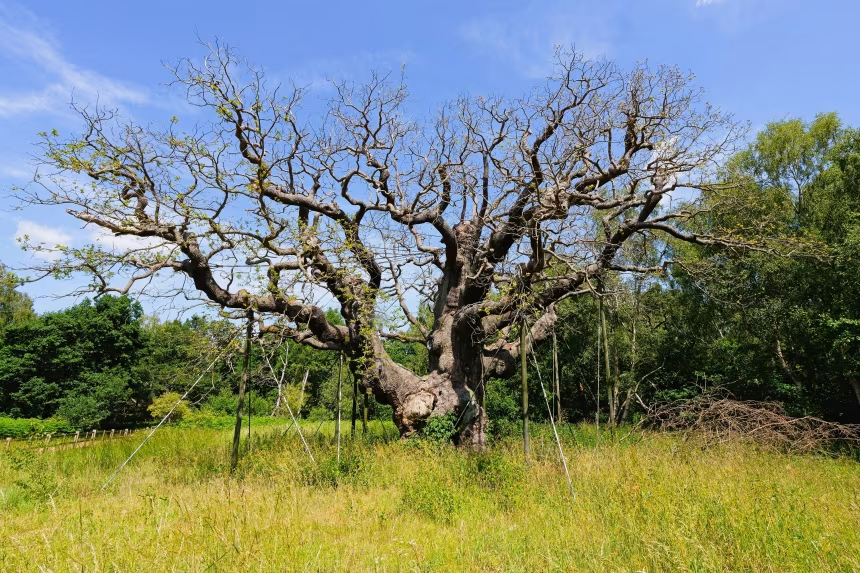
Some trees become landmarks. The Major Oak became a full-blown legend with bark on it.
The ancient oak in Sherwood Forest, Nottinghamshire — the tree long linked to the story of Robin Hood and his Merry Men — is now believed to have reached the end of its life after failing to produce leaves in spring 2026.
According to the official Sherwood Forest update, the tree’s crown produced fewer leaves than ever in 2025 before producing none this year. After careful examinations by leading tree and soil experts, the Major Oak is thought to have come to the end of its living years. But this is not a clean fade to black.
The tree still stands. And even in death, it will continue serving the forest as a monument, habitat and heartbreakingly poetic reminder that some legends do not disappear. They just change form.
Visit the official Sherwood Forest update, then fall down the Robin Hood and ancient tree rabbit hole.
As an Amazon Associate, INYIM Media earns from qualifying purchases.
The Major Oak was no ordinary old tree. Estimated at around 1,200 years old, it grew into one of Britain’s most famous natural icons, helped along by centuries of folklore, visitors, paintings, photographs and the irresistible idea that Robin Hood once found shelter beneath its massive branches.
But the same love that made the oak famous may have helped wear it down. Conservationists have pointed to a complex mix of age, soil compaction from visitors, drought, heat stress, root-system decline and older interventions that supported its huge limbs while also changing the way the tree aged.
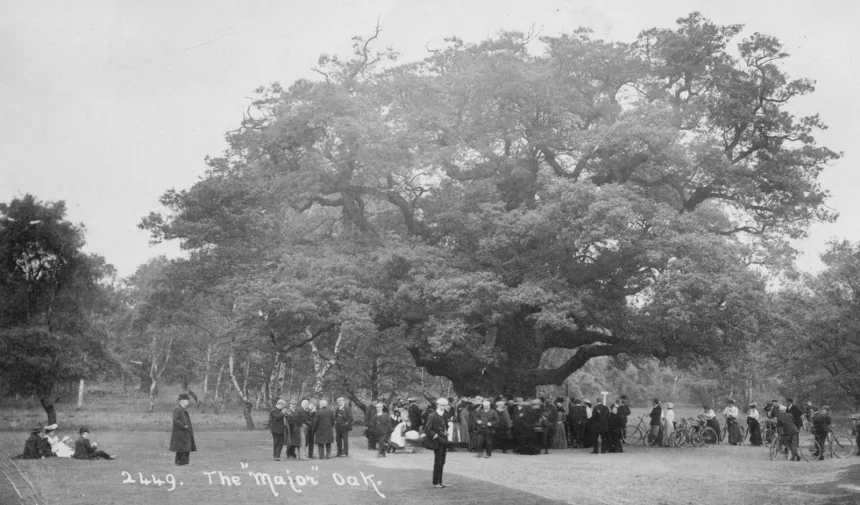
The Major Oak before the final chapter.
A historic look back at the Sherwood Forest icon, already a destination more than a century ago.
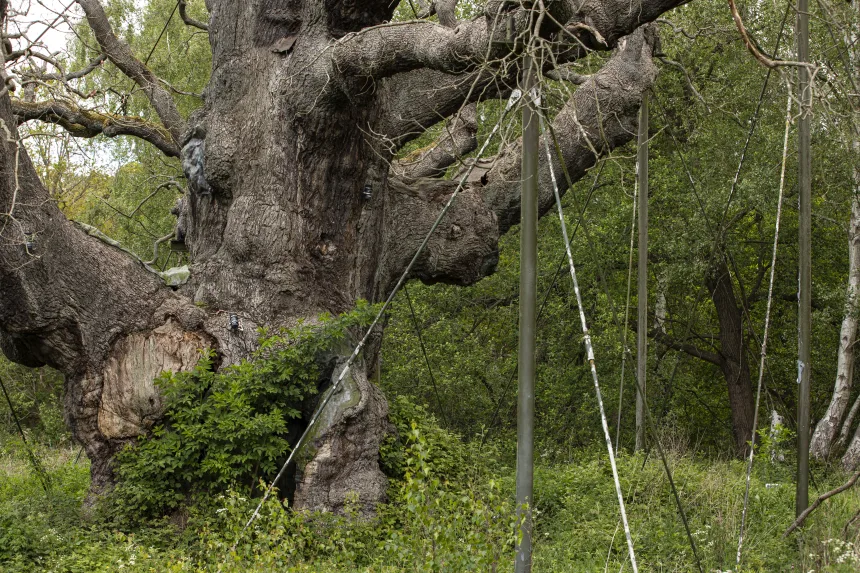
In its later years, the oak became instantly recognizable not just for its enormous hollow trunk and sprawling crown, but also for the metal supports holding its limbs in place. The props became part of the image: a tree so iconic that people built a system around keeping it upright.
The supports became part of the silhouette.
A close look at the bracing that helped the Major Oak remain standing through its final living years.
There is something quietly devastating about a tree outliving kings, myths, tourists, postcards, school trips and generations of “wait, Robin Hood was real?” debates — only to finally bow out because the modern world kept pressing in around its roots.
Still, the Major Oak is not being erased. Sherwood Forest says the tree will remain standing and continue supporting wildlife above and below the ground. Acorns and saplings connected to the oak also carry the story forward elsewhere.
So yes, the living tree may be gone. But the legend? That old thing still has leaves.
Watch AP’s report on the Major Oak.
The report looks at the ancient Sherwood Forest oak, its Robin Hood connection and what happens next.
Sources: Visit Sherwood / RSPB provided the official Major Oak update; AP News provided additional reporting and video context.