

















Anthony Feels a Powerful El Niño Coming—Here’s How to Prepare
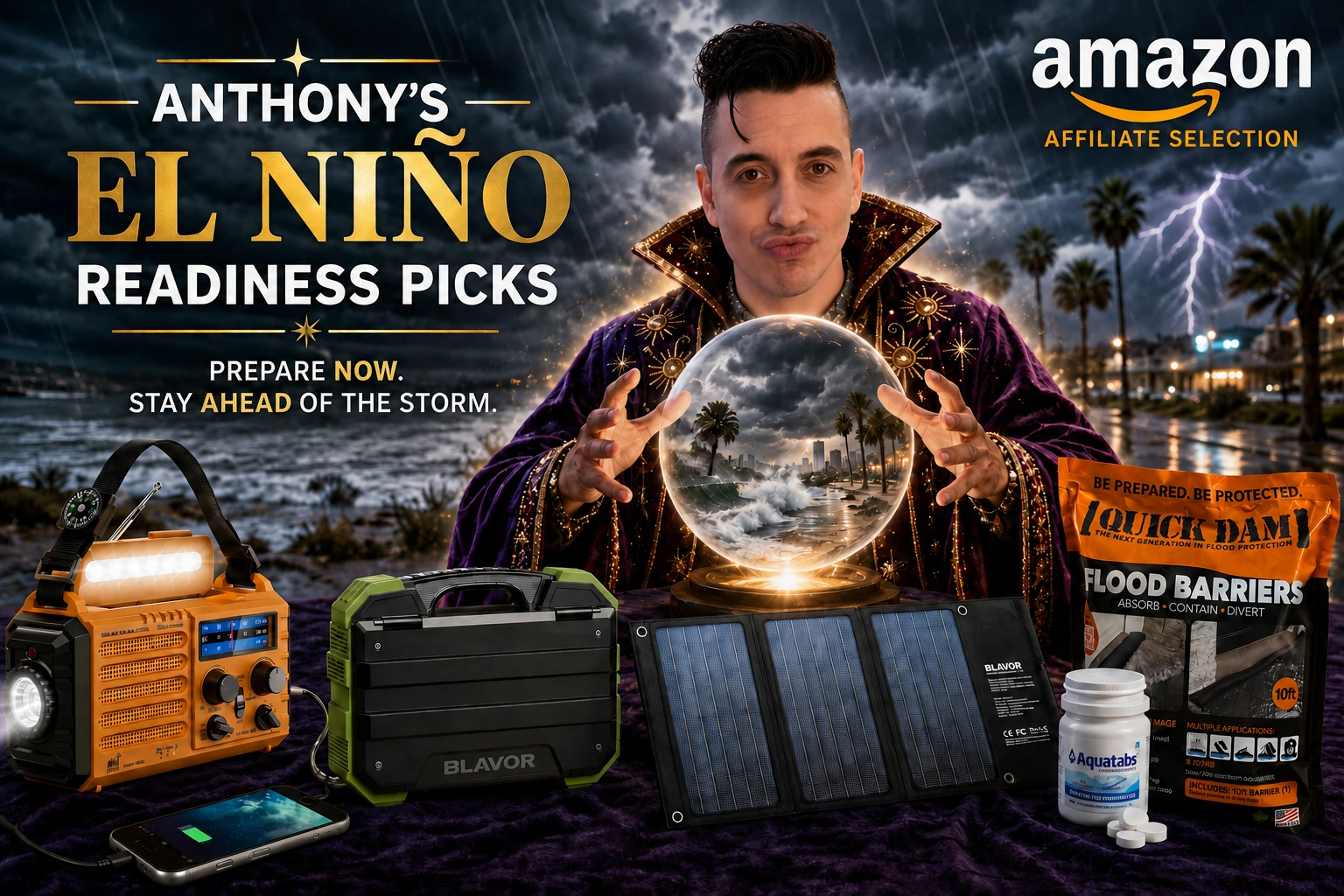
Anthony has what we have long called a sixth sense for what is coming. He gets a feeling, starts warning everybody around him and, more often than we would like to admit, something eventually proves him right. Right now, he cannot shake the feeling that the approaching El Niño season could hit especially hard—and he wants people ready before the rain begins and useful supplies disappear from shelves.
His instinct is personal, not a scientific forecast, but the official outlook gives it some weight. NOAA says El Niño is already underway and expected to strengthen through winter 2026–27, with an 81 percent chance of becoming very strong during October through December. Even a very strong El Niño cannot guarantee a particular storm or its impact in any one city. It does, however, make this a smart moment to look at the ordinary problems storms create before they become emergencies.
Then the news caught up with Anthony’s gut. CBS Los Angeles reported that climatologist Daniel Swain highlighted a European forecast showing a 70 to 100 percent chance of above-average winter precipitation in California and the same probability range that December through February could rank among the state’s wettest 20 percent of winters on record. Those are model probabilities—not a promise that California will have its wettest winter ever—but they are enough reason to prepare before everyone else has the same idea.
These four practical Amazon finds cover the problems that become urgent fastest: floodwater, missing information, dead devices and questionable drinking water. Storm preparation feels optional—right up until water starts nosing toward the garage, the power disappears and everybody’s phone is sitting at 11 percent.
Anthony’s El Niño Readiness Picks
- Quick Dam 10-Foot Flood Barrier
- Eoxsmile NOAA Emergency Weather Radio
- BLAVOR 30W Foldable Solar Charger
- Aquatabs 397mg Water Purification Tablets
Disclosure: As an Amazon Associate, INYIM Media earns from qualifying purchases. Prices and availability can change.
This is not a fantasy survival haul, a prediction that disaster is guaranteed or an excuse to ignore an evacuation order. It is Anthony’s compact layer of backup for the house, car or emergency closet—because waiting until the forecast turns red is exactly when useful supplies become harder to find.
1. Quick Dam 10-Foot Water-Activated Flood Barrier
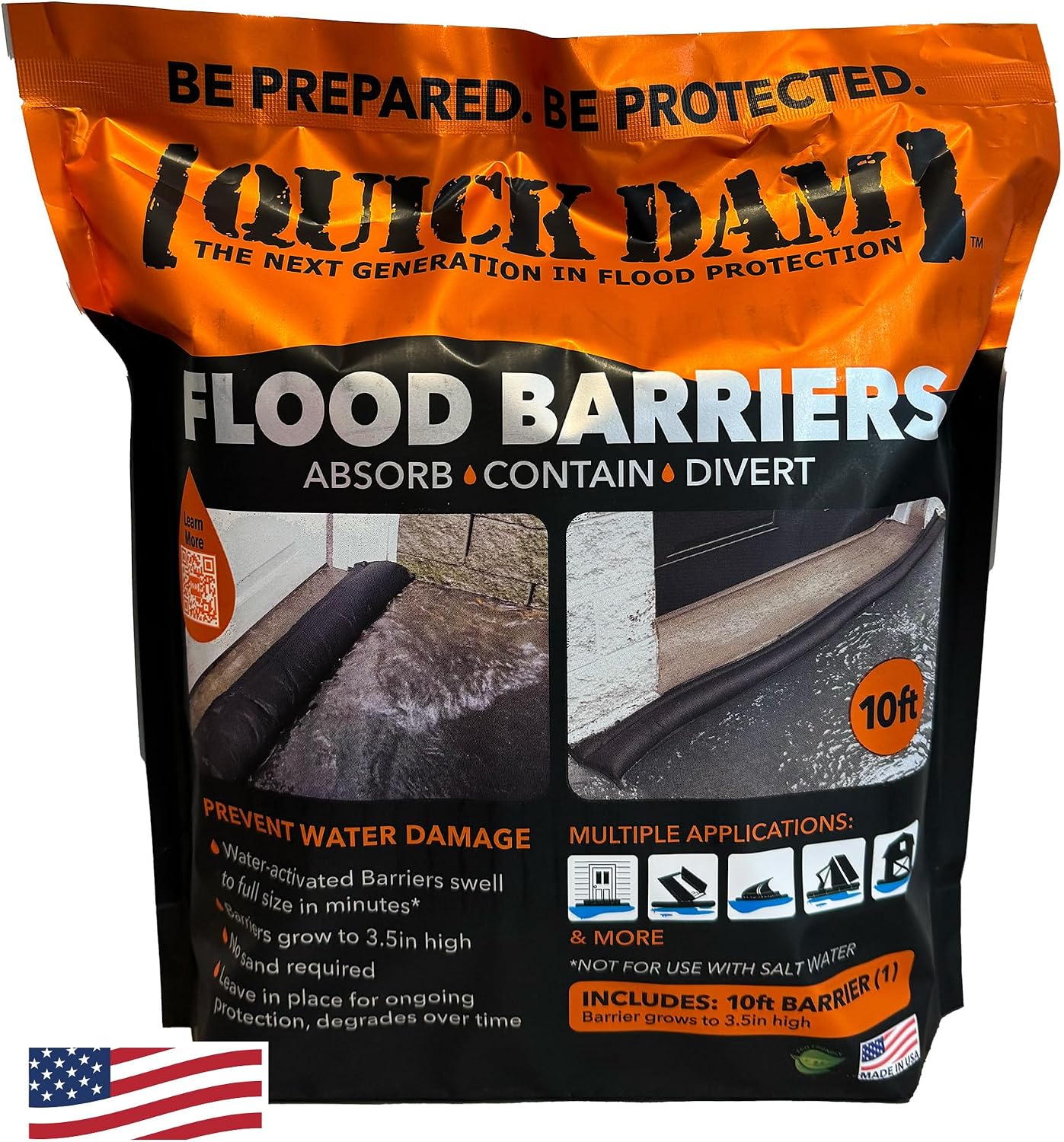
A sandbag is useful, but it is also heavy, messy and rarely sitting politely in the closet when you need it. The Quick Dam 10-foot barrier stores flat and expands after contact with water, reaching roughly 3.5 inches high within minutes. Its flexible, dual-chamber design can be positioned across a doorway, garage entrance or another low point to help contain and redirect incoming water.
Know the limit: this is temporary flood control, not a permanent waterproof wall, and the manufacturer says it should not be used with salt water. Place it before water is already rushing through the room and follow the included instructions.
See it at Amazon: Shop the Quick Dam Flood Barrier.
2. Eoxsmile NOAA Emergency Weather Radio
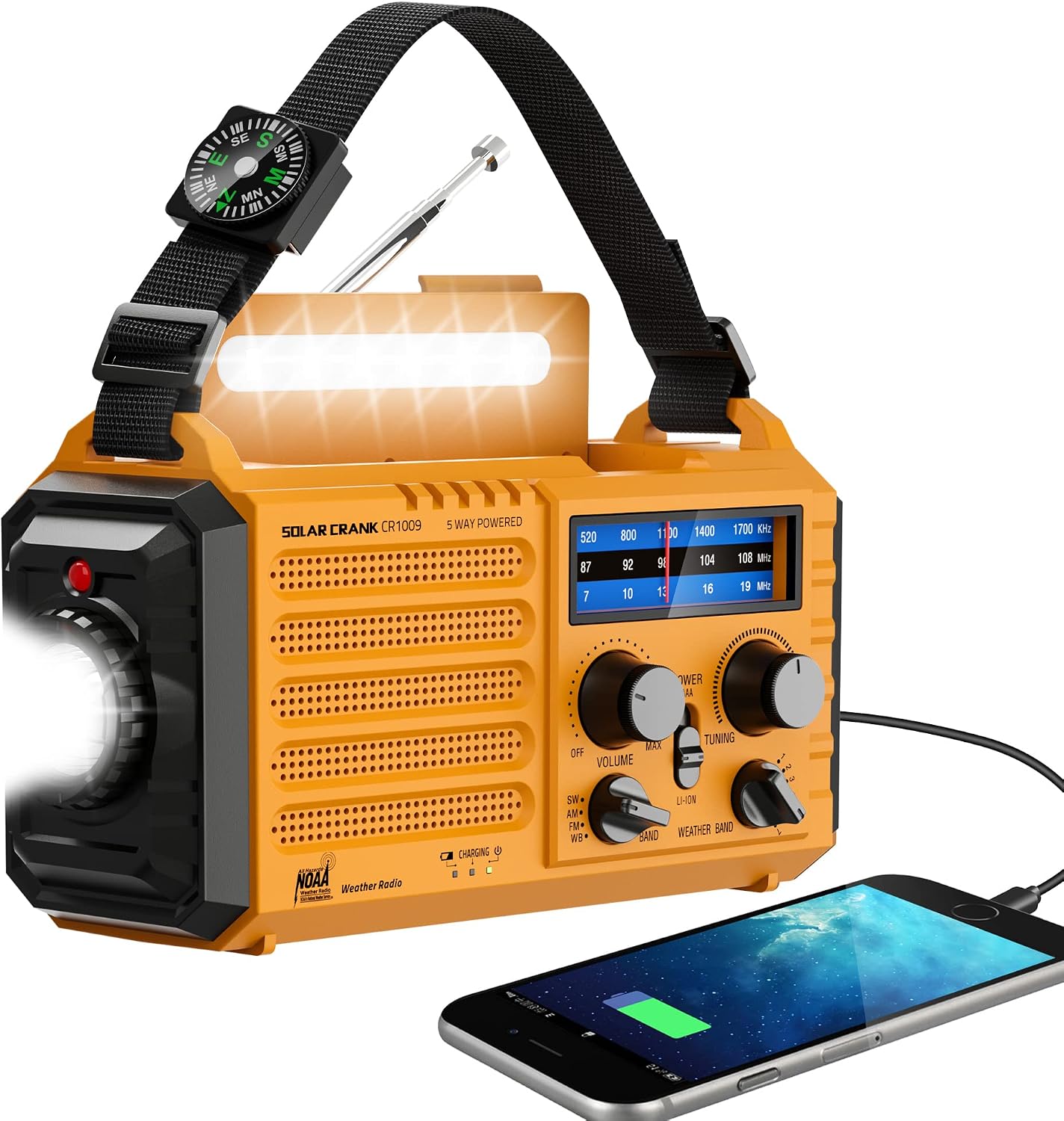
Phones are wonderful until cell service buckles or the battery gives up. The Eoxsmile emergency radio receives NOAA weather channels along with AM, FM and shortwave broadcasts. It also combines a 5,000mAh rechargeable battery, USB charging, hand crank, solar panel, flashlight and SOS alarm in one portable unit.
The National Weather Service broadcasts official warnings, watches and forecasts through NOAA Weather Radio 24 hours a day. Charge the radio fully before storm season and treat the crank and small solar panel as emergency backups—not your everyday charging plan.
See it at Amazon: Shop the Eoxsmile Emergency Radio.
The barrier helps protect an entry point and the radio keeps official information coming. The next two supplies cover what happens when an outage lasts longer than expected.
That is where backup power and emergency water treatment earn their space—even if they spend most of the year sitting quietly in a labeled bin.
3. BLAVOR 30W Foldable Solar Charger
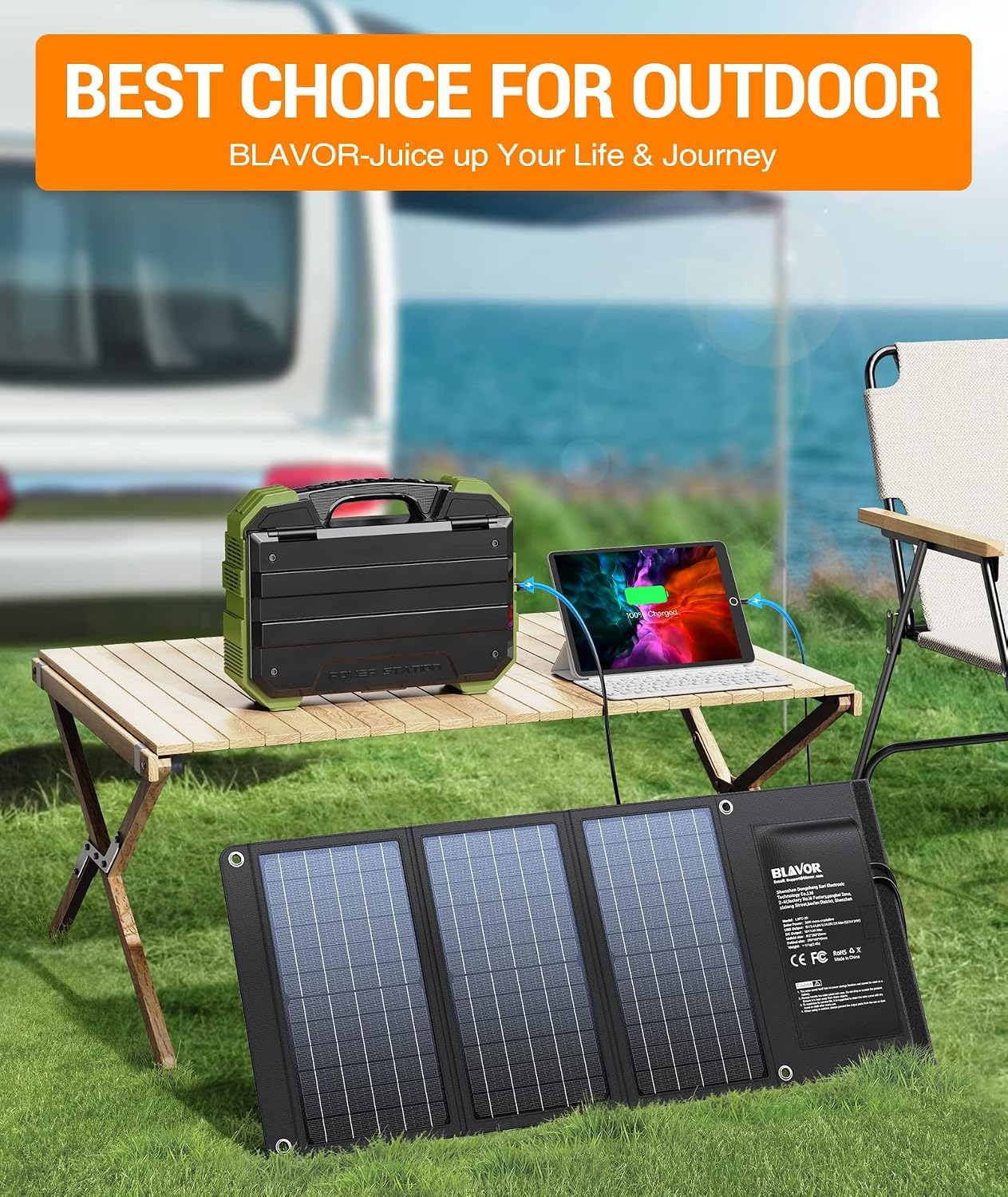
The BLAVOR 30W foldable solar panel gives you USB-A, USB-C and DC output options for charging compatible phones, tablets, power banks or portable power stations when sunlight is available. It folds down for storage, uses monocrystalline solar cells and carries an IPX4 rating for protection against splashes.
Important: this is a solar panel, not a battery. It does not store electricity for nighttime use, and clouds, shade, heat and panel angle can reduce output. The smarter setup is to use it with a charged power bank or compatible portable power station, giving the panel somewhere to store the energy it produces.
See it at Amazon: Shop the BLAVOR 30W Solar Charger.
4. Aquatabs 397mg Water Purification Tablets
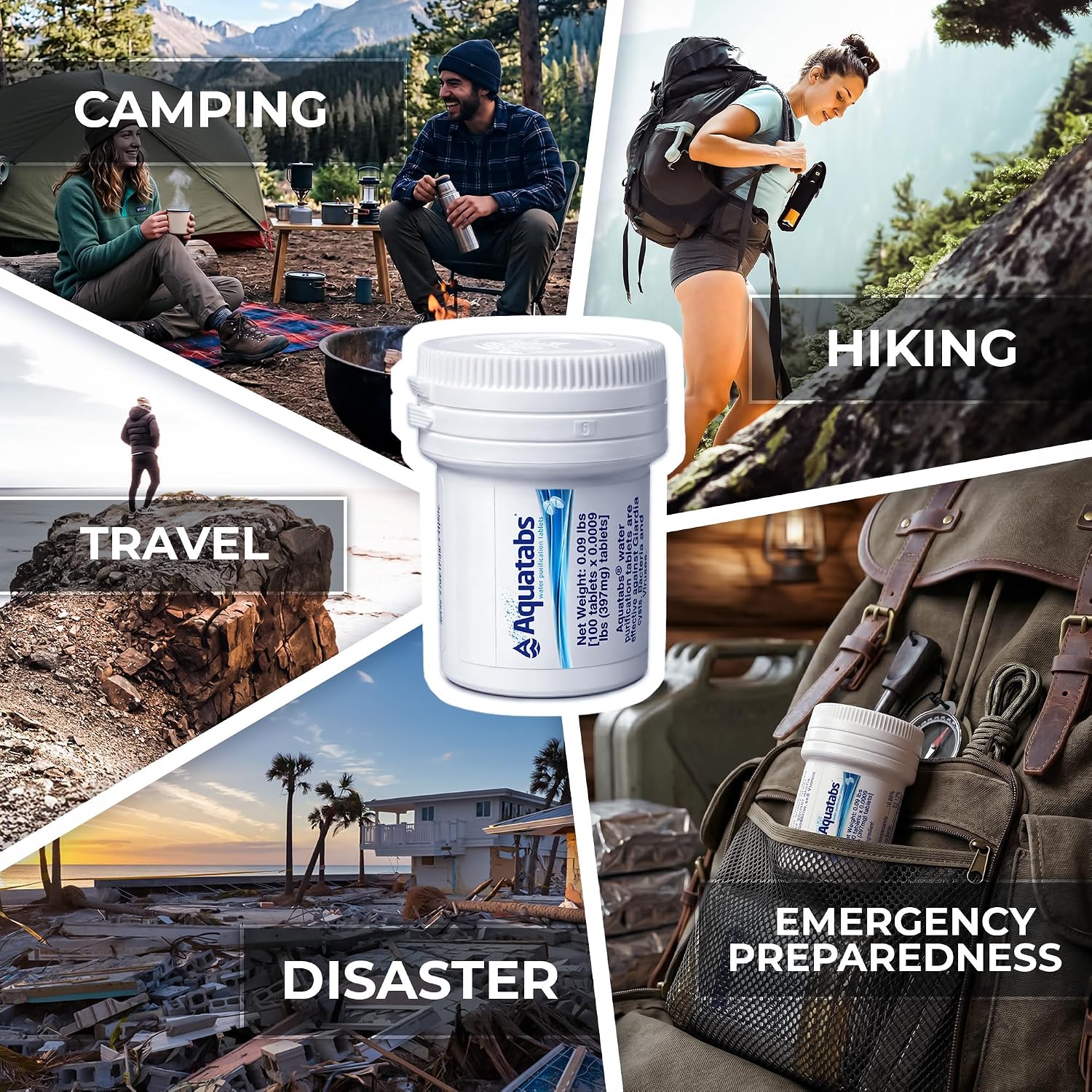
A boil-water notice becomes much more annoying when the electricity or gas is also out. This 100-pack of 397mg Aquatabs is designed for emergency water treatment, with each tablet treating up to four gallons in about 30 minutes when used according to the product directions.
The CDC says boiling is the most reliable way to kill germs in water. When boiling is not possible, chemical disinfectants can be useful—but the package directions, dosage and contact time must be followed exactly. Tablets cannot make water contaminated by fuel, toxic chemicals or salt safe to drink. When officials say to use bottled water, use bottled water.
See it at Amazon: Shop Aquatabs Water Purification Tablets.
What Should You Buy First?
If your property has a known low doorway or garage-flooding problem, start with the Quick Dam. For nearly every household, the weather radio is the broadest first purchase because information matters in every kind of emergency. Add the solar panel if you already own a power bank or station, then keep Aquatabs as a compact secondary water-treatment option.
Anthony’s sixth sense may be sounding the alarm early, but that is exactly when preparation is most useful. None of these replaces stored drinking water, charged batteries, local alerts or a real evacuation plan. Together, though, they close four very ordinary gaps before a storm has the chance to turn them into very expensive problems.
Sources: CBS Los Angeles’ report on Daniel Swain’s California winter outlook, the report republished by MSN, NOAA Climate Prediction Center’s ENSO discussion, NOAA Weather Radio, Quick Dam, CDC emergency-water guidance and the linked Amazon product listings.