

















Shirley Manson Never Needed to Fit In — That Was the Point
Shirley Manson has spent more than three decades proving that rock longevity does not require sanding yourself down. Tough without becoming inaccessible, glamorous without behaving obediently, funny without softening the point — the Garbage frontwoman has endured because the things that once made her feel like a weirdo became the very things generations of women recognized themselves in.
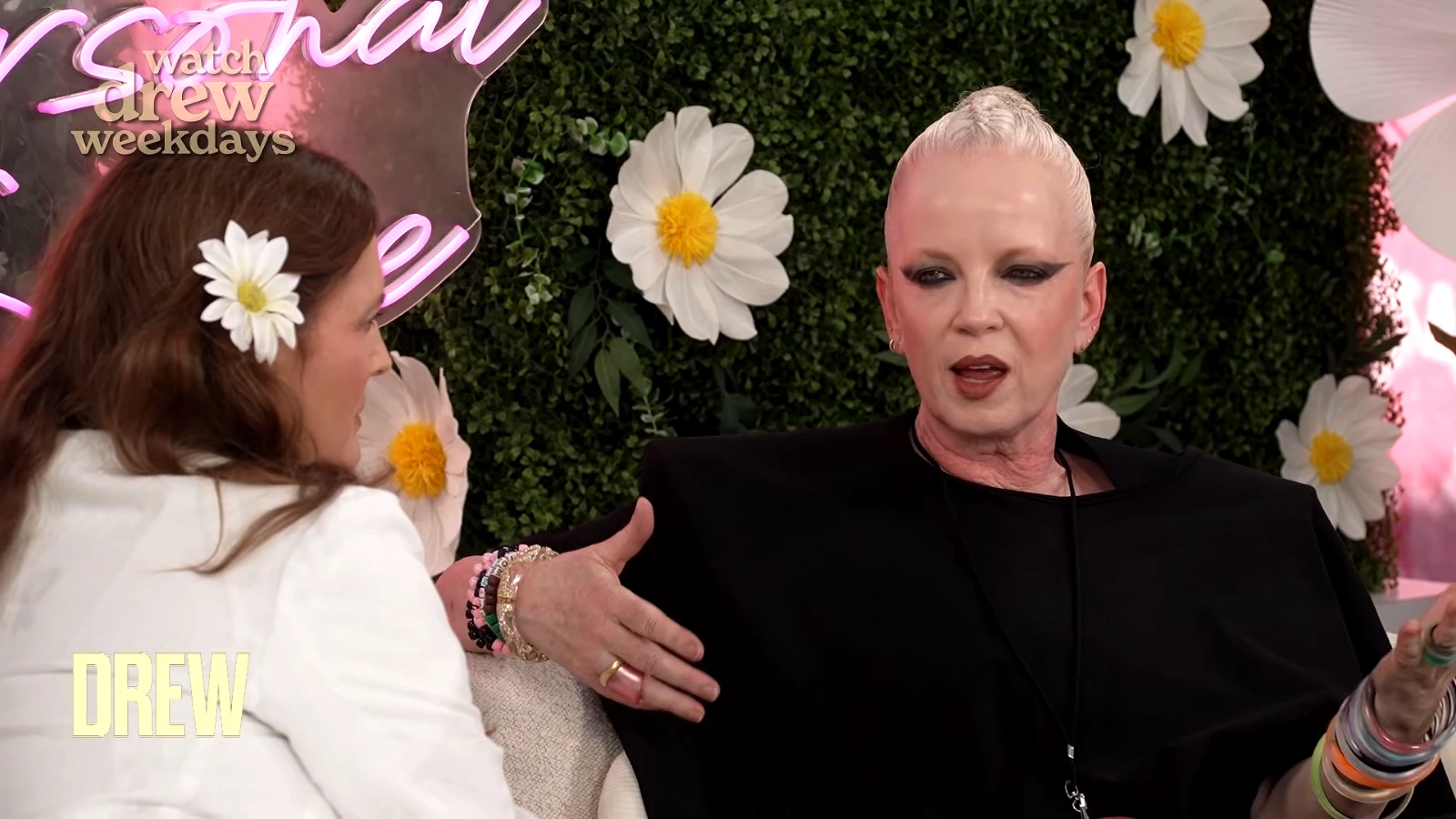
That history came into perfect focus when Manson reunited with Drew Barrymore at Olivia Rodrigo’s Daisy Chain Fields festival for The Drew Barrymore Show. What begins as two women laughing about daisies, ’90s photographs and one very famous Saturday Night Live introduction quickly becomes a conversation about individuality, women in rock, mentorship and why Manson wants one thing back from the decade that made both of them famous: the weirdos.
Discover More
Shirley Manson: Still Holding the Line
Three decades into Garbage, Shirley Manson is still making the case for originality, community and refusing to play the nice-girl rules.
Some links may be affiliate links. INYIM may earn from qualifying purchases.
The reunion starts in full ’90s mode. Drew remembers Manson’s daisies as something close to a signature, while Shirley explains they were more than styling. “They were sort of like my armor,” she says — armor that did not tell the world to stay away. That distinction feels almost like a mission statement for Manson’s entire career: protection without retreat, attitude without shutting the door.
Then comes the meme. Barrymore reminds her of the March 1999 Saturday Night Live episode she hosted, when she introduced Garbage with a little extra sauce: “Ladies and gentlemen, the very sexy Garbage.” The sound has had a second life online, attached to reveal videos celebrating whoever or whatever the poster finds irresistible. Manson’s response is wonderfully simple: she loves it for them.
But when Drew asks what the two of them would actually bring back from the ’90s, Manson does not say a hairstyle, a club or a fashion trend. “Weirdos.”
That answer is the heart of the conversation. Manson argues that there is more conformity now — not an absence of great music or great artists, but a pressure for people to sound alike, look alike and fit neatly into whatever lane has already been approved. Drew agrees, remembering a decade when everybody seemed to look a little different because very few people appeared especially interested in fitting in.
Standing at Daisy Chain Fields makes the point almost too perfectly. The festival gathered women from different generations and corners of music rather than flattening them into one idea of what a female artist is supposed to be. Manson points to the bill itself and says they are all “a bit weird” — artists who did not take the easy route. She singles out Chappell Roan, noting how relentlessly she gets criticized precisely because she refuses to play by the prescribed “nice girl” rules.
Drew turns the compliment back on Shirley. In the ’90s, Manson established that a woman could be tough, brash, sexy, funny and inviting all at once. She did not have to pick one mode and stay there so other people could understand her. Manson immediately reminds Drew that she was doing the same thing — recalling a Mark Seliger shoot in which Barrymore wore boxing gloves while playing with traditionally feminine and masculine imagery at the same time.


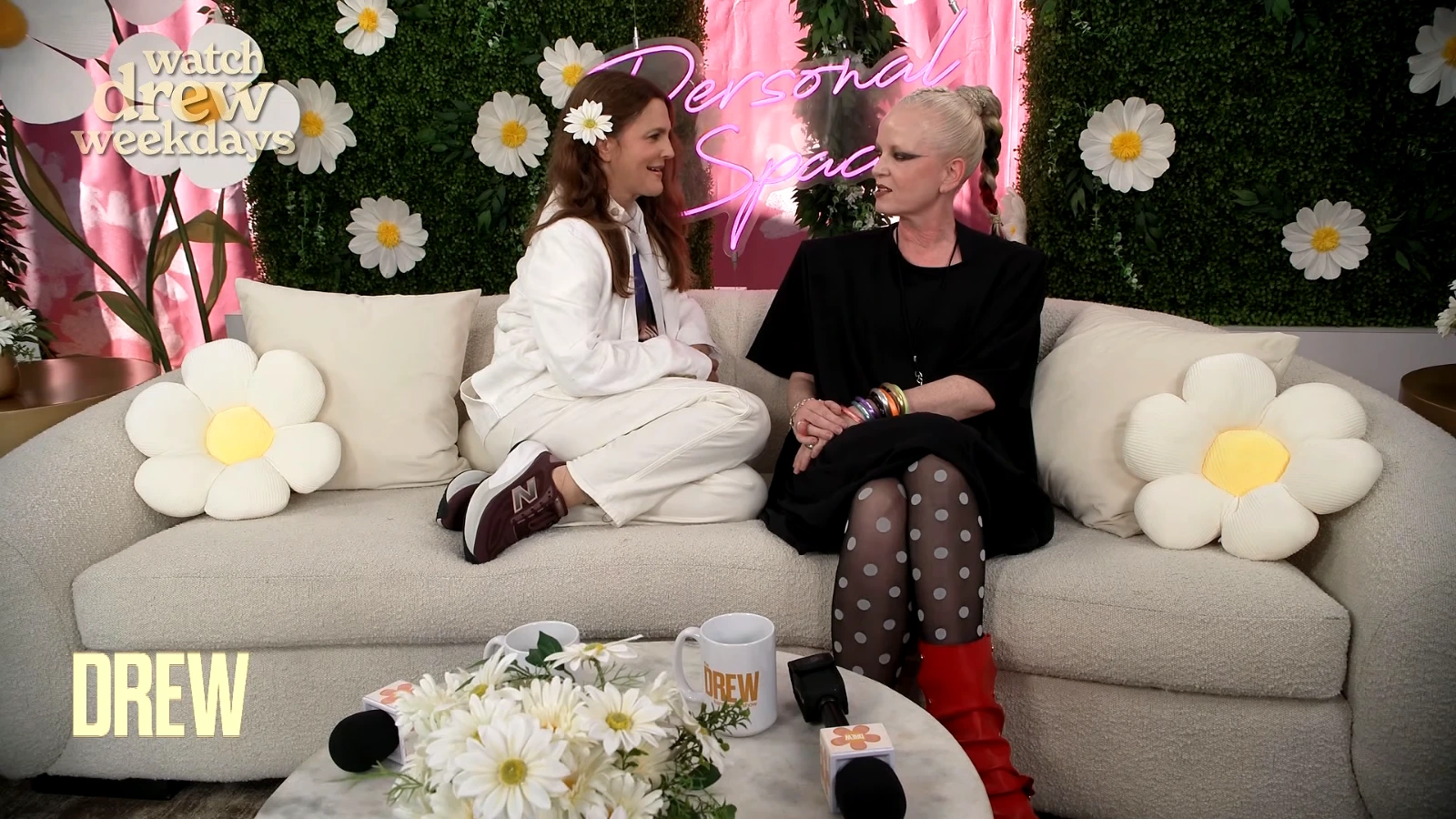
That freedom to hold contradictions has always been one of Manson’s great strengths. Garbage arrived in the middle of an era that loved to categorize women, but Shirley never behaved like a category. She could sneer, flirt, rage, joke, nurture and confront without treating any of those instincts as mutually exclusive. That is a large part of why she remains one of rock’s most enduring women.
And endurance, for Manson, has never been a solo act. When Drew asks who gave her that sense of possibility when she was young, Shirley does not hesitate: Debbie Harry. Long before Garbage, Manson’s first band, Goodbye Mr. Mackenzie, opened for Harry on a solo UK tour, beginning a relationship that evolved into genuine mentorship. Manson has spoken for years about Harry’s generosity and the example she set simply by continuing to create, perform and remain culturally present as she aged.
At Daisy Chain Fields, Shirley says Harry was still mentoring her only days earlier, sending her sunglasses that Manson planned to wear at the festival. “Debbie Harry has to be here in some way or form,” she tells Drew, calling her the archetype for the entire thing.
That image says almost everything: Debbie passing something down to Shirley, Shirley passing something down to the artists coming behind her, all of them meeting on a bill created by Olivia Rodrigo. The lineage is not about copying one another. It is about making enough room that the next woman does not have to.
Manson’s definition of cool has changed with age, too. She is no longer interested in the chilly “too cool for school” posture that once made her feel ugly, unpopular or unwelcome. These days, cool means people who put love into the world with intention. She sees that in Rodrigo and in the community Daisy Chain Fields was designed to create — a festival centered on women and girls, with a lineup spanning generations rather than treating one generation as a replacement for another.
Then, because this is Drew and Shirley, all that philosophy ends up back in the rain. Barrymore tells Manson she loves running outside when it pours and letting herself get soaked. Shirley, singer of “Only Happy When It Rains,” naturally approves. Drew tells her that, as a woman, she always wanted to be next to her. Shirley wastes no time turning that into one final joke.
“You heard that here first, folks. She wanted to be with me.”
And Drew brings the whole thing full circle with the only introduction that could possibly end it: “Ladies and gentlemen, the very sexy Garbage.”
Watch Shirley Manson Reunite With Drew Barrymore at Daisy Chain Fields
Manson and Barrymore revisit their ’90s history, the viral Garbage SNL introduction, individuality, Debbie Harry’s mentorship and what Shirley wants the next generation to hold onto.
Sources: The Drew Barrymore Show / YouTube; Paramount Press Express; Daisy Chain Fields.