









Before We Knew New York Club Culture, “Feel the Spin” Took Us There
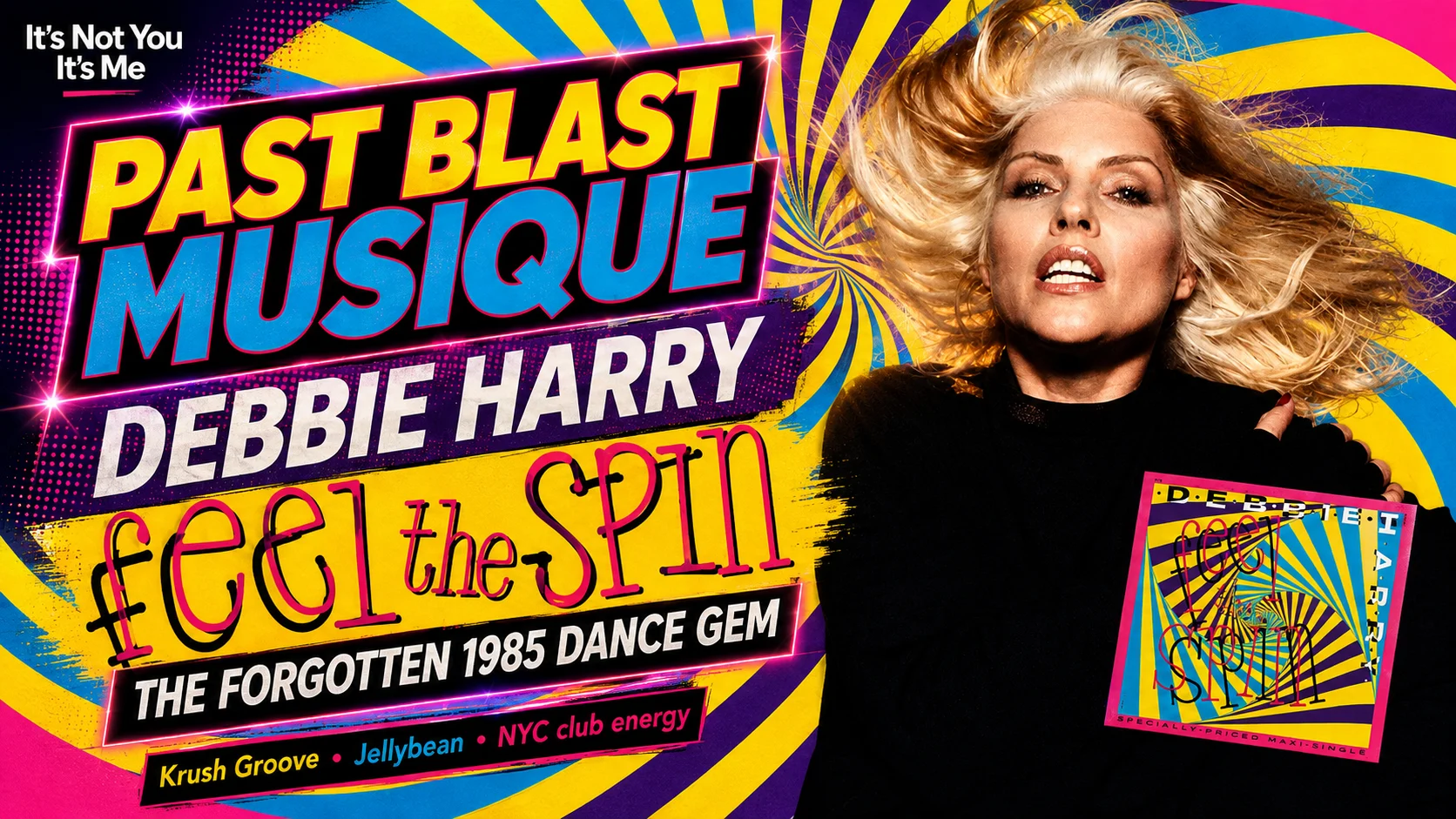
Update — Aug. 24, 2026: After this story was published, INYIM Media heard directly from Blondie co-founder Chris Stein about why “Feel the Spin” faded from view. His response — and what it may reveal about the song’s curious afterlife — has been added below.
Some records reach you before you have the vocabulary to explain why they matter.
Debbie Harry’s “Feel the Spin” was one of those records for us. We first discovered the 12-inch in our DJ uncle’s record collection. We were already kids who loved Blondie, and then suddenly there was Debbie again in 1985 with this sleek, percussive club track that seemed to belong to an entirely different world. The cover lodged itself in our memory almost as firmly as the record did.
It also became one of the first records we learned to beat-match on. Before we understood the history of New York nightlife, before we knew the names of the clubs or the people behind the records, we were literally learning how dance records could lock together with Debbie Harry spinning on the turntable. It felt like New York City club music before we really knew what New York City club music was.
That physical connection to the record never really went away. Years later, spotting another copy of “Feel the Spin” at Goodwill felt like the record finding us all over again — the same sleeve that had been part of our earliest DJ memories suddenly sitting there in the wild.
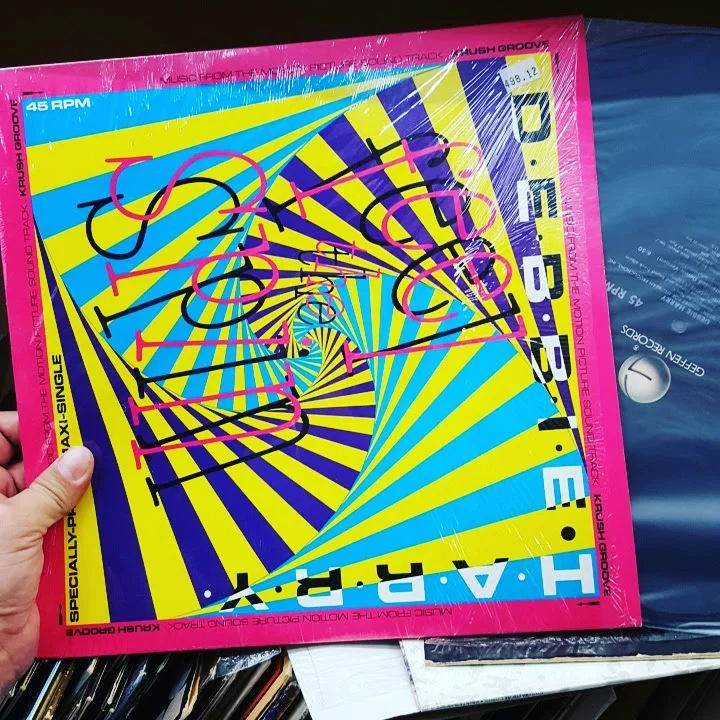
That feeling has never left. Neither has the mystery around the record. “Feel the Spin” became a genuine 12-inch sales hit, was featured prominently in one of the best club sequences in the 1985 musical film Krush Groove, celebrated with a Palladium party attended by Andy Warhol and yet somehow never developed the visual afterlife you would expect from a Debbie Harry dance single released at the absolute height of the MTV era.
More than four decades later, the deeper you dig into “Feel the Spin,” the stranger — and better — its story gets.
music
Step Back Into Debbie Harry’s 1985 Dance Floor
Revisit the records, soundtrack and New York club energy surrounding Debbie Harry’s overlooked Feel the Spin era.
Some links may be affiliate links. INYIM may earn from qualifying purchases.
Before Rockbird, Debbie Quietly Stepped Back Onto The Dance Floor
In August 1985, months before Debbie’s full solo comeback took shape, the Los Angeles Times described “Feel the Spin” as the “first step” in her return: a new song for Warner Bros.’ upcoming Krush Groove soundtrack, produced by New York DJ and producer John “Jellybean” Benitez.
The timing matters. Blondie had broken up in 1982, Debbie’s soundtrack single “Rush Rush” had followed in 1983, and her recording career had slowed considerably while Chris Stein was seriously ill. By fall 1985, however, Harry had signed with Geffen Records for North America. Cash Box announced that her first Geffen release would be “Feel the Spin,” while a full Geffen album was planned for 1986.
That album would become Rockbird. “Feel the Spin” was the bridge.
And it was released like a record built specifically for the dance floor. The U.S. 12-inch paired a 6:50 Extended Dance Version with a 4:34 Dub Version. Rather than arriving with a conventional pop-single rollout, it moved through clubs, DJs, record stores and the Krush Groove soundtrack.
Jellybean Suggested Debbie — And Debbie Loved Writing With Him
A later account of Jellybean’s 1985 Warner Bros. production deal, citing a 1988 New York Magazine profile, says the label asked him to produce a non-rap song for the Krush Groove soundtrack and that Benitez suggested Debbie Harry. Harry, Benitez and arranger Toni C. ultimately wrote “Feel the Spin” together.
That detail feels important. Debbie was not simply being dropped into somebody else’s fashionable dance project. According to that account, Jellybean wanted Debbie for the record.
And whatever temptation there may be to turn Jellybean’s connection to Madonna into a story of rivalry, Debbie’s own words from the period point in another direction. In a January 1986 SPIN interview, she said, “It was great meeting Jellybean Benitez. He’s a nice guy, a really talented guy. I liked writing with Jellybean.” She went on to describe writing with him as a creative turn-on after a period in which she had not been writing much.
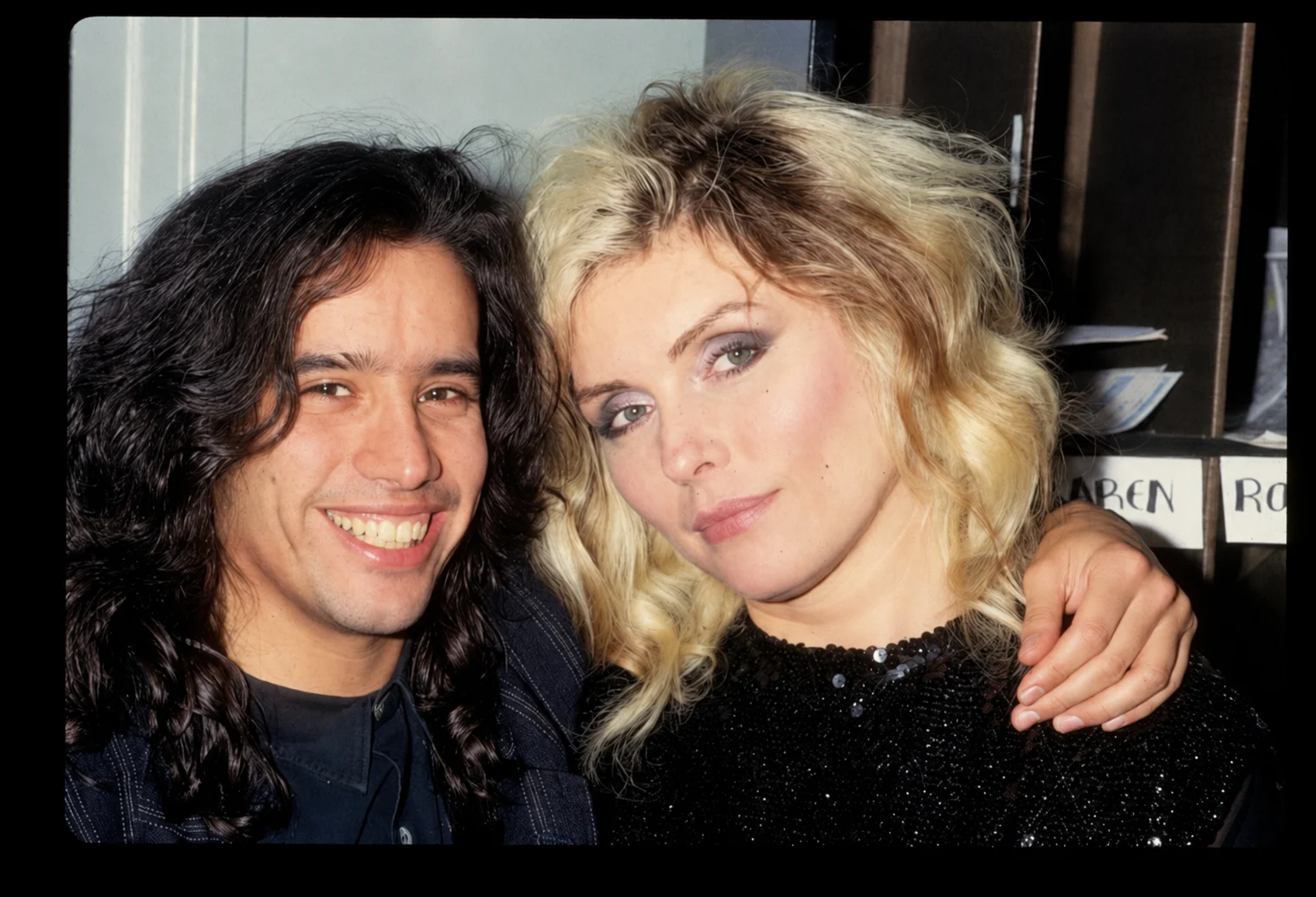
The record also had a killer studio lineup — and the names are worth stopping for. “Feel the Spin” was recorded and mixed digitally at the Hit Factory in New York, arranged by Toni C. and produced by Jellybean.
Toni C. was more than an arranger here: she co-wrote “Feel the Spin” with Debbie and Jellybean, later wrote Whitney Houston’s “Love Will Save the Day” for another Jellybean production, and would work with Debbie again during her solo career. Stephen Bray, on drums and synthesizers, was Madonna’s early musical collaborator and would become the co-writer and co-producer behind major records including “Into the Groove”. Carlos Alomar, on guitar, was David Bowie’s longtime guitarist and a co-writer of “Fame.”
The background-vocal lineup was just as deep. Siedah Garrett would soon duet with Michael Jackson on “I Just Can’t Stop Loving You” and co-write “Man in the Mirror.” Audrey Wheeler had come out of New York post-disco group Unlimited Touch and built a formidable career as a session vocalist. Cindy Mizelle likewise became one of the industry’s most in-demand background singers, with credits stretching across R&B, pop and later Steely Dan. Wheeler and Mizelle had also sung backing vocals on Jellybean’s “Sidewalk Talk” alongside Madonna, while Bray worked on that record as well.
Then there is Jack Walden, credited on the original “Feel the Spin” 12-inch for synthesizer. Unlike the more famous names surrounding him, his broader career is much less clearly documented in accessible sources — but his name is right there on the record.
In other words, that New York-club feeling we heard in the record as kids was not imagined. It was baked into the room.
In Krush Groove, The Club Itself Became The Music Video
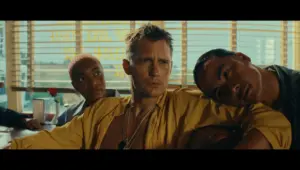
Then there is Krush Groove — the 1985 musical film built around the early hip-hop world of Def Jam, starring and featuring many of the artists who also appear on its soundtrack.
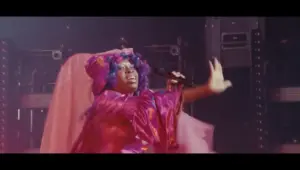
Debbie does not appear onscreen performing “Feel the Spin,” but the song is used during a long club sequence that has always been one of our favorite parts of the movie. The camera lets the room breathe: people dancing, characters moving through the crowd, outrageous dance-floor fashion and the energy of a club in full effect.
Watching it again now, the sequence feels almost like the visual the single never otherwise received. Debbie does not need to stand in the middle of the frame. For those minutes, the club itself becomes the star of “Feel the Spin.”
That makes the record even more personal for us. We heard “Feel the Spin” and saw that scene before we had any real understanding of the New York nightlife culture behind it. The record, its unforgettable sleeve and the movie were showing us a world we did not yet have a name for — while that same 12-inch was helping teach us how to beat-match.
“Feel The Spin” Did Not Just Become A Cult Favorite — It Sold
Here is the part of the story that gets lost when “Feel the Spin” is dismissed as an obscure soundtrack curiosity: people were buying the 12-inch.
Cash Box reviewed the record in November 1985 and singled out Jellybean’s percussion-heavy production and Debbie’s understated vocal. Its accompanying club report called the record highly danceable and said it was already generating strong requests, with retail expected to follow.
It did.
On Billboard’s 12 Inch Singles Sales chart — compiled from a national sample of retail-store sales reports — “Feel the Spin” made a spectacular five-week climb:
| Date | Billboard 12 Inch Singles Sales |
|---|---|
| Nov. 30, 1985 | No. 50 — debut |
| Dec. 7, 1985 | No. 17 |
| Dec. 14, 1985 | No. 12 |
| Dec. 21, 1985 | No. 7 |
| Dec. 28, 1985 | No. 5 — peak |
That first jump alone — No. 50 to No. 17 in a single week — tells you this was not simply a vanity soundtrack pressing sitting unnoticed in record bins.
Cash Box, whose Top 75 12” Singles chart stated that it was based solely on actual pieces sold at retail stores, tracked “Feel the Spin” even higher. By January 1986, the single had reached No. 3 there.
And the record had enough staying power to finish at No. 46 on Billboard’s 1986 year-end Dance Sales ranking. It never crossed over to the Billboard Hot 100, but on the format for which it had actually been designed — the 12-inch dance single — it was a real hit.
Billboard May Have Left Us One More “Feel The Spin” Mystery
For years, we have wished there were a proper Debbie Harry video for “Feel the Spin” — or even one surviving television or live performance. We still have not been able to locate a conventional Debbie-centered music video or a documented performance of the song.
But while checking the original charts, we found something odd.
On Billboard’s December 21, 1985 12-inch sales chart, the “Feel the Spin” listing carries the magazine’s diamond symbol. Billboard’s key on that chart defines the diamond as “Video clip availability.”
So what exactly was Billboard referring to?
Was there a promotional clip that has disappeared? Was the label circulating footage connected to Krush Groove? Was it something less formal than the kind of standalone music video we would expect today? We do not know, and we are not going to invent an answer. But the fact that Billboard itself apparently flagged some kind of video availability makes the missing visual history of “Feel the Spin” even more intriguing.
Andy Warhol’s Six-Dollar Cab Ride To The Place To Be
Then we get one of those perfect little pieces of New York history that makes the entire record suddenly feel alive.
On Thursday, October 24, 1985, Andy Warhol went to the Palladium for Debbie’s “Feel the Spin” party. His diary entry preserves not just the celebrity names but the tiny details — including the $6 cab fare to the Palladium:
Thursday, October 24, 1985: Cabbed to the Palladium for Debbie Harry’s party ($6) for her song that Jellybean produced, “Feel the Spin.” When Debbie arrived, she saw us in the balcony and came up there because she thought it was the place to (laughs) be, and then it was the place to be because all the photographers came after her. She looks great. Debbie actually was the first Madonna.
Andy Warhol, The Andy Warhol Diaries
The $6 cab fare is somehow one of our favorite details. So is the chain reaction in the balcony: Debbie sees Warhol and company upstairs and decides that must be where the action is. Debbie goes up. The photographers follow Debbie. And suddenly, because Debbie Harry is there, it actually becomes the place to be.
Warhol’s final observation is even more remarkable because he wrote it in 1985, while Madonna was becoming one of the biggest stars on the planet: “Debbie actually was the first Madonna.”
It is tempting to turn that comparison — especially with Jellybean’s history with Madonna — into some kind of generational rivalry. The contemporary evidence does not really support that. Debbie spoke warmly about working with Jellybean, and in a December 1985 interview she even identified with the criticism Madonna was receiving for provocative female imagery because Debbie had already lived through a version of it herself.
The more interesting story is the handoff happening around them: Debbie Harry, one of the defining faces of downtown New York cool, making a club record with one of the DJs and producers helping shape the next era of New York dance-pop.
One Song, A Whole Trail Of Covers
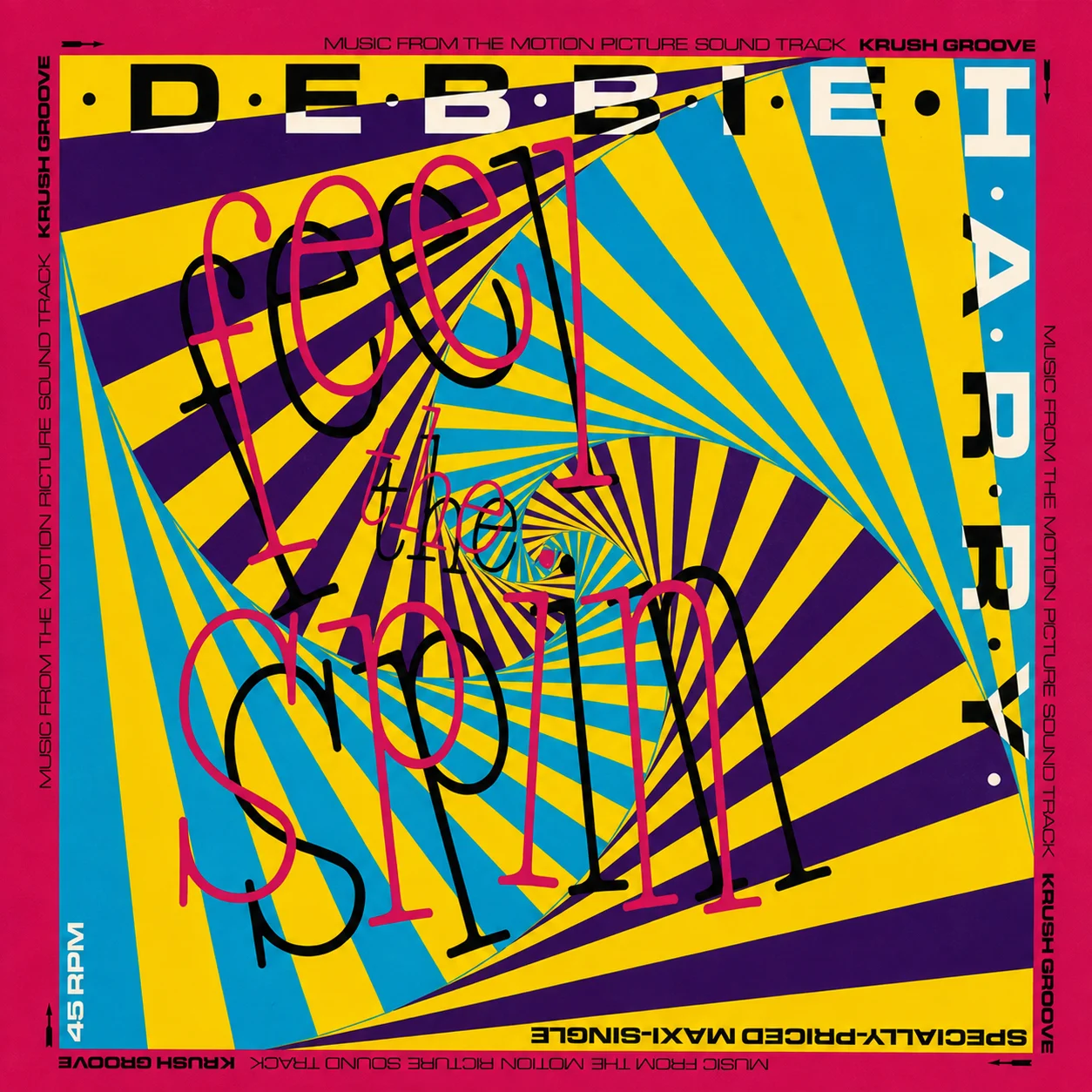
Part of our memory of “Feel the Spin” has always been visual. That original 1985 sleeve is impossible to forget: a hot-pink border framing a yellow, turquoise and deep-purple optical spiral, with DEBBIE HARRY wrapped around the edges and the title almost dancing across the vortex. The artwork looks like the record sounds — kinetic, slightly dizzy and made to spin.
The back sleeve is almost a visual remix of the front: the same hypnotic spiral stripped of the giant Debbie Harry lettering and title, leaving the artwork to pull you inward before the barcode and tiny production credits snap you back to reality.
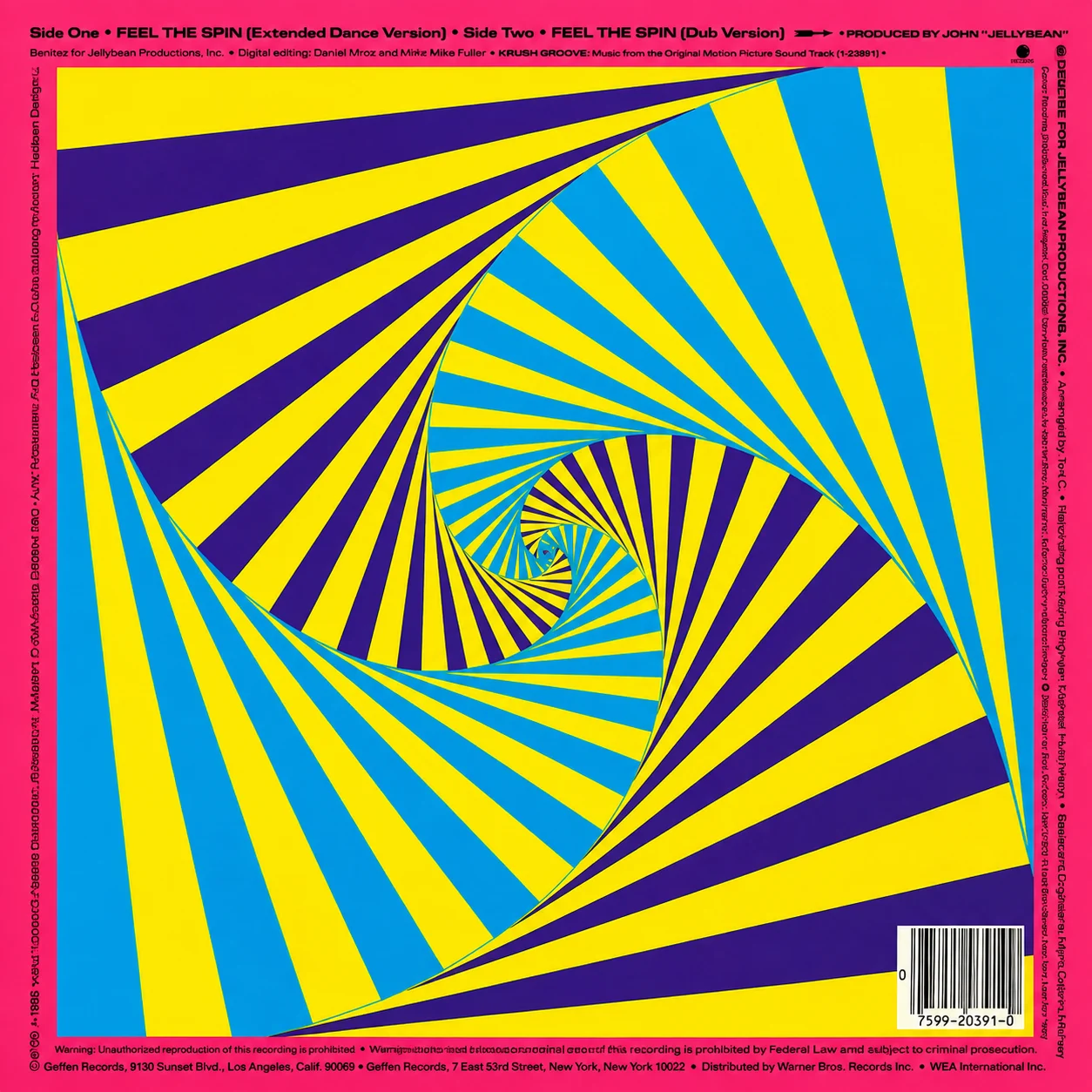
There were really two primary 1985 single releases to chase. The U.S. got the now-familiar 12-inch picture sleeve, catalog number 0-20391, with the 6:50 Extended Dance Version backed by the 4:34 Dub. Canada also received a 7-inch Geffen pressing, 92 88687, pairing a vocal version with an instrumental. We have found stock and promotional label variants of that Canadian 45, but so far we have not verified a distinct Canadian picture sleeve — so we are not going to manufacture one for the visual history.
At the same time, the song had another official visual identity: the Krush Groove soundtrack LP. Debbie’s name sits right on the cover among Sheila E., Run-D.M.C., LL Cool J, the Fat Boys, Kurtis Blow, Chaka Khan, the Gap Band, Beastie Boys and Force M.D.’s. For a track that sometimes gets treated like an obscure footnote in Debbie’s solo catalog, there was nothing obscure about the company it kept.
Then Rockbird Gave “Feel The Spin” A Second Life
The strangest part of the artwork trail comes in 1987. “Feel the Spin” had never been issued as a proper U.K. single in 1985, but once Rockbird arrived, Chrysalis began quietly attaching the older club record to Debbie’s new singles.
“Free to Fall” put “Feel the Spin” directly behind a glamorous Brian Aris-era Debbie image. On the 7-inch, the shorter approximately four-minute version appeared as the B-side; the U.K. 12-inch carried the full 6:50 Extended Dance Version alongside “Secret Life.” A 12-inch picture-disc edition gave the release yet another collectible visual form.
A few months later, “In Love With Love” did it again. The U.K. 12-inch placed “Feel the Spin” on side two with the French version of “French Kissin’ in the USA.” Even better for collectors, Chrysalis issued a 12-inch picture disc featuring Debbie’s face across the vinyl — with “Feel the Spin” still sitting on the B-side. A U.K. promo 12-inch stripped the pairing down even further: “In Love With Love” on one side, “Feel the Spin” on the other.
That means “Feel the Spin” effectively travelled into the Rockbird campaign without ever becoming part of the album itself. It is an odd little afterlife: a 1985 soundtrack single quietly following Debbie’s 1986 comeback into 1987 record bins.
From Soundtrack Rarity To Official Debbie Harry History
By 1988, “Feel the Spin” was no longer being treated merely as an old B-side. The full Extended Dance Version was included on Once More Into the Bleach, the Debbie Harry/Blondie remix collection. Its Brian Aris close-up of Debbie — all eyes, platinum hair and warm bleached tones — gave the track one of its most recognizable later album homes. The compilation was also significant because it brought Debbie’s non-album soundtrack singles “Rush Rush” and “Feel the Spin” into the same official retrospective for the first time.
A decade later, the track surfaced again on the European Deborah Harry Collection in 1998, a Disky compilation whose cover used another close, leather-jacketed Debbie portrait. The same compilation was later repackaged by EMI Gold in 2004 as French Kissin’ — The Collection with new artwork, extending the song’s cover history yet again.
Then came perhaps its most definitive solo-career placement: Most of All: The Best of Deborah Harry in 1999. The blue cover places Debbie in an Andy Warhol “BAD” shirt — a wonderfully accidental visual echo of the same Andy Warhol who had written about the “Feel the Spin” party back in 1985. Inside, the Extended Dance Version appears among the singles that define Debbie’s solo career.
So the visual history of “Feel the Spin” is much richer than a single forgotten sleeve. There is the psychedelic 1985 12-inch we remember from our uncle’s DJ collection; the label-only Canadian 45; the Krush Groove soundtrack; the Rockbird-era “Free to Fall” and “In Love With Love” sleeves and picture discs; the elegant Once More Into the Bleach cover; and the later compilations that finally folded the song into Debbie’s official solo story.
And through all of those covers, one thing remained missing: a Debbie Harry “Feel the Spin” video.
Then the record found another route back to the dance floor. In 1988, S’Express sampled “Feel the Spin” on “Theme from S-Express,” carrying a piece of Debbie’s 1985 club record directly into the sample-heavy explosion of late-’80s dance music.
That feels right. “Feel the Spin” has always sounded less like a dead-end soundtrack cut than a record sitting at a crossroads — Blondie’s downtown past behind Debbie, Rockbird just ahead, and an entirely new generation of club music moving around her.
More Than Forty Years Later, We Still Want That Debbie Video
We still wish we had the obvious thing: Debbie Harry in 1985, on camera, performing “Feel the Spin.” A full music video. A television appearance. One live performance. Something.
And we have kept waiting for it. We saw Debbie on a solo tour in the 2000s and hoped “Feel the Spin” might finally surface. It did not. Then came Cyndi Lauper’s 2007 True Colors Tour, where Debbie deliberately dug into her solo catalog. We were there and saw (FINALLY) “French Kissin’ in the USA,” “Rush Rush” and “The Jam Was Moving” alongside her then-new material. For longtime solo fans, it was the kind of set that made you think almost anything might turn up.
But still, no “Feel the Spin.”
Chris Stein Says It Simply “Fell By The Wayside”
After publishing this story, INYIM Media reached out directly to Blondie co-founder Chris Stein about “Feel the Spin” and its remarkable disappearance from the conversation around Debbie Harry’s solo catalog. His response was telling: the song had become so distant that he needed to hear it again before answering.
“It’s an ok track but you’re the only one to mention it in years and years. I had to listen to it now to refresh. For me it’s very ‘Madonnaish’ being Jellybean. But it just fell by the wayside.”
Chris Stein, direct response to INYIM Media, Aug. 24, 2026
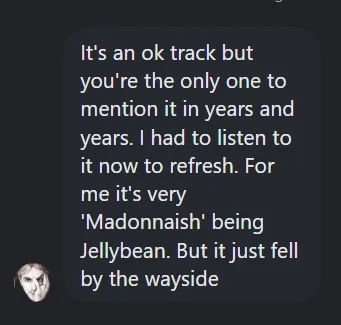
That does not solve every mystery surrounding “Feel the Spin” — including why Debbie never appears to have made it part of her live repertoire — but it may explain the larger disappearing act better than any theory could. There was no dramatic rejection or buried scandal offered by Stein; in his recollection, the record simply slipped out of view.
His “Madonnaish” observation also fits the record’s creative context. Jellybean Benitez was central to Madonna’s early dance-pop sound, and “Feel the Spin” was made with several musicians whose work intersected with that world. What sounded contemporary in 1985 may also have become unusually tied to that exact moment in New York club-pop history.
And maybe the simplest explanation for why “Feel the Spin” disappeared is that it did what it was meant to do, and then everyone moved on. The single gave Debbie a visible return to the dance floor, landed on the Krush Groove soundtrack, sold strongly as a 12-inch and helped bridge the gap into the next phase of her solo career. By 1986, the focus had shifted to Rockbird, a full new album with its own singles, imagery and promotional cycle.
Chris Stein’s response makes that possibility feel even more convincing. The fact that he had to listen to the song again to refresh his memory says a great deal about where “Feel the Spin” ultimately sat in the larger Debbie Harry story. It was not necessarily rejected or deliberately buried; it may simply have belonged so completely to one brief 1985 moment that, once the next chapter began, the people closest to it kept moving forward too.
Instead, what survives is almost more mysterious: the 12-inch we first pulled from our DJ uncle’s collection — and later found again at Goodwill — the dub, the chart climb, the Krush Groove club scene, Warhol’s six-dollar cab ride to the Palladium, the photographers we know were there but whose party images remain frustratingly hard to identify, and a Billboard symbol suggesting that some kind of video clip may once have been circulating.
Maybe that incompleteness is part of why the song has stayed so vivid for us.
When we first heard “Feel the Spin,” we did not know the Hit Factory credits. We did not know about the Palladium party. We did not know the Billboard numbers, the Cash Box sales, or what Jellybean’s place in New York club history really meant. We knew the sleeve, we knew the groove, and we knew how exciting it felt to learn to bring that record into another one on a pair of turntables.
We just knew that Debbie Harry had made this great club record, and it sounded like somewhere we wanted to be.
Turns out, the kids heard it right.
Revisit Debbie Harry’s “Feel The Spin”
Revisit the original 1985 recording — and, if you can find the film clip, watch the Krush Groove club sequence that gave “Feel the Spin” the dance-floor visual it deserved.
Debbie Harry — “Feel the Spin” (Extended Dance Version), the 6:50 club mix that drove the original 1985 U.S. 12-inch.
Sources: Los Angeles Times, Aug. 18, 1985; Los Angeles Times, Dec. 1, 1985; SPIN, January 1986; Cash Box, Oct. 12, 1985; Billboard, Nov. 16, 1985; Billboard, Dec. 7, 1985; Billboard, Dec. 21, 1985; Billboard, Dec. 28, 1985; Cash Box, Nov. 16, 1985; Cash Box, Feb. 1, 1986; Billboard 1986 Year in Music; AFI Catalog; The Best of Blondie discography; Andy Warhol diary excerpt; John Benitez discography/biography references; and “Theme from S-Express” sample references; AllMusic: Audrey Wheeler; Steely Dan: Cindy Mizelle; Whitney Houston: “Love Will Save the Day”; and contemporary coverage of Debbie Harry on the 2007 True Colors Tour; MusicBrainz Deborah Harry discography; 45cat Canadian “Feel the Spin” 7-inch listing; The Best of Blondie: “In Love With Love” release variants; Once More Into the Bleach release listing; 1998 Deborah Harry Collection listing; and Most of All: The Best of Deborah Harry; and direct correspondence from Chris Stein to INYIM Media, Aug. 24, 2026.