





















Refunds may be up, but most Americans are really just getting back what was taken from their paychecks all year — here’s why, where that money goes, and how to actually come out ahead.
Everyone loves tax refund season. It hits like a bonus — a little extra cushion in a year where everything feels more expensive.
But here’s the part most people don’t realize:
That refund? It’s not free money.
It’s your money.
Are Returns This Year Really Going to Be Bigger?
You’ve probably heard refunds are “bigger” this year — but it’s not new money.
- More was withheld from paychecks
- Income didn’t grow as expected
- Withholding was off
👉 Most people simply paid more in than they needed to.
A bigger refund might feel good — but it also means you had less money all year…and the much higher cost of living didn’t help. You’ll get that money back, but everything is still going to be expensive.
Throughout the year, money is taken out of your paycheck before you ever see it. By the time a refund shows up, it feels like a reward — but in reality, it’s just the government returning what you already earned.
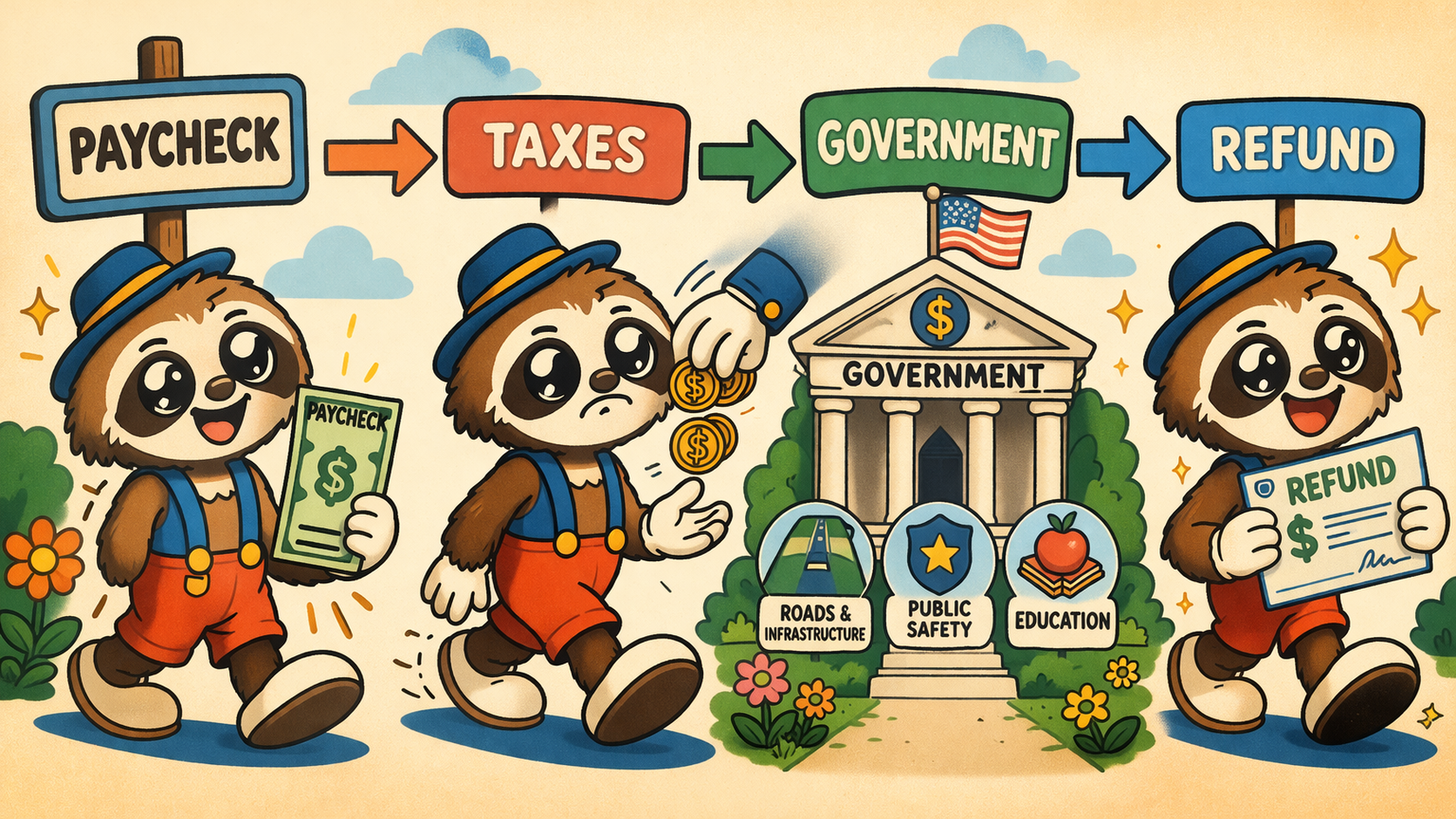
🧾 The Tax Money Roadmap (Simple Version)
Let’s break it down in the easiest way possible:
Step 1: You earn money
You work → your employer calculates your pay
Step 2: Taxes are taken out first
Before you even get paid, money is withheld for:
- Federal income tax → runs the country at a national level
- California state tax → funds state programs and services
- Social Security → supports retirement and disability income
- Medicare → funds healthcare for older Americans
- State disability insurance → helps if you can’t work temporarily
Step 3: That money is used immediately
It goes into systems that are running right now
Step 4: End of year = tax check-up
The IRS compares:
- what you paid
vs - what you actually owed
Step 5: The result
- Paid too much → you get a refund
- Paid too little → you owe
The reality: your refund isn’t extra money — it’s money you already earned coming back to you.
Why does the government take money out of our paycheck?
The U.S. runs on a pay-as-you-go system.
Instead of one huge bill at the end of the year, taxes are collected little by little throughout the year.
That keeps everything running — but because it’s based on estimates, most people end up overpaying.
That overpayment?
That’s your refund.
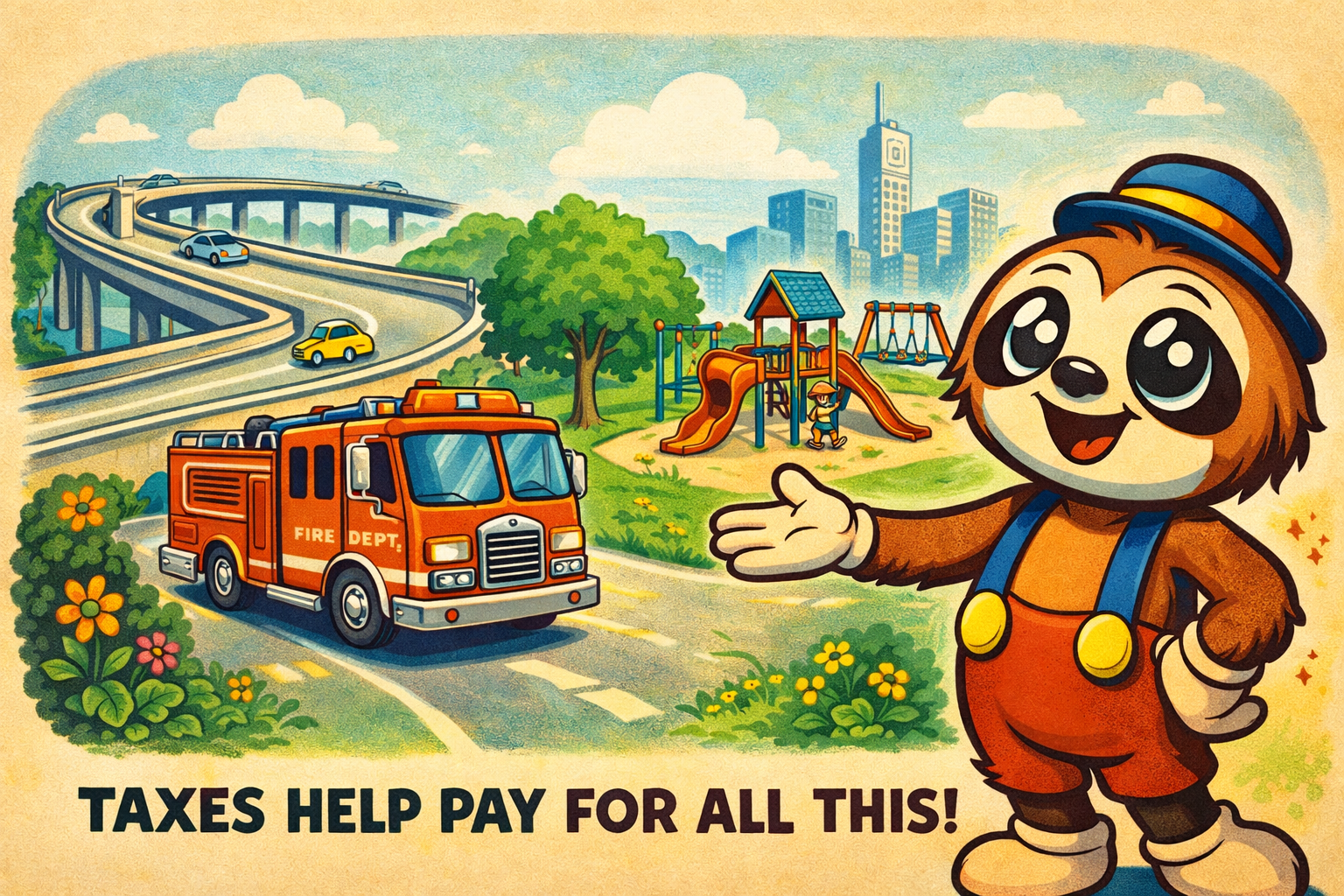
So what are these taxes actually paying for?
That money coming out of your check isn’t just sitting somewhere.
It’s constantly being used.
And honestly — it’s paying for a lot of the things people take for granted every day:
- Roads, highways, and freeways
- Public schools and colleges
- Police, fire, and paramedics
- Parks, pools, and libraries
- Street lighting and traffic systems
- Public transit and sanitation
- Social Security and Medicare
- Government operations and major projects
The U.S. is often seen as a place where things “just work.”
You turn on the water — it runs.
You drive on the freeway — it’s maintained.
You call 911 — someone shows up.
That doesn’t happen by accident.
It’s funded.
The part people don’t think about
Taxes aren’t based on what you personally use.
They’re based on a shared system.
You might not:
- Call the fire department
- Use public schools
- Go to a public pool
But those systems still need to exist — for everyone.
That’s the tradeoff:
Everyone pays in so the system is there when it’s needed.
Why does it feel like so much money is gone?
Because it’s not just one tax.
From a single paycheck, you’re often paying:
- Federal tax
- State tax
- Social Security
- Medicare
- State disability insurance
Stacked together, it’s a lot.
That’s why it feels like your money disappears before you even touch it.
And yes — we’re also paying for the things people debate
When the government builds something big, funds programs, or spends money overseas…
That’s not abstract.
That’s taxpayer money.
We are paying for it.
That’s why people argue about:
- government spending
- healthcare
- public programs
- priorities
Because at the end of the day:
It’s our money being used.
What would happen if we stopped paying taxes?
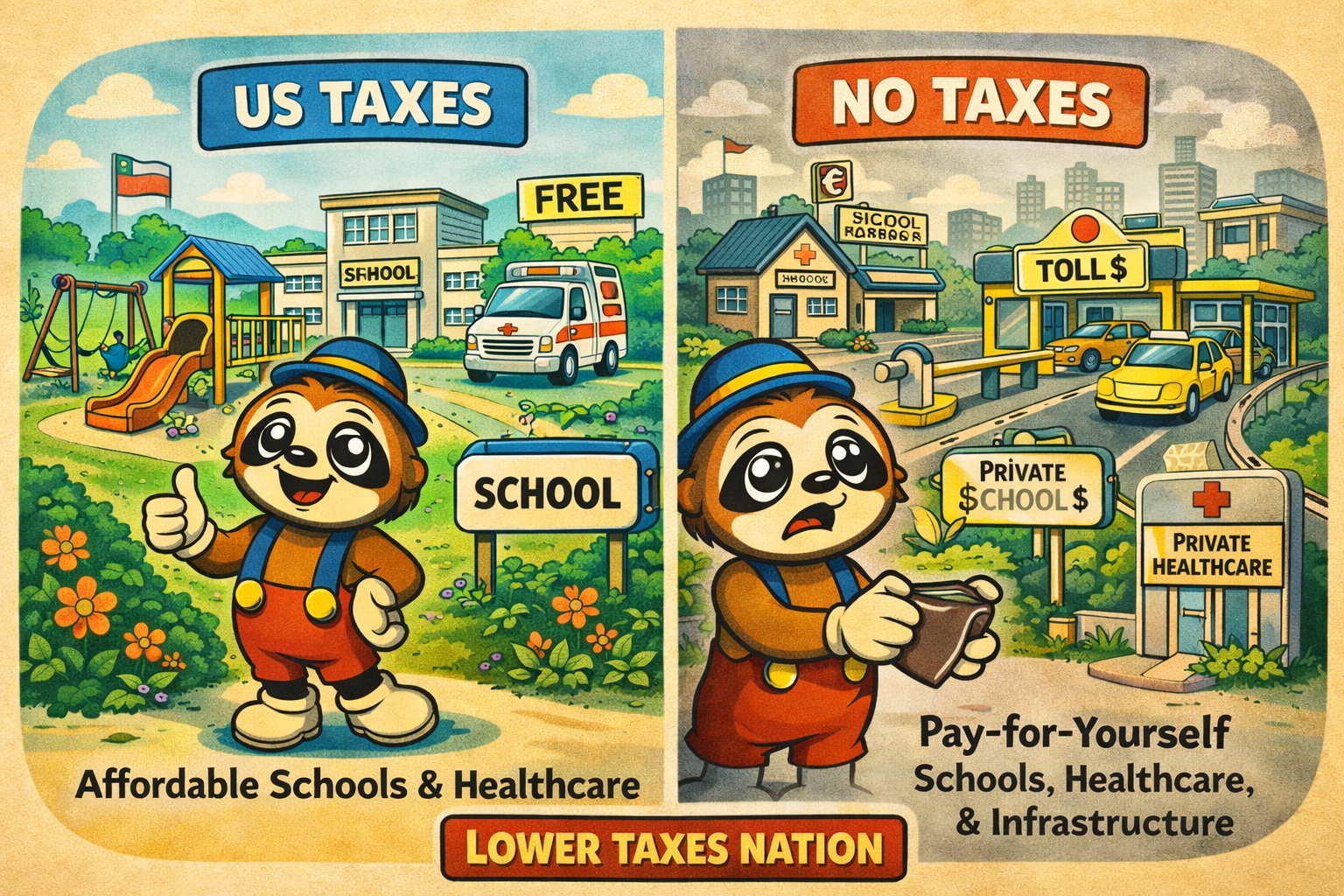
It sounds great for about five seconds.
Then reality hits.
Over time, you’d start to see:
- Roads falling apart
- Emergency services slowing down
- Public schools losing funding
- Social Security and Medicare breaking down
- Trash, transit, and city systems struggling
A lot of what feels “normal” today would either:
- disappear
- become unreliable
- or turn into expensive private services
Why do people compare this to other countries?
You’ve heard it before:
“The roads were bad.”
“There was trash everywhere.”
“The hospitals weren’t great.”
That’s often tied to how systems are funded.
Less funding = fewer services, less maintenance, less reliability.
That doesn’t mean one system is perfect and another is broken.
It means there are tradeoffs.
But one thing is always true:
Infrastructure doesn’t maintain itself.
Where you can actually come out ahead
Here’s where most people miss it.
The goal isn’t to hope for a bigger refund.
The goal is to understand the system.
Because the real opportunity is in:
Tax credits
Think of them like:
👉 Coupons built into the system
And a lot of people?
Don’t use them.
If you use the credits correctly:
👉 You get more of your money back
👉 Your refund actually increases
👉 You benefit from a system most people don’t fully understand
These Tax Credits Can Increase Your Refund
Think of tax credits like built-in coupons — they directly reduce what you owe and can boost your refund.
- Credit for Other Dependents — up to $500 (this includes adult dependents like a partner)
- Earned Income Tax Credit (EITC) — for lower to moderate income workers
- Child Tax Credit — if you have qualifying children
- Child and Dependent Care Credit — if you pay for care so you can work
- American Opportunity Credit — for college expenses
- Lifetime Learning Credit — for education and skill-building
- Saver’s Credit — for contributing to retirement accounts
👉 Most people don’t claim everything they qualify for — and that’s where money gets left behind.
One last thing to think about
Your tax refund isn’t a gift from the government.
It’s literally your money.
We need to stop thinking of it as “free money.”
A simpler way to look at it
You’re basically lending your money to the government all year so the country can run.
At the end of the year, they calculate everything…
…and give you back what they took too much of.
What you’re really paying
It’s more like a service fee for living in this country.
But here’s the key:
👉 That fee is based on an estimate
👉 And that estimate is often too high
So what happens?
You overpay.
And your refund is simply:
The extra money coming back to you.
Where people get it wrong
People celebrate refunds like they “won.”
But really:
👉 You just got back what was already yours
Where you can win
Credits = coupons
And if you use them correctly:
👉 You walk away with more of your own money
The takeaway
You’re not getting free money.
You’re:
- paying into a system
- being overcharged (based on estimates)
- then getting refunded the difference
And maybe one day, this won’t feel like a yearly headache.
Maybe it’ll just be an app on your phone — tracking what you made, what you paid, and what you’re owed in real time.
No guessing. No confusion.
But until then?
Understanding it is the real advantage.
WHAT TO DO WITH YOUR REFUND
It may feel like a bonus — but it’s really your money
How you use it now matters more than how much you get back.
A larger refund often means you overpaid throughout the year. Instead of treating it like extra cash, think of it as a reset moment for your finances.
Paying down debt, building savings, or investing even a portion can have a much bigger impact than a short-term splurge.