


















Forty-Two Years In, They’re Still Correcting Each Other Mid-Sentence
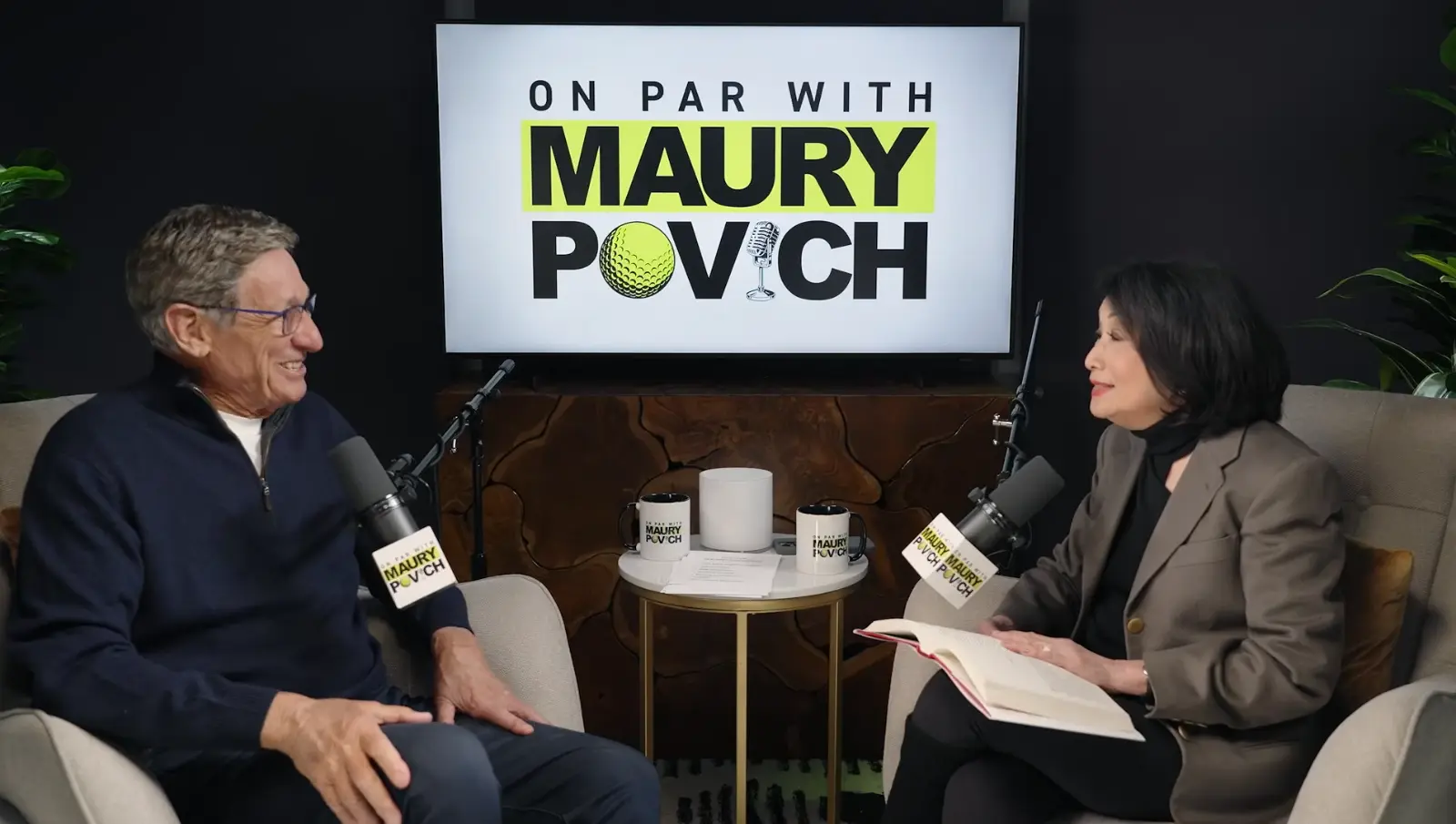
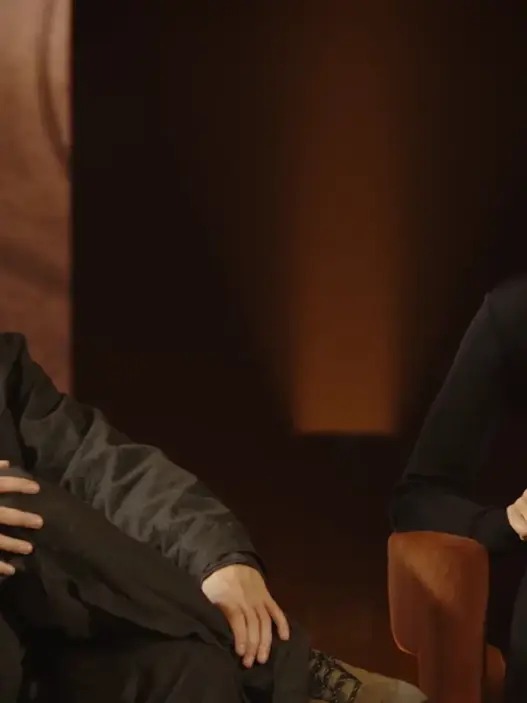
King and Queen of media, duo twosome Maury Povich and Connie Chung are together in the studio for some annoying and laughs. They perhaps may drive one another loco from time to time. Naturally, after more than 40 years of marriage. However, thee spark is definitely still there… especially on a Sunday!
Letting viewers and listeners know they still keep it sexy on Sundays — and then some — Connie opens with a line that immediately sends the conversation exactly where you would expect these two to take it: “I feel sexiest on Sundays.” Maury quickly explains why nobody is getting him onto a golf course that day. Sundays belong to Connie.
Discover More
Maury & Connie: Still Sparring, Still Smiling
More than four decades into marriage, the two broadcasting legends turn one podcast conversation into journalism history, marital comedy and several spectacular detours.
Some links may be affiliate links. INYIM may earn from qualifying purchases.
That is basically the rhythm of the entire interview. Maury says he needs six days to repair the marriage after working with his wife for half an hour. Connie says the only reason she agreed to the show is because he wanted her out of the house. Then, before anybody can settle into a sweet-married-couple groove, Maury reminds the room that Connie Chung has an entire marijuana strain named after her.
Connie, naturally, has notes. She reads the description back: easy to grow, low maintenance, pleasant scent. Maury immediately objects to the “low maintenance” part. Connie also reveals she does not get a cut of the proceeds and was never asked. Somewhere out there, apparently, Connie Chung weed is doing business without Connie Chung.
Underneath all the sparring, though, the two actually lay out what they think their show is about. Connie sees it as a chance to get back to truth in a media environment increasingly drowned in opinion. Maury sees something more elemental: men, women, marriage, memory and the stories people tell about themselves.
And once the memory machine starts, it does not stop.
Maury needles Connie about the famous men she knew before him. She insists she did not “mess around” with stars. He keeps pushing. Warren Beatty comes up, along with a killer line from Connie’s sister: every woman who came to California had to go through Warren Beatty “like an immigration system.”
Then Connie tells perhaps the most perfectly Connie Chung dating story imaginable. She once went out with a musician who casually told her he played in a band. She did not know who he was. There was a piano nearby, so she asked him to play one of his songs.
He started playing “Hotel California.”
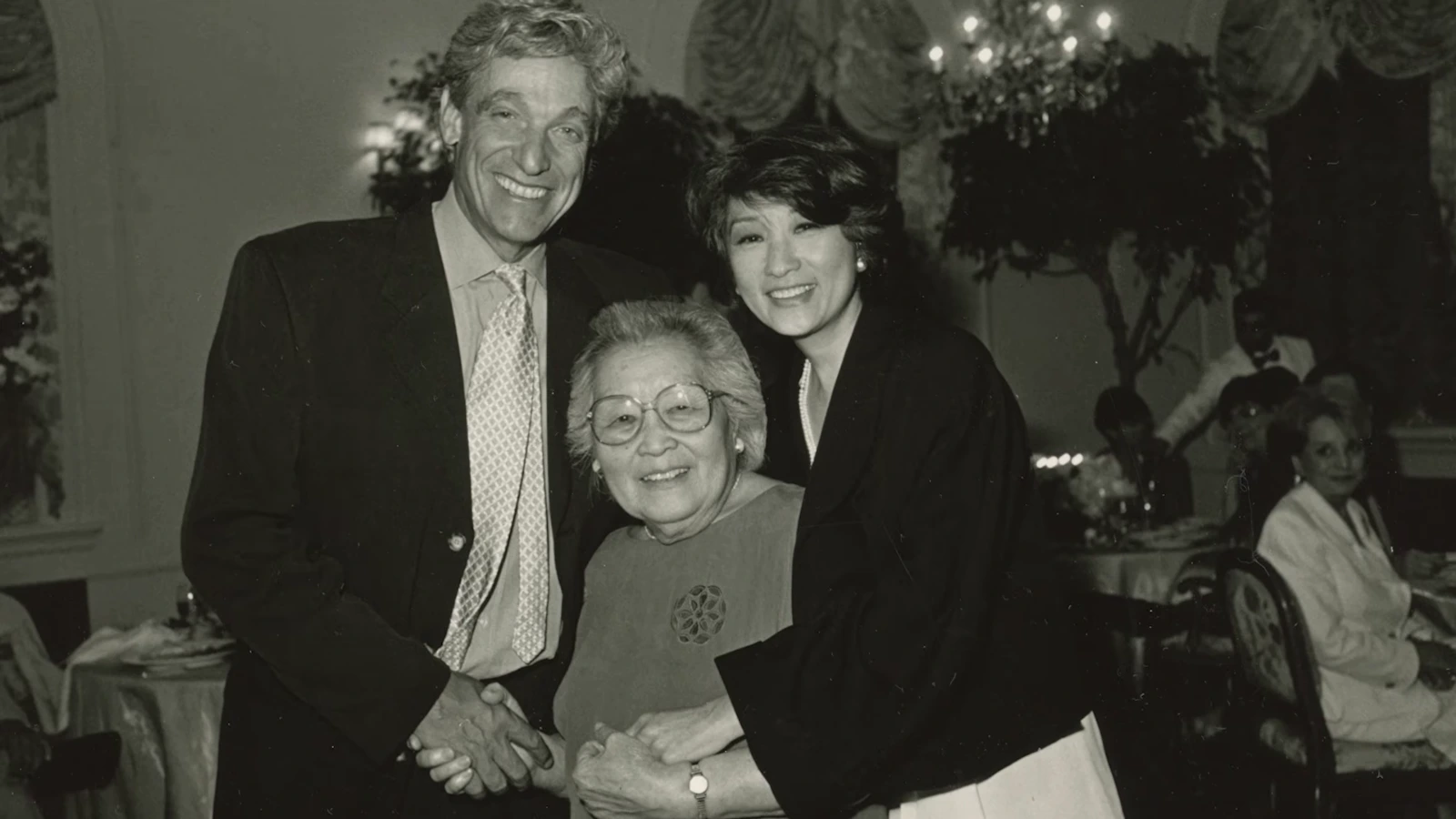
Connie’s reaction? Essentially: Oh. I know that song. She then phoned Maury, who was living in Philadelphia, and told him she had gone out with “an Eagle.” Maury initially thought she meant a Philadelphia Eagle. Their dating years, they clarify, were not exclusive — which gives the whole exchange an extra little sparkle as they continue correcting each other in real time.

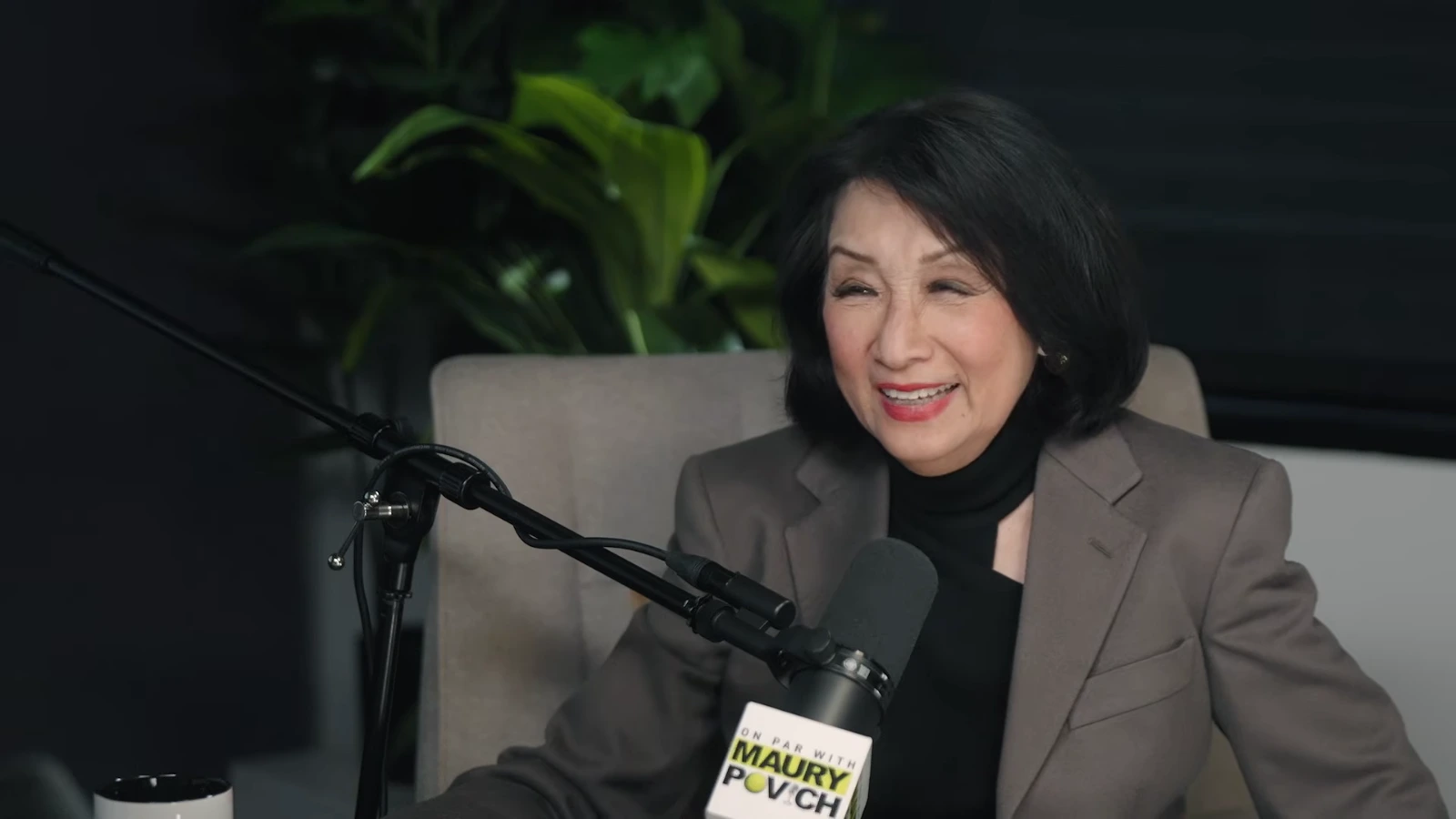
The interview keeps ricocheting between home life and television history. Connie calls herself a “guy’s guy.” Maury says absolutely not. She defends the claim by pointing out that she does not eat wimpy salads. He remains unconvinced.
Maury then reaches back to the Watergate era and tells a Hunter S. Thompson story: Thompson came on his show with a six-pack hidden under his legs and managed to drain the entire thing during a roughly 15-minute interview by drinking whenever the camera cut away. Connie counters that Thompson was also smoking marijuana on the campaign trail. Maury has to clarify: not with him.
Their domestic differences are just as well rehearsed. Connie calls Maury a rule breaker and herself a rule maker. He is comfortable with a mess; she is obsessively neat. She loves organizing and tidying so much she calls the satisfaction “choregasms.” Maury admits avoidance is basically his preferred lifestyle.
That split follows them straight into arguments. Maury can put his head on the pillow after a fight and declare the matter over. Connie wakes up still ready for round two. “Wrongo,” she tells him. The disagreement is not finished merely because he went to sleep.
Then the conversation opens into family history, and the jokes start carrying a little more weight. Maury tells stories about his father, legendary Washington Post sportswriter Shirley Povich, including an encounter with Yankees manager Casey Stengel where Maury later challenged the accuracy of his father’s column. Shirley’s response: “He should have.” Dramatic license.
There is also Muhammad Ali, who once turned one of Maury’s questions back on him by saying, “You ain’t smart like your daddy.” Maury remembers it with obvious affection, just as Connie does when talking about the trailblazing journalism career she built in a business that repeatedly tried to hand women secretarial work instead of reporting jobs.
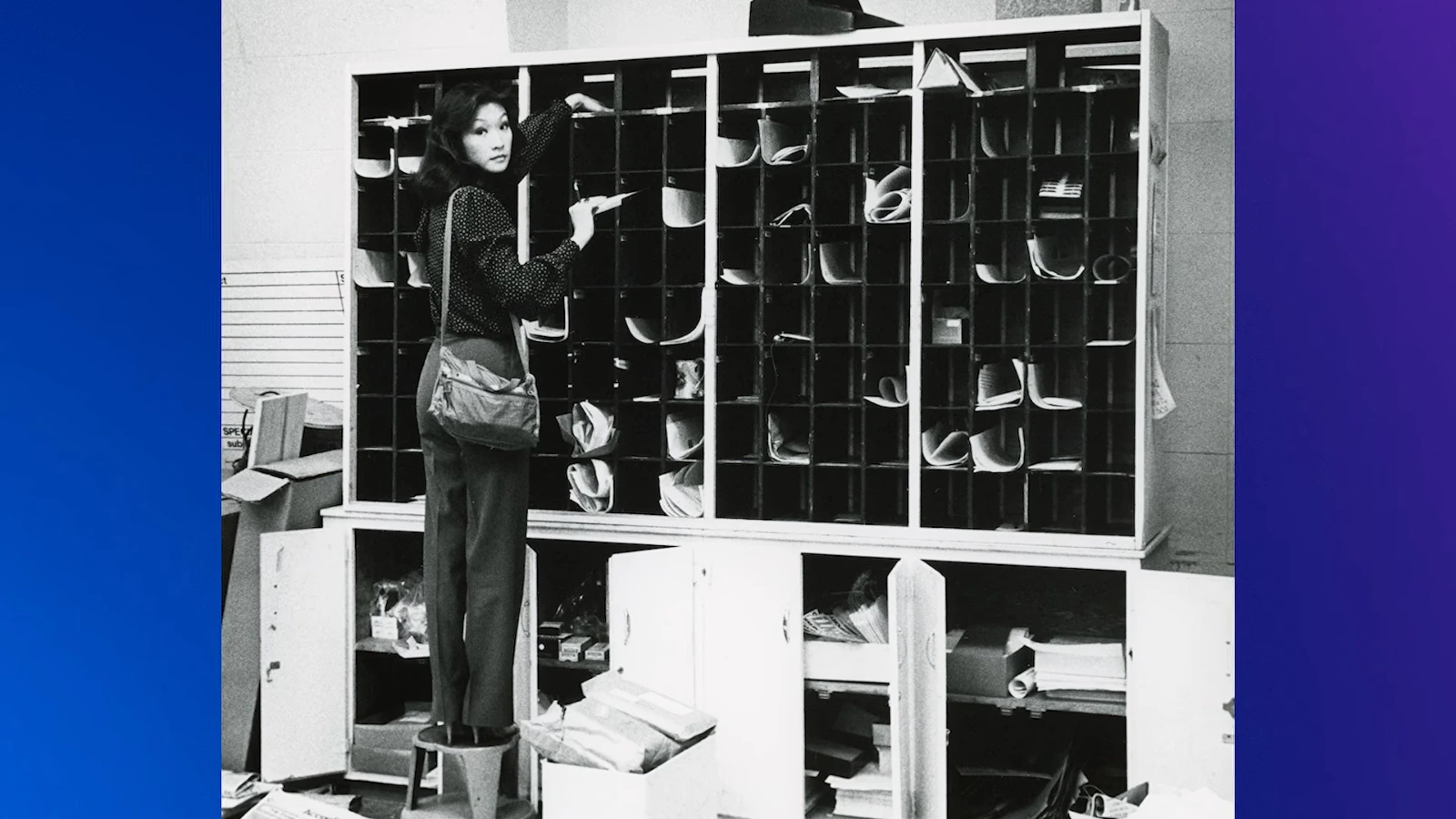
Connie recalls starting in television in 1969 as a secretary because, as she puts it, “that’s what they gave women.” When a weekend writing job opened up, her boss initially refused to let her take it unless she found her own replacement. So Connie walked across the street to a bank, approached a teller and basically asked if she wanted to be in television.
The teller got Connie’s old job. Connie got the writing job.
That same instinct later helped propel her to CBS. While covering unsanitary conditions at a Washington restaurant, Connie barged in with a camera crew rolling — very Mike Wallace — and happened to catch the attention of the CBS Washington bureau chief eating lunch there. He handed her his card and told her to call.
She waited about 20 minutes. Long enough, in her estimation, for him to get back to his desk.
And she got the job.
That is what makes this more than a cute married-couple clip. Maury and Connie have spent decades interviewing everybody else, yet when they sit across from one another, they become each other’s most relentless fact-checker, heckler and archivist. The affection is obvious precisely because neither one seems remotely interested in letting the other get away with a clean version of the story.
So yes, they annoy each other. They disagree. They interrupt. They revisit old arguments. And after 42 years of marriage, Sunday is still apparently spoken for.
Watch Connie Chung and Maury Povich on On Par with Maury Povich
The husband-and-wife broadcasting legends trade stories about marriage, former dates, Hunter S. Thompson, Muhammad Ali, journalism, family and why Sundays belong to Connie.
Source: On Par with Maury Povich / YouTube. Images: On Par with Maury Povich / YouTube.