


















Yoonj Kim Finds a Boarded-Up Art Deco Treasure in Koreatown
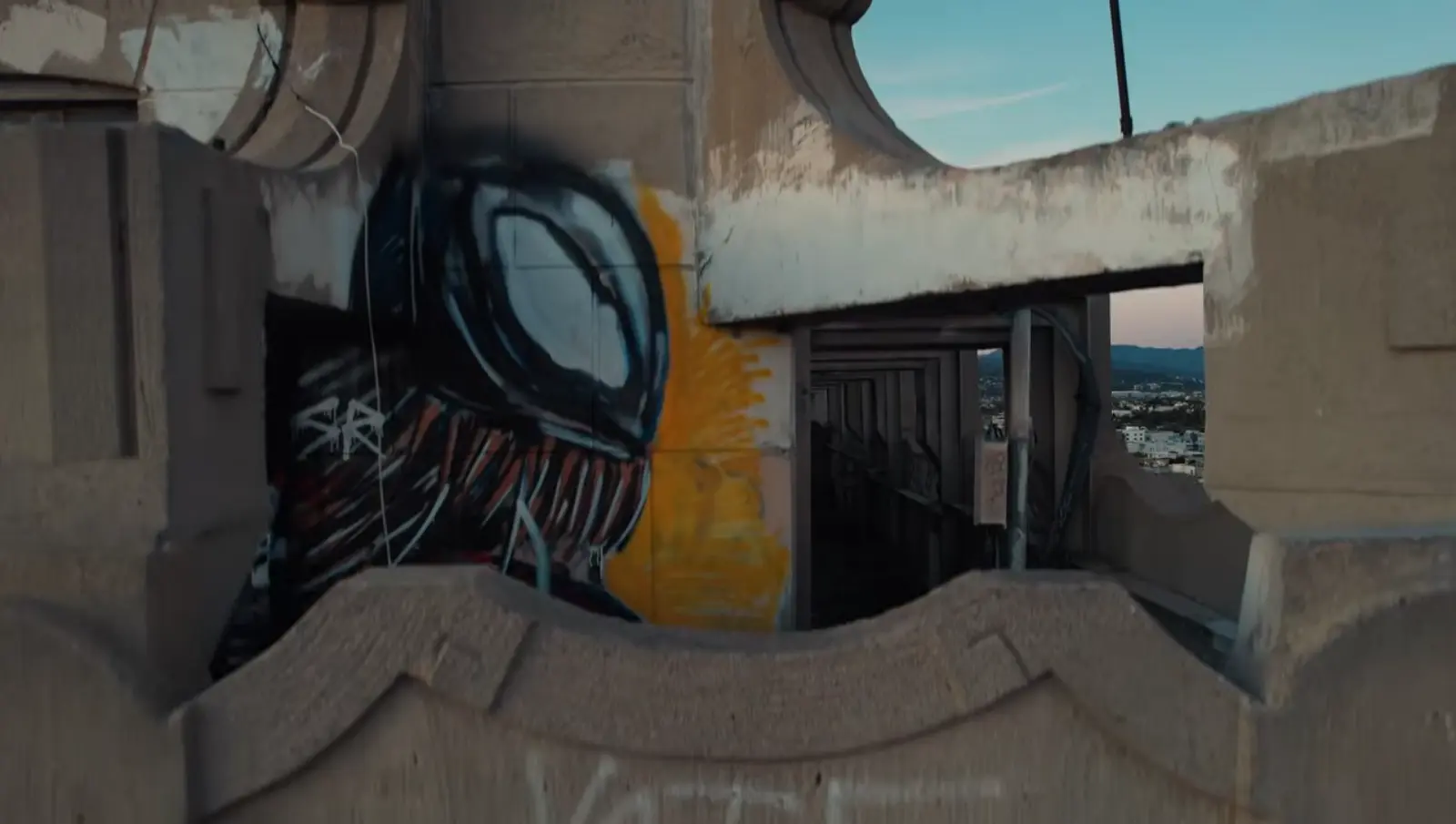
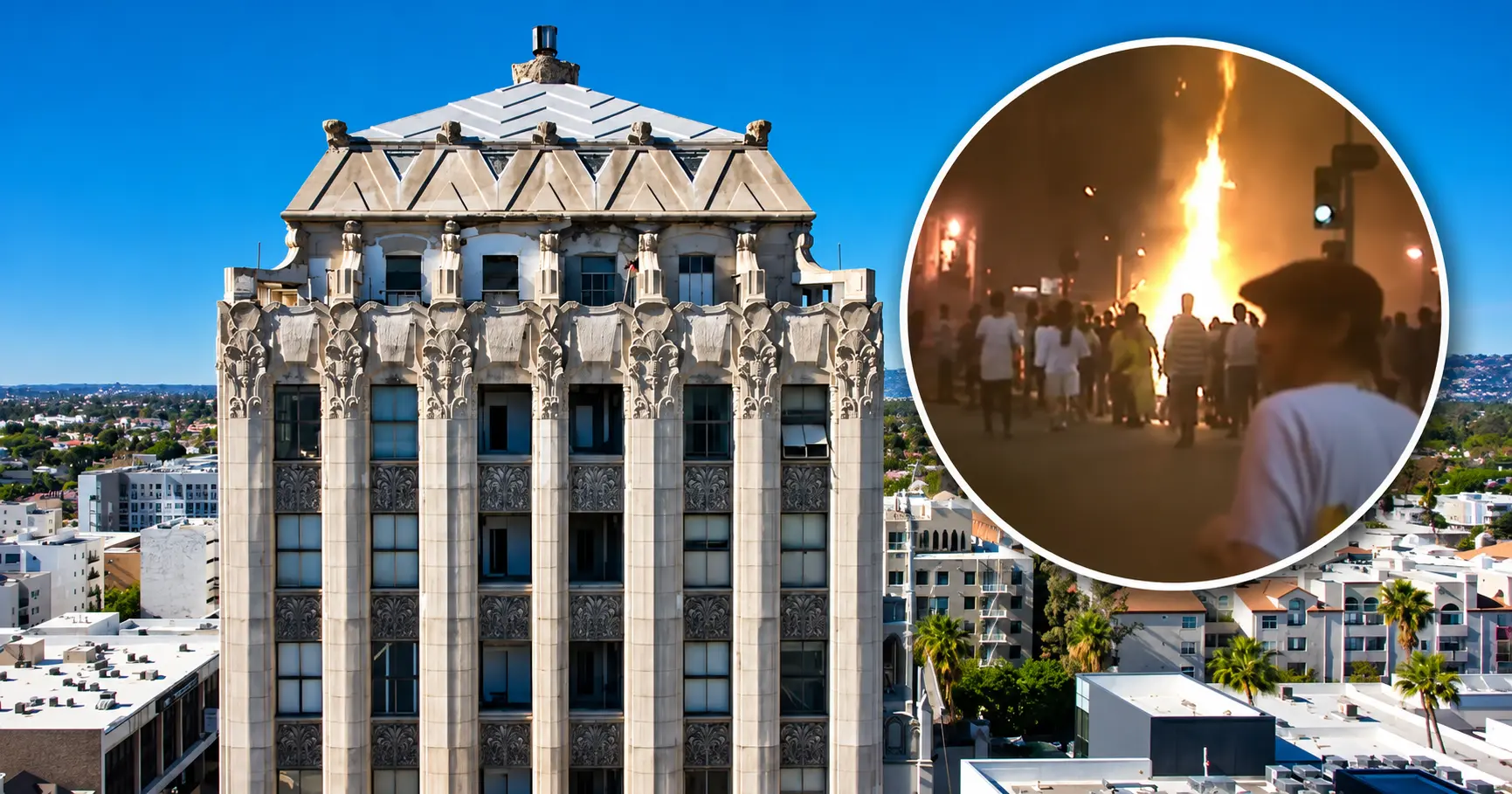
The Wilshire Professional Building has spent decades commanding attention along Wilshire Boulevard. Today, the 13-story Art Deco landmark at 3875 Wilshire Boulevard commands a different kind of attention: boarded-up rooms, exposed interiors and mounting questions about why such a remarkable piece of Los Angeles history remains empty. In a sharply reported investigation, journalist Yoonj Kim examines the building’s deterioration, the property empire behind it and a proposed conversion that has yet to revive the tower.
Kim’s report cites 37 failed city inspections, a plan to create 35 live-work apartments, and the striking contrast next door: a new residential building with roughly 230 apartments that opened in July 2026. Kim ties the two neighboring buildings to a debate over whether the city can safeguard its landmarks while making room for housing.
A Historic Building, an Empty Interior and a Preservation Fight
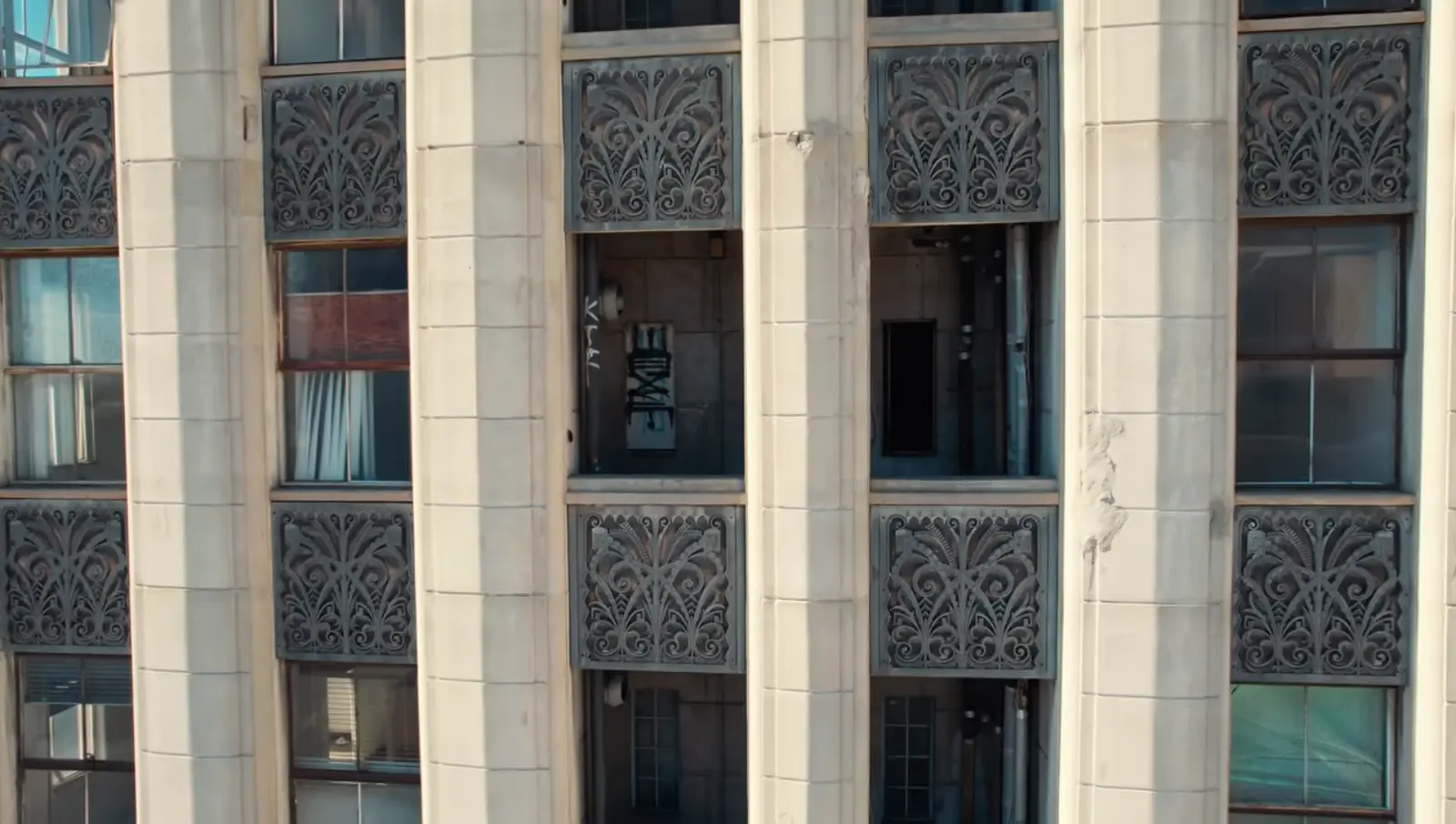
Designed by Arthur E. Harvey, the Wilshire Professional Building is an exuberant survivor of the Zigzag Moderne period. The Los Angeles Conservancy notes its stepped profile and patterned terrazzo sidewalk. The Art Deco Society of Los Angeles sought its preservation, and the city designated it a Historic-Cultural Monument in 2015. Historic status protected the building from easy demolition, but it did not magically restore the rooms behind those extraordinary walls.
Kim speaks with local historian Charles Fischer, who filed the landmark nomination on the Art Deco Society’s behalf. His distinction is especially important. Asked whether landmark status has anything to do with the tower remaining empty, he says it likely has everything to do with the building still being there—but adds, “As far as it being empty, that’s an owner thing.”
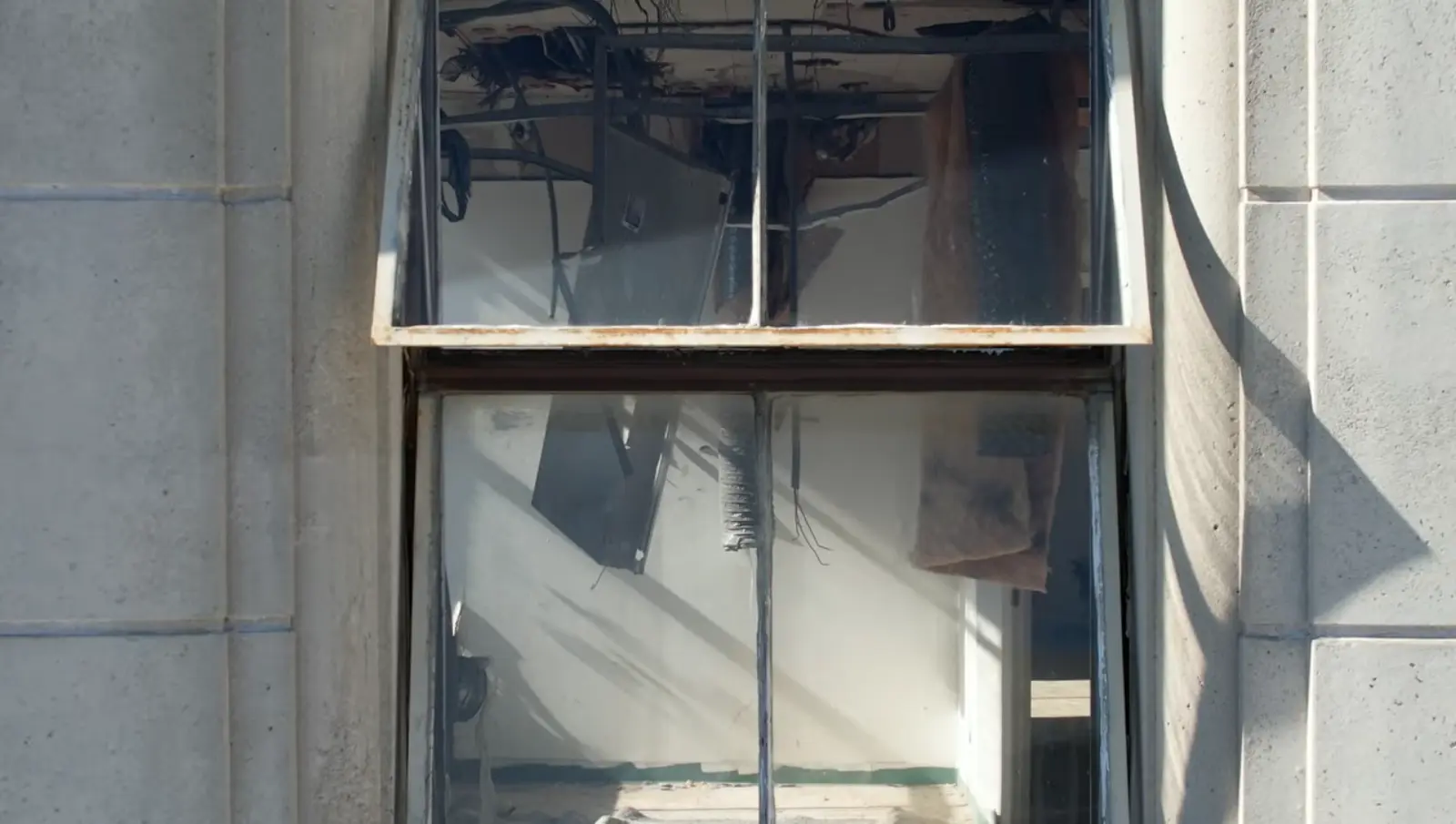
Fischer is surprised when Kim describes the current condition. “That’s not good,” he says. And when she asks what should happen if the owner cannot afford to fix the landmark, his answer is unambiguous: “Then he needs to sell it.” When the possibility of not finding a buyer comes up, he responds, “There’s always a buyer.” His position cuts through the false choice between protecting a landmark and accepting its decline.
Another voice in Kim’s report calls the situation “demolition by neglect,” a phrase preservationists use when a historic property is allowed to deteriorate. That is an assessment voiced in the report, not a legal finding against the owner. Meanwhile, the proposed adaptive reuse has to contend with the difficult and expensive reality of updating an aging building, including seismic work, while retaining the features that earned it protection.
How the 1992 Uprising Shaped Koreatown’s Property Empire
Kim places today’s vacancy against the painful legacy of the 1992 Los Angeles uprising, including the Rodney King beating and acquittals, the killing of Latasha Harlins and the extensive losses suffered by Korean-owned businesses. She reports that physician and investor David Lee began acquiring major Wilshire Boulevard properties in the years following the unrest, building the holdings associated with Jamison and affiliated entities.
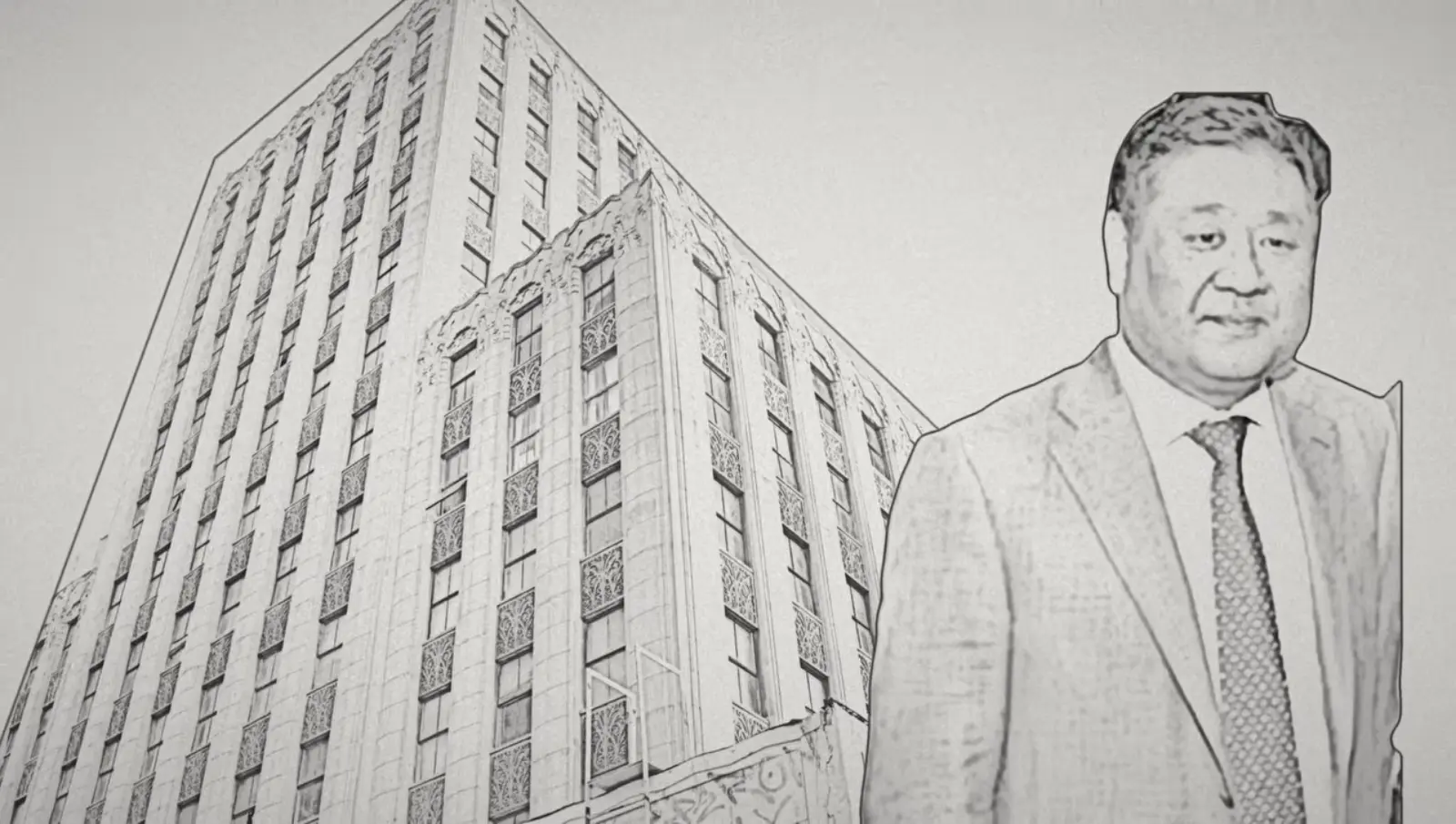
The scale matters. Kim traces a portfolio of at least 74 properties, including 48 in Koreatown, according to records reviewed for her investigation. LAist separately reported in August 2026 that Jamison had a large pipeline of office-to-apartment conversions in Koreatown and Westlake, with roughly 3,652 homes either completed, underway or proposed across projects. Proposed units are not the same as delivered housing—and the vacant landmark remains a particularly visible reminder of that difference.
The Preservationist’s Dilemma: Save the Building, but Save It for What?
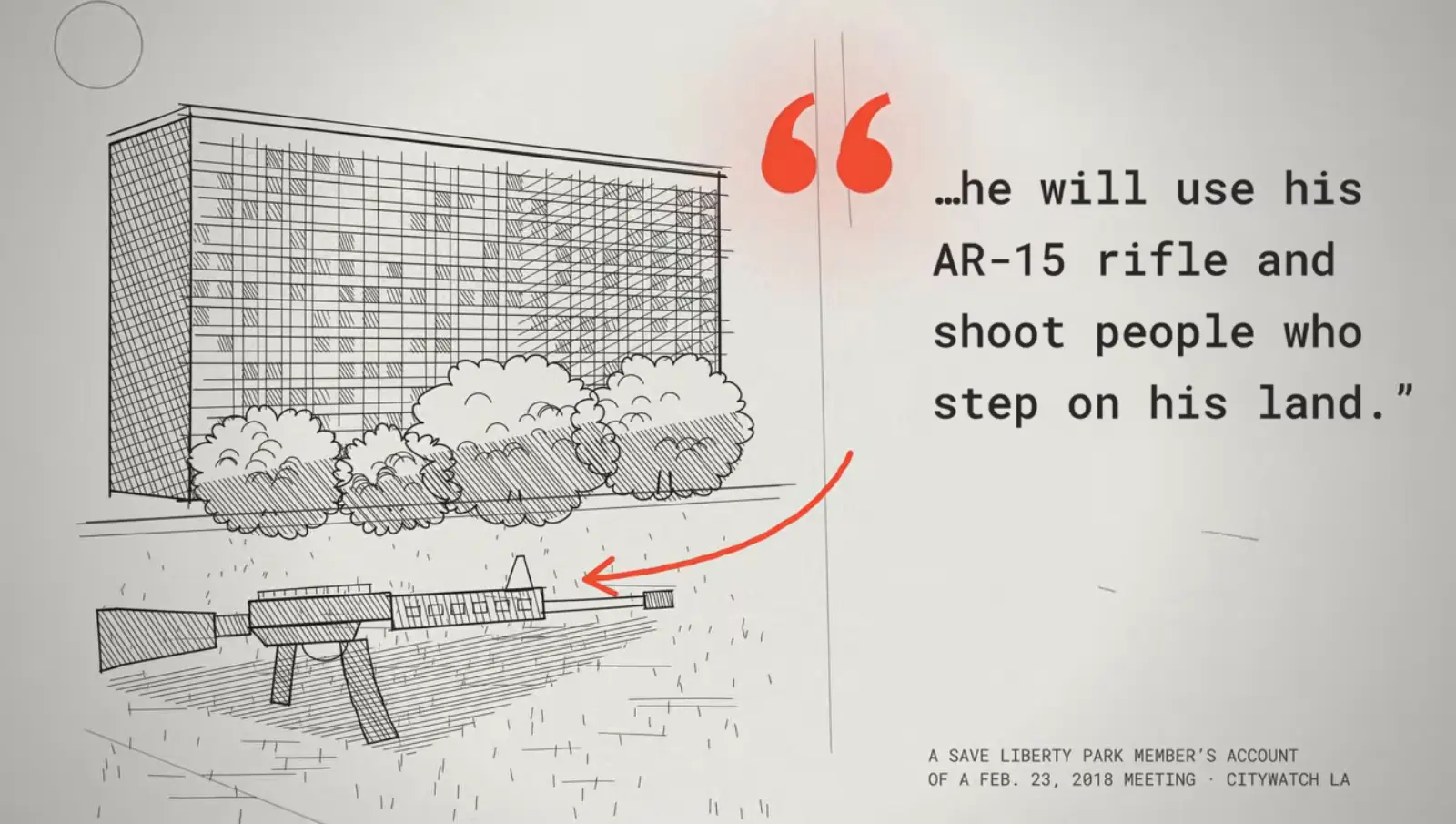
The Wilshire Professional Building is not the only flashpoint in Kim’s report. She revisits the Liberty Park dispute at the former Radio Korea property, where residents fought a proposal for roughly 500 apartments because they wanted to preserve an important community site. The report recounts allegations that David Lee referred to using an AR-15 against trespassers during a contentious meeting; Kim says police investigated, no charges were filed and Lee later apologized, saying he had been misunderstood. Those are allegations and reported responses, not findings of criminal wrongdoing.
One interviewee, who speaks of personally experiencing housing insecurity, nevertheless says, “I would like to preserve it as an Art Deco building, not converted for housing.” The comment exposes something that easy slogans miss: people can need housing and still believe certain places should survive for reasons beyond the number of apartments they might hold. Kim herself closes with a question rather than a victory lap: “We saved the building. We lost the homes. Hard to tell if it was worth it.”
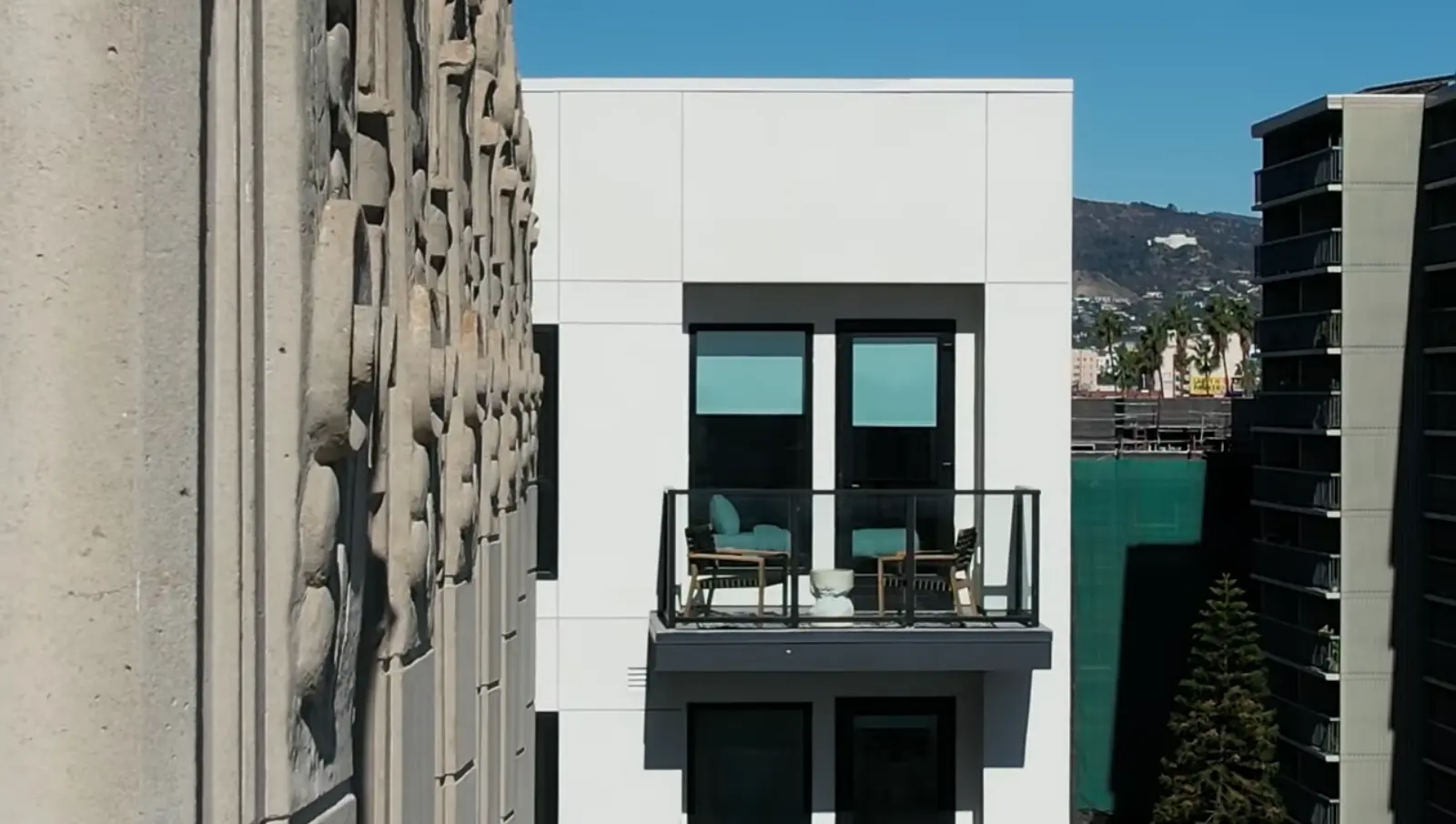
Our Los Angeles: Why Wilshire’s Real Architecture Matters
For those of us who live in Los Angeles, this story is more than a real-estate stalemate. Wilshire Boulevard was once a grand shopping and commercial destination, where remarkable buildings made everyday streets feel like a city with confidence in its own imagination. Some have found new lives; others sit behind fencing, as if their best years are something Los Angeles has already decided to abandon.
Here is the irony that stays with us: visitors to Disney California Adventure can wander through lovingly staged echoes of old Los Angeles. These are not merely generic “California streets.” Buena Vista Street evokes historic Los Angeles and its Bullocks Wilshire department store, while architectural inspirations for the park reach into the Hollywood Boulevard streetscape and Chapman Market in Koreatown. It is a stylized tribute, not a block-for-block reconstruction, but those recognizable local inspirations are the point. What is celebrated as beautiful in Anaheim should not be treated as expendable on the actual streets that helped inspire it.
We do not believe the answer is to let historic neighborhoods become untouchable museum pieces. Los Angeles desperately needs homes, and adaptive reuse can bring life back to buildings that have lost their original purpose. But preservation without maintenance is not preservation in any meaningful sense. Owners, public agencies and preservation advocates all have a responsibility to find practical solutions, not simply wait while plaster cracks and windows break.
Fischer’s answer lingers precisely because it refuses to accept abandonment as an inevitable outcome. The debate should not be whether Koreatown deserves historic architecture or living neighborhoods. It deserves both.
Yoonj Kim’s Investigation: Koreatown’s Art Deco Landmark in Detail
From aerial views of Wilshire Boulevard to the tower’s ornamented roofline, the photographs and illustrated graphics in Kim’s report connect the building’s physical condition with the disputes over ownership, neighborhood memory and redevelopment.
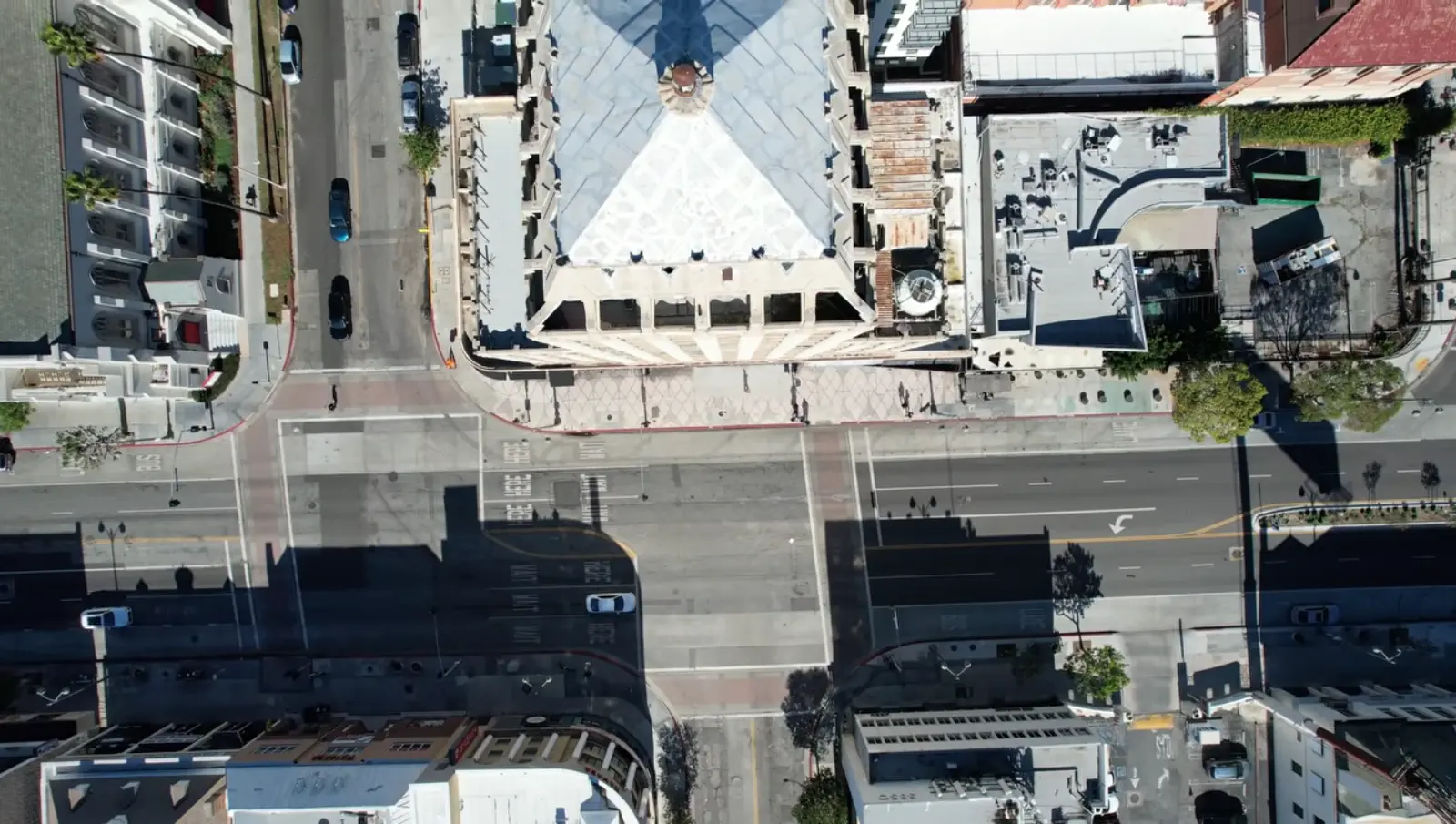
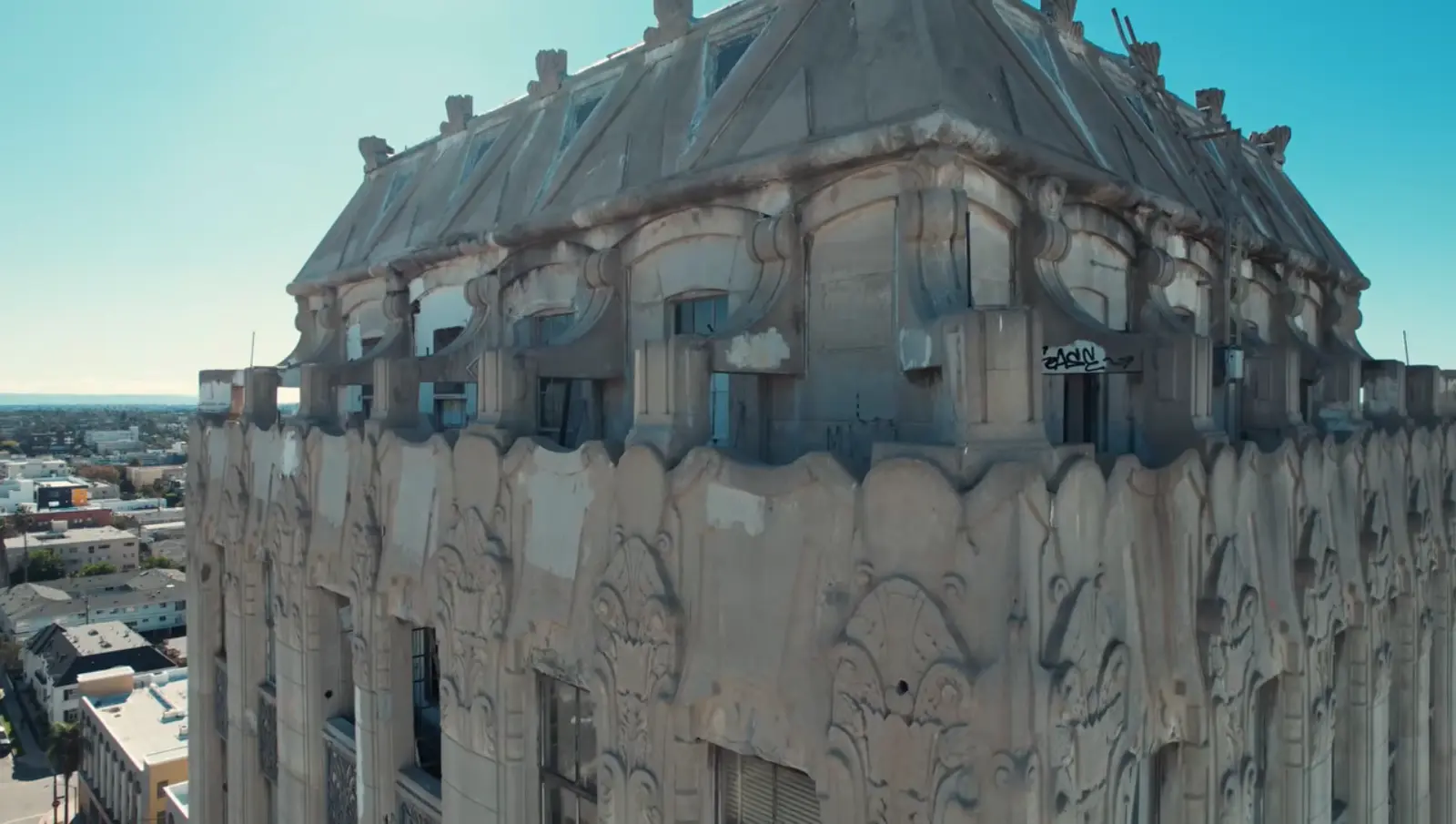
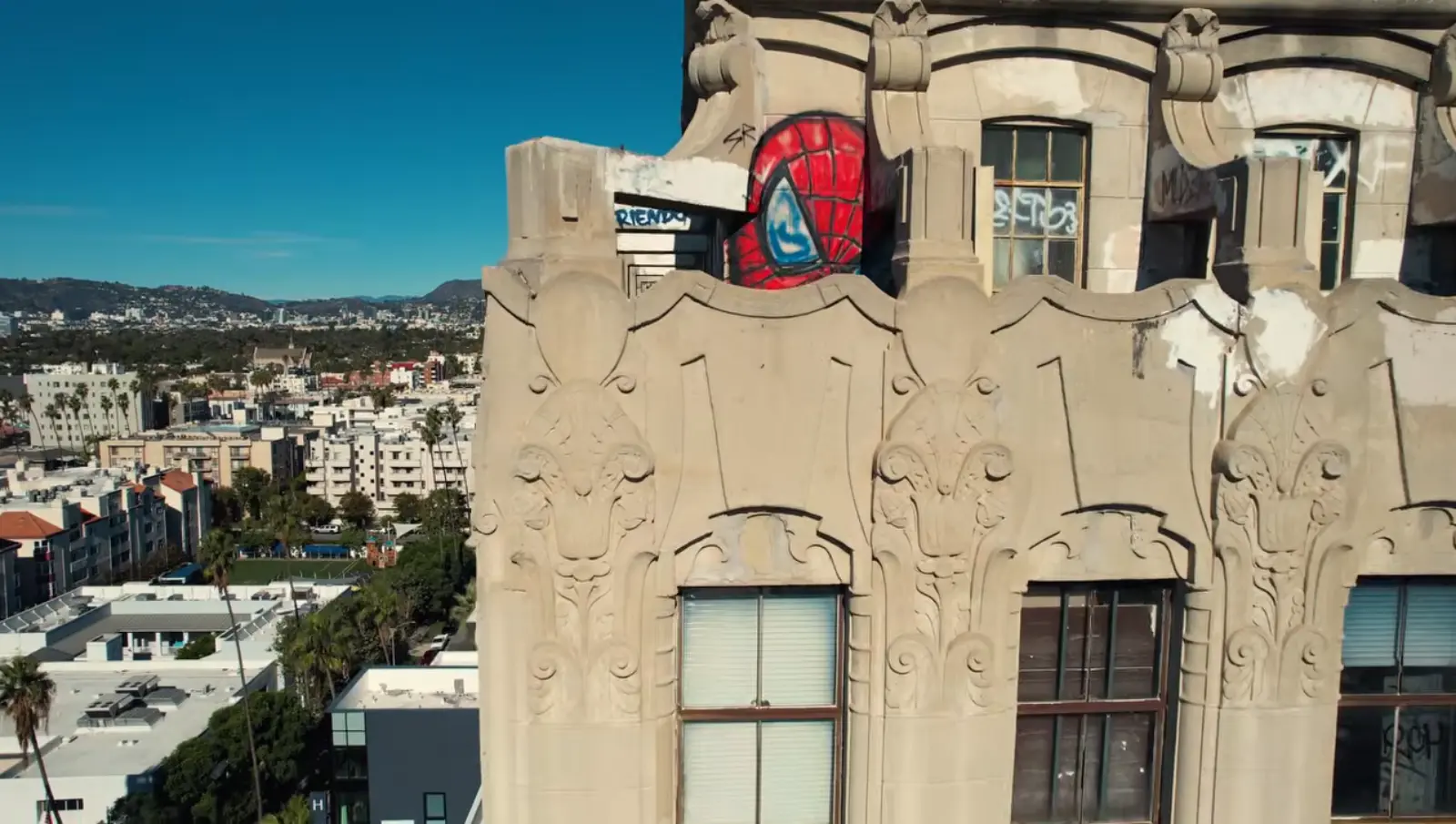
The damaged surfaces, surviving ornament and surrounding redevelopment make the story’s contradiction difficult to miss: this place has not lost its architectural value. The question is whether Los Angeles can give it a viable future.
Yoonj Kim Investigates Koreatown’s Boarded-Up Wilshire Professional Building
Sources: Yoonj Kim’s investigation of Koreatown’s largest landlord and the Wilshire Professional Building; Los Angeles Conservancy; City of Los Angeles landmark case 15-0195; LAist; Los Angeles Times; PBS SoCal, Lost LA; Yesterland architectural comparisons. Images: Yoonj Kim / YouTube.