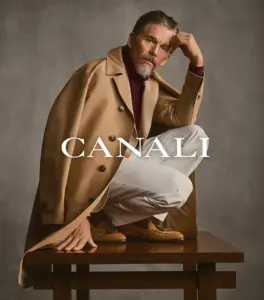













Ethan Hawke revisits career-defining scenes with extraordinary candor and affection
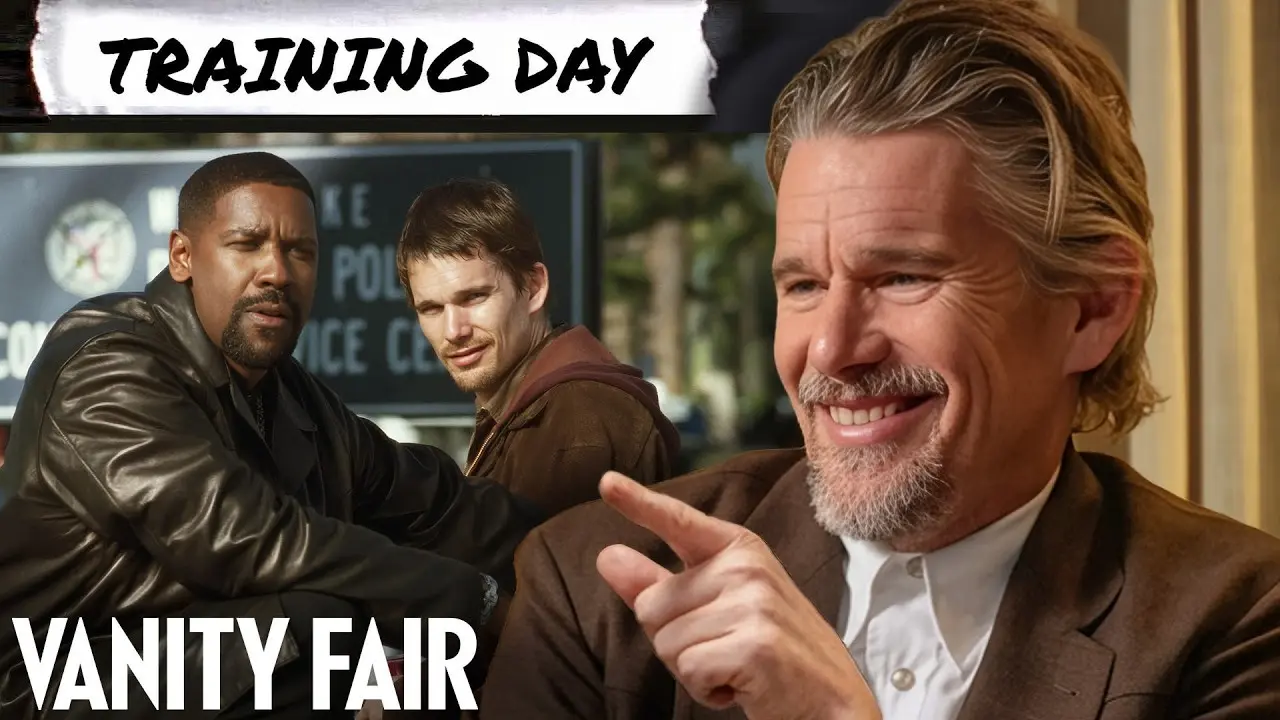
Ethan Hawke rewatches his seminal films and so much more for Vanity Fair! In a wonderfully candid installment of the magazine’s Scene Selection, the actor revisits moments from Training Day, Reality Bites, the Before trilogy, First Reformed, Blue Moon and FX’s The Lowdown. Rather than simply reliving the hits, Hawke gets into what the performances taught him—and which fellow artists changed the way he thinks about acting.
And yes, let’s get one INYIM opinion out in the open: Hawke should have won the Best Actor Oscar for Blue Moon. He earned a nomination for his portrayal of songwriter Lorenz Hart, but the statuette went elsewhere. Watch him speak about the sheer work behind that performance and the case for our verdict only gets stronger.
Discover More
Revisit Ethan Hawke on screen
Explore the official source and related picks curated around this story.
Some links may be affiliate links. INYIM may earn from qualifying purchases.
Denzel Washington’s unforgettable Training Day improvisation
Rewatching Training Day (2001), Hawke marvels at Denzel Washington‘s command of character. After months spent researching their roles—including time riding with police officers—Hawke recalls the famous climactic eruption as one of the greatest improvisations he has witnessed on a film set. Director Antoine Fuqua kept the cameras rolling as Washington continued beyond the expected end of the scene. Hawke compares the experience to hearing a jazz master improvise a solo: thrilling because nobody knew exactly where it would go.
The lesson ran deeper than a memorable line. Hawke says Washington taught him to think simultaneously from inside the character and from the audience’s point of view—a method of storytelling that transformed his understanding of what film acting could be.
Winona Ryder’s Reality Bites influence and the Before trilogy’s honesty
Reality Bites (1994) brings a laugh, a family memory and a generous tribute to Winona Ryder. Hawke recalls that audiences often confused him with his brooding character Troy Dyer. Even his grandmother worried that his intense staring meant he needed glasses—and, he admits, she was right. He also credits Ryder’s faith in Ben Stiller and the script with helping bring the film into being, comparing her youthful cultural influence to that of Taylor Swift today.
He is equally amused remembering his irritation with Stiller’s approach on set: in Hawke’s telling, the director-actor spent an extraordinary amount of time perfecting his own takes. Decades later, the frustration has become affectionate teasing, while his admiration for Stiller as a filmmaker has only grown.
Then comes Before Sunrise (1995), and the story of how Jesse persuaded Céline to get off a train. Hawke says he, Julie Delpy and director Richard Linklater workshopped the exchange extensively because it had to feel believable, not like a movie forcing two strangers together. The eventual time-travel idea passed Delpy’s test. He also remembers being heartbroken over the New York Knicks’ 1994 NBA Finals loss, a rather wonderful detail to attach to one of cinema’s most romantic conversations.
By Before Midnight (2013), the challenge had changed. Hawke describes the third film as an answer to the romantic projection of the earlier chapters: what does love actually look like after years together, with children, responsibilities and no room left for comfortable illusions? It’s a lovely way of explaining why the trilogy grows up with its audience.
Philip Seymour Hoffman, Sidney Lumet and the difficult art of ambiguity
Watching Before the Devil Knows You’re Dead (2007) is more painful. Hawke speaks movingly about the late Philip Seymour Hoffman, a friend and artistic peer whose ferocious standards made everyone around him aim higher. He thought they would have a lifetime to talk, work and grow older together. Hawke also remembers the intensity of working with Sidney Lumet on the director’s final film, where thorough rehearsal and fast shooting created room for unsettling, unpredictable moments.
With First Reformed (2017), Hawke refuses to reduce Paul Schrader‘s haunting finale to one fixed interpretation. He offers different possible readings—including salvation, despair and a final vision—but argues that the ambiguity is precisely the point. For Hawke, the scene holds hope and despair together, rather than demanding audiences choose one neat answer.
Why Ethan Hawke’s Blue Moon performance deserved the Oscar
Finally, Blue Moon (2025) brings Hawke back to Linklater for a performance of astonishing emotional precision as lyricist Lorenz Hart. He recalls shaving his head for the severe comb-over and negotiating the character’s shorter stature through complicated physical staging. With co-star Andrew Scott, he had to make decades of friendship, resentment, pride and disappointment come alive in one extended conversation.
What makes his explanation so revealing is how firmly he rejects a single-note reading of Hart. The man can be jealous of his former collaborator and genuinely proud of him. He can recognize another artist’s brilliance while resenting his own exclusion. Hawke describes a person who wants forgiveness and another chance without necessarily being willing to change the behaviors that damaged his life. That contradiction—the comedy and heartbreak occupying the same breath—is exactly why we believe his Oscar-nominated performance deserved to win.
Hawke calls the film an almost 90-minute comic farewell note, a portrait of an artist facing the end of an era as American popular music changes around him. He also explains how Linklater challenged him to pursue the heights of performances by his own heroes, rather than settling for an impressive physical transformation. That’s an actor thinking seriously about the work, not merely the awards around it.
The selection closes with footage from FX’s The Lowdown, in which Tommy Lee Jones plays his character’s father. Hawke, a fellow Texan, calls Jones a longtime hero and breaks down how something as simple as a bowl of cereal and the actors’ positioning can make a grown man look like a chastened child. Even after four decades on screen, he’s still finding fresh reasons to marvel at a colleague’s craft.
There is a lot to love about this rewind: the humor, the genuine tenderness for people who shaped his life, and a deep curiosity about how scenes come together. More than a greatest-hits tour, it is a reminder that Hawke remains one of the most engaged and searching performers of his generation.
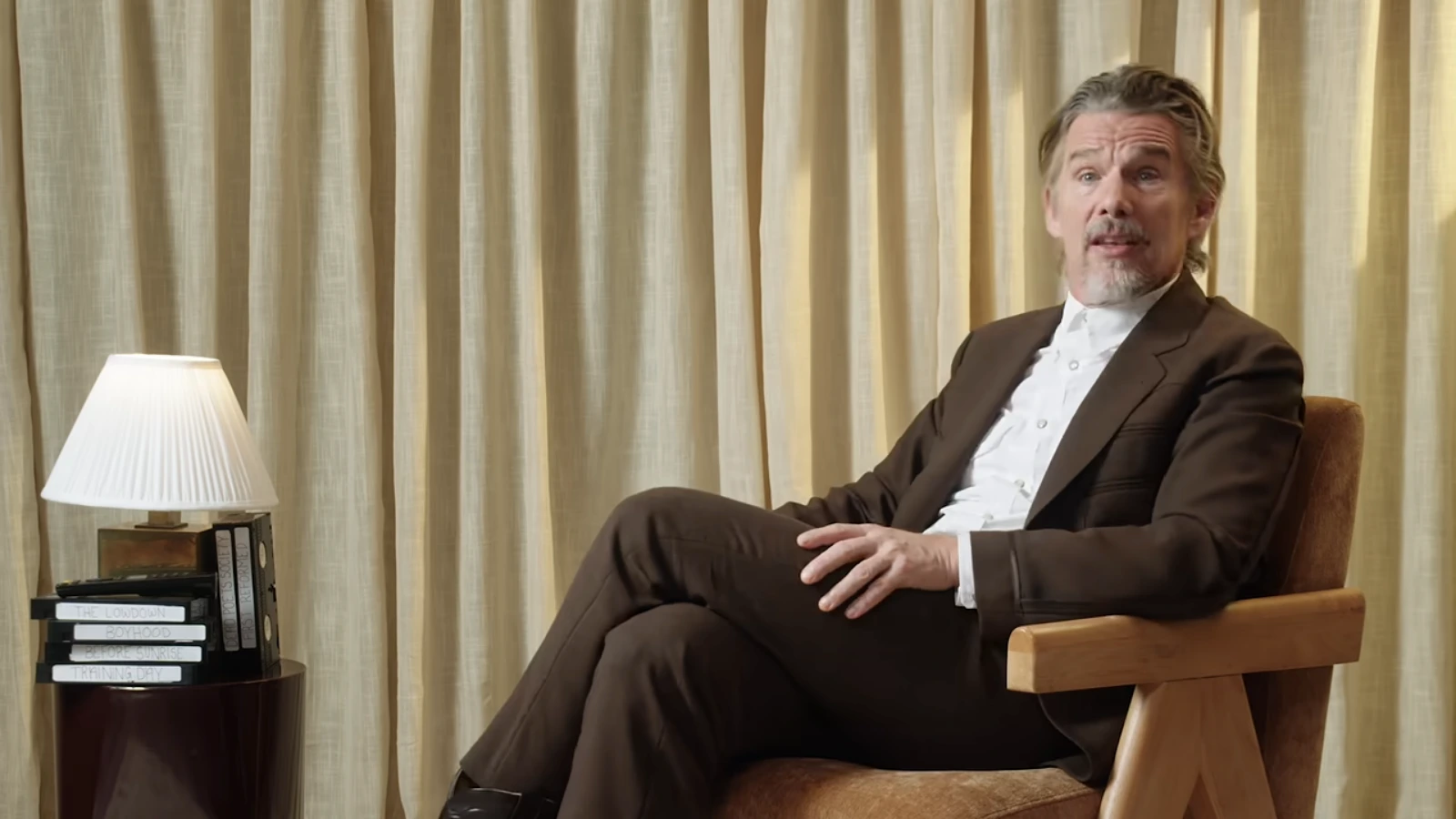
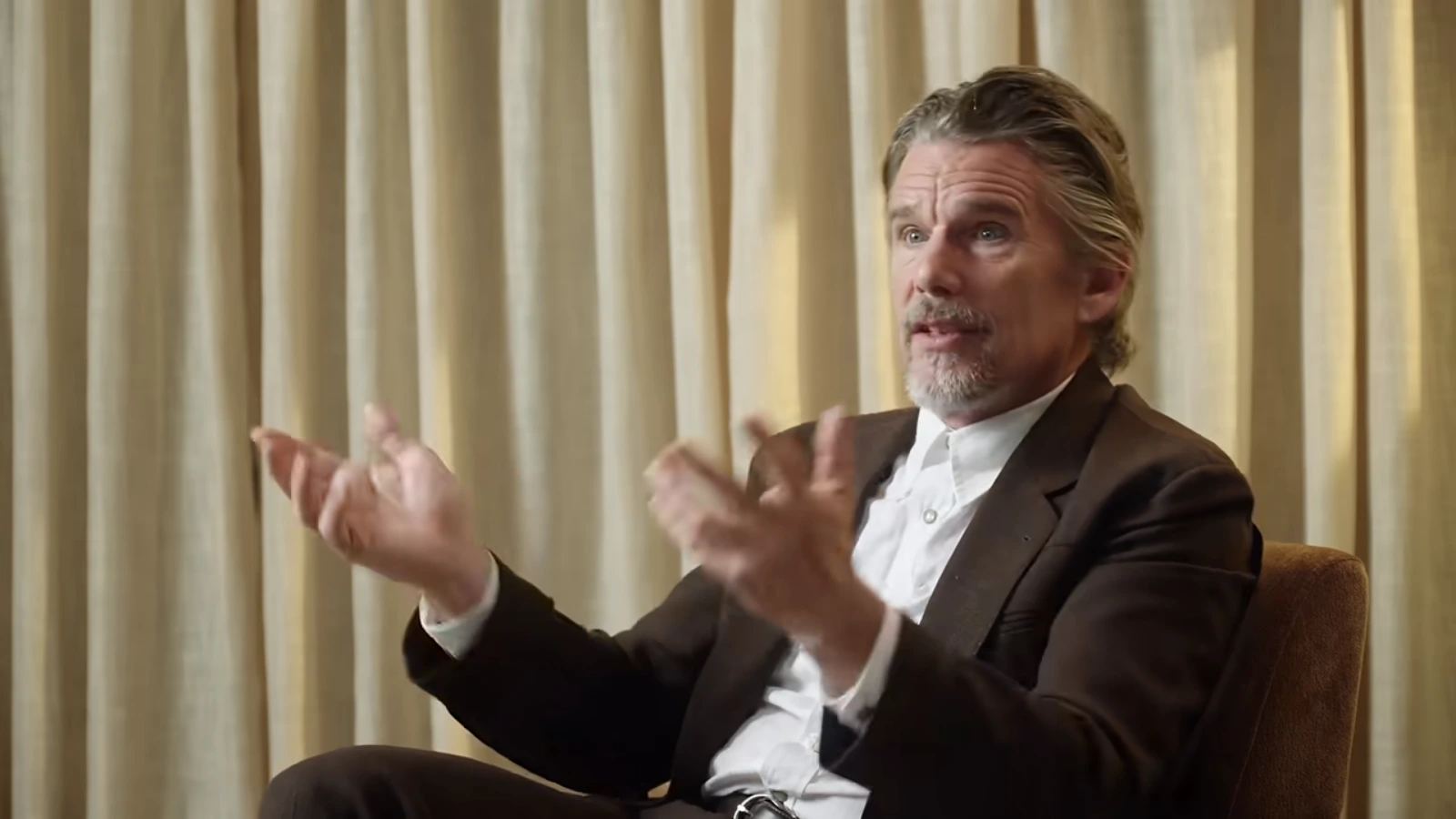
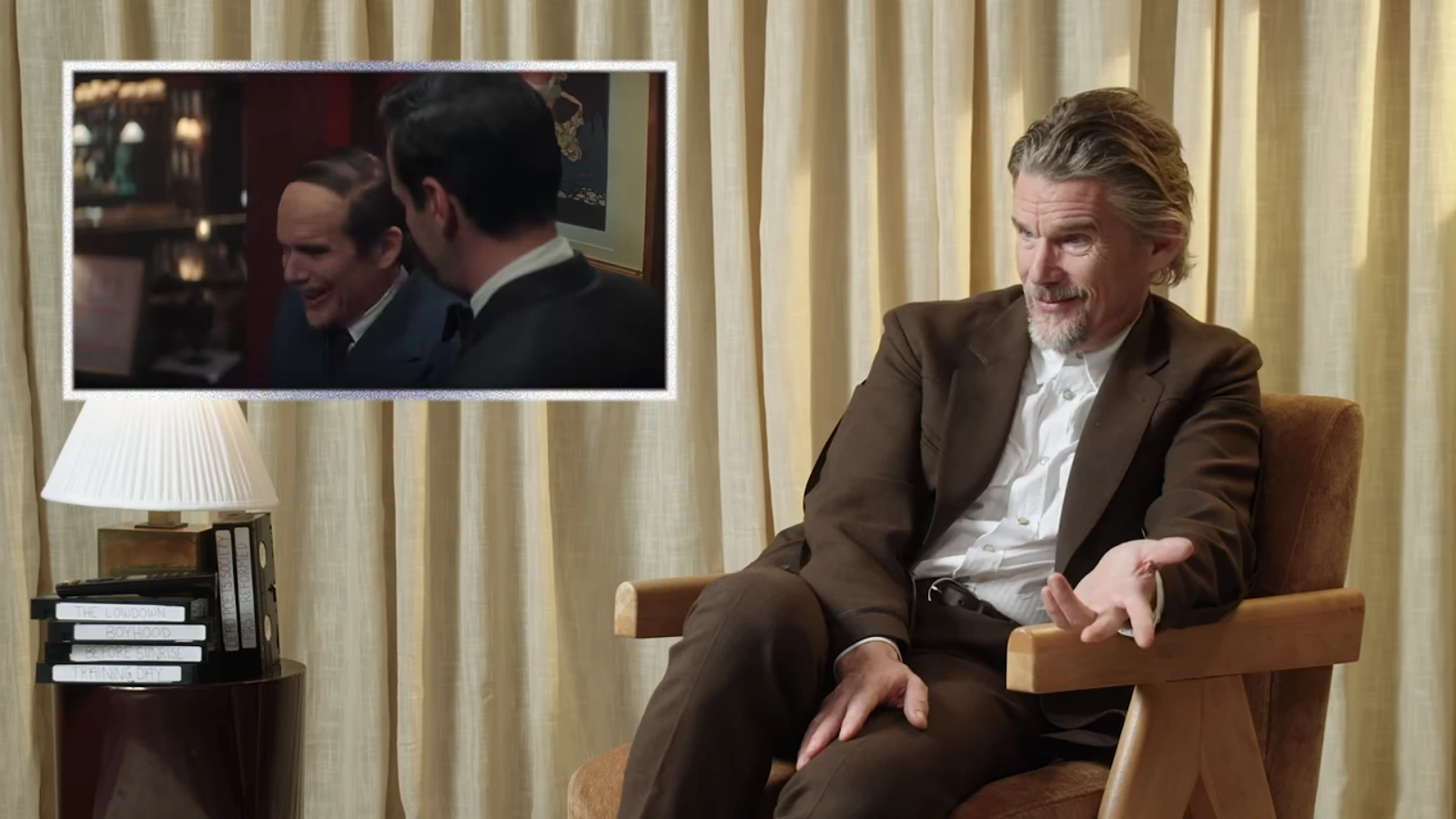
Watch Ethan Hawke revisit Blue Moon, Training Day and more for Vanity Fair
Watch Hawke revisit his performances and share stories about Washington, Ryder, Hoffman, Linklater, Scott and Jones in the complete Vanity Fair Scene Selection interview.
Sources: Vanity Fair’s Scene Selection interview and accompanying reporting; supplied video transcript; Academy of Motion Picture Arts and Sciences’ 2026 Best Actor nomination record; FX’s official The Lowdown series information.