










Dustin Hoffman gets candid with Conan about his wild road to Hollywood glory
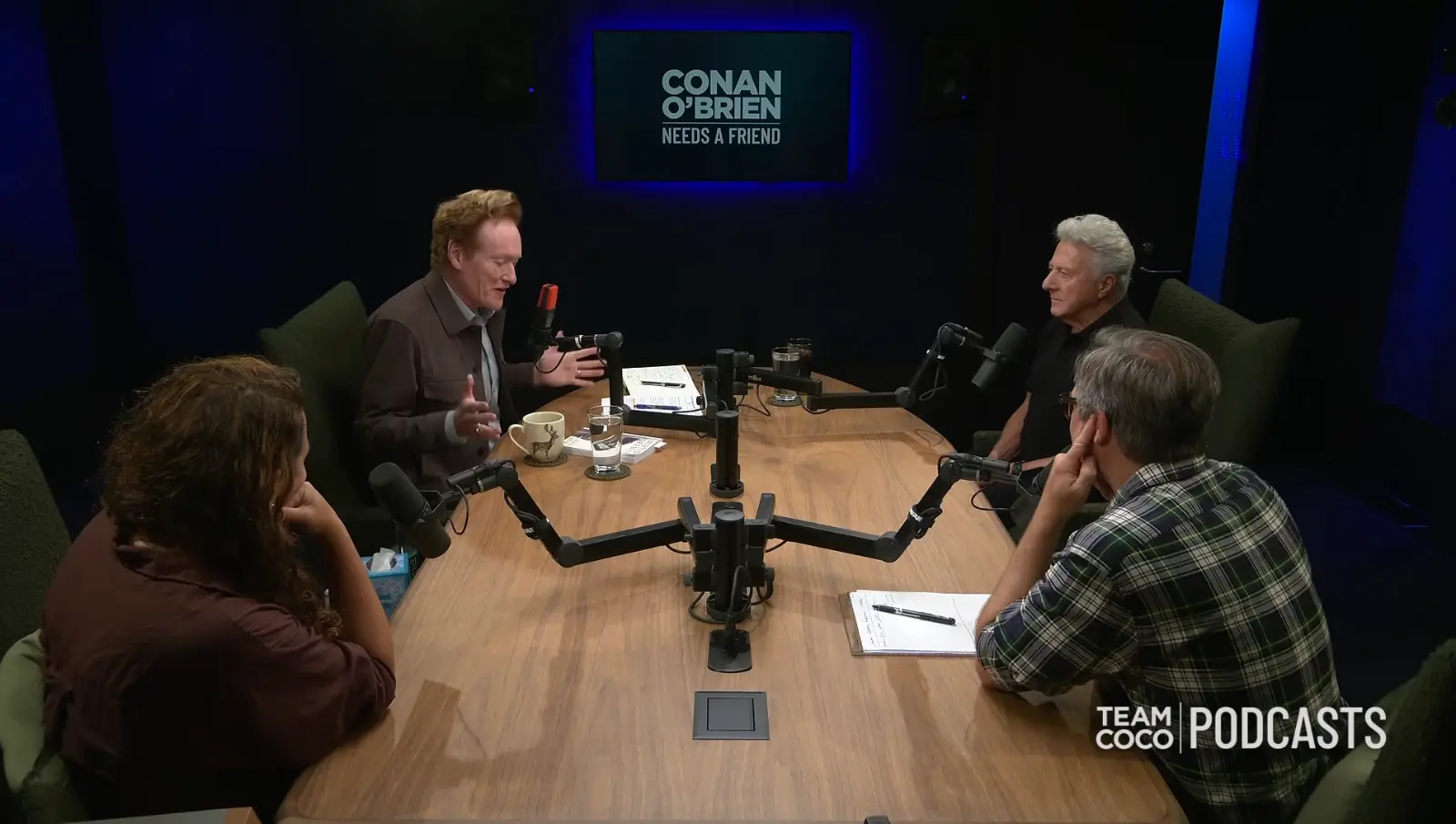
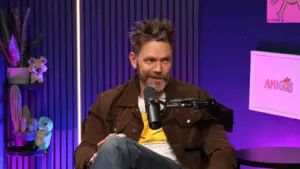
The one of one living legendary actor Dustin Hoffman has dropped into Conan O’Brien Needs a Friend for Part I of a special two-part conversation, and Mister Hoffman is more than ready to chit chatter. His opening confession? He would feel great about being Conan’s pal—if only Conan would ever call. Conan insists he does; the voice picking up the phone, sounding suspiciously like Hoffman, keeps telling him the actor isn’t home.
At the center is Hoffman’s new memoir, Look at Me, but the detours are golden: from being the family’s “designated failure” and selling toys at Macy’s to surviving his breakout role in The Graduate, reinventing himself in Midnight Cowboy, and sharing a deeply personal memory of working alongside Laurence Olivier. Turns out even the most celebrated Hollywood legends have plenty to unpack.
Discover More
Dustin Hoffman: The Hollywood Years
Explore the official source and related picks curated around this story.
Some links may be affiliate links. INYIM may earn from qualifying purchases.
The Graduate made Dustin Hoffman a star—and he hated making it
Conan points to the cruel irony of Hoffman’s rise: after an injury cost him a Broadway role, another play, The Journey of the Fifth Horse, helped bring him to director Mike Nichols and, eventually, The Graduate. Hoffman even ribs Conan for getting only about 60 percent of the details right. The humor gives way to something more surprising when the actor describes his time making the 1967 classic as an intensely unhappy working experience, haunted by the feeling that he did not belong in the role of Benjamin Braddock.
The film transformed him into a star at 30, but Hoffman says he saw himself as a character actor, not a conventional Hollywood leading man. He remembers earning just $3,000 for The Graduate, then standing in an unemployment line despite the picture’s enormous success. The story of overnight fame rarely gets much stranger—or more revealing—than that.
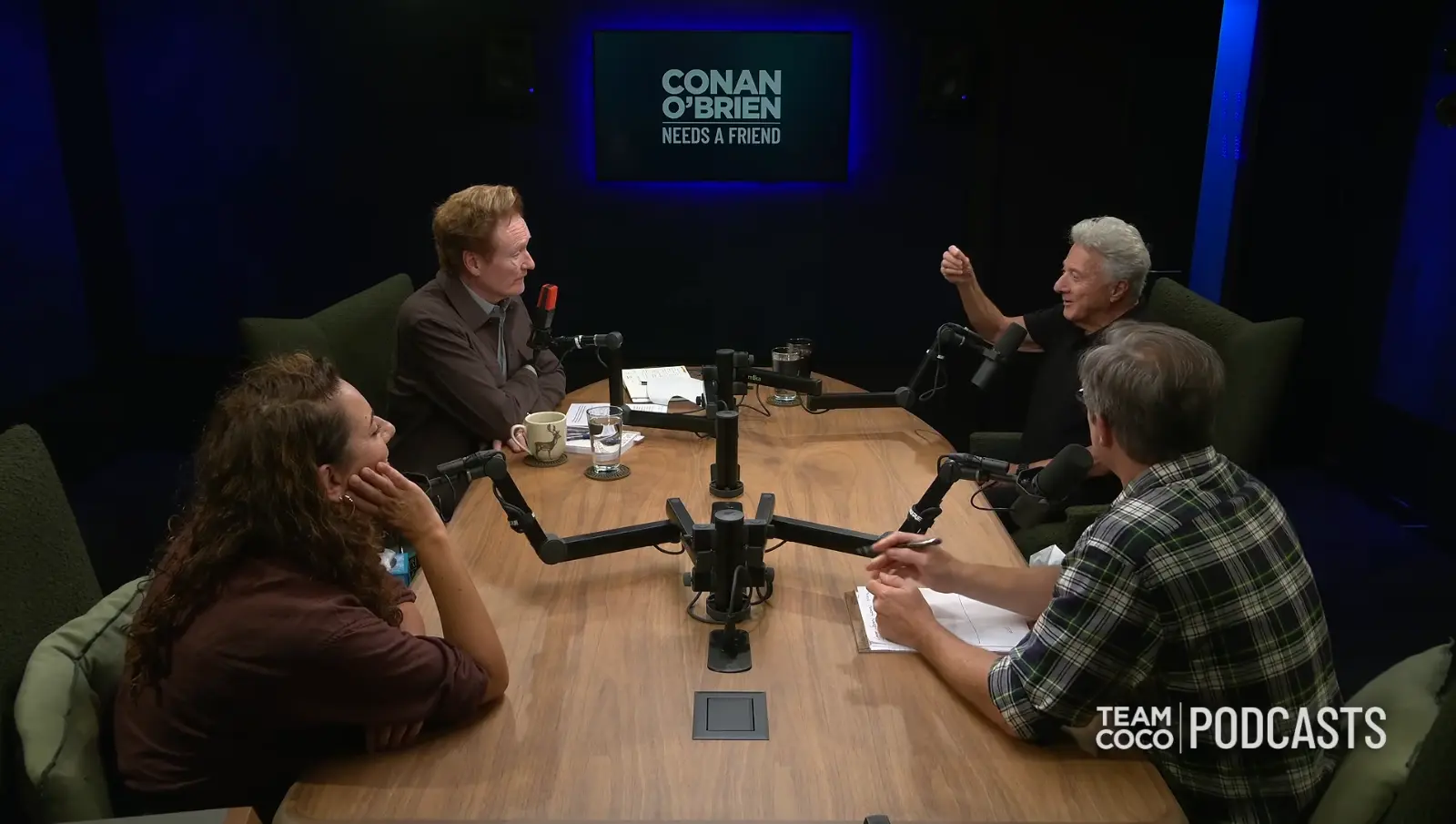
Before any of it, there was Macy’s. Hoffman recalls selling tabletop hockey games and turning his shift into acting practice by inventing an elaborate identity for himself: a down-on-his-luck, injured French hockey player. Conan is beside himself at the idea of a future Oscar-winning actor giving an unsuspecting department-store customer an entire character performance with their shopping demonstration. The conversation also recalls Hoffman’s early New York orbit with Gene Hackman and Robert Duvall.
Why Midnight Cowboy became Hoffman’s rebellion against Hollywood
The success of The Graduate could have pushed Hoffman toward safer leading-man territory. Instead, he pursued Ratso Rizzo in Midnight Cowboy, eager to show audiences that Benjamin Braddock was a role he had played, not the sum of his abilities. He describes combing New York streets, studying strangers and their movements, and building a damaged, fiercely determined character from the smallest observations.
Hoffman remembers Nichols questioning why he would take a grimy supporting part after becoming a star. That, for Hoffman, was precisely the point. It was never enough to be famous; he wanted to disappear into somebody else, preferably somebody the public would never mistake for the young man from The Graduate.
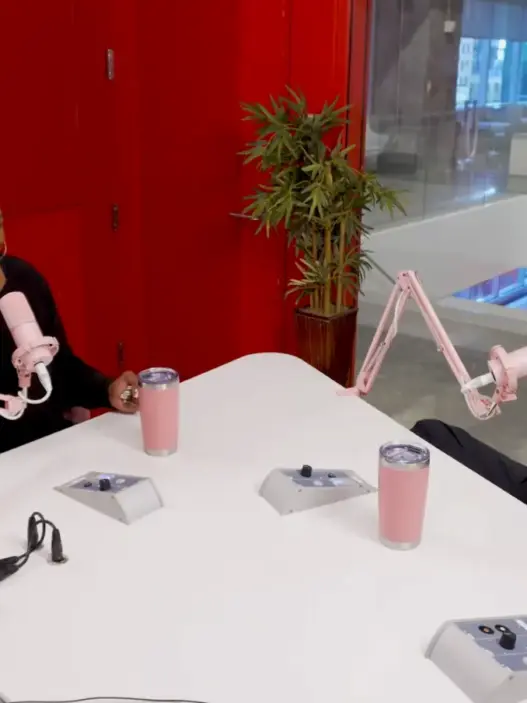
Dustin Hoffman and Conan O’Brien: A Hollywood legend in conversation
The Part I conversation moves between hilariously unexpected detours and intimate recollections of the actor’s life, with Hoffman’s long memory—and Conan’s affectionate interruptions—keeping the exchange anything but predictable.
A terrifying gunpoint encounter—and a moving memory of Laurence Olivier
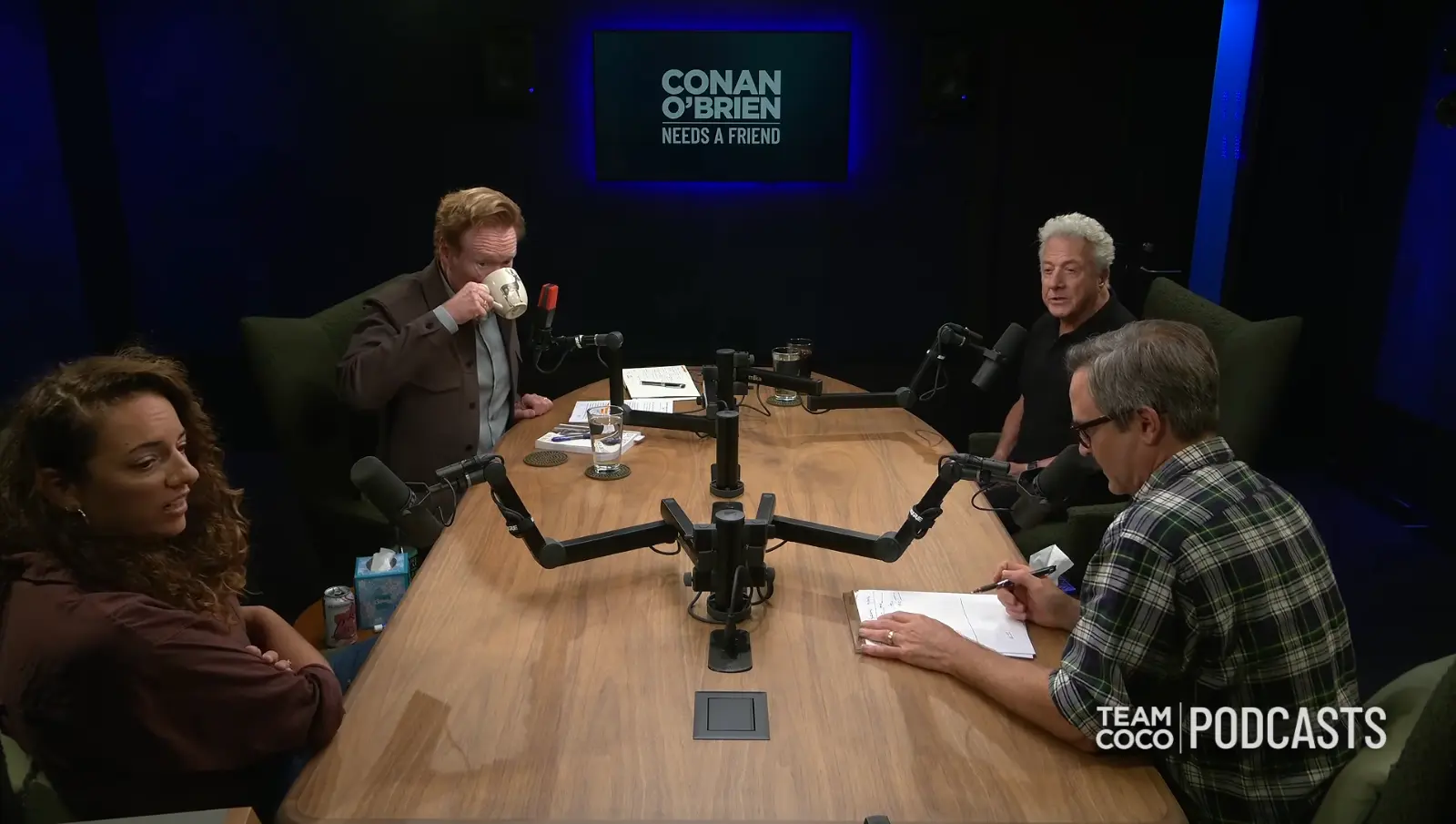
The interview takes a startling turn when Hoffman recalls a youthful affair with a married woman whose husband unexpectedly appeared with a gun. Hoffman describes the terror of seeing the weapon aimed at him, and the realization that no one can be certain how they will behave in a moment when they believe they might die. Conan meets the gravity of the recollection with the nervous, disarming humor that makes these two such an improbable match.
Then comes a poignant account of Marathon Man. Hoffman remembers Laurence Olivier struggling on set while seriously ill and heavily medicated. As the cameras moved closer, director John Schlesinger was reluctant to suggest that the theatrical giant rein in his performance. Hoffman approached Olivier gently, offering to run their lines together in a more intimate way. According to Hoffman, Olivier understood the suggestion, thanked him, and the two grew close. It is a remarkable little story about one great actor caring for another.
Hoffman also gives enormous credit to writer Ariel Levy, his collaborator on Look at Me. After years of beginning the memoir in one notebook after another, he says Levy’s questions unlocked memories that his usual answers had barely touched. For a performer whose career is already etched into cinema history, the book appears to have opened a few doors even he had not expected.
And the two-part special is not finished. Part II is scheduled for Wednesday, November 11, 2026, as Conan and Hoffman continue tracing a life that has taken him from toy counters and Broadway stages to some of the most unforgettable performances ever captured on film.
Dustin Hoffman Part I — Conan O’Brien Needs a Friend Full Episode
Sources: Team Coco — Dustin Hoffman Part I; Conan O’Brien Needs a Friend (Apple Podcasts).