

















SoCal Gets a Near-Total Lunar Eclipse Thursday Night
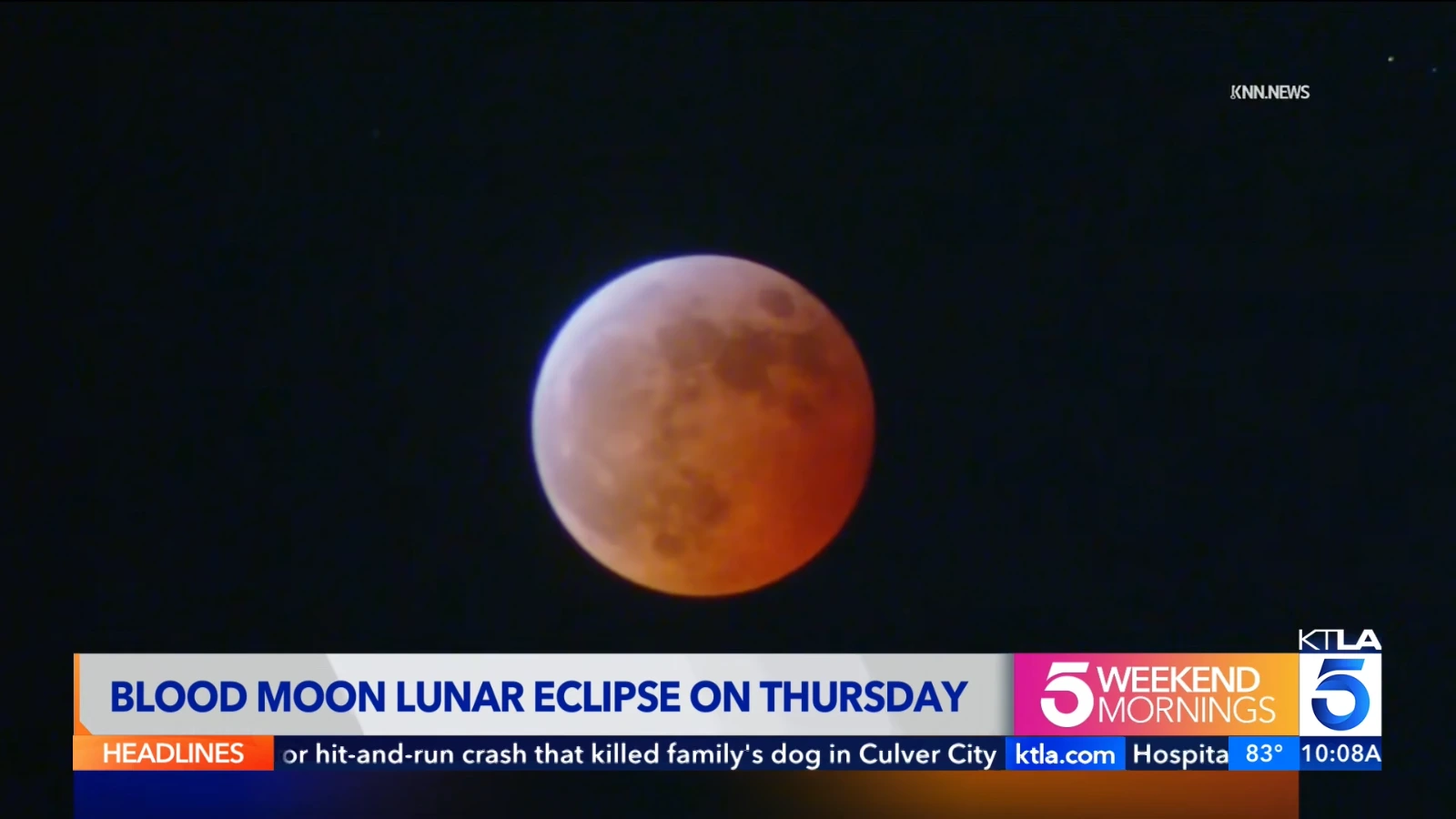
Get your phones out and mark those calendars on us, SoCal heads. Thursday night, August 27, 2026, Southern California gets a lunar eclipse that comes extremely close to totality — close enough for most of the Moon to darken dramatically and potentially take on that eerie coppery-red glow everybody associates with a “blood moon.”
One important little cosmic correction: this is technically a deep partial lunar eclipse, not a total lunar eclipse. NASA says that at maximum eclipse, 96.3% of the Moon’s disk will be inside Earth’s umbra, the darkest central part of our planet’s shadow. Translation: only a skinny portion of the Moon stays fully sunlit.
So yes — it is partial. But visually? Almost the whole Moon is getting swallowed by shadow. Keep a ghouling and howling eye out.
SKYWATCH
Make Thursday a moon-watch night.
You do not need eclipse glasses for a lunar eclipse — just a clear eastern view, your own eyes and maybe a little help getting closer.
Some links may be affiliate links. INYIM may earn from qualifying purchases.
For Los Angeles, The Show Starts Right Around Moonrise
The timing is especially friendly for Southern California. In Los Angeles, the Moon rises at roughly 7:17–7:18 p.m. PDT on Thursday, already brushing into the eclipse. The deeper partial phase begins at about 7:33–7:34 p.m., when Earth’s umbra starts taking a visible bite out of the lunar disk.
Maximum eclipse arrives around 9:12–9:13 p.m. PDT. That is the money shot: about 96% of the Moon’s disk inside the umbra, with the Moon sitting roughly 21 degrees above the east-southeastern horizon from Los Angeles.
The partial phase wraps around 10:51–10:52 p.m., while the subtler penumbral eclipse continues until just after midnight, around 12:01 a.m. Friday.
No Eclipse Glasses Needed — Just Find a Clear Eastern View
Unlike a solar eclipse, a lunar eclipse is completely safe to watch with your naked eyes. No special eclipse glasses required. Binoculars or a small telescope can make Earth’s curved shadow and the changing color across the lunar surface even easier to see.
The bigger challenge in Los Angeles is geography. Because the Moon rises while the eclipse is already underway, you will want an unobstructed view toward the east-southeast. Hills, buildings and trees can block the first part of the show while the Moon is still hugging the horizon.
Why The Moon Can Still Look Red Without Going Fully Total
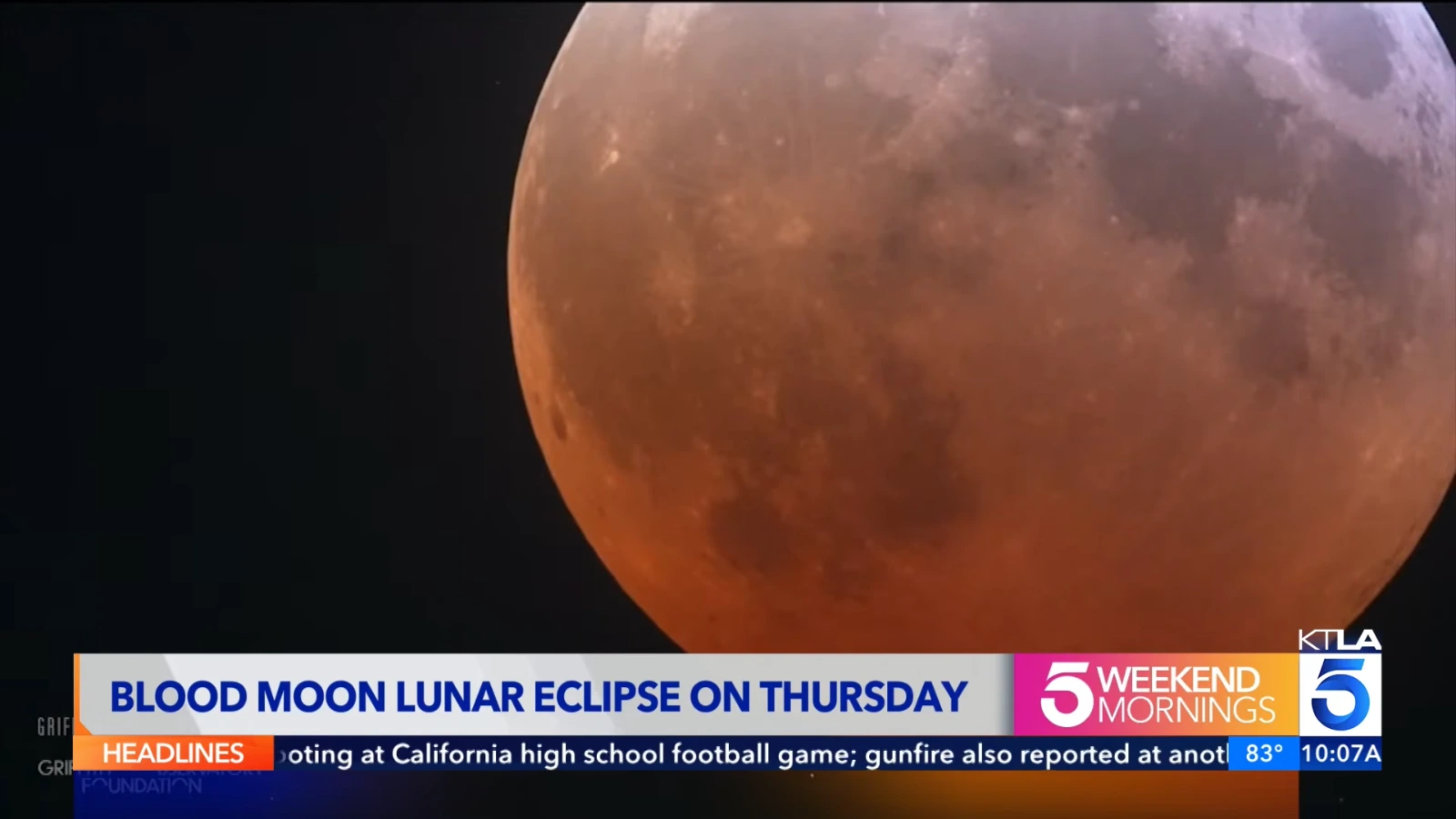
The red-orange color comes from sunlight filtering through Earth’s atmosphere before reaching the eclipsed Moon. Shorter blue wavelengths scatter more easily, while longer red and orange wavelengths make it through — essentially sending the colors of Earth’s sunrises and sunsets onto the lunar surface.
NASA notes that this eclipse will never quite reach totality, but with so much of the Moon inside the umbra, observers can still see a rusty or coppery tint across the shadowed portion. The exact color depends in part on conditions in Earth’s atmosphere.
And if your neighborhood view is blocked or the marine layer decides to be very Los Angeles about the whole thing, Griffith Observatory plans to livestream the eclipse online.
So: Thursday night. Look east. Maximum drama around 9:13 p.m. No special glasses. And for once, staring directly at an eclipse is not only allowed — it is the entire assignment.
Watch How a Deep Partial Lunar Eclipse Darkens the Moon
The supplied YouTube clip offers visual context for the kind of near-total partial lunar eclipse Southern California will see Thursday night.
Sources: NASA; NASA Scientific Visualization Studio; Griffith Observatory; Timeanddate.com.