









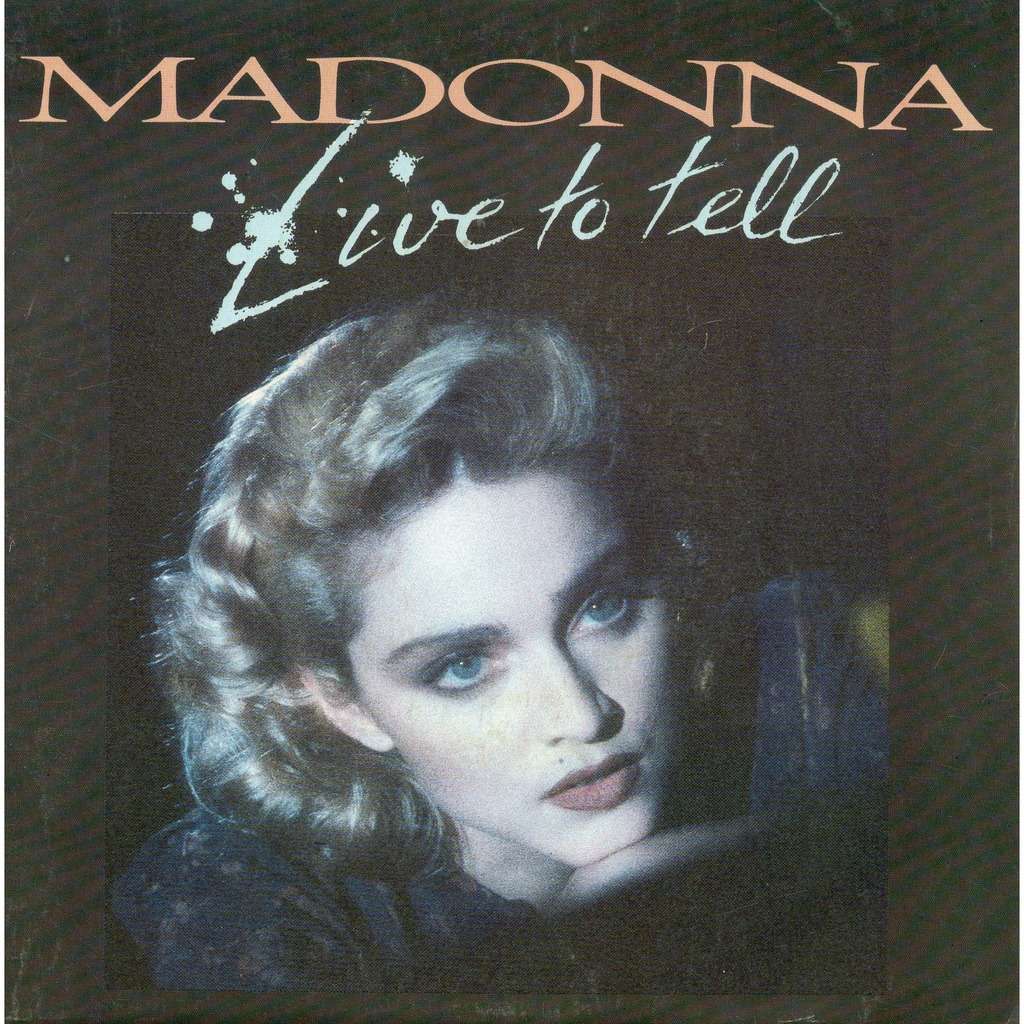
From one of our preferred Musical Sources. Featured artist Madonna:
In The Number Ones, I’m reviewing every single #1 single in the history
of the Billboard Hot 100, starting with the chart’s beginning, in 1958, and working my way
up into the present.INYIM WeeklyGet the good stuff.Fresh music, bold entertainment, and men’s fashion—one tight email a week.
No spam. Unsubscribe anytime.
***“Planetarium music.” That’s what my friend Nat called it. Sometime near the
end of high school, I was starting to grapple with the idea that there might
be good music that was neither skate-punk nor Wu-Tang somewhere out in the
world. I was riding around in Nat’s car, and we were listening to the used
cassette copy of The Immaculate Collection that I’d just bought. Nat and I were both having one of
those shit, fuck, this rules moments with the tape, processing the idea that Madonna was way
better at making music that we’d ever given her credit for being.
When we heard the “Live To Tell” intro, with its big drums and its gasping
keyboards and its blippy little oscillations, Nat said, “Yo, it’s
like planetarium music,” and he was exactly right. I’ve never encountered a better
description. Decades later, I still think of what Nat said every time I hear
the song.“Planetarium music” fits because the production of “Live To Tell” is pure
head-blown ’80s sci-fi awe — the kind of wonderstruck synth music that Carl
Sagan might’ve used to soundtrack Cosmos. The term also fits because the song sounds like Madonna staring out into
the universe, contemplating her own place within it. Her lyrics are vague
but portentous, and they hint at some kind of emotional apocalypse. Her
voice is wounded but strong. She comes off as a person dealing with the kind
of vast sadness that’s hard to put into words, but she also comes off as
someone determined to get through it: “The light that you could never see/
It shines inside, you can’t take that from me.”In June of 1985, Madonna had just gotten done with the Virgin Tour, her
first-ever arena trek. The tour, which featured the pre-Licensed To Ill Beastie Boys as openers, solidified Madonna as an A-list pop figure,
and she apparently liked the experience enough that she wanted to keep
working with her collaborators. The tour’s musical director was Patrick
Leonard, a fellow Michigan native who’d previously played keyboards in Frank
Zappa’s band and in the Allman Brothers Band. Before working with Madonna,
Leonard had been the musical director for the Jacksons’ Victory Tour. After
the Virgin Tour ended, Madonna asked Leonard if he wanted to write some
songs together. Leonard was into it.At the time, Leonard was trying to get into the film-scoring world. Leonard
had seen the script for Fire With Fire, a 1986 romance about a girl at a Catholic boarding school falling in love
with a boy in a prison camp. He sent Paramount a song he’d written, telling
the studio that he could get Madonna to write some lyrics for it. Paramount
rejected Leonard’s song, and they hired Howard Shore to score the movie
instead. I’d never heard of Fire With Fire until I sat down to write this, but it exists. Looks pretty good,
too!
At the time, Madonna was married to Sean Penn. They’d made it official on
Madonna’s birthday in 1985, just after she’d finished the Virgin Tour. When
Madonna heard that Paramount wasn’t interested in the song that Leonard had
written, Madonna decided that it would be great for the movie Penn was
making. Penn was starring in the drama At Close Range, playing a soulful and conflicted son in a family of criminals in rural
Pennsylvania.
Madonna wrote some lyrics on the spot, coming up with a bridge and a few
melodies of her own. She recorded a quick demo and then took it to Penn, who
loved it. Madonna thought that she was writing the song from a male
perspective and that they’d find a man to sing it. But Leonard loved the
vulnerability of Madonna’s version, and that demo that she recorded was the
one that Madonna eventually released.
At Madonna’s suggestion, At Close Range director James Foley hired Leonard to score the movie. Leonard only
scored a few more films after that: The 1985 Tom Hanks mob comedy Nothing In Common, the 1991 Michael Biehn sci-fi Timebomb, the 1994 Joe Pesci/Brendan Fraser coming-of-age thing With Honors, the Sundancey 2014 drama Lullaby. Leonard’s biggest film credit probably comes from a very different part
of his career. Leonard was a writer and producer on Leonard Cohen’s last
three albums, and he co-wrote Cohen’s “Nevermind,” which became the theme
song for the second season of True Detective. Anyway, Madonna loved working with Leonard, so he’ll be in this column
again as both a writer and producer.James Foley directed Madonna’s “Live To Tell,” video, which is mostly just
scenes from At Close Range. I’d have to check through her videography again to be sure about it, but
“Live To Tell” is almost certainly the only Madonna video that gives as much
screen time to a mustachioed Christopher Walken as it does to Madonna
herself. But the video does highlight one of Madonna’s many image
reinventions. Where she’d previously styled herself as a new-wave New York
club kid with a whole lot of jewelry, the Madonna who sings in front of a
black void in the “Live To Tell” video is more of a retro Hollywood beauty —
a very conscious decision on her part. (At Close Range was only Foley’s second movie, and he went on to have a weird and
occasionally-great journeyman career: Glengarry Glen Ross, Fear, 12 episodes of House Of Cards, the second and third Fifty Shades movies.)Despite generally good reviews, At Close Range was a box-office failure — though not as big a failure as Shanghai Surprise, the notoriously awful movie that Madonna and Penn made together later in
1986. But “Live To Tell” took off anyway. When she released “Live To Tell”
as a single, Madonna was still working on her third album True Blue, which wouldn’t come out until a few weeks after the song hit #1. When
“Live To Tell” was at its apex, then, it wasn’t available on an album. You
had to buy the single.Like Madonna’s previous #1 single “Crazy For You” — another song from a movie that’s probably not quite as memorable as the
song itself — “Live To Tell” is Madonna bending the aesthetics of the ’80s
adult-contemporary ballad to her own will. As a singer, Madonna has never
been a powerhouse like Whitney Houston, but she’s a communicator. She speaks
volumes with tone and phrasing. On “Live To Tell,” she sounds lost and
scared. Her voice is low and quiet, like she’s putting voice to things she’s
not quite ready to admit: “A man can tell a thousand lies/ I learned my
lesson well.”“Live To Tell” isn’t necessarily about any particular situation. Madonna
once told Rolling Stone that the song is “true, but it’s not necessarily autobiographical.”
Her lyrics are light on specifics; we don’t know what secret she wants to
live to tell. Instead, it’s the kind of song that you feel, not the kind
that you parse.Musically, “Live To Tell” takes the sound of big mid-’80s pop and somehow
makes it intimate. Madonna and Leonard produced the song together, and
Leonard played the keyboards and programmed the drum machines. All the
sounds — the glowing synths, the big drum thumps, the occasional
guitar-growls — are clean but immersive. “Live To Tell” hit #1 on the Adult
Contemporary charts, but it doesn’t sound canned and treacly like so many
other ’80s adult-contempo hits. Instead, it cuts a little deeper.That depth served Madonna well. We’ll see her in this column again soon.
GRADE: 9/10 – https://www.stereogum.com/