













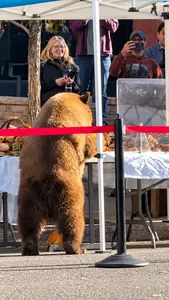


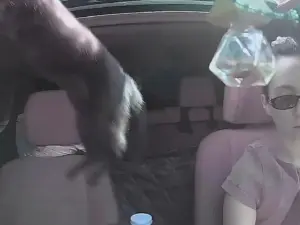

Last week delivered a stunning moment for California wildlife — and a historic one for Southern California. The California Department of Fish and Wildlife confirmed the sighting of a gray wolf in Los Angeles County, near Lancaster, marking the first time a wolf has been documented in the region in more than a century. The moment was first reported by KFMB San Diego, whose coverage helped spotlight just how extraordinary this sighting truly is.
The video was captured in the mountains near Santa Clarita — just approximately 26 miles from Hollywood, where INYIM Media is headquartered. A wild wolf wandering within such close range of the city’s creative heart? That’s a Present‑day Development if there ever was one.
To understand the significance, CBS 8 spoke with Jacob Keating of the California Wolf Center in Julian. His excitement was unmistakable:
“Wolves are part of our California heritage. They were here before we were a state.”
The female wolf, known as BEY03F, was born three years ago into Northern California’s Beyem Seyo Pack. Last year, she reached dispersal age — the moment young wolves leave their family pack to search for a mate and establish new territory. Her path took her south, where she briefly crossed into the range of the Yalumni Pack in Kern County, near the Sequoia National Forest. But that pack was tight‑knit, and she kept moving.
And here’s where the story gets both scientific and a little poetic. The female wolf, BEY03F, isn’t just wandering — she’s searching. Much like Hazel Dean in her 1983 Hi‑NRG anthem “Searchin’ (I Gotta Find a Man)”, our girl is on a mission of her own: looking for love, looking for a mate, and following instincts that have guided wolves for generations. You can even feel the parallel — the determination, the longing, the unstoppable forward motion. Maybe she’s headed to Boystown, West Hollywood! (Watch the track’s iconic energy here: Searchin’ (I Gotta Find a Man) (Extended Mega-Mix))


Before her travels, she was fitted with a tracking collar — a crucial detail that allowed biologists to follow her extraordinary trek.
This time of year marks wolf breeding season, when hormones surge and dispersal instincts intensify. That natural pull likely pushed her farther than any California wolf has ventured in generations — nearly 400 miles south, all the way into the mountains above Los Angeles.
There are no male wolves in Southern California, so experts believe she won’t stay long. Once she realizes there’s no mate to be found, she’ll likely head back north toward Central California.
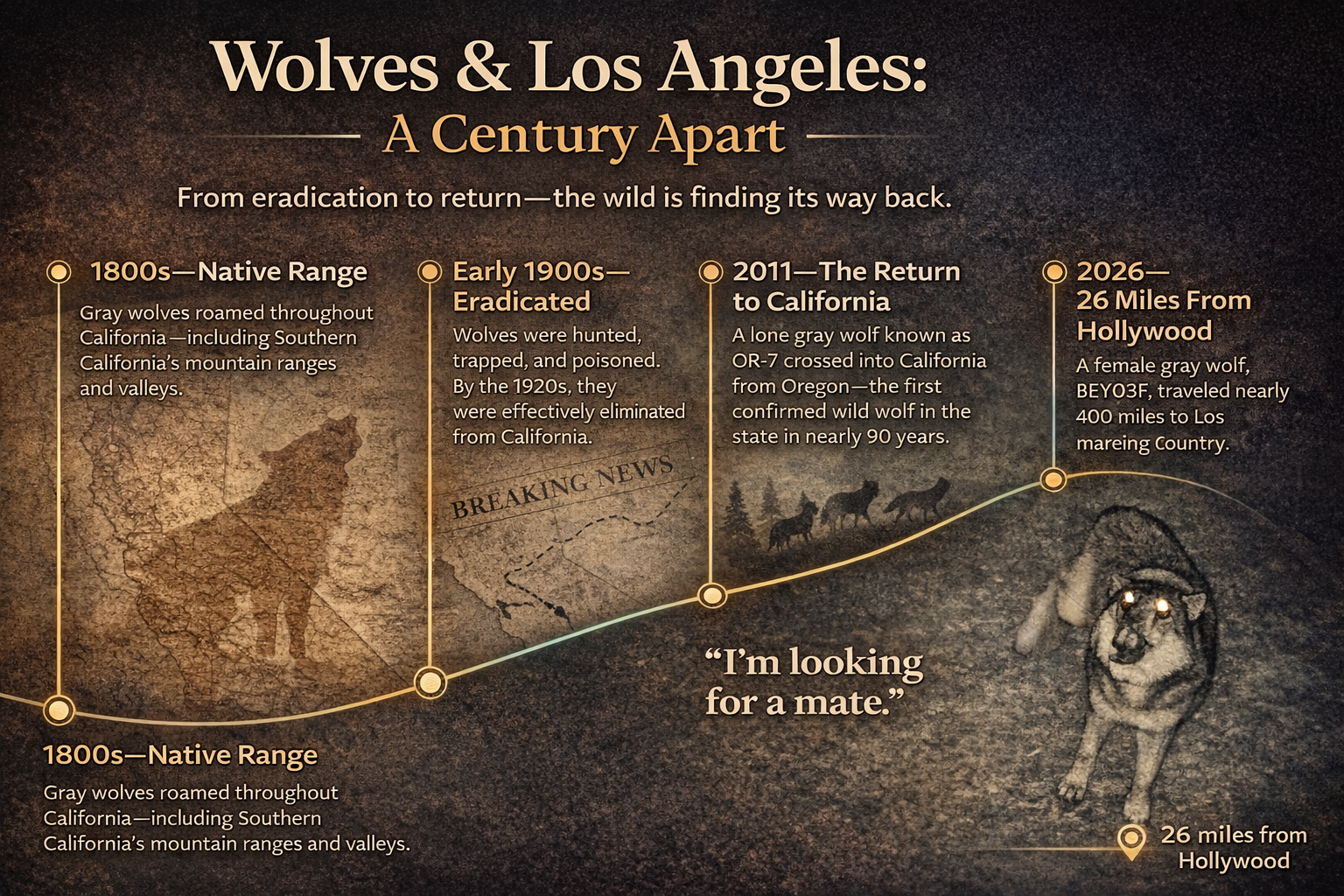
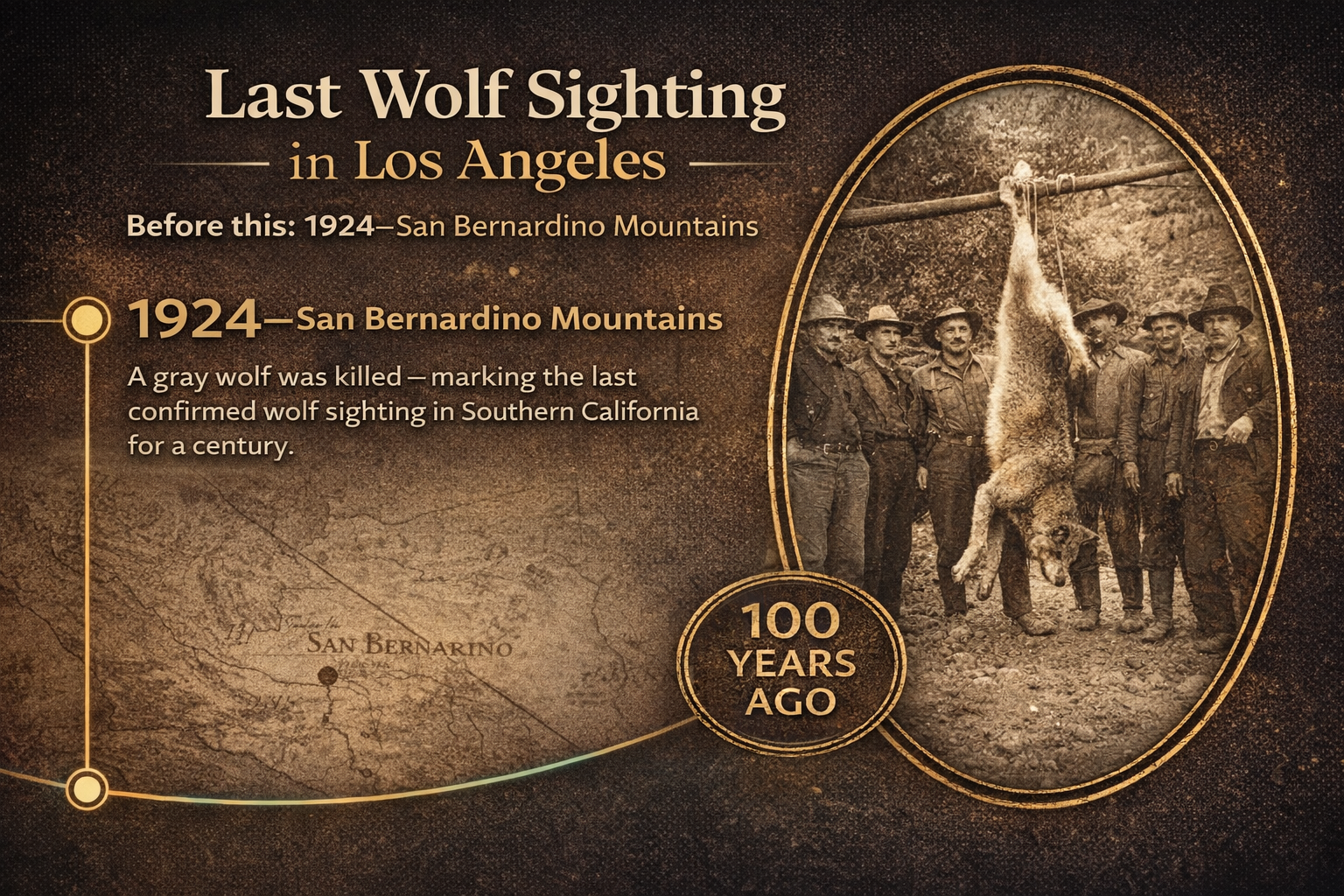
The last known gray wolf in Southern California was documented more than a century ago, in the early 1920s. Like many wolves across the West during that era, it was killed as part of government‑backed eradication campaigns that targeted predators to protect livestock and support settlement expansion. Wolves were trapped, poisoned, and shot until they were completely wiped from the region — long before modern wildlife protections existed. BEY03F’s arrival isn’t just rare; it’s a return to a landscape her species was forcibly removed from.
But her presence here, even briefly, is monumental.
“The wolves are coming back on their own,” Keating explains. “They’re saying, ‘Hey, look at this area in California that we like. This looks like a good place for us to live and persist and reproduce.’”
BEY03F’s journey is more than a wildlife headline — it’s a living symbol of recovery, resilience, and the wild spirit returning to landscapes that haven’t seen wolves in over 100 years.
A true Present‑day Development.